45 Foot Container Applications Guide for Buyers
A 45-foot container earns its footprint when a 40-foot unit leaves you short on usable length, but adding a second container would complicate access, delivery, or security. This 45 foot container applications guide explains where the extra five feet creates real operational value and where a smaller unit may be the better decision.
For contractors, agricultural operators, retailers, and property owners, the primary question is not simply how much a container holds. It is whether the unit can be delivered safely, placed on a stable site, opened without obstruction, and maintained for the intended life of the project. A well-chosen container should reduce handling, protect inventory, and avoid avoidable modifications later.
What a 45-Foot Container Adds
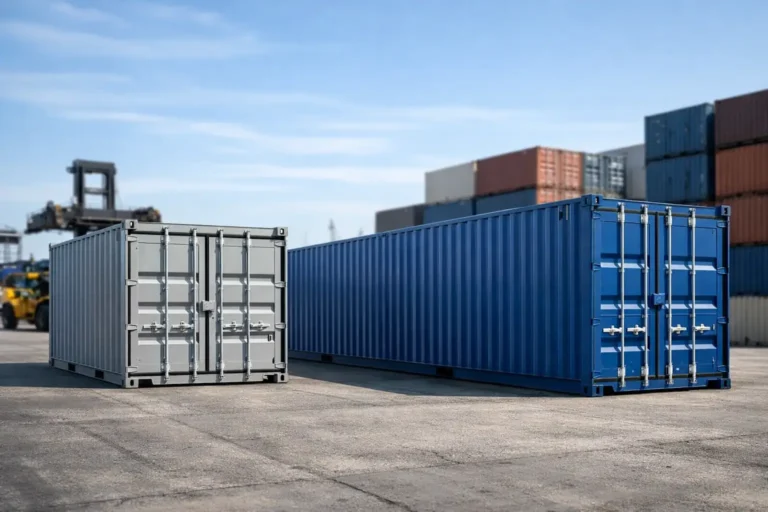
Most 45-foot containers are high-cube units. Their exterior dimensions are generally about 45 feet long, 8 feet wide, and 9 feet 6 inches high. Interior dimensions vary by manufacturer and container design, but buyers can generally expect roughly 44 feet of interior length and close to 3,000 cubic feet of capacity.
That additional length over a 40-foot container is not dramatic on paper. In practice, it can be enough room for another equipment rack, several pallets, a separated work area, or a clear aisle that makes the container easier to use every day. The added height of a high-cube unit also matters for tall shelving, stacked supplies, and mobile office or workshop conversions.
There are trade-offs. Forty-five-foot units are less common than 20-foot and 40-foot containers, so local inventory and delivery options can be more limited. Their longer chassis requirements also make site access more demanding. Confirm the exact exterior dimensions, door configuration, condition grade, and delivery method before committing to a layout or foundation plan.
45 Foot Container Applications Guide: Best-Fit Uses
Secure construction and job-site storage
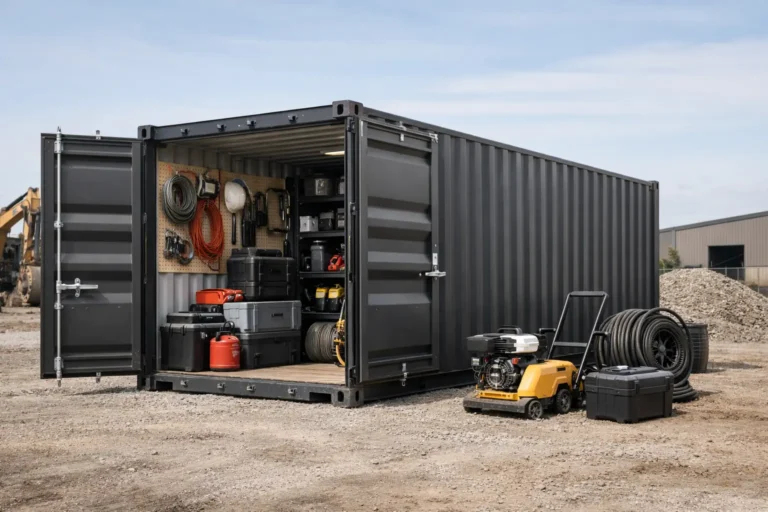
For active construction sites, a 45-foot container can consolidate high-value tools, consumables, electrical materials, safety equipment, and small machinery in one lockable location. The extra length helps crews separate materials by trade instead of creating one crowded storage space where inventory is difficult to find.
A standard container is built with Corten Steel, a weathering steel designed for marine transport. A Wind & Watertight, or WWT, unit is often a practical option for job-site storage when appearance is secondary to dry, secure space. If the container will be transported by rail, ship, or commercial freight, Cargo Worthy certification may be necessary. Those terms are not interchangeable, so buyers should select the grade based on their actual use rather than assuming one label covers every need.
For a site that receives frequent deliveries, place the container where truck traffic and door access do not conflict. Double cargo doors require clear swing space, and the approach should remain usable after rain, when loose soil and staging areas can change quickly.
Agricultural equipment and seasonal inventory
Farm and rural property operations often need storage that is secure, rodent-resistant, and available without constructing a permanent building. A 45-foot unit can hold fencing supplies, irrigation components, feed-related equipment, harvested-product packaging, hand tools, and seasonal attachments with room to create logical zones.
It is particularly useful when inventory changes by season. One end can hold spring planting supplies while the other holds tools or maintenance stock. Add shelving only after accounting for door clearance, aisle width, and the weight distribution of dense materials. Heavy equipment and palletized goods should rest on a level base and be positioned to avoid concentrated loads in one small area.
Ventilation deserves attention in humid climates. A shipping container is designed to keep weather out, not to eliminate condensation caused by warm, moist air meeting cooler steel surfaces. Passive vents, moisture control, and sensible storage practices help protect boxed goods, paper products, and metal tools over the long term.
Inventory overflow and retail staging
A 45-foot container can function as an off-floor stockroom for retailers, distributors, event operators, and service businesses. It works well for boxed inventory, display fixtures, packaging, promotional materials, and seasonal merchandise that needs secure access near the point of use.
This application benefits from a clean interior and a professional exterior condition. A one-trip container is often the preferred choice when the unit will be visible to customers or placed beside a retail facility. One-trip describes a container that has typically made a single loaded journey from its manufacturer. It is not identical to brand new in a showroom sense, but it generally offers a cleaner appearance, newer flooring, and fewer cosmetic repairs than an older used unit.
Consider how staff will move product. A 45-foot space is large enough to tempt buyers into filling every available foot, but an organized center aisle and labeled rack sections usually produce better daily results than maximum density. If forklifts will load pallets, verify ramp requirements, floor condition, and the safe operating plan before delivery.
Mobile workshops and field-support space
A high-cube 45-foot container can support a larger mobile workshop, maintenance base, or field-support unit. The length allows a practical division between storage, workbench space, parts racks, and electrical equipment. For utility contractors, equipment service teams, and fabrication operations, that separation can improve accountability and reduce time spent unloading materials just to reach one tool.
Conversion work should be planned carefully. Cutting large openings into side walls, roofs, or end panels can affect structural integrity. Doors, windows, roll-up openings, insulation, electrical systems, and HVAC equipment add value only when the design accounts for reinforcement, drainage, ventilation, and the container’s intended placement.
A container that will remain stationary may be modified differently from one that will be moved later. If future relocation is likely, keep lifting, loading, and transport constraints in the design. A professional fabricator can advise on framing around new openings and on avoiding modifications that create leaks or weaken critical structural members.
Modular builds and larger project shells
For a modular office, studio, equipment enclosure, or small commercial build, a 45-foot high-cube container provides more uninterrupted interior length than standard 40-foot designs. It can reduce the number of modules required for a long, narrow layout and may simplify a project that needs separate rooms or a larger open work zone.
That does not automatically make it the right building module. Local zoning, building permits, engineered plans, insulation requirements, accessibility rules, utilities, and foundation design all affect the final scope. A container shell is only one component of a code-compliant structure. Buyers should establish those requirements before purchasing rather than assuming a container can be converted without approvals.
Choose Condition Based on the Application
Container condition should follow the operational need. A refurbished unit may make sense for a homeowner who wants a cleaner exterior and a more finished appearance. A used WWT unit may be the more economical choice for protected material storage at a working site. A one-trip unit may be worth the added cost for a customer-facing retail setting, a long-term conversion, or storage of sensitive inventory.
Ask for verified specifications and a clear description of any repairs, floor wear, dents, surface rust, door operation, and weather-tightness. Used containers are industrial assets, and cosmetic imperfections are normal. The goal is not to find a unit with no marks. The goal is to receive a container whose grade, condition, and price match the job without fine print or surprises.
Delivery Planning Is Part of the Purchase
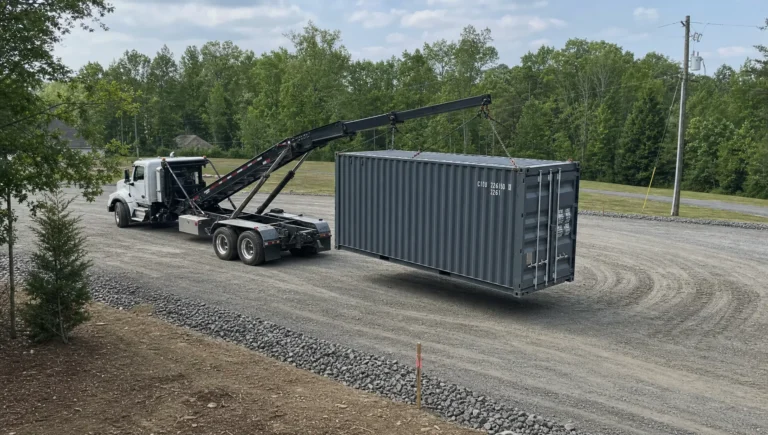
A 45-foot container requires more than an open spot on the property. Delivery vehicles need adequate road access, turning radius, overhead clearance, and a firm area for unloading. Trees, utility lines, soft ground, narrow gates, and sharp turns should be identified before scheduling.
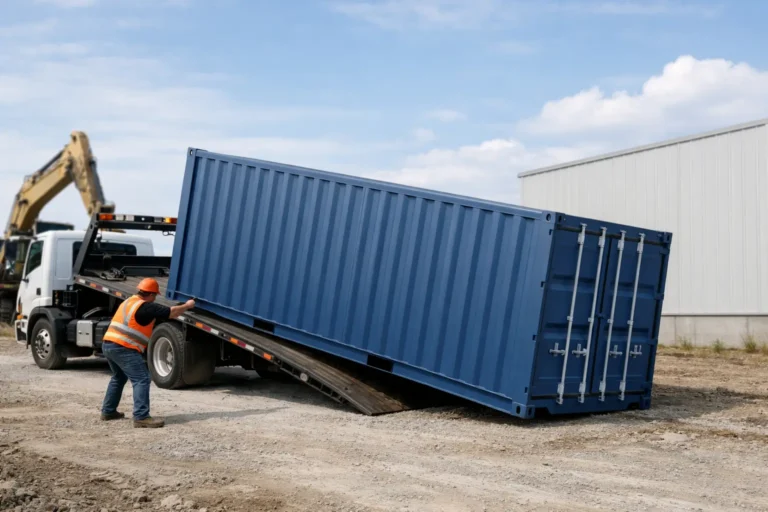
Tilt-bed delivery is common for ground-level placement, but it requires substantial clear space behind the truck while the container slides off the trailer. The exact requirement depends on the truck, site grade, and container orientation. A ground-level delivery can be efficient when planned correctly, but it is not a method for squeezing a long container into a tight residential driveway.
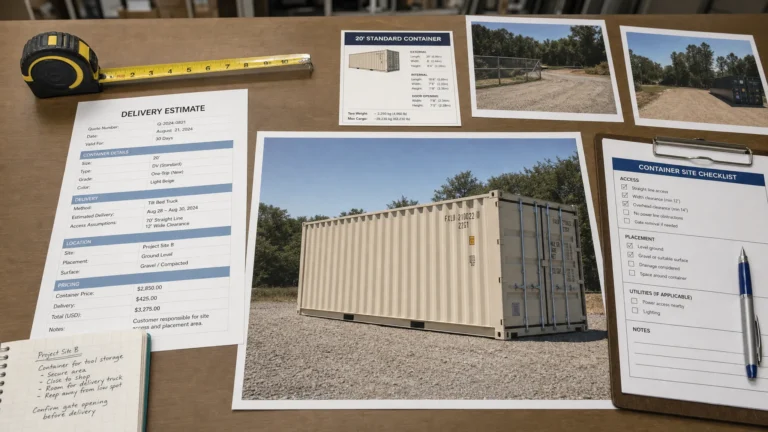
Prepare a level foundation before the truck arrives. Compacted gravel, concrete pads, or properly placed blocks and piers are common solutions depending on the site and intended use. Support the corner castings adequately, keep the frame level enough for doors to operate correctly, and allow drainage away from the container. Avoid setting it directly on uneven soil, where settlement can twist the frame and make door operation difficult.
Make the Extra Five Feet Work
The best 45-foot container application begins with a measured layout, not a capacity estimate. Mark the proposed footprint, account for cargo-door swing, confirm truck access, and decide where people, pallets, or equipment will move inside the unit. Then select the condition grade and modifications that fit the real job.
For buyers who need one secure, durable space without adding a second container, the extra length can be a practical advantage. Clear specifications, honest condition grading, and a delivery plan established before purchase are what turn that advantage into dependable storage or workspace on day one.