Best Containers for Construction Sites in 2026
In 2026, the best containers for construction sites are not always the newest or largest units. The right choice depends on your jobsite footprint, material risk, project duration, delivery access and whether you need storage, office space, refrigerated capacity or a modular layout. For general contractors, home builders and developers in Raleigh, North Carolina and across the Southeast, containers for construction have become a practical way to secure tools, stage materials and keep projects moving without building temporary structures from scratch.
A shipping container is more than a steel box. Most standard units are built to ISO standards, use Corten Steel for weather-resistant exterior panels and are designed for heavy-duty transport before being repurposed for ground-level jobsite use. That makes them a strong fit for construction environments where weather, theft, dust, schedule changes and limited space all matter.
How to choose containers for construction in 2026
The best container is the one that matches your actual project conditions. A downtown Raleigh infill build may need a compact 20ft unit that can fit near a fence line. A subdivision project outside Wake County may benefit from multiple 40ft containers placed near framing, roofing and mechanical staging zones. A commercial development may need a mobile office container plus a separate storage unit for tools and high-value materials.
Use this quick comparison as a starting point before looking at grade, delivery requirements and modifications.
| Container type | Best fit on a jobsite | Key advantage | Watch for |
|---|---|---|---|
| 20ft standard container | Tight urban lots, remodels, tool storage | Easier placement and smaller footprint | Less room for long materials |
| 40ft standard container | Larger builds, bulk materials, multi-trade storage | More capacity per delivery | Requires more clear space |
| 40ft High Cube container | Tall equipment, shelving, modular buildouts | Extra interior height | Needs careful clearance planning |
| One-trip container | Client-facing sites, long-term use, clean storage | Best condition and appearance | Higher upfront cost |
| Used WWT container | General jobsite storage | Cost-effective weather protection | Not certified for cargo shipping |
| Cargo Worthy container | Storage plus transport applications | Structurally suitable for shipping | May cost more than WWT |
| Reefer container | Temperature-sensitive materials | Controlled interior environment | Requires power planning |
Best container types by jobsite need
20ft standard containers for tight sites
A 20ft standard container is often the best fit for remodels, residential construction, municipal projects and small commercial jobs where access is limited. It gives crews a lockable storage point for power tools, fasteners, safety gear, doors, windows and finish materials without overwhelming the site.
This size works especially well in Raleigh neighborhoods where driveways, curbs, trees and utility lines can limit placement options. If you are comparing real-world uses, Lease Lane’s guide to 20ft containers on homes and jobsites offers practical examples for contractors and homeowners.
For many builders, 20ft containers for construction strike the best balance between security, delivery flexibility and daily accessibility.
40ft standard containers for larger projects
A 40ft container is the workhorse option for contractors managing bulk materials, multiple crews or longer project timelines. The added length makes it easier to store lumber, conduit, insulation, scaffolding components, cabinetry and palletized materials.
On larger construction sites, one 40ft unit can replace several smaller sheds or scattered tool cages. That matters when a superintendent needs to know where materials are located and when subcontractors need predictable access. A 40ft unit also tends to offer strong value per square foot, provided the site has enough room for delivery, door swing and safe crew movement.
For construction companies buying multiple units, 40ft containers can also support phased staging. One unit may hold rough-in materials while another protects finish items that should not be exposed until later in the schedule.
High Cube containers for vertical clearance
A High Cube container is typically one foot taller than a standard container, which makes a meaningful difference for shelving, equipment, ductwork, tall doors, rolled materials and modular interiors. The extra height is also useful when contractors want to add lighting, insulation or overhead storage while preserving comfortable interior clearance.
High Cube units are popular for mobile workshops and storage-office combinations because they feel less cramped inside. They are also a strong choice for developers considering future container modifications after the current project ends.
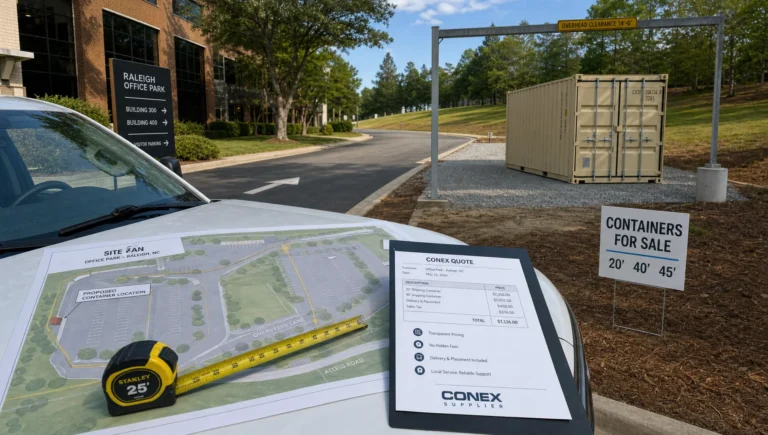
The tradeoff is placement planning. The delivery route needs enough overhead clearance for the truck, tilt-bed operation and final container height. This is especially important around tree canopies, utility drops and tight commercial lots throughout the Southeast.
Mobile office containers and reefer containers
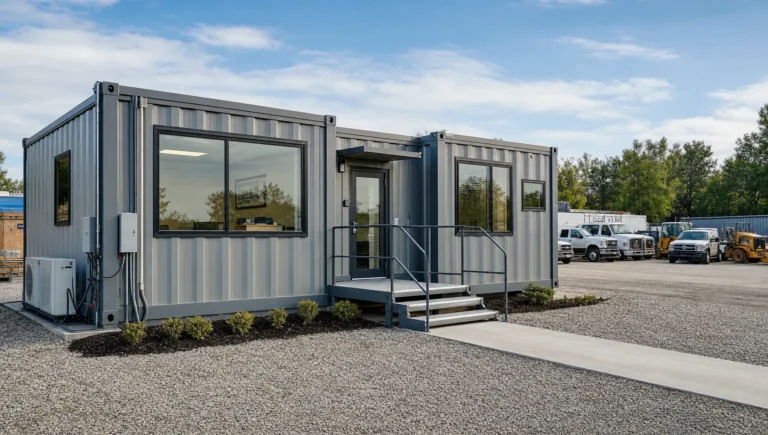
A mobile office container can give a project team a weather-resistant space for drawings, meetings, field documentation and daily coordination. Contractors often choose a separate office container when jobsite management needs to be close to the work but protected from dust, noise and weather.
If you are planning a field office, review how to choose a mobile office container for contractors before deciding on size, insulation, electrical needs and interior layout.
Refrigerated containers, also called reefers, serve a more specialized role. They can help maintain temperature-sensitive materials, coatings, adhesives, event supplies or perishable inventory tied to a construction-adjacent operation. A reefer requires power planning and may need more site coordination than a dry storage container, but it can be the right answer when temperature control is essential.
For mixed-use projects, a combination of storage, office and reefer containers for construction can create a more organized temporary site infrastructure.
Container grades that matter on construction sites
Container grade affects price, condition, appearance and suitability. For contractors, the most important grades to understand are one-trip, Cargo Worthy and Wind & Watertight.
| Grade | What it means | Best construction use | Typical advantage |
|---|---|---|---|
| One-trip | Newer unit used for one ocean trip | Long-term storage, client-facing sites, modifications | Cleanest condition and strongest appearance |
| Cargo Worthy | Inspected as suitable for cargo transport | Storage plus shipping or relocation | Strong structural confidence |
| Wind & Watertight | Keeps wind and rain out, not certified for cargo shipping | General jobsite storage | Lower cost for secure storage |
One-trip containers
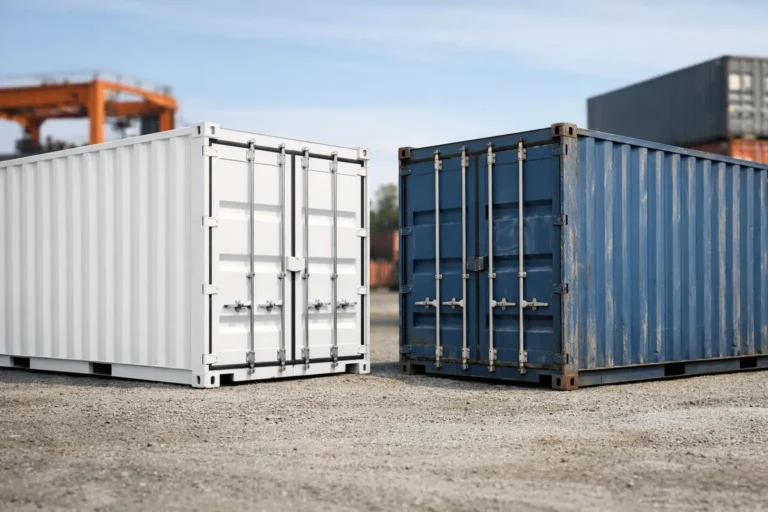
A one-trip container is generally manufactured overseas, loaded once and shipped to the United States. Because it has not spent years in marine service, it usually has fewer dents, cleaner paint, better-looking floors and newer door seals.
For construction firms, one-trip units make sense when the container will be visible to clients, used for a long-term yard, converted into an office or modified into a modular solution. They also work well when the stored contents are especially sensitive to dust, moisture or rough interior surfaces.
One-trip units are usually the premium option, but they can deliver long service life and a cleaner professional appearance.
Cargo Worthy and WWT used containers
Cargo Worthy containers are used units that remain structurally suitable for shipping cargo. They should have sound corner castings, working doors, intact floors and no holes that would compromise cargo transport. If your container may later be used for regional or international shipping, Cargo Worthy is often the safer grade.
Wind & Watertight containers, often shortened to WWT, are used containers that keep out rain and wind but are not certified for cargo transport. For jobsite storage, WWT can be an excellent value because many contractors do not need shipping certification. They need a strong steel unit that protects tools and materials.
When comparing used containers, contractors should ask for clear condition details, door operation notes, floor condition and whether the unit is WWT or Cargo Worthy. That transparency helps prevent buying a cheap unit that creates expensive problems later.

Security, durability and field efficiency
Security is one of the main reasons contractors choose steel storage over temporary sheds or off-site storage. A container made with Corten Steel panels, steel doors, locking rods and corner posts creates a much harder target than lightweight storage structures. Lock boxes and heavy-duty padlocks can further reduce exposure to opportunistic theft.
Durability also matters in the Southeast. Raleigh jobsites can see heavy rain, summer humidity, red clay mud, wind events and rapid schedule changes. A properly graded WWT or Cargo Worthy container helps keep materials closer to the crew while reducing weather exposure.
Field efficiency is just as important as theft prevention. If workers spend less time driving to off-site storage or searching through scattered material piles, the jobsite runs better. OSHA’s construction material storage standard, 29 CFR 1926.250, also reinforces the importance of stable, orderly storage. Containers support that goal when they are placed safely and loaded with clear aisles inside.
The best containers for construction improve security, but they also help superintendents control access, organize phases and reduce jobsite clutter.
Pro-Tip: prepare the site before delivery
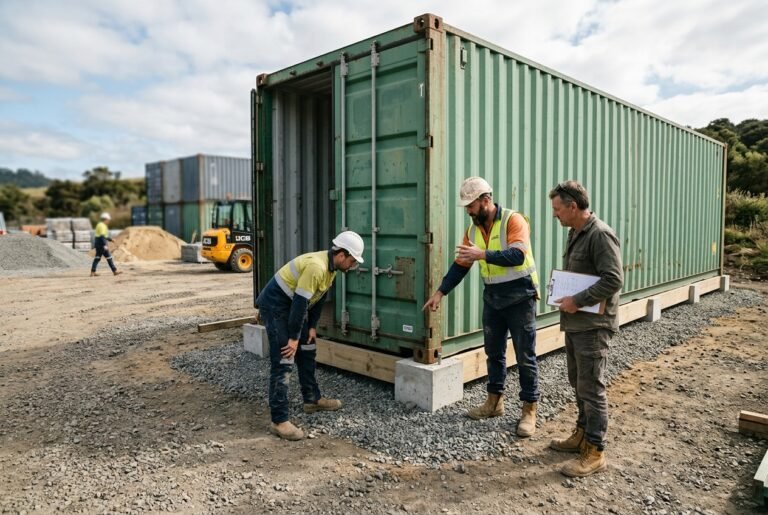
A container performs best when it is placed on stable, level ground. Before delivery, walk the site with the superintendent, confirm truck access and mark the exact door direction. The container should sit level enough for the doors to open and close without binding.
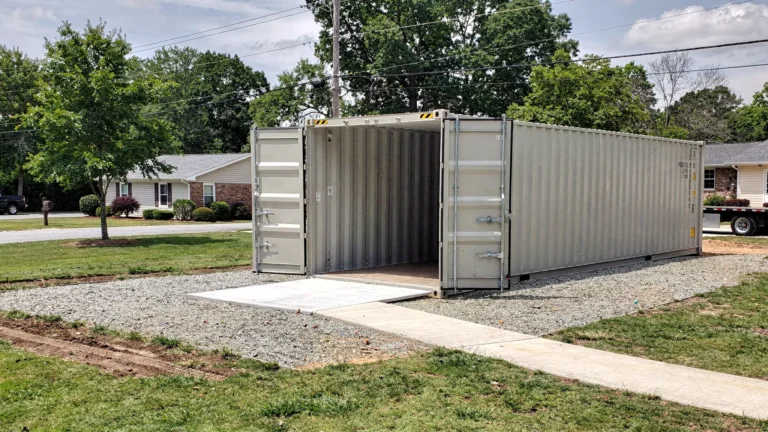
For most construction sites, a compacted gravel pad is a smart solution. Gravel improves drainage, reduces mud around the entry and helps prevent the container from settling unevenly. Concrete pads can also work well for long-term placements, equipment yards and office container setups.
Before delivery, confirm these basics:
- The path has enough width, turning radius and overhead clearance for the delivery truck.
- The drop spot is level, firm and clear of debris, stumps and large rocks.
- Doors have enough swing space for daily loading and unloading.
- The container will not block fire lanes, utilities, sidewalks or required access routes.
- Local permit, zoning, HOA or right-of-way rules have been checked when applicable.
In Raleigh, Cary, Durham and other North Carolina municipalities, rules can vary by property type and project duration. Always verify local requirements before placing long-term containers for construction, especially near public streets or residential areas.
Raleigh, Southeast and national delivery considerations
Construction container delivery is usually straightforward when the site is prepared, but the details matter. Tilt-bed delivery needs extra straight-line space because the truck lowers one end of the container and pulls forward as the unit slides into position. Tight sites may require additional planning, alternate placement or equipment coordination.
For Raleigh-area contractors, traffic patterns, narrow subdivision roads, tree coverage and active jobsite congestion can affect timing. In rural parts of North Carolina and the broader Southeast, ground conditions may be the bigger challenge, especially after heavy rain. A loaded delivery truck needs firm access, not just a spot that looks dry on the surface.
Lease Lane Containers LLC is headquartered in Raleigh and supports customers across North Carolina, the Southeast and the wider United States with new one-trip units, used containers, trailers and custom modular solutions. That local knowledge matters when you are balancing delivery logistics, site prep and container selection under real construction deadlines.
If a unit will move between projects, discuss whether a Cargo Worthy container is the better long-term fit. If it will stay on one jobsite for storage only, WWT may be the more economical option.
2026 buying checklist for contractors
Before choosing a container, define what success looks like for the project. A low-cost container is not a bargain if it is too small, hard to access or in the wrong grade. A premium one-trip unit may be worth it if it will later become a permanent storage asset, mobile office or modified structure.
Use this checklist to narrow the decision:
- Choose 20ft for tight lots, small crews, remodels and tool-focused storage.
- Choose 40ft for large material staging, multi-trade projects and longer schedules.
- Choose High Cube when interior height, shelving or future modifications matter.
- Choose one-trip for clean appearance, long service life and modification projects.
- Choose Cargo Worthy if the unit may be shipped with cargo later.
- Choose WWT for economical ground-level storage that needs to stay dry.
- Choose a reefer only when temperature control justifies power and setup requirements.
The best containers for construction in 2026 are selected around workflow, not just dimensions. Think about what goes inside, who needs access, how often the container will move and what the site will look like after two weeks of rain and subcontractor traffic.
Frequently Asked Questions
What size container is best for a construction site? A 20ft container is usually best for tight sites, remodels and tool storage. A 40ft container is better for larger projects, bulk materials and multi-trade staging. High Cube containers are useful when you need extra interior height for shelving, equipment or modifications.
Are used containers good enough for construction storage? Yes, used containers are often a smart choice for jobsite storage when they are properly graded. WWT units are cost-effective for dry storage, while Cargo Worthy units are better if the container may later be used for cargo transport.
What is the difference between one-trip, Cargo Worthy and WWT? One-trip containers are newer units that have typically made one ocean trip. Cargo Worthy containers are used units inspected as suitable for shipping cargo. WWT containers are Wind & Watertight, meaning they keep out rain and wind but are not certified for cargo shipping.
Do I need a permit for containers for construction in Raleigh? Permit requirements depend on location, property type, placement duration and whether the container affects access, zoning or public right-of-way. Contractors should check with the City of Raleigh, the relevant municipality or county office before long-term placement.
How should a construction container be placed on site? Place the container on firm, level ground with drainage, clear truck access and enough room for the doors to swing open. Compacted gravel is often a practical base for temporary jobsite storage.
Talk with Lease Lane Containers
If you are comparing containers for a Raleigh jobsite, a North Carolina development or a project anywhere in the United States, Lease Lane Containers LLC can help you choose the right size, grade and delivery plan. Contact the sales team at sales@leaselanecontainers.com for clear pricing and availability, or visit the Raleigh office to discuss your project with a local container specialist.