Cargo Storage Containers That Fit Jobsites, Farms, and Retail
Cargo storage containers work best when they fit how you load, retrieve and protect inventory, not simply how much you can squeeze inside. A contractor needs fast access to tools. A farm may need dry space for irrigation parts and packaged supplies. A retailer needs organized overflow stock that stays suitable for sale.
For buyers in Raleigh, North Carolina and across the USA, the practical choice comes down to five factors: usable space, access, container condition, environmental protection and delivery feasibility. Start with the daily workflow, then choose the size and grade. That approach helps prevent buying a spacious unit that becomes difficult to use.
Start With What Moves In and Out
Jobsites: Put Frequently Used Equipment Within Reach
On construction sites, retrieval time matters. If crews must unload several items to reach a saw or fastening system, the storage layout is working against them.
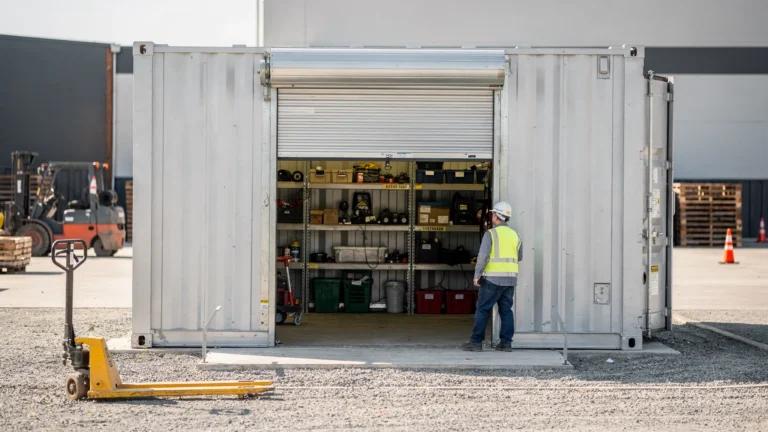
Separate daily-use equipment from reserve materials. Position frequently used tools near the doors, keep a clear aisle and place heavier items low. Long stock needs its own loading path rather than sharing space with loose equipment.
Account for changing site conditions, too. A container delivered beside an open work area can become inaccessible after fencing, scaffolding or landscaping goes in. Choose a location that preserves truck access if the unit will move between projects.
For smaller projects, 20ft containers can support practical home and jobsite storage layouts without requiring the footprint of a larger unit. Confirm that your longest materials will fit through the actual door opening before ordering.
Farms: Separate Dry Supplies From Moisture Sources
On working farms, cargo storage containers should be organized around seasonal demand and the condition of the stored goods. Irrigation fittings, fencing hardware and packaged supplies have different needs from damp equipment or freshly harvested products.
Avoid placing wet machinery beside moisture-sensitive inventory. A closed steel enclosure can trap moisture brought in on equipment, even when the roof and doors keep rain out.
Store bagged goods off the floor and check their storage instructions. Feed, seed and food-related products may require temperature control, pest-management measures or storage conditions that a basic dry container cannot provide. Agricultural chemicals need a separate review of label requirements, ventilation and applicable regulations.
For larger inventories, compare 40ft containers and other farm storage options against your loading method and seasonal peak stock, not just your current inventory.
Retail: Protect Saleable Condition and Stock Rotation
Retail overflow storage succeeds when staff can find the correct item without damaging packaging or mixing old stock with new arrivals. Label shelf locations and reserve a clear receiving area near the doors.
Bulky merchandise also changes the calculation. For example, a retailer carrying baby products such as strollers and carriers must account for carton dimensions, handling space and manufacturer-specified storage conditions. Filling every available inch can make inspection and retrieval impractical.
Keep returns, incoming stock and ready-to-sell merchandise in separate locations. Products with batteries, electronics or temperature-sensitive components need particular attention to their storage requirements.
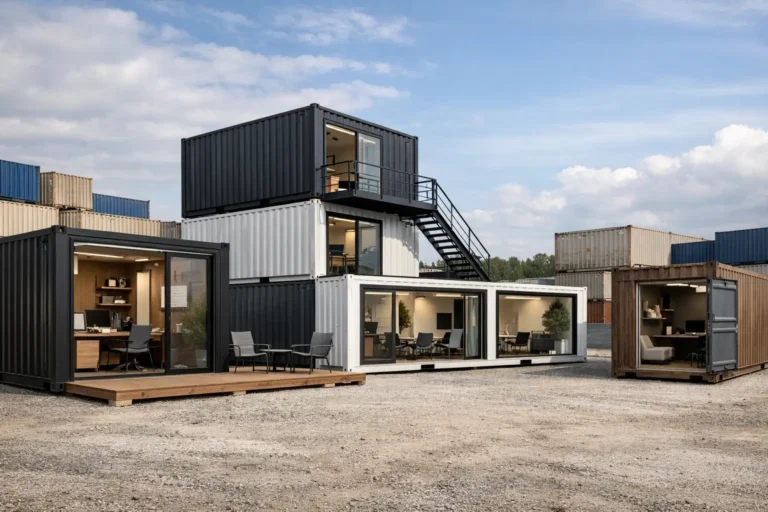
Using cargo storage containers for back-of-house inventory is also different from operating a customer-facing container shop. Public occupancy can trigger additional zoning, accessibility, fire-safety and building requirements.
Match the Footprint to a Usable Layout
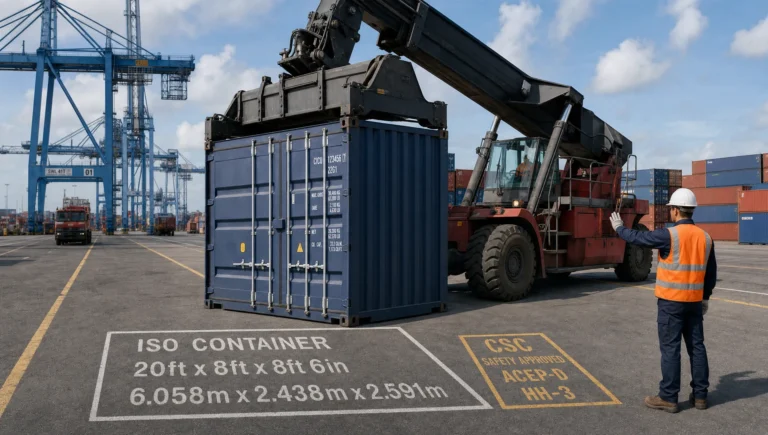
Standard dry containers commonly come in 20-foot and 40-foot lengths. A High Cube adds height, not width. These nominal exterior dimensions provide a starting point for site planning:
| Container format | Nominal exterior dimensions | Basic footprint | Best reason to consider it |
|---|---|---|---|
| 20ft Standard | 20 ft long × 8 ft wide × 8 ft 6 in high | 160 sq ft | A smaller footprint and shorter retrieval distance |
| 40ft Standard | 40 ft long × 8 ft wide × 8 ft 6 in high | 320 sq ft | More room for inventory, long materials or separate storage zones |
| 40ft High Cube | 40 ft long × 8 ft wide × 9 ft 6 in high | 320 sq ft | Additional vertical clearance for suitable shelving or taller items |
Exterior footprint is not usable interior floor area. Walls, doors and structural members reduce internal dimensions. Door openings are also smaller than the exterior profile, so request measurements for the actual unit.
When comparing cargo storage containers, sketch the layout with an aisle, door clearance and shelving included. For palletized goods, check pallet dimensions and handling equipment rather than relying on square footage alone.
Shelving, concentrated loads and forklift operation also require attention to floor condition and load limits. Do not assume a container's stated payload capacity approves every possible loading arrangement.
Understand the Grades of Cargo Storage Containers
One-Trip, Cargo Worthy and Wind & Watertight describe different aspects of condition. They should not be treated as interchangeable guarantees.
One-Trip: Limited Use, Not Necessarily Perfect Condition
A One-Trip container typically enters the market after an initial cargo journey from its place of manufacture. It generally offers less wear than a heavily used unit, making it attractive for visible commercial sites or long-term ownership.
Transport and handling can still leave marks. Inspect the doors, seals, floor and exterior rather than assuming the label means an untouched finish. One-Trip describes use history; it does not promise climate control or suitability for occupied space.
Cargo Worthy: Relevant to Transport Suitability
Cargo Worthy, often abbreviated CW, generally indicates a container assessed as suitable for cargo transport in its inspected condition. That makes it relevant when a buyer needs shipping capability as well as storage.
For international transport, confirm the required inspection documentation, carrier acceptance and valid CSC safety approval status. The International Convention for Safe Containers establishes the safety framework for containers used in international transport. A seller's grade label alone is not a complete shipping authorization.
Wind & Watertight: A Storage-Focused Condition
Wind & Watertight, or WWT, generally describes a unit that keeps wind and rain out in its assessed condition. It does not establish cargo-transport certification, insulation or control of interior humidity.
WWT can be a practical choice for stationary storage if its doors, seals and floor meet your needs. For cargo storage containers intended to hold valuable inventory, ask what inspection supports the grade and whether photos show the actual unit.
When comparing used containers for construction storage, prioritize documented condition over a low advertised unit price.
Plan for Raleigh Heat, Humidity and Heavy Rain
Many shipping container bodies use weathering steel commonly called Corten Steel. Its protective surface patina can improve resistance to atmospheric corrosion under suitable conditions, but it does not make a container rustproof. Persistent dampness, trapped debris and damaged coatings still need attention.
Standard shipping containers follow applicable ISO standards for dimensions and other transport-related requirements. Those standards do not turn a dry freight container into an insulated warehouse or an approved building.
In Raleigh and the wider Southeast, hot weather and humid air make moisture planning especially relevant. Roof leaks are only one concern. Condensation can form when moist air meets cooler interior surfaces, so watertight cargo storage containers can still experience moisture inside.
Passive vents may help air exchange, but they do not guarantee humidity control. Depending on the inventory, you may need professionally designed insulation, dehumidification or conditioned storage. A refrigerated container, or reefer, is a different equipment category that requires checks of its machinery, power supply and operating condition.

Pro-Tip: Prepare the Drop Spot Before Delivery
A level, well-drained site helps doors operate properly and reduces avoidable placement problems. Uneven support can twist the container enough to make opening and closing difficult.
A compacted gravel pad may be appropriate for some locations, but the base and support arrangement must suit the soil, drainage, intended loading and duration of use. Permanent installations may require engineered foundations. Do not assume improvised blocks are adequate for every site.
Before delivery, confirm these details with the supplier and local authority:
- Ground and drainage: Check bearing conditions, soft areas and where runoff will go after heavy rain.
- Support and leveling: Agree on the foundation or pad arrangement and who will prepare it.
- Truck access: Review gate width, turns, overhead obstructions and the space needed for the delivery method.
- Door orientation: Leave room for door swing, loading equipment and a safe walking route.
- Local approvals: Verify zoning, setbacks, permits and any property restrictions before scheduling placement.
Requirements can differ between the City of Raleigh, unincorporated Wake County and neighboring North Carolina jurisdictions. Agricultural use, commercial storage and occupied retail space may also be treated differently.
For cargo storage containers delivered elsewhere in the USA, apply the same process with the relevant local authority. The container's footprint is only part of the required access area, so obtain delivery-specific guidance rather than estimating clearance from container length alone.
Compare the Delivered Solution, Not Just the Steel Box
A useful quote connects the container to your actual operating needs. Ask for the size and grade, actual-unit photos where available, delivery method and placement expectations. Clarify charges related to distance, access difficulties or an unsuccessful delivery attempt.
Security deserves a separate discussion. Steel walls and locking doors provide a substantial enclosure, but no unit is theft-proof. Review lock protection, site lighting, access control and insurance requirements for the goods inside.
If you plan to add personnel doors, windows or large openings, have the structural implications reviewed. Insulation, electrical work and customer occupancy require a different planning process from basic storage. Do not assume a storage container is immediately ready to become an office or shop.
Lease Lane Containers LLC, headquartered in Raleigh, offers new One-Trip and used units, including Standard, High Cube and refrigerated options, with nationwide delivery. To compare cargo storage containers effectively, give the team your inventory dimensions, proposed location and loading routine so the discussion starts with fit rather than size alone.
Frequently Asked Questions
Is a 20ft or 40ft container better for storage? A 20ft unit suits smaller footprints and shorter retrieval distances. A 40ft unit provides more space for long materials or inventory zones. Choose from a layout that includes aisles and handling room, then verify delivery access.
Does WWT mean the container will stay dry inside? WWT describes resistance to outside wind and water in the assessed condition. It does not prevent condensation, moisture introduced with stored items or future deterioration of seals and coatings.
Do I need a Cargo Worthy container for stationary storage? Not necessarily. A sound WWT unit may meet stationary storage needs. Cargo Worthy becomes more relevant when transport suitability matters, although shipping documentation and acceptance must still be confirmed.
Can I use a container as a retail pop-up? Potentially, but public-facing use requires more than stock storage. Check zoning, permits, accessibility, emergency exits and building requirements before purchasing or modifying a unit.
Get a Container Matched to Your Property
Choose cargo storage containers around your inventory, daily access and delivery site. Contact the Lease Lane Containers LLC sales team at sales@leaselanecontainers.com to discuss sizes, grades and nationwide delivery, or arrange a visit to the Raleigh office to review your project.