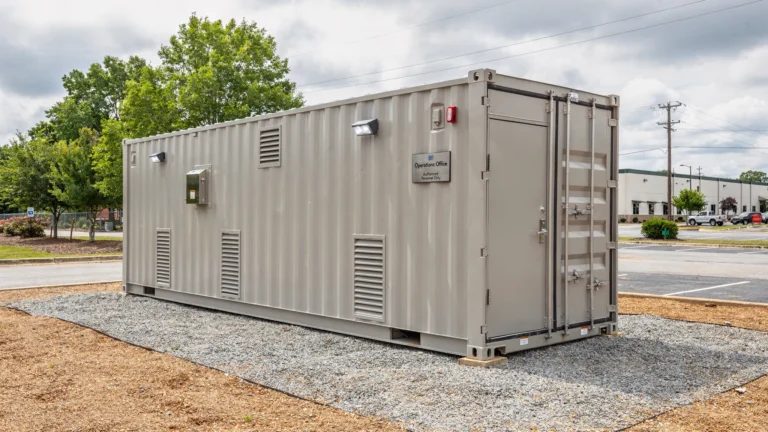
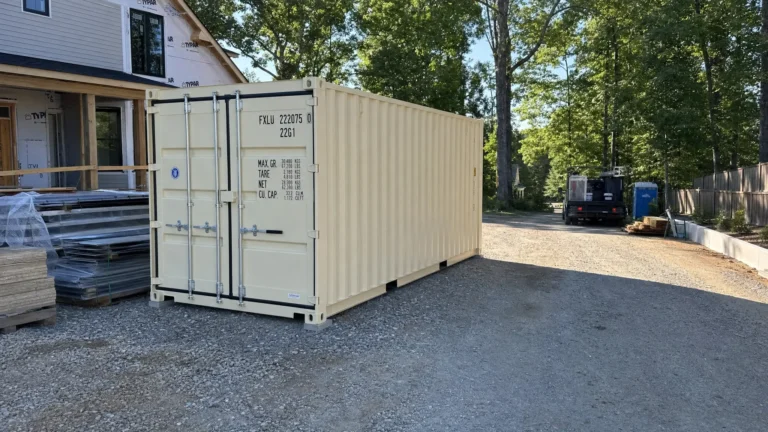
Construction Company Container Storage Example
A construction company container storage example is most useful when it shows the operational details that determine whether a container helps the job site or creates another problem to manage. The box itself is straightforward. The decisions around size, grade, placement, delivery access, and security are where contractors protect their schedule and budget.
Consider a general contractor starting a six-month commercial renovation. The crew needs a secure place for power tools, fastening systems, copper fittings, PPE, temporary electrical supplies, and small equipment that cannot be left exposed after hours. Materials arrive in phases, space is limited, and the superintendent needs inventory close to the work area without blocking deliveries.
A shipping container can solve that problem quickly, provided it is specified for the actual job rather than ordered as a generic steel box.
Construction Company Container Storage Example: A Six-Month Renovation
In this example, the contractor selects one 40-foot standard-height used shipping container, approximately 40 feet long, 8 feet wide, and 8 feet 6 inches high. It provides roughly 320 square feet of ground-level storage, enough room to separate high-value tools from consumable materials while keeping a clear center aisle.
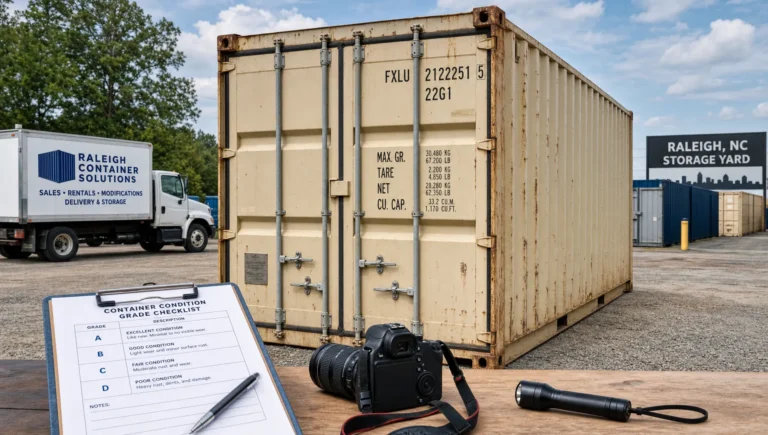
The company chooses a Wind & Watertight, or WWT, container. This grade means the unit is structurally intact and designed to keep out wind and water under normal conditions. A used container may have cosmetic dents, surface rust, patches, and prior shipping markings. For an active construction site, those appearance issues are usually a reasonable trade-off for a lower purchase price.
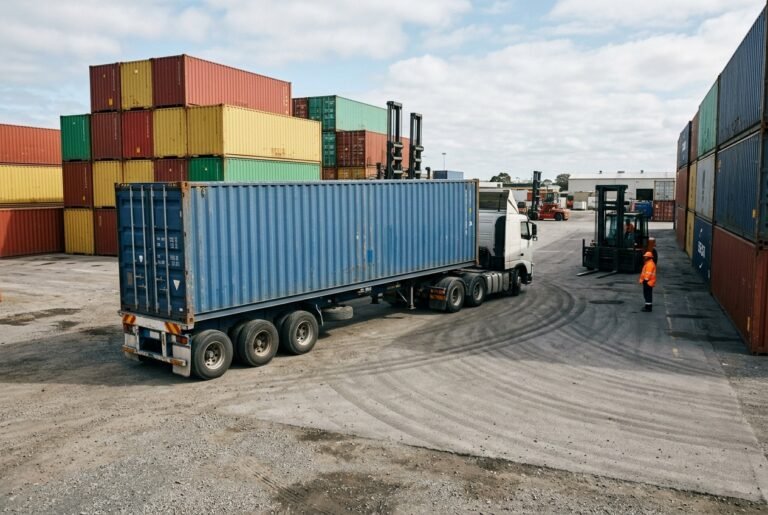
If the container will be moved later by rail or ocean freight, Cargo Worthy certification may be the better requirement. Cargo Worthy containers meet a stricter standard for intermodal transport. For stationary job-site storage, however, a verified WWT unit is commonly the practical choice. Paying for a higher grade only makes sense when the use case requires it.
The superintendent places the container along the rear edge of the paved lot, with the cargo doors facing the building entrance but outside the path of concrete trucks, dumpsters, and material forklifts. That orientation matters. Opening doors toward a narrow drive lane can force crews to work around them or leave them shut when access is needed most.
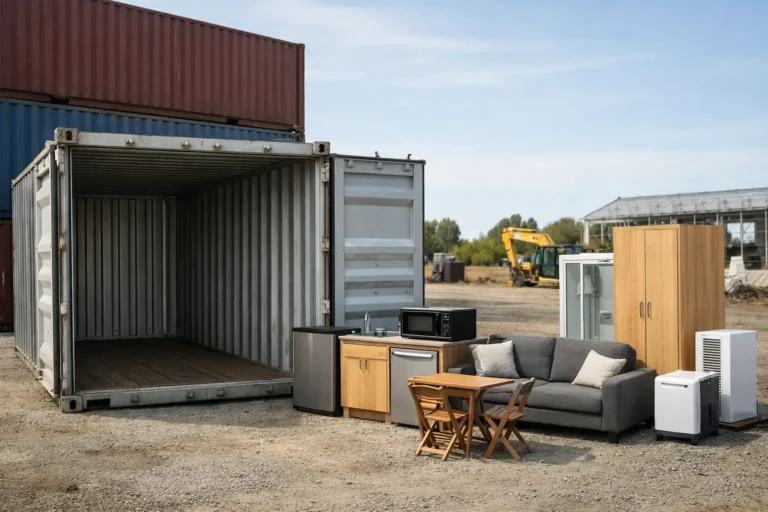
Inside, the contractor uses one side for locked tool chests and battery charging stations, keeping chargers elevated and protected from moisture. The other side holds boxed hardware, conduit, fittings, and scheduled materials. A center aisle is kept open from doors to the back wall so two workers can load or retrieve supplies without unloading half the container first.
This is not a complicated setup, but it prevents a common issue: treating container storage as a place to pile materials until the first urgent item disappears under three weeks of deliveries.
Selecting the Right Size Before Delivery
A 20-foot container is often enough for a smaller crew, a residential build, or a site that needs locked storage for tools and supplies but does not hold palletized inventory. Its compact footprint can also be easier to place where access is tight.
A 40-foot container works better when the contractor wants separate zones for equipment and materials, expects recurring deliveries, or needs storage across several project phases. It is also more efficient than buying two smaller units when the site has adequate space and delivery access.
High-cube containers add roughly one foot of interior height. That additional clearance can be valuable for tall shelving, longer tools, or bulky mechanical components. It does not automatically make a high cube the better choice. A standard-height unit is often easier to fit beneath overhead obstructions and can be more readily available in some markets.
Before choosing size, measure the proposed placement area and the full delivery route. Account for the container footprint, door swing, working clearance, and the truck’s ability to approach and depart. A container can fit the site on paper while still being impossible to deliver if the entrance has a sharp turn, low utility line, weak shoulder, or blocked staging area.
Site Preparation Is Part of the Storage Plan
Shipping containers are built from Corten steel and designed to carry heavy loads at their corner castings. They still need stable, reasonably level support. Setting a container directly on soft soil can cause settlement, door alignment problems, poor drainage, and difficult removal later.
For the renovation example, the contractor uses compacted gravel with concrete blocks or railroad ties positioned under the four corner castings. The pad is graded slightly to move water away from the doors. The container is kept clear of standing water, which reduces corrosion risk and prevents crews from tracking mud into stored materials.
The right foundation depends on duration, soil conditions, local requirements, and whether the container will stay after the project ends. A temporary gravel base may be appropriate for a short-term site. A long-term workshop or storage installation may justify a more engineered foundation. The key is to avoid assuming that “level enough” is good enough when doors and drainage are involved.
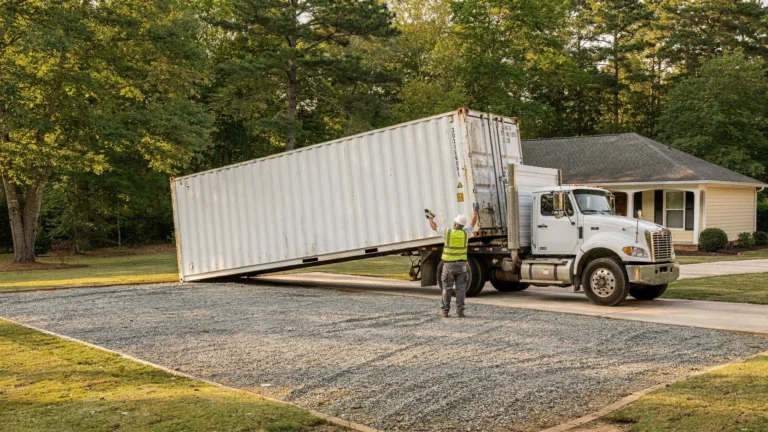
Delivery method also affects site preparation. A tilt-bed truck needs room to raise the container and slide it off the trailer. Ground-level delivery can provide more control where overhead clearance allows, but the truck still needs a clear, firm approach. The customer should identify low branches, wires, gates, slopes, and parked equipment before the delivery date, not while the truck is at the entrance.
Security Must Cover the Doors and the Routine
Container doors are strong, but a basic padlock alone is not always adequate for high-value tools. In this example, the contractor adds a lockbox that shields the padlock from bolt cutters, along with interior lighting and a clear check-in process for shared equipment.
The better security improvement is often procedural. The foreman assigns responsibility for locking the container at the end of each shift, keeps a simple inventory of serialized tools, and does not allow expensive equipment to remain in the doorway overnight. If a crew frequently leaves doors open during the day, the container should be located where it can be observed without creating a traffic conflict.
For sites with higher theft exposure, the contractor may add a motion light, camera coverage, security bars, or a second locked compartment inside the container. These measures should match the value of the stored inventory and the project’s risk profile. A container is an effective physical barrier, not a substitute for a job-site security plan.
Plan for Ventilation and Material Compatibility
A steel container is weather-resistant, but it is not climate controlled. Daily temperature swings can create condensation inside, particularly in humid regions or when wet materials are stored after rain. Cardboard packaging, paper products, electronics, and certain adhesives deserve additional attention.
The contractor in this example installs passive vents and stores sensitive supplies on pallets rather than directly on the container floor. Wet lumber, fuel, and incompatible chemicals are kept out of the primary tool-storage area. Flammable products and regulated materials must be handled according to manufacturer instructions, fire codes, and site safety requirements.
Refrigerated containers can serve specialized temperature-controlled storage needs, but they require a compatible power supply and a clear understanding of operating costs. They are not the default answer for ordinary construction materials. For most crews, a dry WWT container with sensible inventory practices delivers the better return.
What Makes This Example Work
The value is not just that the contractor has 320 square feet of lockable storage. The container is matched to the project duration, material volume, delivery conditions, and security needs. The company accepts normal cosmetic wear in exchange for a practical used-unit price, while still requiring verified weather protection and functional doors.
That distinction prevents expensive surprises. A contractor who needs a clean, client-facing unit near a finished retail space may prefer a refurbished container. A contractor storing demolition tools behind a fenced site may prioritize grade, door function, and delivery timing over paint condition. Both decisions can be correct when the requirements are clear.
Before ordering, walk the delivery route, mark the placement area, decide which direction the doors should face, and identify what will actually be stored. A properly selected container becomes part of the job-site workflow from day one, rather than an obstacle crews learn to work around.