Construction Storage Containers for Sale Guide
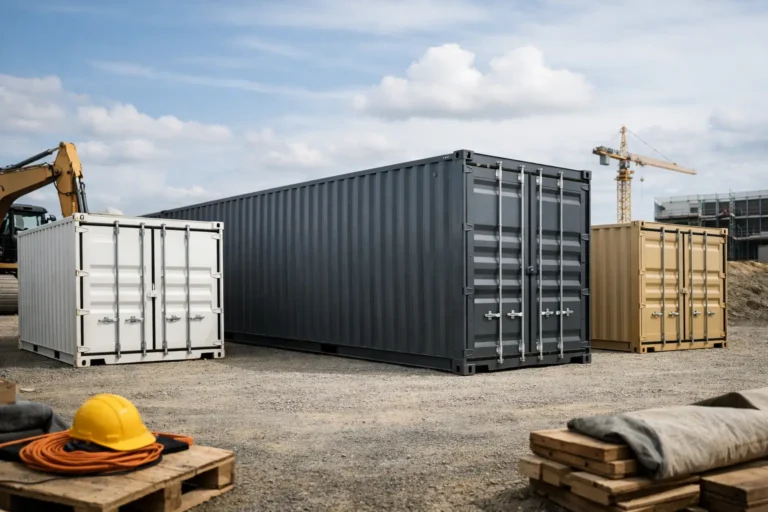
If you are comparing construction storage containers for sale, the best choice is not always the newest container or the lowest advertised price. Contractors need a unit that fits the site, protects tools and materials, arrives when promised and matches the intended use for months or years of work.
For general contractors, home builders, remodelers and developers in Raleigh, North Carolina and across the Southeast, a purchased shipping container can become part of the jobsite infrastructure. It can reduce theft risk, keep crews from wasting time driving to off-site storage and give project managers a predictable place for tools, fasteners, doors, fixtures, safety gear and weather-sensitive materials.
This guide focuses on the buying decision. You will learn how to compare container sizes, understand grades, inspect condition, plan delivery and avoid costly site-prep mistakes before you commit to a unit.
When buying makes more sense than renting
Renting can work for short projects with a fixed end date. Buying usually makes more sense when you run multiple jobs per year, expect long-term storage needs or want control over modifications such as shelving, vents, lighting, roll-up doors or a personnel door.
Ownership also helps contractors standardize their operations. A home builder in the Raleigh area, for example, may use the same 20ft or 40ft container across several subdivisions. Instead of renegotiating rentals each time, the company can move its own container from site to site and keep a consistent setup inside.
A purchased unit can also be useful beyond construction. Small businesses use containers for overflow inventory. Farms use them for feed, equipment and seasonal supplies. Developers use them for temporary staging or modular planning. Logistics managers may need Cargo Worthy units for transport rather than simple ground storage.
The key is to buy for the job you actually need the container to perform. A unit used for tool storage on a Wake County construction site does not need the same certification profile as a container being loaded for international freight.
Container grades explained: One-Trip, Cargo Worthy and WWT
Container grade is the first thing to clarify before comparing prices. Two containers may both be 40ft units, but their condition and intended use can be very different.
Most ISO shipping containers are built with a steel frame, corner castings and standardized dimensions so they can be moved by cranes, chassis, ships and trucks. The exterior panels are commonly made from Corten Steel, a weathering steel designed to resist harsh outdoor conditions. Corten Steel is durable, but it is not magic. Door seals, flooring, roof condition and previous use still matter.
| Grade | Best for | What to expect | Construction storage fit |
|---|---|---|---|
| One-Trip | Long-term ownership, customer-facing sites, offices and cleaner storage | Newer container that has typically made one cargo trip from the factory, with minimal wear | Excellent when appearance and longer service life matter |
| Cargo Worthy | Shipping, transport and demanding storage applications | Used container inspected for structural integrity and cargo use when documentation is current | Strong choice for contractors who may move or load the unit frequently |
| Wind & Watertight (WWT) | Ground-level storage for tools, materials and equipment | Used container that should keep out rain and wind, with dents, patches or surface rust possible | Often the best value for jobsite storage |
| As-Is | Salvage, projects with repair capability or non-critical use | Condition varies widely and may include leaks, floor damage or door problems | Usually risky for active construction storage unless inspected carefully |
For many construction buyers, WWT offers the best balance of cost and function. It is not certified for ocean freight, but it should keep your stored materials dry when doors and seals are in working condition. Cargo Worthy is worth considering if the container will be transported loaded, stacked or used in a logistics setting. One-Trip containers cost more but provide cleaner cosmetics and a longer expected service life, which matters for mobile offices, retail-facing jobsites or developers who care about presentation.
A reputable seller should clearly state the grade, explain what it means and avoid vague descriptions such as good condition without documentation. Lease Lane Containers LLC prioritizes transparent grading for One-Trip, Cargo Worthy and WWT units, which helps buyers compare options with fewer surprises.
Choosing the right size for a construction site
The two most common construction storage sizes are 20ft and 40ft. Both are standard ISO container lengths, but they solve different problems on a site.
A 20ft container is easier to place on tight lots, residential remodels and urban infill projects. It provides secure storage without taking over the site. A 40ft container gives you more volume and works well for larger commercial builds, subdivisions, framing crews or projects that need to store bulky materials.
High Cube containers add another layer of capacity. A standard container is typically 8 ft 6 in tall on the exterior, while a High Cube is typically 9 ft 6 in tall. That extra foot is useful for tall shelving, equipment, palletized inventory or workspace conversions.
| Container size | Typical construction use | Placement consideration |
|---|---|---|
| 20ft Standard | Tools, fasteners, small equipment, remodel projects and tight residential sites | Easier to deliver and place where access is limited |
| 40ft Standard | Lumber, fixtures, doors, pipe, larger tool inventories and multi-crew projects | Needs more straight-line delivery room and a larger pad |
| 40ft High Cube | Tall materials, racking, equipment storage and modified workspaces | Extra height improves interior usability, but overhead clearance matters |
| 20ft Reefer or 40ft Reefer | Temperature-sensitive materials, cold chain work and specialty storage | Requires power planning and more technical setup |
If you are still deciding between sizes, Lease Lane Containers has a deeper breakdown of 20ft and 40ft construction container options for different jobsite layouts and storage needs.
What to inspect before you buy
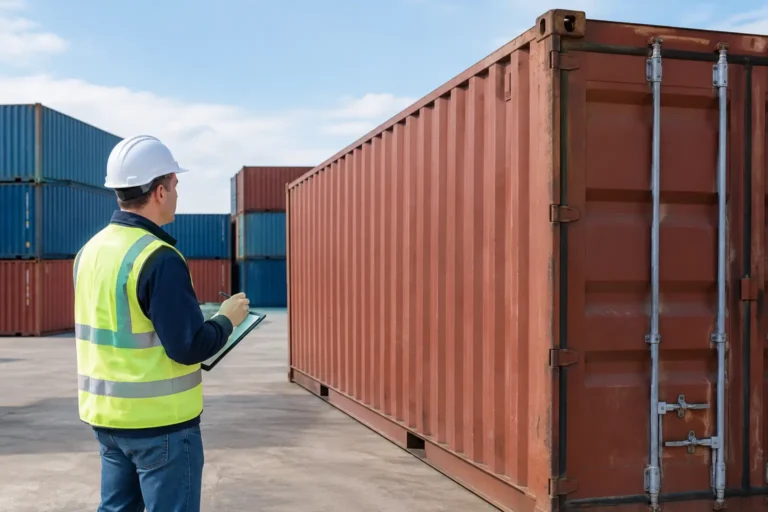
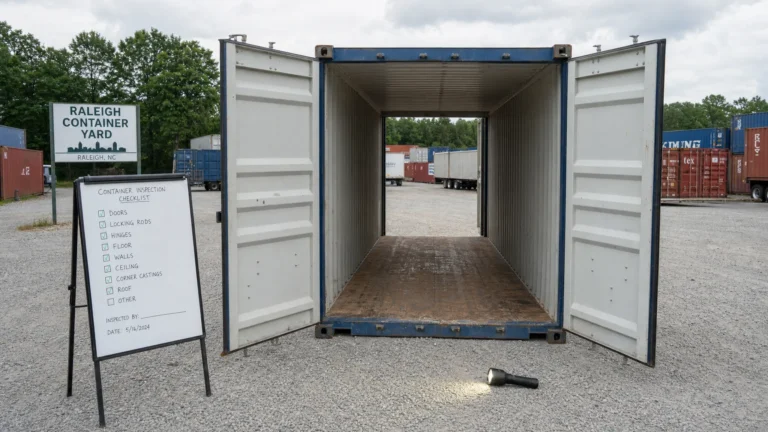
A construction container does not need to look perfect, but it does need to function correctly. Contractors should focus on water resistance, door operation, structural condition, flooring and security readiness.
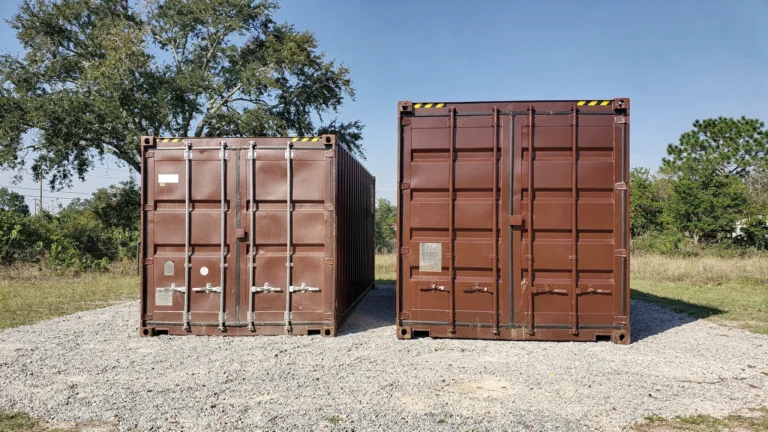
Start with the roof. Look for major dents that hold water, poor patches or visible pinholes. Inside the container, close the doors during daylight and look for light coming through the roof, sidewalls or door gaskets. Small surface rust is common on used units, but active holes or soft spots are a different issue.
The doors should open and close without a forklift, pry bar or excessive force. Check locking rods, cams, keepers and rubber seals. On a busy jobsite, a door that fights the crew every morning becomes a productivity problem.
The floor also deserves attention. Most dry containers use heavy plywood flooring over steel crossmembers. Look for soft areas, delamination, strong chemical odors or evidence of spills. If you are storing finish materials, cabinetry or flooring products, a clean interior matters more than it would for shovels and formwork.
For a deeper inspection process, especially if you are comparing used units, review the used storage containers for sale checklist before making a final decision.
Delivery planning for Raleigh, the Southeast and nationwide projects
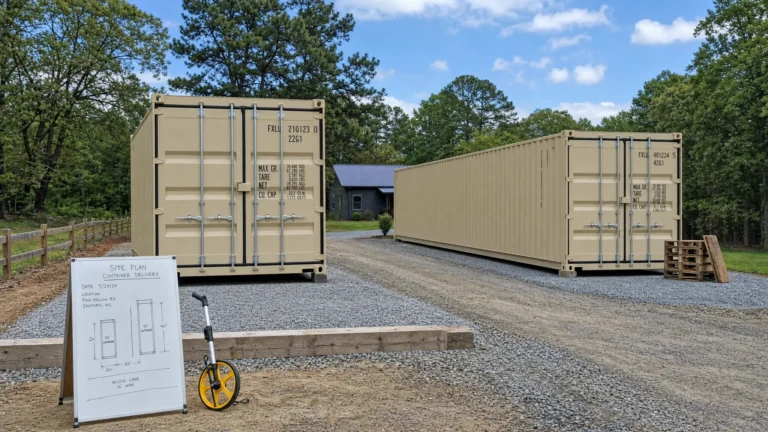
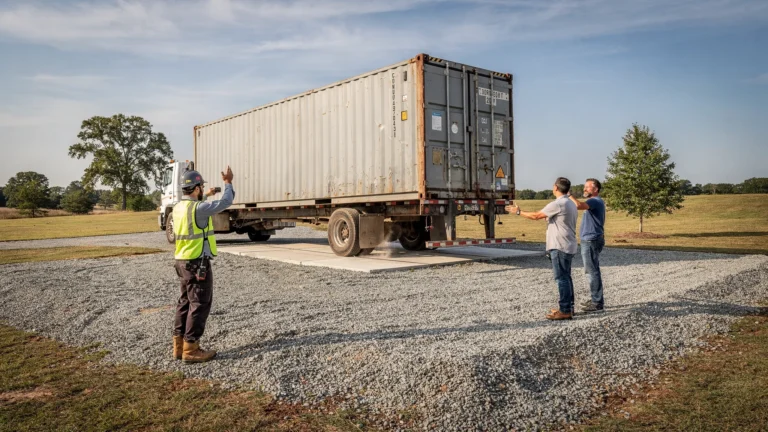
A good container purchase can still go badly if the site is not ready for delivery. Most ground-level deliveries use a tilt-bed or rollback-style truck. The driver backs into position, tilts the trailer and slides the container into place. That method is efficient, but it requires adequate approach space.
As a practical rule, a 20ft container usually needs far less straight-line clearance than a 40ft container. A 40ft delivery can require a long, firm approach area with room for the truck and trailer to pull forward as the unit comes off the bed. Exact requirements vary by truck, property access and container size, so confirm clearance with the sales and dispatch team before delivery day.
Overhead clearance matters too. Low branches, utility lines, signs, building overhangs and temporary scaffolding can block a safe drop. Access width is another common issue on residential construction sites in Raleigh neighborhoods, where driveways, curbs and parked vehicles may leave less room than expected.
For specialized projects, treat transportation planning the same way you treat storage planning. A remote resort renovation, municipal event build or island project may need compact site mobility in addition to container staging; services such as electric cart rentals in Terre-de-Haut show how the right local equipment can help crews and light materials move efficiently where standard trucks are impractical.
For contractors using containers primarily for machines, attachments or high-value tools, Lease Lane Containers also covers practical considerations for shipping container equipment storage, including security and access planning.
Pro-Tip: prepare the pad before the truck arrives
A container should sit level and fully supported. Poor placement can cause the frame to twist, which may make doors hard to open and can speed up wear around seals and hinges.
For most construction sites, a compacted gravel pad is a strong choice. Crushed stone improves drainage, reduces mud around the doors and helps keep the container from settling unevenly. Concrete pads also work well for long-term placement, especially for commercial yards or repeat-use storage locations.
Avoid placing a container directly in a low area where water collects. Even Corten Steel performs best when the site drains properly and air can circulate around the base. If the unit will sit for a long time, consider railroad ties, concrete blocks or other stable supports under the main load points, but do not create an unstable raised setup that shifts under weight.
Permits are location-specific. In Raleigh, Wake County and surrounding North Carolina municipalities, temporary construction storage may be treated differently from permanent placement on residential, commercial or agricultural property. Check local zoning, HOA rules if applicable and jobsite permit conditions before scheduling delivery. If the container will sit near a public right of way, sidewalk or street, ask the local authority before assuming it is allowed.

Security features contractors should consider
A shipping container is naturally stronger than a wood shed or light-duty trailer, but jobsite security depends on more than steel walls. The best setup combines container condition, hardware, lighting and smart placement.
A lockbox is one of the most common upgrades. It shields the padlock from bolt cutters and casual tampering. Many contractors pair a lockbox with a puck lock, then position the doors so they are visible from the site office, street lighting or security cameras.
Ventilation may also matter. If you store paint, adhesives, fuel-powered tools or damp materials, vents can help reduce condensation and odor buildup. In the humid Southeast, condensation control is especially important for long-term storage. A container can be weather resistant and still need airflow if the contents introduce moisture.
Shelving and racking can improve productivity. Crews lose time when every box, saw and fitting is stacked on the floor. Even basic shelving can separate electrical, plumbing, framing and safety supplies by trade. For larger projects, a 40ft High Cube container with organized racking can function like a small warehouse at ground level.
How to compare delivered quotes
The lowest container price online may not be the lowest real cost. Always compare delivered pricing, not just the unit price. Delivery distance, truck type, site access and timing can all affect the final number.
A clear quote should identify the size, grade, delivery location, delivery method and any known site requirements. If you are buying a used unit, ask whether photos represent the actual container or a similar grade. For construction buyers, actual-unit photos can help confirm door condition, roof condition, flooring and exterior appearance.
Payment terms and documentation should also be clear. The quote should show what you are buying and who is responsible for delivery access. If a driver cannot safely place the container because the site is blocked, muddy or not level, you may face delays or additional trip charges. That is preventable with proper planning.
A practical buyer checklist
Use this checklist before approving a purchase order or paying a deposit:
- Confirm whether the container is One-Trip, Cargo Worthy, WWT or As-Is.
- Match the size to the site, not just the amount of material you hope to store.
- Ask about High Cube availability if you need racking, tall equipment or extra interior clearance.
- Review roof, door, seal and floor condition for used containers.
- Confirm delivery access, overhead clearance and the exact drop orientation.
- Prepare a level gravel or concrete pad before the truck arrives.
- Check Raleigh, municipal or jobsite permit requirements when placement is long-term or visible from public areas.
- Compare delivered quotes rather than unit-only pricing.
This process is especially valuable for contractors buying multiple units across North Carolina or the wider Southeast. Standardizing your buying criteria makes it easier to scale from one project to several without getting inconsistent containers on each site.
Frequently Asked Questions
What is the best grade for construction storage containers for sale? For most jobsites, a Wind & Watertight container is a strong value because it is designed to keep out wind and rain for ground storage. Choose Cargo Worthy if the container may be transported loaded or used for shipping. Choose One-Trip when appearance, cleanliness and longer service life are top priorities.
Should I buy a 20ft or 40ft container for a construction site? A 20ft container is better for tight residential lots, remodels and smaller tool inventories. A 40ft container is better for larger projects, bulky materials and multi-trade storage. If you need vertical racking or extra clearance, consider a High Cube.
Are shipping containers weatherproof? A quality WWT, Cargo Worthy or One-Trip container should resist normal rain and wind when doors, seals, roof and panels are in good condition. Weather resistance depends on condition, so used units should be inspected for leaks, damaged gaskets and roof issues.
Do I need a permit for a storage container in Raleigh? Permit requirements depend on location, property type, duration and how the container is used. Construction sites, residential properties, commercial lots and agricultural land may be treated differently. Check with the City of Raleigh, Wake County or the relevant municipality before placement.
Can a construction storage container be modified after purchase? Yes, many buyers add lockboxes, vents, shelving, roll-up doors, lighting, insulation or office features. The right modifications depend on the container grade, intended use and whether the unit needs to remain suitable for transport.
Get the right construction container for your site
Lease Lane Containers LLC helps contractors, builders, businesses and property owners compare new One-Trip and used shipping containers, including 20ft, 40ft, High Cube and refrigerated options. Whether your project is in Raleigh, elsewhere in North Carolina, across the Southeast or anywhere in the USA, the right buying process starts with clear grading, practical delivery planning and honest site-prep advice.
For help choosing a construction storage container for sale, contact the sales team at sales@leaselanecontainers.com or visit the Raleigh office to discuss your project.