Container Accessories That Improve Security and Use
A shipping container can arrive ready for storage, but the right container accessories determine how well it performs on an active job site, farm, retail lot, or residential property. A lock that cannot be cut easily, a safe way to load equipment, and adequate airflow can prevent the operational problems that cost more than the accessory itself.
The best setup depends on what is stored, who needs access, how often the container is opened, and whether the unit will remain in place for months or years. Start with the container’s condition and intended use, then add only the features that solve a specific problem. That approach keeps costs clear and avoids modifications that create avoidable leaks, weak points, or delivery complications.
Start With the Container and the Site
Accessories work best when they match the container grade. A Wind & Watertight container is designed to keep weather out and is often a practical choice for general equipment, tools, and household storage. A Cargo Worthy container meets stricter structural standards for international transport, which may matter when future shipping or lifting is part of the plan. One-trip containers usually offer the cleanest exterior appearance and the newest door hardware, making them a common choice for visible retail, office, and residential applications.
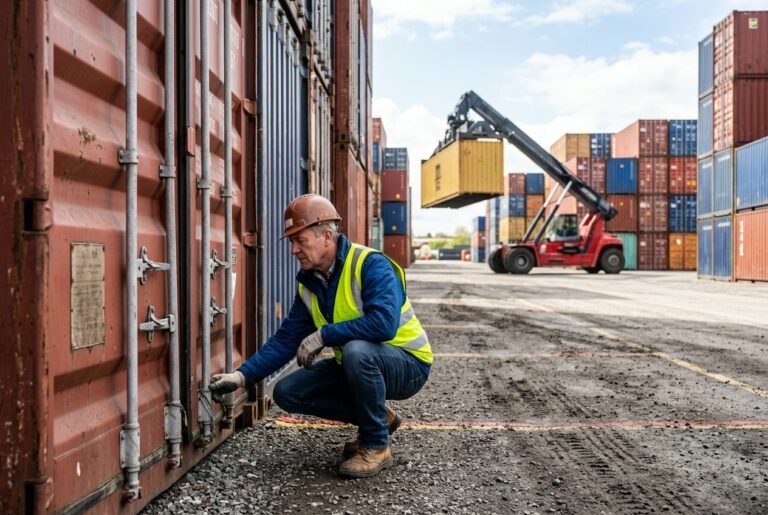
Before selecting add-ons, inspect the doors, door seals, locking bars, corner castings, and floor condition. If the original cargo doors are difficult to operate, adding a high-security lock will not solve the access issue. Likewise, shelving or partition walls should not hide existing floor damage or moisture problems.
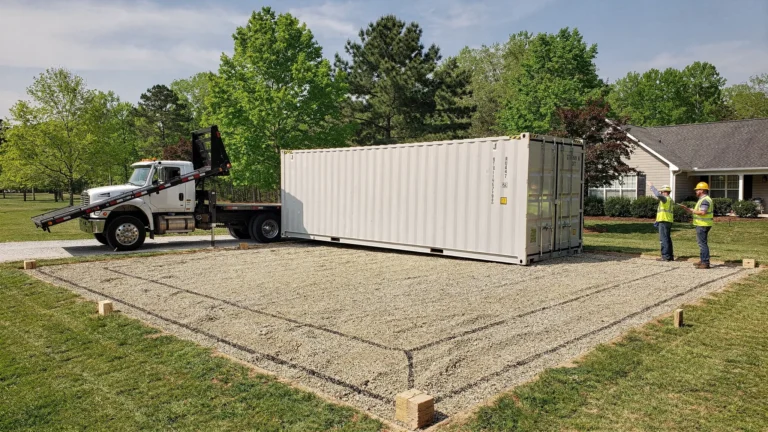
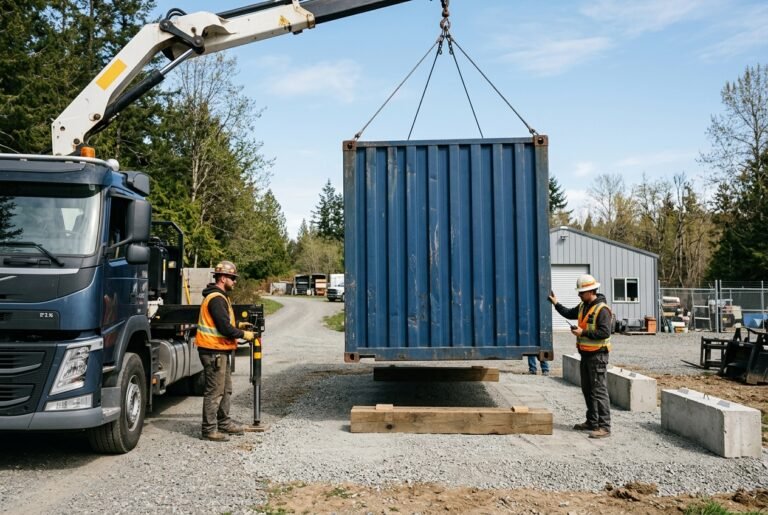
Site conditions matter just as much. A container should sit on a stable, reasonably level base that supports the corner castings. Drainage should move water away from the unit, and the delivery path must provide enough clearance for the truck and unloading method. Tilt-bed delivery requires room for the container to slide off the trailer. Ground-level delivery equipment has different access requirements. Plan accessory installation around delivery whenever possible, especially for exterior doors, awnings, or rooftop equipment.
Container Accessories for Security
For contractors, agricultural operators, and property owners, security is usually the first priority. Standard container locking bars provide basic closure, but they were not designed to stop every type of forced entry. A dedicated security accessory adds a layer of protection where it matters most: the door opening.
Lockboxes and Shrouded Locks
A welded lockbox is one of the most effective upgrades for a storage container. It is a steel enclosure installed over the locking point, shielding the padlock from bolt cutters, saws, and pry bars. The lock remains accessible to authorized users, but the exposed shackle is greatly reduced.
Use a hardened, weather-resistant puck lock or shrouded padlock sized for the lockbox. Avoid selecting a lock based only on price. An oversized lock may not fit correctly, while an exposed shackle can undermine the benefit of the enclosure. For shared job sites, establish a simple key-control process so access is documented when crews or subcontractors change.
A lockbox is an excellent fit for tool storage, construction materials, generators, lawn equipment, and seasonal inventory. It does not make a container impossible to breach, but it raises the time, noise, and effort required. That is often the practical goal for an unattended site.
Door Hardware and Personnel Doors
Cargo doors are durable and secure, but opening both doors several times a day can be inconvenient. A framed personnel door can provide faster everyday access without moving the main doors. This is especially useful for mobile offices, workshops, retail displays, and containers organized with shelves near the entrance.
The trade-off is structural. Cutting an opening into Corten steel must be properly framed and reinforced. A poorly installed door can affect wall strength, create water intrusion, and reduce security rather than improve it. Any fabricated opening should include a weather seal, secure frame, and locking hardware appropriate for the container’s use.
Improve Loading and Daily Access
A container floor sits roughly four feet above grade, so loading plans deserve more attention than many buyers expect. Carrying boxed materials up improvised steps is slow and unsafe. For wheeled equipment, hand trucks, pallet jacks, and ATVs, the correct ramp can make a container substantially more useful.
Container ramps should be selected based on the actual load, not the approximate weight of one box or tool. Consider the weight of the heaviest equipment plus the operator, the wheel type, the ramp angle, and whether loading occurs in wet conditions. Steel ramps provide durability for frequent commercial use, while lighter-duty options may be sufficient for occasional household storage.
If forklifts will load pallets, confirm that both the ramp capacity and floor rating are suitable. Shipping container floors are strong, but concentrated point loads and repeated forklift traffic can damage wood flooring. In some cases, loading from a dock-height position or using a different material-handling method is more appropriate than adding a ramp.
Ventilation, Condensation, and Climate Control
Steel containers are weather-resistant, but temperature swings can create condensation inside. Warm, humid air meeting a cooler steel roof can produce moisture often called container rain. It can affect cardboard packaging, metal tools, textiles, seed, paper goods, and electronics.
Passive vents are a sensible first step for many storage uses. They allow air exchange without requiring power and can reduce stagnant air and excess humidity. Placement matters. Vents should support airflow while remaining protected from direct rain entry and unauthorized access.
For sensitive inventory, passive ventilation may not be enough. A dehumidifier, insulated interior, electrical service, or a refrigerated container may be the better answer depending on the required temperature range. A reefer container is designed for controlled-temperature applications, but it requires appropriate power and should be selected for a real cold-storage need, not simply because it seems more protected.
Insulation can reduce heat transfer, but it also changes interior dimensions and must be installed correctly to avoid trapping moisture against the steel walls. For a workshop or office conversion, insulation, ventilation, and electrical planning should be treated as one system rather than separate upgrades.
Organization Accessories That Protect Inventory
A container with tools piled along the floor is difficult to inventory and unsafe to work inside. Organization accessories should create clear paths, keep heavy items stable, and make frequent-use materials easy to reach.
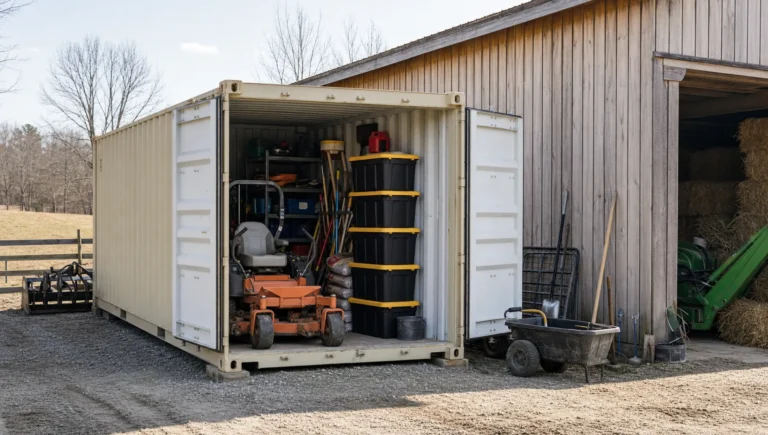
Shelving is a practical upgrade when it is anchored correctly and rated for the intended load. Choose steel shelving for heavy parts, boxed hardware, and job-site supplies. Keep the center aisle open, distribute weight evenly, and avoid placing all heavy inventory on one wall. For long materials such as pipe, conduit, or lumber, rack systems can keep stock off the floor and reduce trip hazards.
Tie-down rings, E-track, and cargo bars are useful when equipment or inventory must remain secure during relocation. Containers are often moved with contents inside for local repositioning, but loading should be planned carefully. Secure cargo low and evenly, and verify whether the container will be lifted, trucked, or left stationary. The same accessory that keeps equipment orderly can prevent damage during a move.
Lighting is another high-value improvement. Battery-powered lights can work for occasional entry, while hardwired LED fixtures are more suitable for daily use. If electrical service is installed, use qualified installation methods and consider how power will enter the container without compromising weather resistance. For remote sites, exterior solar lighting can improve visibility at the entrance, though it should not be treated as a replacement for physical security.
Plan Modifications Before You Buy
Windows, roll-up doors, vents, electrical panels, shelves, and paint can turn a standard container into a more functional asset. They can also add lead time, cost, and coordination requirements. The most efficient plan is usually to define the container’s job before delivery: storage only, secure tool room, mobile office, workshop, inventory overflow, or modular build.
For example, a contractor needing immediate tool storage may benefit most from a Wind & Watertight 20-foot container, lockbox, lighting, and shelving. A rural property owner storing tractors or larger equipment may need a 40-foot unit, ramp access, ventilation, and a prepared gravel or concrete pad. A retailer using a container as a pop-up space may prioritize a clean one-trip unit, personnel access, finished interior surfaces, and professional exterior appearance.
Lease Lane Containers helps customers match container condition, size, delivery method, and practical upgrades before the unit reaches the site. Clear specifications upfront are the best way to avoid a container that is secure but hard to use, or attractive but poorly suited to the work it needs to do.
A well-chosen accessory package should make each entry safer, each item easier to locate, and each day on site more predictable. Begin with the real operating problem, verify the load and installation requirements, and keep the container’s structural integrity at the center of every decision.