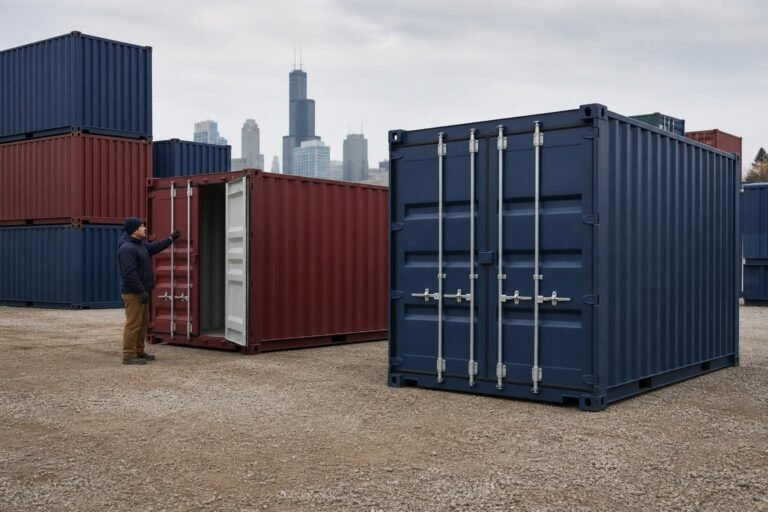
How to Compare Conex Sellers Before You Buy
Typing conex for sale near me into a search bar will usually produce a mix of local dealers, national brokers, private sellers and marketplaces. The listings may look similar at first, but the quality behind those listings can vary a lot. A clean photo and a low advertised price do not always tell you whether the container is structurally sound, properly graded, deliverable to your property or backed by a seller who knows what they are doing.
For buyers in Raleigh, North Carolina and across the Southeast, the seller matters just as much as the steel box itself. A general contractor needs secure jobsite storage that arrives when crews are ready. A homeowner may need a Wind & Watertight unit that will sit on a gravel pad for years. A logistics manager may need a Cargo Worthy container that meets shipping requirements. Those are different buying decisions, and a qualified Conex seller should help you sort through them before money changes hands.
This guide explains how to compare Conex sellers before you buy, with a focus on grades, pricing, documentation, delivery and site preparation.
Start by comparing the seller's process, not just the listing
A trustworthy Conex seller should ask how you plan to use the container before pushing a specific unit. If the conversation starts and ends with price, you may not be getting enough information to make a sound decision.
The right seller will want to understand whether the container will be used for static storage, active construction sites, agricultural equipment, retail overflow, a mobile office, modular conversion or freight movement. Use case affects the grade, size, door type, delivery method and even the best place to set the unit on your property.
For example, a contractor in Raleigh storing power tools and materials may be well served by a clean WWT container with a lockbox. A small business owner planning a customer-facing pop-up may prefer a newer One-Trip container because appearance matters. A shipper moving cargo internationally should be asking about Cargo Worthy condition and documentation, not only paint quality.
If a seller cannot explain why one grade is better for your use than another, keep comparing.
Make sure container grades are explained clearly
Container grading is one of the fastest ways to separate knowledgeable sellers from vague sellers. Industry terms are often used loosely online, so ask what each grade means in writing.
| Grade | What it generally means | Best fit | What to ask the seller |
|---|---|---|---|
| One-Trip | A newer container that has usually made one cargo trip from the manufacturer | Clean storage, retail projects, offices, modifications and buyers who care about appearance | Are photos of the exact unit available, and is it Standard or High Cube? |
| Cargo Worthy | A used container considered structurally suitable for cargo transport when properly inspected | Export, regional transport and buyers who need structural integrity | Is there current inspection documentation or a valid CSC plate for shipping needs? |
| Wind & Watertight (WWT) | A used container that should keep wind and water out, but is not necessarily certified for cargo transport | Ground-level storage, farms, jobsites and long-term property storage | Are the roof, doors, seals and floors inspected for leaks or soft spots? |
| As-Is | A container sold without a condition guarantee | Low-cost projects where repair risk is acceptable | What known damage exists, and can you inspect it before purchase? |
A strong seller will be comfortable discussing dents, surface rust, previous repairs, door operation and floor condition. Used containers are built from Corten Steel, a weathering steel designed to resist corrosion better than ordinary mild steel, but that does not make them rust proof. Rust through, deep pitting around the lower rails and roof holes are different from normal cosmetic wear.
If you are focused on pre-owned units, review practical inspection details in this guide to comparing used Conex containers before you commit.
Verify that the seller knows the difference between storage and shipping use
Many buyers say they need a shipping container when they really need ground-level storage. That distinction matters.
A WWT unit can be a smart, cost-effective choice for static storage on a construction site, farm or residential property. It should protect contents from rain and wind when the doors and seals are in good condition. However, WWT does not mean the unit is approved for loaded ocean transport.
Cargo Worthy is the term to focus on when the container may be loaded, lifted and transported with cargo inside. For international movement, buyers should ask about the CSC plate and any inspection requirements related to the route, carrier or freight forwarder. A seller who treats WWT and Cargo Worthy as interchangeable is not giving you precise guidance.
One-Trip containers sit at the cleaner end of the market. They are popular for mobile offices, retail builds, property storage, modular projects and customers who want fewer dents, cleaner paint and newer door seals. They are still steel containers built to handle transport conditions, but they are often purchased for appearance and longer service life rather than the lowest upfront cost.
Compare sizes, specs and ISO compatibility
Most buyers choose between 20ft and 40ft containers, with High Cube options available when extra vertical clearance is helpful. Standard ISO containers are designed around common dimensions, corner castings and handling points, which is why they can move through ports, yards, rail systems and trucking networks efficiently.
A 20ft container is easier to place in tighter driveways, smaller jobsites and residential settings. A 40ft container provides more storage volume for contractors, retailers, agricultural operations and large inventory needs. A High Cube container typically adds one foot of exterior height, making it useful for taller equipment, shelving, office conversions and modular builds.
A seller should help you think beyond length. Door swing clearance, interior height, forklift access, shelving plans, driveway width and the turning radius for the delivery truck can all affect the final choice. If you are still deciding between 20ft containers, 40ft containers and High Cube configurations, the guide on which size and grade fit your needs is a useful next step.
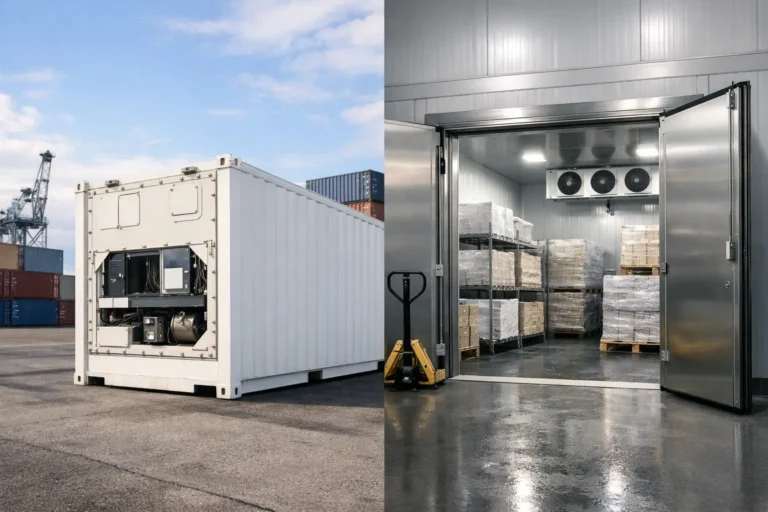
Refrigerated containers, often called reefers, require even more seller expertise. If you are maintaining cold chain storage for food, flowers, pharmaceuticals or temperature-sensitive materials, ask about operating condition, power requirements, service history and whether the unit is intended for storage or active transport.
Ask for a delivered price, not a yard price
A low container price can become less attractive once delivery, taxes, handling, site limitations and access issues are added. When comparing sellers, ask for a written delivered quote to your actual address or jobsite.
A clear quote should identify the container size, grade, condition, delivery location, delivery method and any assumptions about site access. For Raleigh buyers, that means the seller should understand urban driveways, Wake County jobsite conditions, tight lots, overhead wires, trees, sloped approaches and soft ground after heavy rain. Across the Southeast, clay soils and drainage issues can affect whether a loaded delivery truck can safely reach the drop spot.
Delivery pricing can vary based on distance from the yard, fuel, truck type and whether special equipment is needed. If one seller is far cheaper than the others, ask what is excluded. The cheapest listing is not always the cheapest completed purchase.
For a broader view of the cost factors that can affect your budget, see this breakdown of Conex container prices.
Evaluate delivery capability before you pay
The best seller for your purchase is not always the one closest on the map. A local presence helps, especially when buying in Raleigh or elsewhere in North Carolina, but delivery coordination is what determines whether the container arrives safely and lands where you need it.
Ask whether delivery will be made by tilt-bed truck, roll-off truck, chassis or another method. Ground-level delivery is common for storage buyers because the container is placed directly on the prepared surface. Chassis delivery may be more relevant for transport operations where the container remains mounted or moves through logistics channels.
A qualified seller should ask about straight-line clearance, overhead clearance, turning room, slope and ground firmness. They should also tell you when a crane, forklift or alternate delivery plan may be required. If a seller accepts payment without asking any access questions, they may be leaving delivery risk on you.

Look for seller transparency in photos and documentation
Stock photos are common in container sales, but they should not be the only information you receive. For used containers especially, ask whether photos show the exact unit being offered or only a representative example.
Useful photos include all four sides, roof condition when available, door gaskets, locking rods, corner posts, lower rails, interior walls and floor. Floors are especially important because many containers use marine-grade plywood or similar heavy-duty flooring systems. Soft spots, delamination, chemical contamination and severe gouging can affect usability.
Documentation also matters. Depending on the use case, you may need a bill of sale, invoice, grade description, delivery terms, warranty or condition statement, unit number, CSC plate information or modification specifications. A professional seller should be able to explain which documents are relevant and which are not.
For logistics managers, documentation can be operationally critical. A container intended for international shipping may need to satisfy carrier or port requirements. For homeowners and contractors, the focus may be proof of ownership, delivery terms and condition expectations.
Compare communication quality
The way a seller communicates before the sale often predicts how they will handle the delivery. Strong sellers answer direct questions, explain tradeoffs and put key details in writing. Weak sellers rely on urgency, vague promises or incomplete quotes.
Pay attention to whether the seller can answer these questions without dodging:
- What grade is the unit, and what does that grade mean?
- Is the container One-Trip, Cargo Worthy, WWT or As-Is?
- Are photos of the exact container available?
- What is included in the delivered price?
- What delivery method will be used?
- What site conditions could prevent delivery?
- What payment terms and paperwork are provided?
- What happens if the unit arrives in a materially different condition than described?
A professional seller will not treat these questions as a nuisance. They are normal due diligence for a steel asset that may sit on your property for years.
Use a simple Conex seller comparison scorecard
When several sellers appear similar, a scorecard can help you compare them objectively. You do not need a complicated procurement process. You need a consistent way to separate clear answers from assumptions.
| Comparison point | Strong seller behavior | Buyer concern |
|---|---|---|
| Grade clarity | Explains One-Trip, Cargo Worthy, WWT and As-Is in plain language | Uses grade terms loosely or avoids defining them |
| Inventory accuracy | Provides exact or representative photos with condition details | Shows only polished stock images |
| Pricing | Gives a written delivered quote with assumptions | Advertises a low price without delivery details |
| Delivery planning | Asks about access, slope, clearance and ground conditions | Schedules delivery without site questions |
| Technical knowledge | Understands ISO standards, Corten Steel, High Cube units and reefers | Cannot explain basic container specs |
| Documentation | Provides invoice, bill of sale and condition terms | Requests payment with little paperwork |
| Local knowledge | Understands Raleigh, North Carolina and Southeast delivery conditions | Treats every site the same |
This table is especially useful for business buyers comparing multiple vendors for construction sites, retail storage, agricultural operations or logistics needs.
Watch for common red flags
Most container purchases are straightforward when you work with a reputable seller, but the market does attract vague listings and inconsistent grading. Be careful when a seller offers a price that is far below other quotes without explaining why. It may be an As-Is unit, a bait price without delivery or a listing that does not reflect real inventory.
Another warning sign is refusal to discuss condition in detail. Surface rust and dents are normal on many used containers, but holes, bad door seals, twisted frames and soft floors should be disclosed. If you are buying a WWT unit, the seller should be willing to discuss water intrusion risk. If you are buying Cargo Worthy, they should be willing to discuss structural suitability and documentation.
Payment pressure is also worth questioning. A seller who demands full payment through an unusual channel, cannot provide a formal invoice or will not identify the business clearly should not be your first choice.
Pro-Tip: Prepare the site before delivery day
Site preparation is one of the most overlooked parts of buying a Conex container. Even the right container can become a problem if it is dropped on soft, uneven or poorly drained ground.
For most storage uses in Raleigh and the Southeast, a level gravel pad is a practical starting point because it supports drainage and helps keep the container off standing water. Many buyers also use concrete pads, concrete blocks or properly placed railroad ties, depending on the property and the intended load. The key is to support the container evenly, especially at the corners, so doors continue to open and close correctly.
Before delivery, confirm truck access with the seller. Tilt-bed trucks need room to back in, raise the bed and pull forward as the container slides into place. The exact clearance depends on the truck and container size, so do not guess. Measure gates, driveways, tree limbs, utility lines, roof overhangs and turning areas.
Permit requirements can also vary. A temporary container on a construction site may be treated differently from long-term storage on a residential property or a modified container used as an office. In Raleigh, Wake County and nearby municipalities, check zoning rules, HOA restrictions and permit requirements before delivery. A good seller can help you think through the questions, but local authorities make the final determination.
FAQ
What is the most important thing to compare between Conex sellers? Grade transparency is usually the first test. A seller should clearly explain whether the container is One-Trip, Cargo Worthy, Wind & Watertight or As-Is, then match that grade to your use case.
Is a local Conex seller better than a national broker? A local seller can be valuable because they understand regional delivery conditions, permitting patterns and site access issues. National delivery capability also matters for buyers outside Raleigh or companies managing multiple locations. The best choice is the seller that offers both clear guidance and reliable delivery planning.
Should I buy the cheapest Conex container I can find? Not without comparing the delivered price, condition grade and seller documentation. A cheaper unit may be fine for some storage uses, but it can cost more if it arrives with leaks, door problems, floor damage or unexpected delivery charges.
What grade should I choose for jobsite storage? Many contractors choose WWT containers for secure ground-level storage because they are cost-effective and designed to keep weather out when in good condition. One-Trip units may be better when appearance, cleanliness or long service life is a priority.
Do I need a permit for a Conex container in Raleigh, NC? It depends on location, duration, zoning, property type and intended use. Check with the relevant city, county or HOA before delivery, especially for long-term placement, residential use or modified containers.
Ready to compare Conex sellers with confidence?
Lease Lane Containers LLC helps buyers in Raleigh, North Carolina, the Southeast and across the USA compare new One-Trip containers, used WWT units, Cargo Worthy containers, High Cube options, reefers and modular solutions with clear grading and delivery guidance.
If you are ready to buy or still comparing quotes, contact the sales team at sales@leaselanecontainers.com or visit the Raleigh office. You can also start with Lease Lane Containers LLC to discuss the right size, grade and delivery plan for your property.