How to Compare Shipping Container Suppliers
Choosing between container companies is not just a price comparison. A shipping container is a steel asset that has to match your use case, arrive in the condition promised and fit safely on your property. For buyers in Raleigh, across North Carolina and throughout the Southeast, the right supplier can save weeks of frustration by helping you compare size, grade, delivery logistics and site requirements before you pay a deposit.
If you searched for shipping container suppliers near me, you are likely seeing a mix of local yards, national brokers, online marketplaces and delivery companies. Some are excellent. Others advertise low prices without explaining the grade, delivery fees or whether the pictured unit is the one you will receive. The goal is not to find the cheapest container on the page. The goal is to compare the total delivered value.
Use the framework below to evaluate suppliers with confidence, whether you need secure jobsite storage, a farm storage unit, a 40ft High Cube for inventory overflow or a Cargo Worthy container for transport.
Start With the Container’s Job
A reliable supplier should ask what the container needs to do before recommending a unit. Storage, transport, retail use, cold storage and modular conversion each call for different specifications.
A general contractor in Raleigh may need a Wind & Watertight storage container that keeps tools dry on a muddy jobsite. A logistics manager may need a Cargo Worthy unit that can pass inspection for freight movement. A small business owner planning a pop-up shop may prefer a newer One-Trip container because the cleaner walls, floor and exterior reduce prep work before modification.
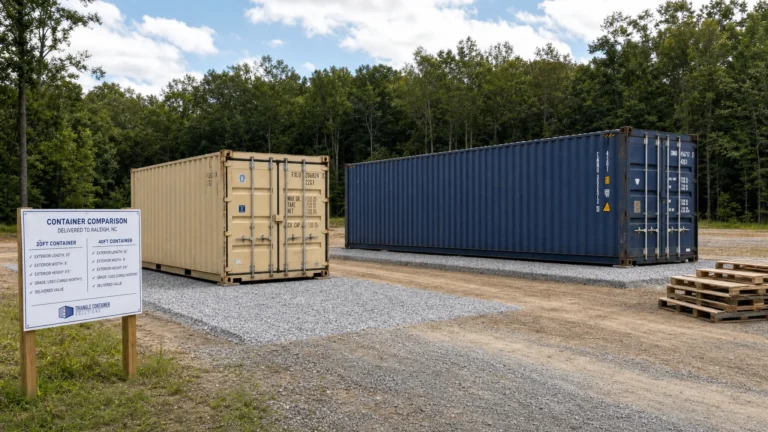
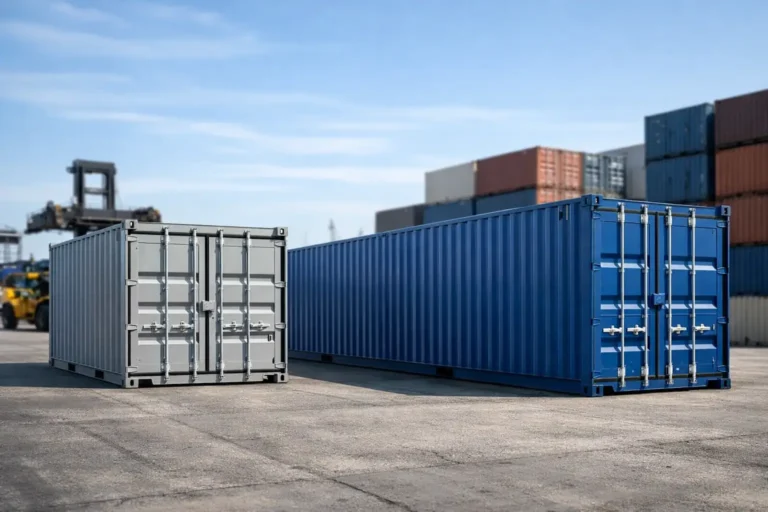
Size also matters. Standard ISO containers are usually 8 feet wide, with common lengths of 20 feet and 40 feet. Standard height is about 8 feet 6 inches, while a High Cube container is about 9 feet 6 inches tall. That extra foot is useful for shelving, mechanical systems, taller equipment and mobile office conversions.
If you are still deciding whether a compact unit is enough, Lease Lane Containers has a practical guide to 20ft shipping container buyer tips that can help you weigh space, access and delivery requirements.
Compare Inventory, Not Just Advertised Availability
Many suppliers list common container types, but not every company has direct access to the right unit at the time you need it. Ask whether the quoted container is in current inventory, depot inventory or will be sourced after payment. This question is especially important during busy construction seasons in the Southeast, when contractors and agricultural buyers may be competing for similar storage units.
A strong supplier should be able to discuss these options clearly:
- 20ft Standard containers for tight sites, residential storage and smaller tool inventories
- 40ft Standard containers for larger jobsite storage, equipment and warehouse overflow
- 40ft High Cube containers when extra interior height is worth the added space
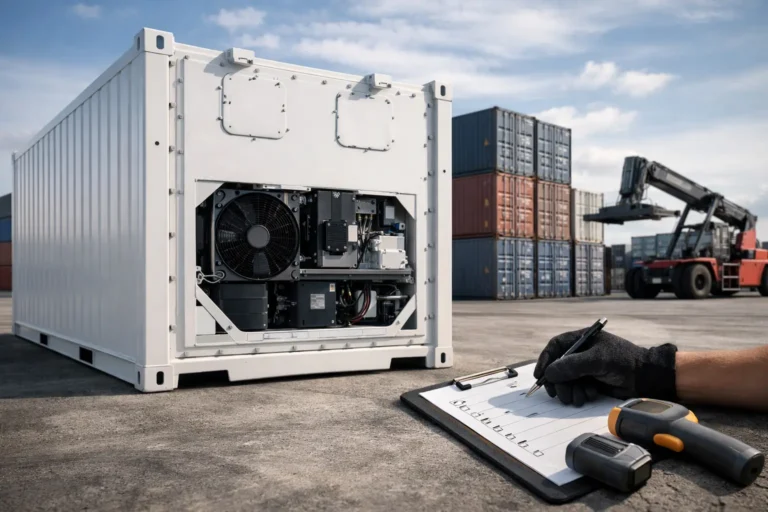
- Refrigerated containers, often called reefers, for temperature-controlled products
- Used containers for cost-conscious storage applications
- One-Trip containers for cleaner appearance, fewer dents and modification projects
For buyers comparing used shipping containers, inventory transparency is especially important. Used does not mean bad, but it does mean condition should be explained with photos, grade terminology and honest expectations.
Understand Container Grades Before Comparing Quotes
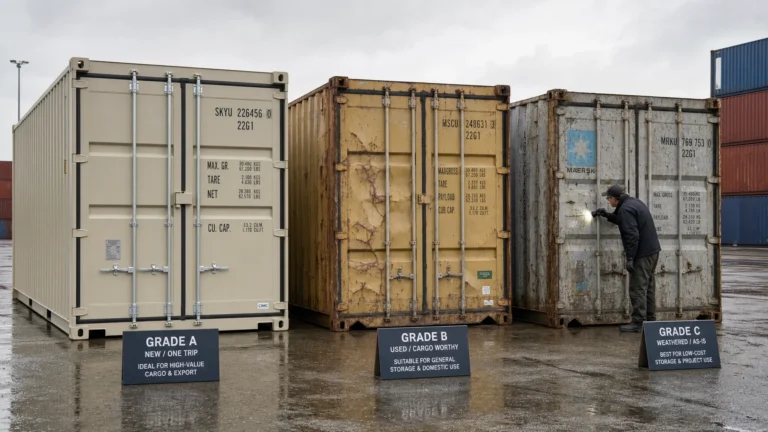
Two quotes can look similar while describing very different containers. This is where grade terminology matters. A professional supplier should explain the difference between One-Trip, Cargo Worthy and Wind & Watertight without making the buyer guess.
| Grade | What it generally means | Best fit | What to verify |
|---|---|---|---|
| One-Trip | A newer container typically used for one freight trip from the manufacturing region, with minimal handling wear | Retail builds, mobile offices, clean storage, modifications, residential projects | Door operation, floor condition, exterior finish, lockbox availability and exact size |
| Cargo Worthy | A used container considered structurally suitable for cargo transport when properly inspected | Domestic or international shipping, logistics, export use and heavy-duty storage | Valid inspection status if shipping, corner castings, understructure, doors, floors and roof rails |
| Wind & Watertight | A used storage-grade container that should keep out wind and rain but is not necessarily certified for cargo shipping | Jobsite storage, farm storage, household storage and inventory overflow | Roof patches, door gaskets, daylight leaks, rust areas, floor integrity and door alignment |
Most shipping containers are built from Corten Steel, a weathering steel designed to develop a protective oxide layer. That does not mean a container is rustproof. It means the steel is built for harsh marine and transport environments, but seams, door gaskets, floors and prior repairs still need inspection.
ISO standards also matter. Standard intermodal containers are designed around ISO dimensions, corner castings and handling requirements so they can be moved by cranes, forklifts and chassis systems. If your use is purely storage, ISO compatibility still affects structural strength, stacking ability and resale value.
Evaluate the Supplier’s Technical Knowledge
A good supplier does more than take an order. They help you avoid buying the wrong container for the job.
When comparing suppliers, listen for specific answers. If you ask about a 40ft High Cube, the supplier should understand clearance concerns, delivery truck space, interior height benefits and why a High Cube may be better for racking or conversion. If you ask about a reefer, they should discuss power requirements, temperature needs, airflow and whether you need operating or non-operating refrigerated storage.
Clear specs matter in every durable purchase. Homeowners comparing long-lasting products expect materials, safety and warranty details to be easy to find, whether they are shopping for steel storage or solid wood Montessori furniture for a growing family. Container buyers should expect the same clarity around steel condition, grade, dimensions and delivery terms.
Be cautious if a supplier uses vague language such as good condition, nice box or seaworthy without defining the actual grade. Professional sellers use industry terms consistently and are willing to explain what each term includes and excludes.
Compare Total Delivered Price
The price that matters is the delivered price, not just the container price. A low advertised number can become expensive once delivery, fuel, distance, difficult access or special equipment is added.
Ask each supplier to break down the quote in writing. You want to know the container grade, size, delivery cost, taxes, payment terms and any added charges for wait time or special handling. If delivery requires a tilt-bed truck, roll-off truck, crane or chassis setup, the supplier should explain why.
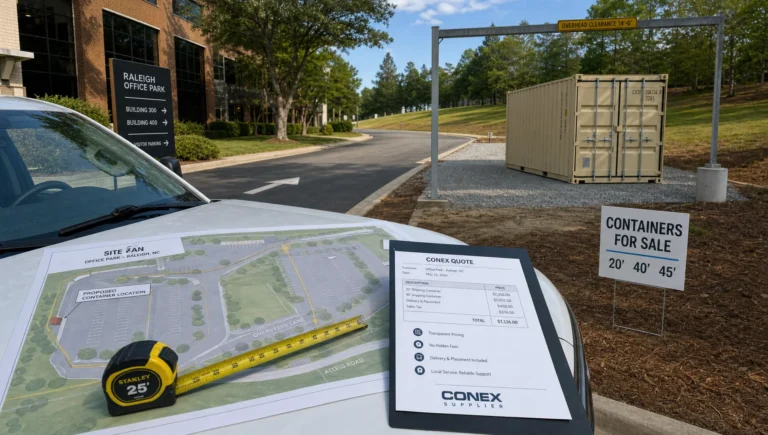
This is especially important in Raleigh and surrounding areas where delivery conditions vary widely. A downtown infill site may have tight access, overhead utility concerns and limited staging room. A rural property outside the Triangle may have a long gravel drive, soft soil or limited turnaround space.
If delivery is a major part of your decision, compare the questions in Lease Lane Containers’ guide on container delivery companies before choosing a supplier.
Ask How Containers Are Inspected
Inspection standards separate professional suppliers from casual resellers. A container can look acceptable in a few photos yet still have roof pinholes, soft flooring, difficult doors or prior repairs that affect long-term use.
For used containers, ask whether the inspection includes the roof, undercarriage, corner posts, door seals, locking rods, floor, vents and interior light test. An interior light test is simple: with the doors closed, visible daylight can indicate holes or gaps that may allow water intrusion.
For Cargo Worthy units, inspection should go deeper because the container may need to perform in transport. Structural components such as corner castings, crossmembers, side rails and door frames matter more when the container is being lifted, stacked or shipped.
For One-Trip units, inspection still matters. Newer units can have minor dents, forklift marks or cosmetic scuffs from the single freight move. Those are normal, but the supplier should set expectations before delivery.

Compare Delivery Capability and Site Guidance
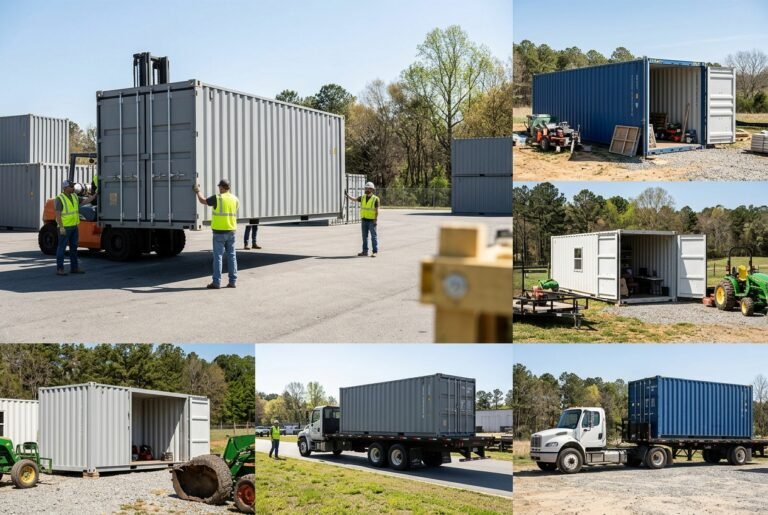
Container delivery is not a small-package shipment. A 20ft or 40ft steel unit requires adequate approach space, level ground and a safe drop area. A supplier with real delivery experience will ask about access before the truck arrives.
Key delivery questions include whether the truck can enter and exit safely, whether the site has overhead wires or branches, whether the ground can support the truck and whether the container doors should face a specific direction. In the Southeast, drainage matters as much as space. Heavy rain can turn an otherwise suitable area into a rut-prone delivery problem.
You should also ask whether the supplier handles nationwide delivery or only local drop-offs. For buyers in Raleigh, a local team provides regional knowledge. For businesses with multiple locations, national delivery capability can simplify procurement and keep grading standards consistent across sites.
Pro-Tip: Prepare the Drop Site Before Delivery Day
A container performs best when it sits level, drains well and has airflow beneath the floor. Do not place a container directly in a low, soggy area if you can avoid it. Moisture trapped under the flooring can shorten service life and make doors harder to operate over time.
A simple preparation plan can make a major difference:
- Choose a level location with enough truck access for the delivery method
- Use compacted gravel, concrete piers, railroad ties or suitable blocking to promote drainage
- Keep the container slightly elevated so air can move under the floor
- Confirm door swing clearance before the truck arrives
- Check local permit rules with your city, county, HOA or project authority
For Raleigh property owners, permit requirements can vary by use, zoning and duration. A temporary storage unit on an active construction site may be treated differently from a permanent backyard storage structure or a modified commercial space. When in doubt, ask before ordering.
Look for Transparent Photos and Documentation
Photos are useful, but only if they represent the actual container or clearly show a comparable unit. Ask whether the photos are stock images, yard photos or exact-unit photos. For higher-value purchases such as One-Trip containers, modified units or reefers, exact photos become more important.
Documentation should match the use case. For a storage-grade WWT unit, you may mainly need a written invoice and clear grade description. For a Cargo Worthy unit intended for shipping, you may need proof of inspection or confirmation that the container can meet transport requirements. For a modified container, drawings, material specifications and scope documents help avoid misunderstandings.
A supplier that hesitates to put grade, size and delivery terms in writing is asking you to absorb unnecessary risk.
Watch for Common Red Flags
Not every low quote is suspicious, but certain patterns should make you slow down. Container scams and poor-quality transactions often rely on urgency, vague photos and unclear delivery promises.
| Red flag | Why it matters | Better standard |
|---|---|---|
| Price is far below the local market | It may exclude delivery or describe a lower-grade unit | Written delivered quote with grade and size |
| No clear grade terminology | You cannot compare condition accurately | One-Trip, Cargo Worthy or WWT stated clearly |
| Only stock photos are available | The actual condition may be unknown | Exact-unit photos or honest comparable-unit explanation |
| Delivery details are vague | The site may not be accessible or extra fees may appear | Truck type, access needs and drop orientation discussed |
| Pressure to pay immediately | Buyer has little time to verify the seller | Normal payment process with documented terms |
A professional supplier should make the transaction feel clearer as the conversation continues. If each question creates more confusion, keep comparing.
Use a Simple Supplier Scorecard
A scorecard helps you compare suppliers without being distracted by a single price. Rate each supplier on the factors that affect your actual outcome.
| Comparison factor | What a strong supplier provides |
|---|---|
| Grade clarity | Defines One-Trip, Cargo Worthy and WWT accurately |
| Inventory fit | Offers the right size, height and condition for your use |
| Technical knowledge | Understands Corten Steel, ISO standards, doors, floors, roofs and structural components |
| Delivered pricing | Provides a written quote with delivery and fees included |
| Site planning | Reviews access, leveling, drainage and permit considerations |
| Communication | Answers questions clearly before payment |
| Regional reliability | Understands Raleigh, North Carolina and Southeast delivery conditions while supporting broader delivery needs |
This approach works for contractors buying multiple jobsite units, homeowners purchasing long-term storage and logistics teams sourcing Cargo Worthy containers for transport.
Local Raleigh Knowledge Still Matters
National reach is valuable, but local expertise can prevent practical delivery problems. Raleigh and the broader Triangle include dense urban neighborhoods, new subdivisions, commercial construction sites, rural acreage and agricultural properties. Each setting creates different access and placement challenges.
A supplier familiar with North Carolina conditions can talk through gravel pads, wet weather scheduling, driveway protection, construction site coordination and municipal questions. That local guidance is especially useful when the container will sit for months or years rather than a few days.
At the same time, businesses with projects outside North Carolina should look for a supplier that can coordinate beyond the local yard. The best comparison is not local versus national. It is whether the supplier can combine local advice with dependable delivery options wherever the container is needed.
Frequently Asked Questions
What is the most important thing to compare between shipping container suppliers? The most important factor is total delivered value. Compare the container grade, size, condition, delivery cost, site guidance and written terms, not just the advertised container price.
Is a One-Trip container always better than a used container? Not always. A One-Trip container is usually cleaner and newer, making it a strong choice for modifications, retail use and appearance-sensitive projects. A used WWT or Cargo Worthy container may be more cost-effective for jobsite storage, farm storage or transport needs.
What does Wind & Watertight mean? Wind & Watertight, often shortened to WWT, means the container should keep wind and rain out under normal storage conditions. It does not automatically mean the container is certified for cargo shipping.
When do I need a Cargo Worthy container? Choose Cargo Worthy when the container may be used for freight movement, export or applications where structural transport suitability matters. Ask the supplier what inspection documentation is available for your intended route or carrier.
Do I need a permit for a shipping container in Raleigh? It depends on location, zoning, duration and use. A temporary construction storage container may be handled differently from a long-term residential or commercial installation. Always confirm with the relevant city, county, HOA or project authority before delivery.
How much space is needed for delivery? Space requirements depend on the truck type, container size and drop method. A 40ft container typically needs significantly more straight-line room than the container length because the truck must unload and pull forward safely.
Compare Suppliers With Lease Lane Containers
If you are comparing shipping container suppliers in Raleigh, across North Carolina or anywhere in the USA, Lease Lane Containers LLC can help you evaluate the right size, grade and delivery plan before you buy. Our team supplies new One-Trip and used containers, including Standard, High Cube, Cargo Worthy, Wind & Watertight and refrigerated options.
For clear pricing and practical site preparation advice, contact the sales team at sales@leaselanecontainers.com or visit the Raleigh office to discuss your project with a local container specialist.