Tilt Bed Container Delivery Site Prep Guide
A shipping container can arrive on a single truck, but getting it safely from the road to its final position requires more planning than many buyers expect. Tilt bed container delivery is often the most practical ground-level delivery method for 20-foot and 40-foot containers, especially when a crane or forklift is not available. The trade-off is that the truck needs a clear route, firm footing, and substantial space to slide the container off its bed.
For a contractor, farm operator, or homeowner, the goal is simple: the container arrives, lands where it belongs, and is ready for use without a re-delivery charge, site damage, or a last-minute scramble. That starts with understanding how the delivery works.
How Tilt Bed Container Delivery Works
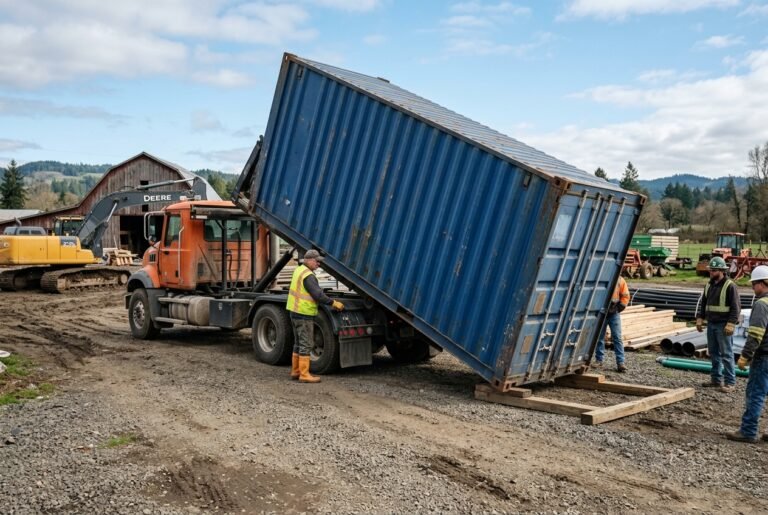
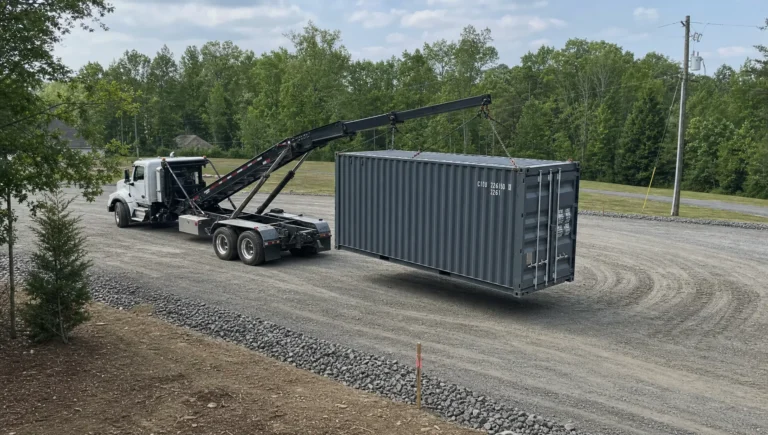
A tilt-bed truck carries the container on a hydraulic trailer or truck bed. At the delivery point, the driver raises the front of the bed and gradually slides the container to the ground. The container typically comes off rear-first, meaning the end closest to the rear of the truck reaches the ground before the rest of the unit slides into position.
This process is efficient because it does not require lifting equipment at your site. It is also a controlled operation, not a vertical drop. As the bed tilts, the truck and container need room in a straight line. A container cannot usually be placed around a corner, between closely spaced trees, or behind a building with a narrow approach.
The final placement also depends on whether doors need to face the truck or face away from it. Door orientation should be confirmed before dispatch. Changing direction on-site may require extra maneuvering room or equipment that was not included in the delivery plan.
The Space Your Delivery Truck Needs
A standard 20-foot container is compact once it is on the ground, but its delivery footprint is much larger. As a working rule, allow approximately 75 to 100 feet of straight, clear space for a 20-foot container and 100 to 120 feet for a 40-foot container. Exact requirements vary by truck configuration, grade, overhead clearance, and placement direction, so site photos and measurements should be reviewed before scheduling.
Width matters as well. The delivery route must accommodate a commercial truck, not just the eight-foot container. A driveway that feels wide enough for a pickup may be too narrow for a truck to turn, straighten out, and unload safely. Gate openings, sharp turns, drainage ditches, parked equipment, retaining walls, and low-hanging branches are common obstacles.
Vertical clearance is equally critical. Tilt-bed unloading raises the front of the container high into the air. Power lines, communication lines, tree limbs, carports, and building overhangs can make an otherwise accessible site unsafe. Never assume an overhead line is insulated or high enough. If there is any uncertainty, provide clear photos and measurements before delivery is scheduled.
A good site review considers the full route from the public road to the final placement area. That includes the road entrance, driveway, turns, unloading zone, and the truck’s ability to exit after the container is set.
Straight-Line Access Is Usually the Deciding Factor
The most favorable sites allow the driver to pull forward in a straight line, unload, and continue out or back out on firm ground. Rural properties and active job sites often have this advantage, but soft shoulders and unmarked utilities can still create problems.
For tight residential lots, a tilt-bed delivery may still work, but only if the approach and unloading area are genuinely clear. If the final location sits behind a house, down a narrow side yard, or on the far side of landscaping, a crane delivery or separate handling equipment may be a better fit. The right method depends on the site, not simply on the container size.
Build a Base That Protects the Container
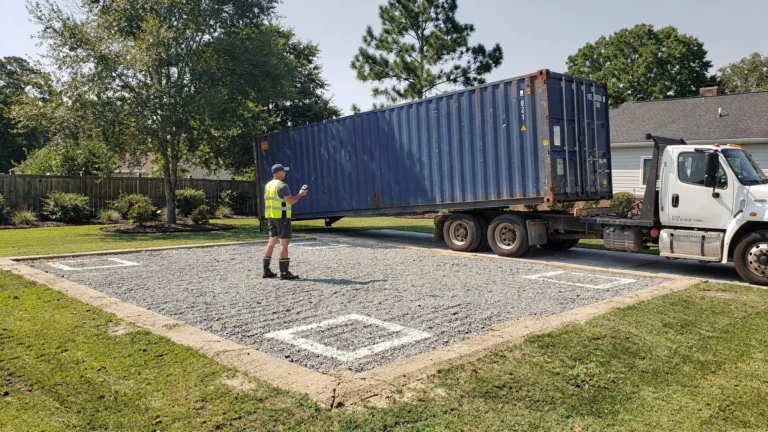
Shipping containers are designed to carry heavy loads at their corner castings. Their structural strength is concentrated at the corners and frame rails, not in the thin steel floor. For long-term storage, place the container on a level, well-drained base that supports all four corners.
Concrete piers, railroad ties in good condition, compacted gravel pads, and engineered concrete slabs can all be appropriate, depending on the project. The base should keep the container off standing water and allow air circulation underneath. This helps reduce moisture exposure, limits corrosion at the underside, and makes the doors easier to operate over time.
For basic job-site storage, compacted gravel with properly placed concrete blocks or timber supports may be sufficient. For a workshop, office conversion, or container intended to remain in place for years, a more permanent engineered foundation may make sense. Local building requirements can also apply when the container is being converted, connected to utilities, or used as an occupied structure.
Leveling is not just cosmetic. A container that is noticeably out of level can have doors that bind, gaps that do not seal correctly, and drainage issues around the roof and base. Check the intended pad before delivery rather than trying to correct major settling after the container is loaded with tools, inventory, or equipment.
Ground Conditions Can Stop a Delivery
A loaded truck is heavy. Dry grass, loose sand, saturated soil, fresh fill, and unreinforced septic areas can all be unsuitable for delivery traffic. What looks solid on foot may not support a commercial truck, particularly after rain.
If the site has recently been graded, ask whether the base has been compacted. If the only route crosses a lawn, field, or soft shoulder, consider weather conditions and whether a gravel access path is needed. Damage to turf, ruts in soft ground, or towing costs caused by inadequate site conditions can quickly exceed the cost of proper preparation.
Construction sites need an additional check: make sure the delivery path is not crossing freshly poured concrete, buried utilities, open trenches, or areas with active equipment movement. A precise delivery window helps, but the site must still be ready when the truck arrives.
Prepare the Container Location Before the Truck Arrives
The best delivery days are uneventful because the work was done beforehand. Mark the desired container location clearly, but do not rely on a small stake alone. Drivers need a visible, practical placement target with enough room to align the truck.
Before the scheduled delivery, remove vehicles, trailers, pallets, debris, and temporary fencing from the route. Trim branches where needed and ensure gates are unlocked and fully open. If the site is inside a development, industrial park, or managed property, confirm any delivery-hour restrictions and truck-access rules in advance.
It is also useful to decide whether the container doors should face the driveway, a loading area, or a protected side of the property. For job sites, doors facing the active work area can improve access and supervision. For homeowners, doors may need to face away from the street for appearance or security. Once the container is on the ground, rotating it is not a simple manual adjustment.
If you need the unit positioned on blocks, piers, or a raised base, discuss that requirement before delivery. The supports must be placed accurately and be stable enough to carry the load as the container slides into place. Do not expect a driver to build or modify a foundation during unloading.
Choosing the Right Container Condition for the Job
Delivery planning and container condition should be considered together. A one-trip container typically offers the cleanest exterior appearance and minimal prior wear, making it a strong option for retail displays, residential projects, and builds where appearance matters. Used containers can provide dependable secure storage at a lower acquisition cost, particularly when specified as Wind and Watertight or Cargo Worthy.
Wind and Watertight means the container is intended to keep out wind and water under normal conditions, which suits many storage applications. Cargo Worthy containers meet structural standards used for international shipping and may be the better choice when transport certification or stronger documented condition is needed. Neither grade replaces a site inspection or proper foundation planning.
For high-value tools, agricultural supplies, or construction materials, focus on door operation, flooring condition, locking needs, and weather protection. Corten steel construction offers excellent durability, but no steel container benefits from sitting in drainage runoff or on unstable ground.
When Tilt-Bed Is Not the Best Option
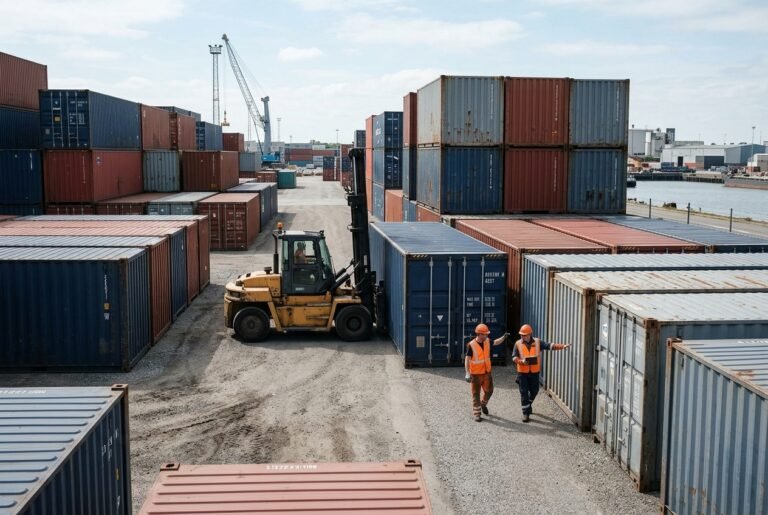
Tilt-bed delivery is efficient, but it is not universal. Sites with severe slopes, limited straight-line clearance, overhead obstructions, weak ground, or a final placement point behind an obstacle may require a different approach. A crane can place a container over a fence or building, while forklifts and specialized moving equipment can help on certain commercial sites.
These alternatives add cost and coordination, but they can be the safer choice when a tilt-bed truck cannot access the target location without risk. Clear pricing starts with an honest assessment of the site. Photos taken from the road entrance through to the placement area, along with container size and preferred door direction, give a logistics provider the information needed to recommend the correct method.
Lease Lane Containers helps buyers plan these details before dispatch because delivery is part of the purchase, not an afterthought. A few accurate measurements and a prepared base can prevent the most common avoidable delays.
A container should feel like immediate, secure storage when it arrives. Give the truck a clear path, give the container firm and level support, and confirm the placement plan before delivery day. That is how ground-level delivery stays predictable – no fine print, no surprises.