Used 20ft Shipping Containers for Sale Checklist
A used 20ft shipping container can be one of the most practical storage purchases for a jobsite, farm, small business or residential project. It is compact enough for many driveways and construction lots around Raleigh, yet large enough to hold tools, equipment, remodel materials, inventory, feed or seasonal property storage.
The key is buying the right used unit, not just the cheapest one. A container may look solid from the curb, but door alignment, roof dents, floor condition, rust patterns and grade classification all affect how well it will perform after delivery.
Use this checklist before you commit to a unit, request an invoice or schedule delivery. If you are still comparing sizes and use cases, Lease Lane Containers also has a deeper guide on how to shop for a 20 ft shipping container for sale that pairs well with this inspection-focused checklist.
Start With the Container Grade
Before you inspect the doors or roof, confirm the grade being offered. Container grading is not just sales language. It tells you what the unit is suitable for, how much repair work it may need and whether it can be used for storage only or transport.
| Grade | What it means | Best fit |
|---|---|---|
| One-Trip | A newer container that has typically made one cargo trip from the manufacturer and has minimal wear | Buyers who want cleaner appearance, longer service life and fewer dents |
| Cargo Worthy (CW) | Used container that is structurally fit for cargo transport when properly certified | Logistics, export, regional transport and storage where higher structural confidence matters |
| Wind and Watertight (WWT) | Used container that should keep out wind and rain but may not be approved for cargo transport | Jobsite storage, farm storage, equipment storage and general property use |
| As-Is | Sold in current condition with known or unknown defects | Only for buyers prepared to repair leaks, doors, rust or flooring |
For most homeowners, contractors and small businesses in North Carolina, a Wind and Watertight 20ft unit is often enough for stationary storage. If you are loading the container for freight movement, stacking or international shipping, ask for Cargo Worthy documentation and confirm whether the unit has a valid CSC plate or inspection accepted by your carrier.
One-Trip containers are not usually considered “used” in the same way as retired fleet units, but they are worth comparing if appearance, cleanliness and long-term durability are priorities. They cost more upfront but may reduce the time you spend evaluating repairs, repainting or replacing door seals.
Confirm the Exact 20ft Configuration
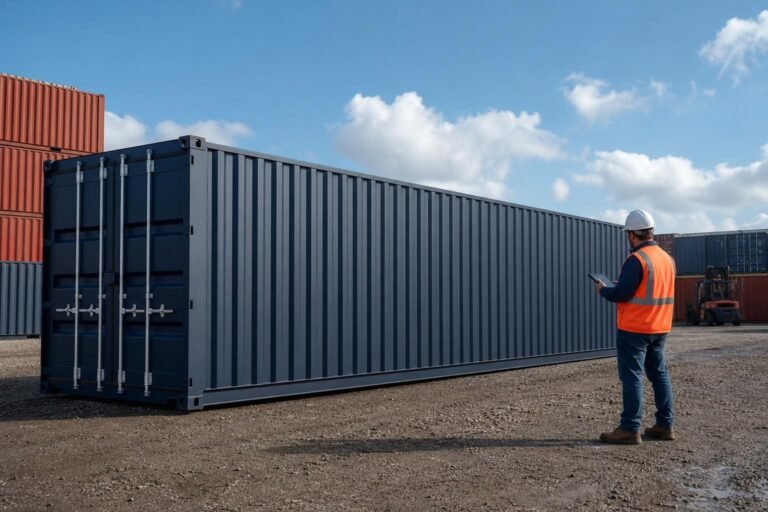
A standard 20ft ISO shipping container is typically about 20 feet long, 8 feet wide and 8 feet 6 inches high on the exterior. Interior dimensions vary slightly by manufacturer and floor construction, so always confirm the actual measurements before buying, especially if you need to store specific machines, pallets or shelving systems.
Most buyers looking for used 20ft shipping containers for sale are considering a standard dry storage unit. However, there are several variations worth knowing:
- Standard 20ft dry container: The most common choice for secure storage, tools, equipment and inventory.
- 20ft High Cube container: Offers extra vertical clearance, commonly 9 feet 6 inches exterior height, although availability can vary by market.
- 20ft refrigerated container, also called a reefer: Designed for temperature-sensitive storage when paired with the right power and maintenance plan.
- 20ft open side container: Useful when you need wide side access for retail pop-ups, jobsite workflow or bulky materials.
If access is more important than maximum weather-sealed simplicity, a used 20ft open side shipping container may be worth reviewing before you settle on a standard double-door unit.
Inspect the Exterior Structure
Shipping containers are built from Corten Steel, a weathering steel designed to develop a protective surface oxide layer. That does not mean rust is harmless. Surface rust is common on used containers, but deep corrosion, holes, flaking metal and rust around structural points can shorten service life and create leak paths.
Focus your exterior inspection on structural areas first. Cosmetic dents are normal on used units. Severe deformation near corner posts, roof rails, crossmembers or door frames is a bigger concern.
Check the following areas carefully:
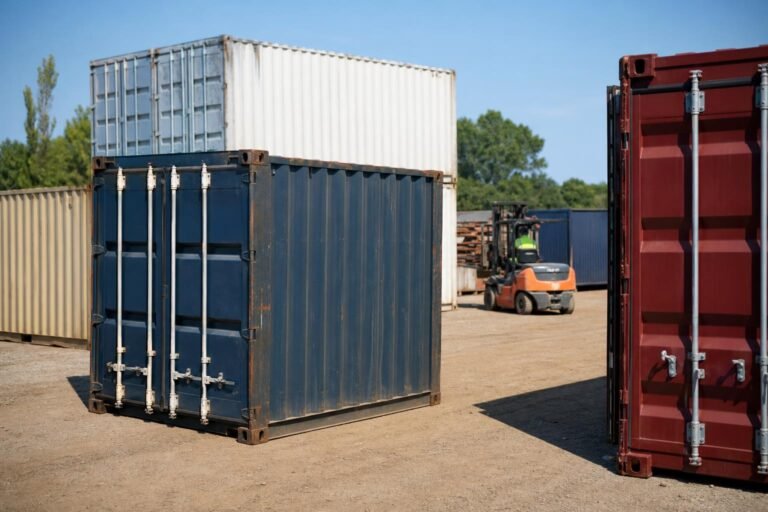
- Corner posts and corner castings: These are critical load-bearing points. Avoid units with severe bends, cracks or heavy corrosion at the corners.
- Roof panel: Look for deep dents that can hold water, pinholes, patched areas and sagging sections.
- Side walls: Watch for punctures, oil-canning dents that affect structure and large rust clusters.
- Bottom rails and undercarriage: These areas take abuse from handling and ground moisture. Heavy rust here matters more than rust on a side panel.
- Welded repairs: Repairs are not automatically bad, but they should be clean, sealed and consistent with the claimed grade.
In Raleigh and across the Southeast, humidity and frequent rain make drainage important. A container with a dented roof that traps water can deteriorate faster than one with ordinary sidewall wear.
Test the Doors Before You Buy
Door problems are one of the most common frustrations with used containers. The doors are heavy, the locking rods must align and the rubber gaskets need to compress evenly to keep out weather.
Open and close both doors if you are inspecting in person. If you are buying remotely, request clear video of the actual unit’s doors being opened, closed and latched. Photos alone can hide alignment problems.
Pay close attention to these items:
- Locking rods: They should rotate without excessive force and seat properly into the cam keepers.
- Door hinges: Look for broken welds, severe rust or hinges that bind.
- Door gaskets: Cracked, missing or hardened seals can allow wind-driven rain to enter.
- Door frame alignment: Uneven gaps can signal racking, impact damage or settlement if the unit is sitting on uneven ground.
- Lockbox condition: A secure lockbox adds theft resistance, which matters for contractors storing tools and materials on active jobsites.
A used 20ft container should not require two people and a pry bar to close properly. Stiff doors can sometimes be improved with lubrication or a level foundation, but bent frames are a more serious issue.
Check the Interior for Leaks, Odors and Floor Damage
Once inside, close the doors during daylight and look for pinholes of light. A dark interior makes roof leaks and wall punctures easier to spot. One small light leak may be repairable, but multiple leaks across the roof or upper side panels are a red flag for a storage buyer.
Inspect the floor with the same attention you give the steel shell. Many containers use heavy-duty wood flooring, often marine-grade plywood or similar materials, supported by steel crossmembers. Used floors may show forklift marks, stains, gouges or patches.
A stained floor is not automatically a dealbreaker, but strong chemical odors, soft spots or wet areas should be taken seriously. If the container will store furniture, retail inventory, feed, tools or construction finishes, interior condition matters as much as exterior grade.

Verify ISO Markings and Shipping Requirements
If your container will only sit on a property as storage, ISO markings may not be your first concern. If you plan to ship cargo, move the unit through ports or load it onto intermodal equipment, documentation becomes much more important.
ISO containers are built around international standards for dimensions, corner castings and handling compatibility. ISO 668 is one of the core standards related to container dimensions and ratings. In practical buying terms, you should confirm that the container has an identifiable container number, readable markings and a CSC safety approval plate if it will be used for cargo movement.
For logistics managers, a Cargo Worthy grade should be more than a verbal promise. Ask whether the unit can pass the inspection required by your shipping line, rail provider or freight partner. A container sold as WWT may be fine for static storage in the Raleigh area, but it should not be assumed suitable for international cargo without proper certification.
Compare the Delivered Price, Not Just the Unit Price
Used container pricing changes with condition, availability, location, grade and transportation cost. A low advertised price may not be the best deal if delivery fees are unclear or the unit grade is vague.
When comparing sellers, request an itemized quote that includes the container, delivery, taxes if applicable and any requested modifications or accessories. For North Carolina buyers, distance from the depot, equipment type and site access can change the final number. National buyers should also ask how long the quote is valid because container markets can shift quickly.
Use this purchase checklist before paying:
| Item to confirm | Why it matters |
|---|---|
| Actual grade in writing | Prevents confusion between WWT, Cargo Worthy and As-Is |
| Photos or video of the actual unit | Stock photos do not show the container you will receive |
| Container number if available | Helps verify the specific unit being sold |
| Delivered price | Avoids surprises after the deposit or invoice |
| Delivery method | Determines access, clearance and site preparation needs |
| Payment terms | Helps protect you from unclear refund or substitution policies |
If you are budgeting now, review the current factors that affect a used 20ft shipping container price before deciding whether WWT, Cargo Worthy or One-Trip makes the most sense.
Ask About Modifications Before Delivery
Many buyers purchase a used 20ft container for simple storage, then realize later that they want vents, a man door, shelving, insulation, electrical preparation or a roll-up door. Some modifications are easier to plan before delivery, especially if the unit will be placed in a tight location.
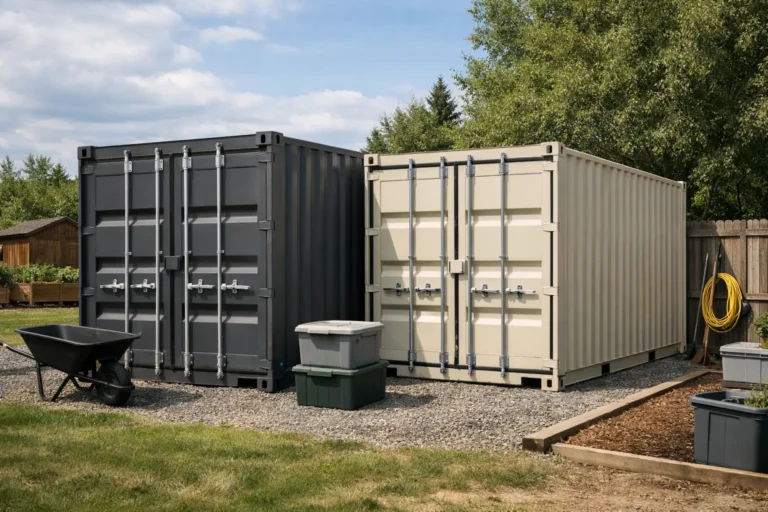
For general contractors, a 20ft unit can become a secure tool room or materials staging point. For small businesses, it can support pop-up retail, overflow inventory or seasonal storage. For homeowners and agricultural buyers, it may function as a shed, feed storage space or workshop shell.
The main point is to match the grade and layout to the final use. A clean One-Trip unit may be better for a customer-facing retail concept. A solid WWT unit may be more cost-effective for jobsite tool storage. A reefer should be evaluated not just as a steel box, but as powered equipment that requires maintenance, ventilation and the right electrical setup.
Pro-Tip: Prepare the Drop Spot Before Delivery
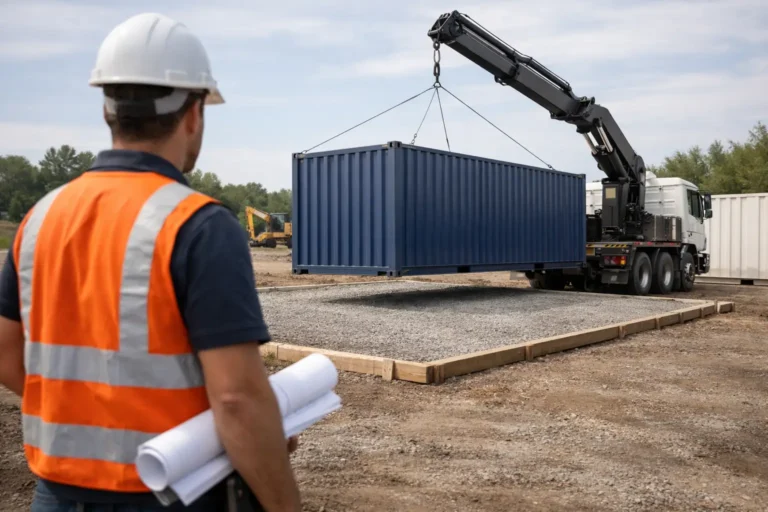
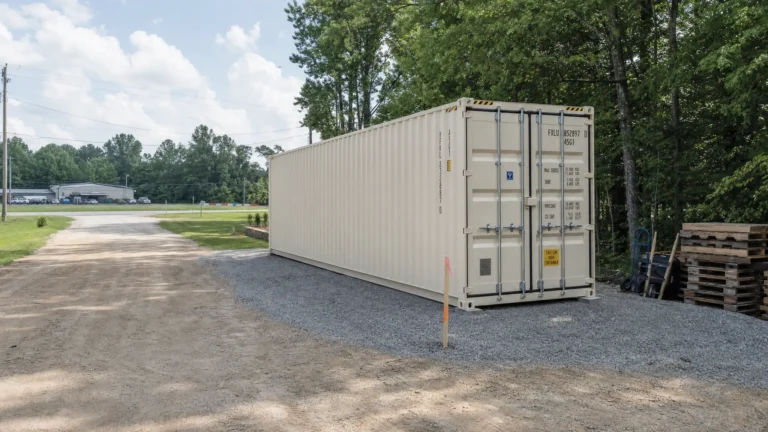
A good container can perform poorly if it is placed on uneven, wet or unstable ground. Before delivery, choose a level spot with reliable drainage. In Raleigh and much of the Southeast, red clay soil can hold moisture, so a gravel pad is often a smarter long-term base than bare dirt.
Aim to support the container at the corners and keep it slightly elevated from standing water. Many buyers use compacted gravel, concrete pads, railroad ties or pressure-treated timbers, depending on the site and expected load. The goal is simple: keep the frame level, reduce door binding and prevent water from collecting under the steel.
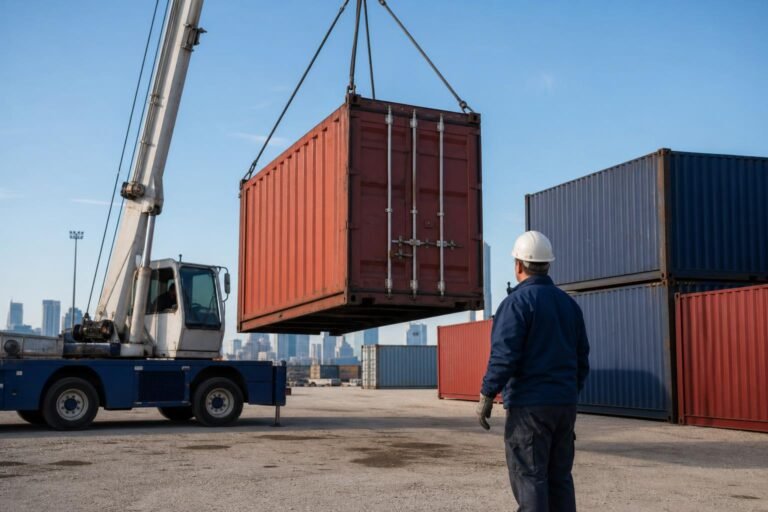
Also check access before the truck arrives. Delivery equipment needs more room than the container footprint itself, and overhead obstructions such as tree limbs, power lines, gates and carports can cause delays. If your property has a steep driveway, soft ground or a narrow turn, tell the sales team before scheduling.
Permits and zoning are local. In the Raleigh area, rules may vary by city, county, neighborhood and HOA. A container used temporarily on a construction site may be treated differently from a permanent storage structure on residential or agricultural land. Confirm requirements before delivery, especially if the unit will be visible from the road or placed near property lines.
Red Flags That Should Slow Down the Purchase
A used container does not need to be perfect. It does need to match the grade, use case and price. Slow down or ask more questions if you see any of the following:
- The seller cannot explain the difference between One-Trip, Cargo Worthy and WWT.
- The listing uses only stock photos and refuses to provide actual unit photos.
- Doors do not close, latch or seal properly.
- The roof has standing water, major dents or multiple visible patches.
- The floor has soft spots, strong odors or signs of chemical contamination.
- The container is advertised as Cargo Worthy without supporting inspection details.
- Delivery pricing is vague or added only after you agree to buy.
For a deeper inspection process across multiple sizes and grades, Lease Lane Containers also explains how to evaluate used shipping containers before paying.
Frequently Asked Questions
What is the best grade for a used 20ft shipping container? For stationary storage, Wind and Watertight is often the practical choice because it should protect contents from normal weather at a lower cost than One-Trip. For cargo transport, request Cargo Worthy status and confirm required documentation with your carrier.
Is a One-Trip 20ft container better than a used WWT container? One-Trip units are usually cleaner, newer and less worn, so they are better for buyers who care about appearance or long service life. A used WWT container can still be a strong value for jobsite storage, farm storage or household overflow.
Can I put a 20ft shipping container on a driveway in Raleigh? It depends on the driveway, local rules and any HOA restrictions. You should confirm zoning or permit requirements, then make sure the driveway can support the weight and that delivery equipment has enough access.
How do I know if a used container leaks? Close the doors during daylight and look for light coming through the roof, walls or door seals. Also check for water stains, rust trails, damp flooring and roof dents that may hold water.
Do used 20ft shipping containers meet ISO standards? Most standard shipping containers are built to ISO dimensions and handling requirements, but condition and certification vary. If the container will be used for shipping, verify markings, CSC plate status and carrier requirements before purchase.
Ready to Buy a Used 20ft Container?
Lease Lane Containers LLC helps buyers in Raleigh, across North Carolina, throughout the Southeast and nationwide compare grades, choose the right 20ft container and prepare for delivery with clear guidance. Whether you need WWT storage for a jobsite, a Cargo Worthy unit for transport or a cleaner One-Trip option for a business project, our team can help you make a confident purchase.
Email sales@leaselanecontainers.com to discuss used 20ft shipping containers for sale, or visit our Raleigh office to talk with the Lease Lane Containers sales team about availability, delivery and site preparation.