Used Conex Containers for Sale: How to Compare
A used Conex container can be a smart purchase for secure jobsite storage, farm equipment, inventory overflow or regional freight. The challenge is that two containers with the same size and similar photos can have very different value once you factor in grade, structure, doors, flooring, delivery and site access.
For buyers in Raleigh, across North Carolina and throughout the Southeast, the right comparison starts with one question: what does the container need to do after it lands on your property? A general contractor storing tools in Wake County may need a different unit than a logistics manager shipping cargo internationally, and both need a different standard than a homeowner setting up long-term property storage.
This guide explains how to compare used Conex containers for sale without getting distracted by the lowest sticker price.
Start With Use Case, Not Price
Price matters, but it should not be the first filter. A container that is too worn for your purpose can cost more over time through leaks, door problems, structural repairs or a failed delivery attempt.
Begin by defining the job:
- Static storage for tools, materials, furniture, retail inventory or farm supplies
- Transport or export where the unit may need to meet shipping requirements
- Construction site use where security, fast access and jobsite durability matter
- Temperature-sensitive storage where a refrigerated container may be appropriate
- Future modification into an office, workshop, pop-up retail space or modular structure
If the container will sit on private property and protect non-perishable goods, a solid Wind and Watertight unit may be enough. If it will move freight by truck, rail or ocean, you should be asking about Cargo Worthy condition, documentation and whether the unit still meets relevant ISO standards.
That difference is why one seller's “good used container” may not be equal to another seller's “good used container.” Always compare grade and intended use together.
Compare Container Grades First
Container grade is the most important starting point when comparing used Conex containers for sale. It tells you what level of condition, function and structural reliability you should expect.
Most shipping containers are made from Corten steel, a weathering steel designed to resist atmospheric corrosion better than ordinary carbon steel. That does not make them rust-proof. It means the steel is built for harsh transport environments, and the actual condition still depends on age, prior cargo use, maintenance and storage history.
| Grade | Best For | What It Usually Means | Key Limitation |
|---|---|---|---|
| One-Trip | Buyers wanting the cleanest condition | Manufactured overseas, loaded once and shipped to the United States | Higher cost than used units |
| Cargo Worthy | Shipping, transport and durable storage | Structurally sound and suitable for cargo use when properly certified | More cosmetic wear than One-Trip units |
| Wind and Watertight | Ground-level storage | Keeps out wind and rain under normal conditions | Usually not intended for international shipping |
| As-Is | Low-budget projects or parts | Sold in current condition with known or unknown defects | May have leaks, door issues or structural concerns |
A One-Trip container is often described as “new” in the retail container market, though it has typically made one cargo trip before sale. These units are usually the cleanest option, with minimal dents, fresh paint and longer expected cosmetic life.
Cargo Worthy units are used containers that remain structurally suitable for transport. For logistics managers, exporters and buyers who may need the container moved loaded, Cargo Worthy can be the right balance between cost and capability.
Wind and Watertight, often shortened to WWT, is common for storage customers. A WWT unit should protect contents from rain and wind, but it may not be certified for cargo transport. For general contractors, homeowners and small businesses around Raleigh needing ground storage, WWT is often practical when the condition is verified.
If you want a deeper grade breakdown before you compare quotes, Lease Lane Containers has a helpful guide to Conex container grades, prices and uses.
Choose the Right Size and Height
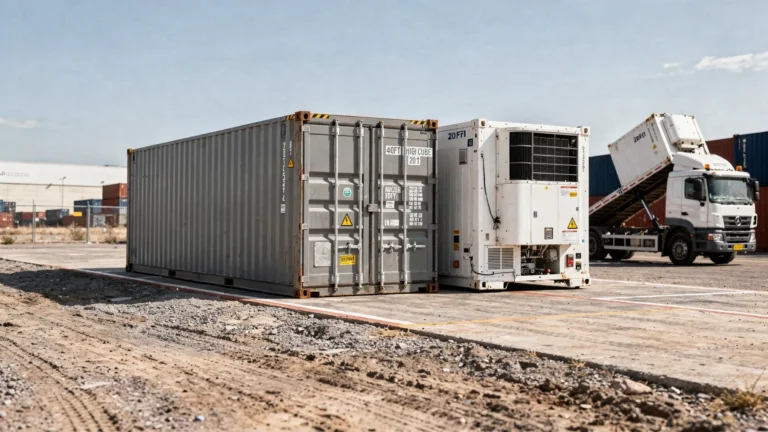
After grade, compare size. The two most common options are 20 ft and 40 ft containers, with High Cube versions available for extra interior height.
A 20 ft container is easier to place on tight jobsites, residential properties and smaller commercial lots. It is a common choice for tools, landscaping equipment, seasonal inventory and garage overflow. A 40 ft container gives you more storage per delivery, which can make sense for builders, agricultural operations, warehouses and real estate developers staging materials.
High Cube containers add about one foot of exterior height compared with standard-height units. That extra height can be useful if you are storing tall equipment, adding insulation, planning a mobile office or building out a modular interior.
| Container Type | Common Fit | Why Buyers Choose It |
|---|---|---|
| 20 ft Standard | Residential storage, small jobsites, tools | Easier placement and less site space required |
| 40 ft Standard | Bulk storage, construction materials, inventory | More capacity in one unit |
| 40 ft High Cube | Equipment, modifications, modular projects | Extra interior height for clearance and build-outs |
| Refrigerated Container | Food, flowers, pharmaceuticals, cold storage | Temperature control for cold chain needs |
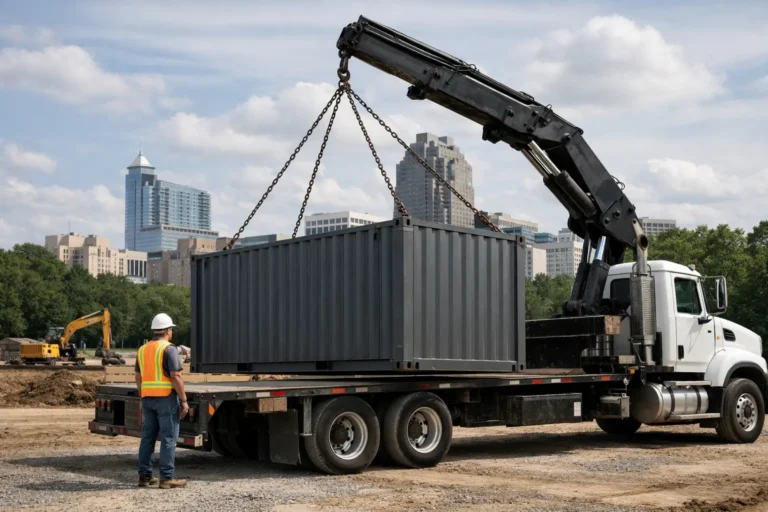
Before buying, measure more than the container footprint. Delivery trucks need room to maneuver, tilt, unload and exit safely. A 40 ft unit is not just twice the storage of a 20 ft unit. It also requires more planning for the drop spot.
For more detail on matching size and grade to your project, see this guide to choosing which Conex size and grade fit your needs.
Inspect the Structure Like a Buyer, Not a Browser
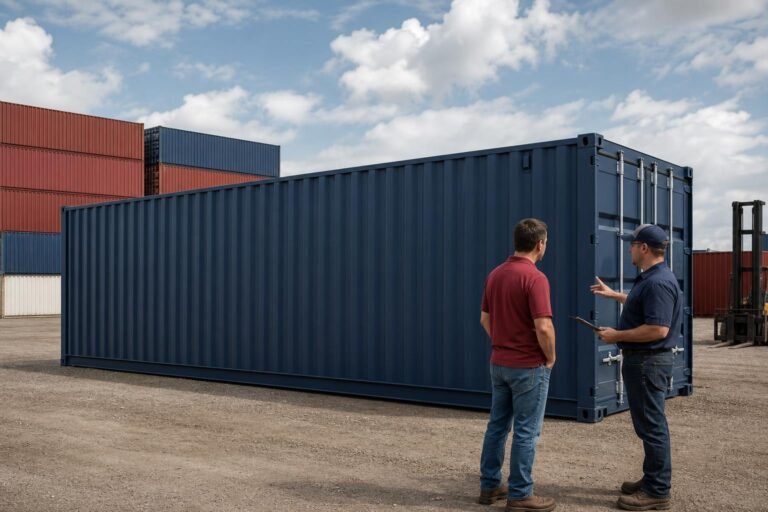
Photos can help, but they do not tell the whole story. When comparing used containers, look at the structural components that determine whether the unit will stay secure, dry and usable.
The frame, corner castings, crossmembers, roof bows and door posts are more important than surface scuffs. Cosmetic dents are normal on used containers, especially Cargo Worthy and WWT units. Deep corrosion, warped frames, holes and doors that will not seal are different concerns.
A practical inspection should focus on these areas:
- Roof: Look for holes, heavy dents that hold standing water and signs of patching.
- Side walls: Check for deep rust, punctures and severe bowing.
- Doors: Open and close both doors fully, then inspect locking rods, hinges, handles and gaskets.
- Floor: Look for soft spots, rot, chemical staining or delamination in the marine-grade plywood.
- Undercarriage: Check crossmembers and forklift pockets if visible.
- Interior light test: Step inside during daylight, close the doors and look for pinholes of light.
The light test is simple, but it is not the only inspection. A container can pass a quick light check and still have door gasket problems, floor issues or rust developing under old patches.

Compare Delivered Price, Not Yard Price
A common mistake is comparing only the container price before delivery. The number that matters is the total delivered cost to your site in Raleigh, elsewhere in North Carolina or anywhere else in the United States.
Delivery cost depends on distance from the depot, fuel, truck type, access conditions, container size and whether special equipment is required. A low container price can become less attractive if the unit is far away or the seller cannot clearly explain delivery requirements.
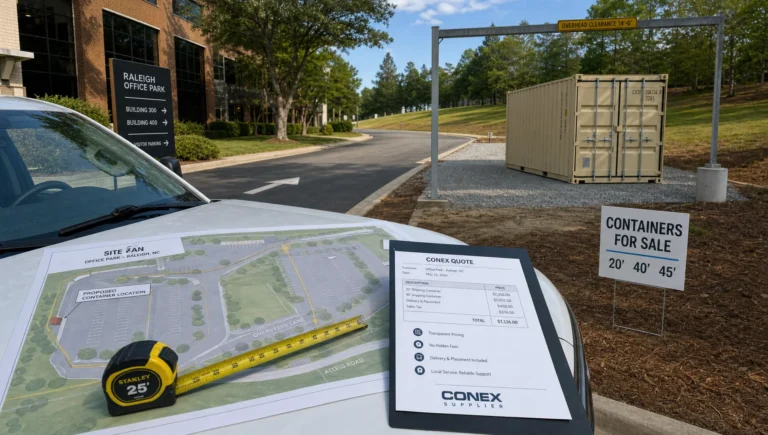
Ask each seller for a written quote that includes:
- Container size, height and grade
- Delivery address or ZIP code used for pricing
- Delivery method, such as tilt-bed ground delivery
- Any limits on driveway slope, road access or overhead clearance
- Whether taxes or additional fees are included
- Estimated delivery window
In the Southeast, site conditions vary widely. A property outside Raleigh may have long gravel access roads, uneven ground or tree clearance issues. A commercial lot near downtown may have tight turning space, overhead wires or limited unloading windows. A national delivery provider should be able to talk through those issues before the truck arrives.
For a closer look at how delivered cost changes, review Lease Lane's guide to what buyers should expect from Conex container prices.
Verify Seller Transparency
A reliable container supplier should be clear about what is being sold. Used containers vary, so transparency matters as much as inventory.
Be cautious if a seller will not define the grade, avoids delivery details or uses vague descriptions such as “like new” without explaining whether the unit is One-Trip, Cargo Worthy or WWT. Good suppliers are specific. They explain condition, delivery, limitations and what kind of use the unit is suited for.
Questions worth asking include:
- Is this container One-Trip, Cargo Worthy, Wind and Watertight or As-Is?
- Is it standard height or High Cube?
- Are the photos of the exact unit or a representative unit?
- Has the container been checked for leaks?
- Are the doors, gaskets and locking rods functional?
- Is the quote delivered to my site or priced from the yard?
- What site preparation is required before delivery?
For buyers comparing sellers, a local team with real delivery knowledge can be valuable. Raleigh-area customers, for example, benefit from working with a supplier that understands regional soil conditions, construction access, suburban driveways and rural North Carolina properties.
Pro-Tip: Prepare the Drop Site Before Delivery
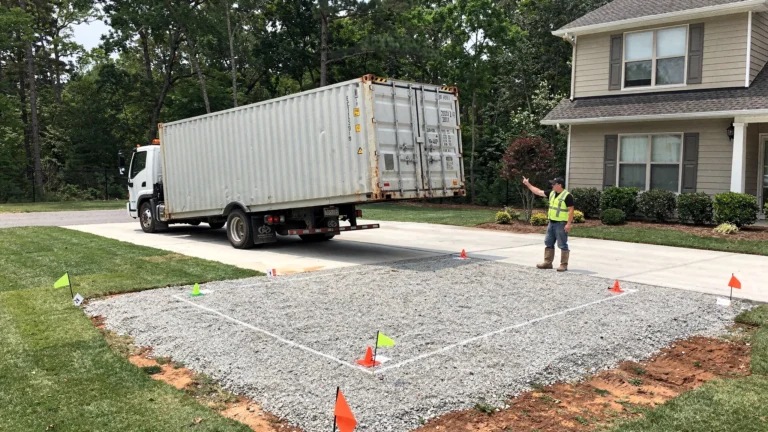
A good container can perform poorly if it is dropped on the wrong surface. Site preparation protects the container, makes doors easier to operate and reduces the risk of water pooling around the base.
For most storage uses, choose a level, well-drained area with enough space for the truck to back in and unload. A compacted gravel pad is often better than bare soil because it improves drainage and helps prevent settling. Concrete pads can work well too, especially for long-term commercial or industrial placement.
Place support under the four corners or along the container's structural rails rather than relying on uneven ground. If one corner settles, the frame can twist slightly and make the cargo doors harder to open. Even a small slope can become frustrating when you are using the unit every day on a jobsite.
Also check local rules before delivery. Permit requirements can vary by city, county, zoning district, HOA and intended use. In Raleigh and surrounding municipalities, short-term construction storage may be treated differently than a permanent accessory structure or a modified commercial unit. If you are unsure, call your local permitting office before scheduling delivery.
Match Grade to Buyer Type
The best used container is not the same for every buyer. Compare value based on risk, purpose and how long you expect to use the unit.
| Buyer Type | Usually Best Fit | Why |
|---|---|---|
| General contractors | WWT or Cargo Worthy | Secure tool and material storage with durable steel construction |
| Homeowners | WWT or One-Trip | Long-term storage with a balance of cost and appearance |
| Small businesses | WWT, Cargo Worthy or High Cube | Inventory overflow, retail storage or future modification potential |
| Logistics managers | Cargo Worthy | Better fit for transport and shipping requirements |
| Developers and modular builders | One-Trip or High Cube | Cleaner structure and extra height for modifications |
| Agricultural users | WWT or 40 ft units | Cost-effective equipment, feed or seasonal storage |
A homeowner may care more about appearance and door condition. A builder may care more about security and quick access. A logistics manager needs stronger documentation and structural confidence. Comparing used Conex containers for sale works best when you weigh each unit against its actual job.
Watch for Red Flags
Used containers are built for hard use, but some defects should change your decision or at least change the price.
Major warning signs include visible daylight through the roof or walls, heavy floor rot, doors that cannot close without force, severe corrosion around the bottom rails, missing lockbox components if security is important and vague grade descriptions. Fresh paint can improve appearance, but it should not be used to hide rust, patches or structural damage.
Be careful with unusually cheap containers advertised online. Scams and bait-and-switch listings are common in the broader container market. A legitimate supplier should have a real business presence, clear contact information, realistic delivery terms and a willingness to explain what you are buying.
Frequently Asked Questions
What is the best grade for used Conex containers for sale? The best grade depends on use. Wind and Watertight is often suitable for stationary storage, Cargo Worthy is better for transport or export and One-Trip is best when you want the cleanest condition and longer cosmetic life.
Are used Conex containers waterproof? A quality WWT container should keep out wind and rain under normal storage conditions. However, no used container should be assumed watertight without checking the roof, door gaskets, seams and interior light leaks.
Should I buy a 20 ft or 40 ft used Conex container? Choose a 20 ft container when space is tight or your storage needs are moderate. Choose a 40 ft container when you need more capacity and have enough delivery access. High Cube options are useful when height matters.
Can a used container be shipped internationally? It may be possible if the container is Cargo Worthy and has proper certification for transport. A WWT container is usually intended for ground storage, not international shipping.
Do I need a permit for a Conex container in Raleigh? It depends on location, duration, zoning, property type and intended use. Always check with the City of Raleigh, your county, your HOA or your local permitting office before delivery.
Talk With a Local Container Team Before You Buy
Comparing used Conex containers for sale is easier when you know the grade, size, structural condition and true delivered cost. Lease Lane Containers LLC supplies high-quality new One-Trip and used containers, including 20 ft, 40 ft, High Cube and refrigerated options, with clear guidance on container condition and site preparation.
If you are buying in Raleigh, elsewhere in North Carolina or need reliable delivery across the United States, contact the Lease Lane Containers sales team at sales@leaselanecontainers.com or visit the Raleigh office to discuss the right container for your property, jobsite or business.