20ft Shipping Container Prices in Raleigh, NC
Table of Contents
- Table of Contents
- Overview of the Raleigh Shipping Container Market
- Current Price Ranges for 20ft Containers in North Carolina
- Factors Influencing Container Costs in the Triangle Area
- Common Uses for 20ft Containers in Raleigh
- Customization Options and Their Impact on Price
- Local Regulations and Zoning for Raleigh Property Owners
- Where to Buy: Local Raleigh Suppliers vs. National Brokers
- Key Checklist Before Finalizing Your Purchase
Table of Contents
- Overview of the Raleigh Shipping Container Market
- Current Price Ranges for 20ft Containers in North Carolina
- New vs. Used Unit Pricing
- Seasonal Fluctuations and Local Demand
- Factors Influencing Container Costs in the Triangle Area
- Condition Grades: One-Trip vs. Cargo Worthy
- Delivery Fees and Logistics from Port to Raleigh
- Common Uses for 20ft Containers in Raleigh
- Residential Storage and Moving Solutions
- Commercial and Construction Site Applications
- Customization Options and Their Impact on Price
- Local Regulations and Zoning for Raleigh Property Owners
- Where to Buy: Local Raleigh Suppliers vs. National Brokers
- Key Checklist Before Finalizing Your Purchase
If you're shopping for a 20ft shipping container in Raleigh, NC, you've probably noticed that prices vary quite a bit depending on where you look. Some listings show containers under $2,000, while others push past $5,000 for what appears to be the same size unit. The difference usually comes down to condition, delivery distance, and whether you're buying from a local supplier or a national broker with hidden fees.
Raleigh sits in a favorable position for container buyers. The city's proximity to the Port of Wilmington and the major I-40 and I-95 corridors keeps transport costs reasonable compared to inland cities farther from the coast. That geographic advantage, combined with steady demand from the Triangle's growing construction and small business sectors, means you'll find competitive pricing if you know what to look for. This guide breaks down real price ranges, the factors that shift those numbers, and what you need to confirm before signing anything.
Overview of the Raleigh Shipping Container Market
Raleigh's container market has grown steadily over the past several years, driven by a construction boom across Wake County and rising demand from small businesses needing affordable storage. The Triangle area, which includes Durham and Chapel Hill, has seen population growth above the national average, and that growth fuels demand for both temporary and permanent container solutions on residential and commercial properties.
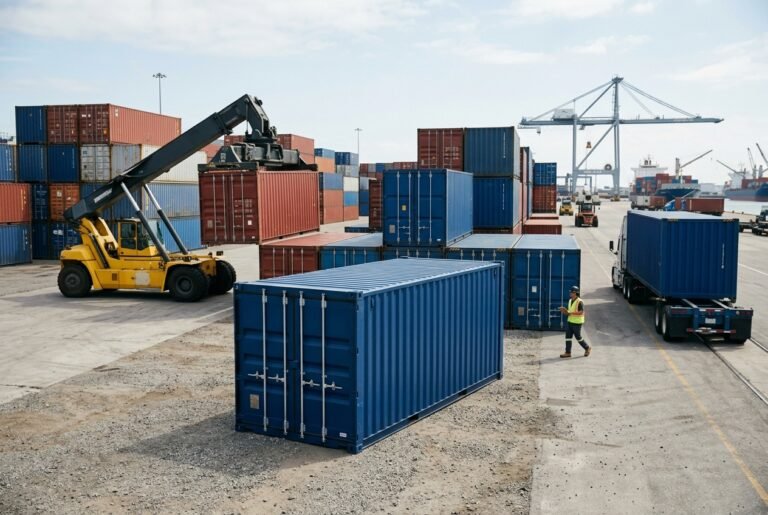
Most containers available in the Raleigh market arrive from the Port of Wilmington, roughly 150 miles southeast on I-40. Some suppliers also source from the Port of Norfolk in Virginia, about 200 miles northeast via I-85 and I-64. This dual-port access gives Raleigh buyers more inventory options than many mid-Atlantic cities.
Demand tends to track with the construction calendar. Spring and summer see the highest volume of purchases, particularly from contractors outfitting job sites. Homeowners and farm owners typically buy year-round, though fall and winter can offer slightly better pricing due to reduced competition.
Current Price Ranges for 20ft Containers in North Carolina
A 20ft shipping container in North Carolina generally costs between $1,800 and $5,200, depending on condition and whether delivery is included. That's a wide range, so understanding what drives the price up or down is critical before you commit.
New vs. Used Unit Pricing
A one-trip container, sometimes called "new," has made a single ocean voyage from the manufacturer (usually in China) to a U.S. port. These units arrive in near-perfect condition with minimal surface wear, intact factory paint, and fully functional doors. Expect to pay between $3,800 and $5,200 for a one-trip 20ft container delivered to the Raleigh area.
Used shipping containers fall into several condition grades, and pricing reflects that. A cargo worthy unit in solid structural shape with functional doors and no major rust typically runs $2,200 to $3,200. Wind and watertight units, which are structurally sound but may have cosmetic damage or older seals, range from $1,800 to $2,600. Units below wind and watertight grade are generally only suitable for non-weather-sensitive dry storage or scrap, and they're priced accordingly under $1,500.
Seasonal Fluctuations and Local Demand
Prices aren't static throughout the year. Spring and early summer bring the highest demand in the Triangle, especially from general contractors starting new builds. If you're flexible on timing, buying in late fall or winter can save you $200 to $400 on the same unit.
Global shipping trends also affect local pricing. When international freight rates drop, surplus containers accumulate at ports, and that pushes used container prices down. The reverse happened in 2021 and 2022 when freight disruptions drove container prices to record highs. Prices have since normalized, but staying aware of broader market conditions helps you time your purchase.
Factors Influencing Container Costs in the Triangle Area
Price tags alone don't tell the full story. Two containers listed at the same price can represent very different value depending on condition, delivery logistics, and what's included.
Condition Grades: One-Trip vs. Cargo Worthy
Understanding container grades prevents the most common buyer mistakes. Here's how the standard grades break down:
- One-trip: Single ocean voyage, near-new condition, factory paint, clean interior, tight seals. Best for visible placement, conversions, or long-term storage of sensitive items.
- Cargo worthy (CW): Certified for international shipping. Structurally sound, functional doors, may show surface rust or minor dents. Ideal for job sites, farm storage, and general-purpose use.
- Wind and watertight (WWT): Keeps weather out but may have older gaskets, surface corrosion, or cosmetic issues. No longer certified for ocean transport. Good for dry storage where appearance isn't a priority.
- As-is: Sold without warranty on condition. May have holes, damaged doors, or significant rust. Only suitable for very specific, low-risk applications.
Lease Lane Containers provides transparent grading guidance so buyers can match the right condition to their actual use case, whether that's a backyard workshop or a construction laydown yard.
Delivery Fees and Logistics from Port to Raleigh
Delivery is often the hidden cost that catches first-time buyers off guard. A tilt-bed truck, the most common delivery method for 20ft containers, typically costs between $150 and $400 for deliveries within 50 miles of Raleigh. Longer hauls from port cities can add $500 to $800.
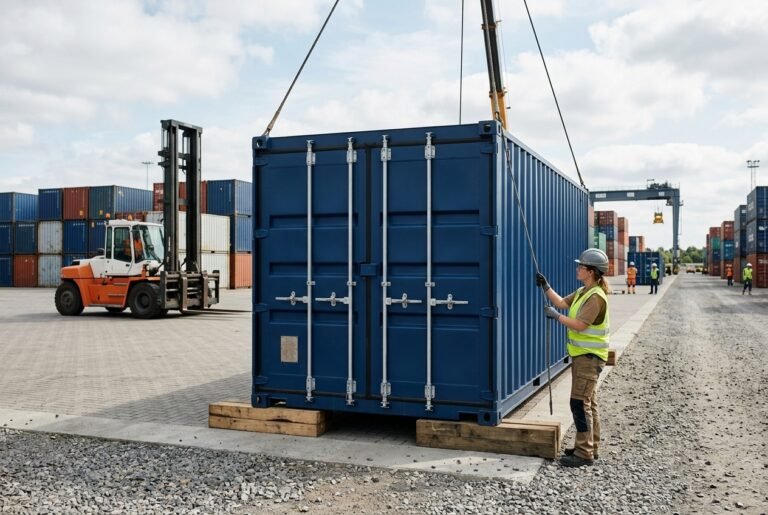
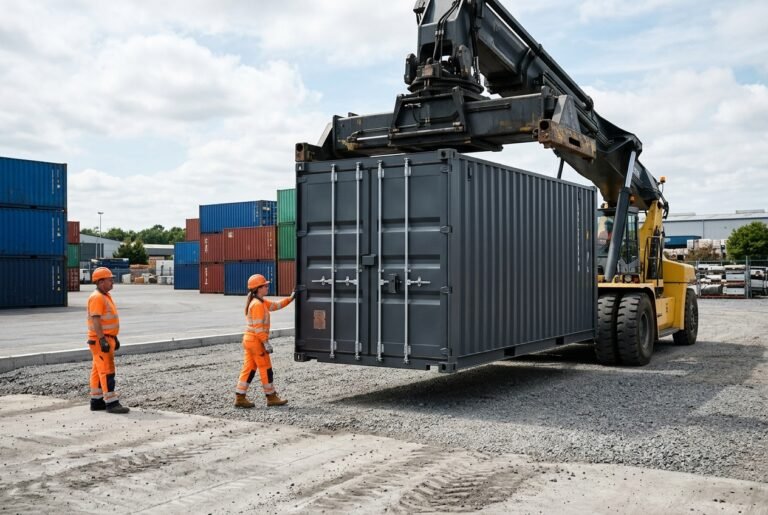
Your site needs to accommodate the delivery vehicle. A tilt-bed truck requires roughly 100 feet of straight clearance to slide the container off the back, plus adequate overhead clearance for power lines and tree branches (minimum 14 feet). If your property has a tight driveway or limited turning radius, discuss this with your supplier before scheduling. Lease Lane Containers offers delivery planning support that covers access requirements, turning radius, overhead clearance, and placement logistics so the container arrives and lands correctly on the first attempt.
Common Uses for 20ft Containers in Raleigh
A 20ft shipping container measures roughly 20 feet long, 8 feet wide, and 8.5 feet tall (or 9.5 feet for a high cube). That's approximately 160 square feet of floor space and 1,360 cubic feet of storage volume in a standard-height unit. It's a practical size for dozens of applications.
Residential Storage and Moving Solutions
Homeowners across Wake County use 20ft containers for overflow storage during renovations, seasonal equipment, lawn care tools, and even as secure workshops. If you're between homes or staging a property for sale, a container on your lot keeps belongings accessible without the recurring cost of a self-storage facility.
The 20ft size fits comfortably on most residential driveways and side yards. It's large enough to hold the contents of a small apartment or a full garage's worth of tools and equipment, but compact enough to avoid dominating your property. Some homeowners in neighborhoods like North Hills and Brier Creek have used containers as temporary moving storage, loading at their own pace rather than paying hourly movers.
Commercial and Construction Site Applications
Contractors in the Triangle rely on 20ft containers for tool storage, material lockup, and mobile offices on job sites. A single unit can secure thousands of dollars' worth of power tools, fasteners, and small equipment overnight, reducing theft risk significantly compared to open trailers or unlocked sheds.
Small businesses use them for inventory overflow, especially retail operators during peak seasons. Restaurants, breweries, and event companies in downtown Raleigh often keep a container on-site or at a nearby lot for furniture, signage, and seasonal supplies. The 20ft footprint is small enough to fit in a standard parking space while still offering meaningful storage capacity.
Customization Options and Their Impact on Price
A basic container works for straightforward storage, but many buyers need modifications. Common customizations for 20ft units include:
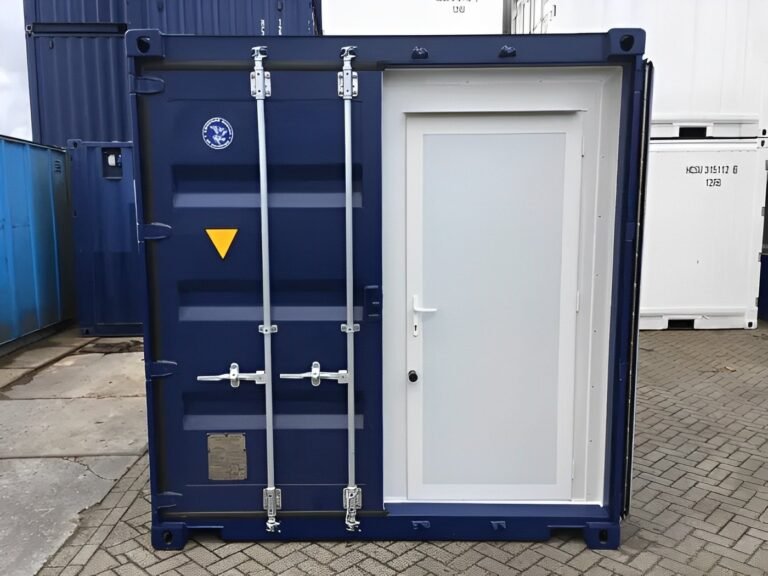
- Roll-up doors (replacing or supplementing the standard double swing doors): $800 to $1,500 installed
- Personnel doors with a lockset: $600 to $1,200
- Windows (fixed or operable): $400 to $900 each
- Interior insulation and climate control: $2,000 to $5,000 depending on scope
- Electrical packages (lighting, outlets, panel): $1,200 to $3,000
- Shelving and workbench installations: $300 to $1,000
If you're planning a container office, workshop, or retail pop-up, these modifications can easily double the base price. Get modification quotes before you buy the container itself, because some grades are better suited to certain modifications. A one-trip unit with clean walls and straight framing is easier and cheaper to modify than a heavily dented cargo worthy unit that needs prep work first.
Local Regulations and Zoning for Raleigh Property Owners
Raleigh's Unified Development Ordinance (UDO) governs where and how you can place a shipping container on your property. The rules differ depending on your zoning district and intended use.
In most residential zones, a shipping container used for storage is treated as an accessory structure. You'll typically need to meet setback requirements, which means the container can't sit too close to property lines or public rights-of-way. Some HOAs in Wake County have additional restrictions or outright prohibitions, so check your covenants before ordering.
For commercial properties, containers used as temporary storage on construction sites generally fall under temporary use permits. If you're placing a container permanently for business storage or as a modified structure (like a container office), you may need a building permit. Contact the City of Raleigh's Development Services office at (919) 996-2600 or visit raleighnc.gov for current permit requirements. Wake County's building inspections department handles properties outside city limits.
Where to Buy: Local Raleigh Suppliers vs. National Brokers
You have two main purchasing channels: local suppliers based in or near Raleigh, and national online brokers who list inventory from depots across the country.
Local suppliers offer several advantages. You can often inspect the container before buying, delivery distances are shorter (which means lower transport costs), and you're dealing with someone who understands Triangle-area logistics. If something goes wrong with delivery or the unit doesn't match what was described, resolving issues is faster with a local company.
National brokers sometimes list lower base prices, but watch for added fees. Delivery charges, depot pickup fees, and condition discrepancies are common complaints with large online marketplaces. A container listed at $1,900 from a depot in Savannah might cost $2,800 after transport to Raleigh, plus you haven't seen the unit in person.
Lease Lane Containers operates out of Raleigh and combines local delivery planning knowledge with access to both new and used inventory. That local presence means you get honest guidance on grades, realistic delivery timelines, and someone who can help you plan site access before the truck shows up.
Key Checklist Before Finalizing Your Purchase
Before you sign a purchase agreement or put down a deposit, run through these items:
- Confirm the container grade in writing. Ask for photos of the specific unit, not stock images.
- Get a delivered price, not just the container cost. Delivery fees should be quoted separately and clearly.
- Measure your placement site. You need at least 100 feet of straight-line clearance for tilt-bed delivery, 14 feet of overhead clearance, and firm, level ground.
- Check zoning and HOA rules. Contact the City of Raleigh or Wake County planning office if you're unsure about setback or permit requirements.
- Inspect the doors. Swing them fully open and closed. Sticky or misaligned doors signal frame damage.
- Look at the floor. Plywood flooring should be dry, solid, and free of soft spots or chemical odors.
- Check the roof for dents or standing water. Even small ponding areas can lead to corrosion over time.
- Ask about the return or dispute policy. Reputable suppliers have clear terms if the unit doesn't match the described grade.
- Plan your foundation. Gravel pads, concrete piers, or railroad ties keep the container level and off wet ground.
- Get your delivery date confirmed in writing, along with a contact number for the driver.
A 20ft container is a practical, long-lasting investment when you buy the right unit at a fair price. Taking an extra hour to verify condition, delivery logistics, and local regulations saves you from costly surprises after the container hits your property.
If you're ready to compare options, browse available inventory at Lease Lane Containers to see current 20ft shipping container choices, grades, and pricing. The Raleigh-based team can help you match the right container to your project and plan delivery logistics before you commit.