How to Spot Quality Containers Before You Buy
Buying a shipping container is deceptively simple: pick a size, pick a color, schedule delivery. The reality is that the difference between a great deal and a money pit usually comes down to condition. If you want quality containers that stay dry, secure, and structurally sound for years, you need to know what to inspect and what questions to ask before money changes hands.
This guide walks you through a practical, buyer-friendly inspection process so you can confidently compare listings, avoid common red flags, and choose a container that fits your project.
To compare container options by size, condition, and use case, browse our full shipping container inventory before making a final decision.
What “quality” means for a shipping container (and why it matters)
“Quality” is not just about cosmetic appearance. A quality container is one that matches your intended use and performs the basics reliably:
-
Weather protection: wind and watertight, no active leaks, doors seal properly.
-
Structural integrity: no major frame twist, roof cave-ins, or compromised corner castings.
-
Security: doors close smoothly and can be secured; lock area is not bent or cracked.
-
Safe interior: flooring is intact, no chemical odors, and no obvious contamination.
A container can look rough on the outside and still be a great storage unit. It can also look freshly painted and still leak or have hidden floor damage. Your goal is to verify performance, not just appearance.
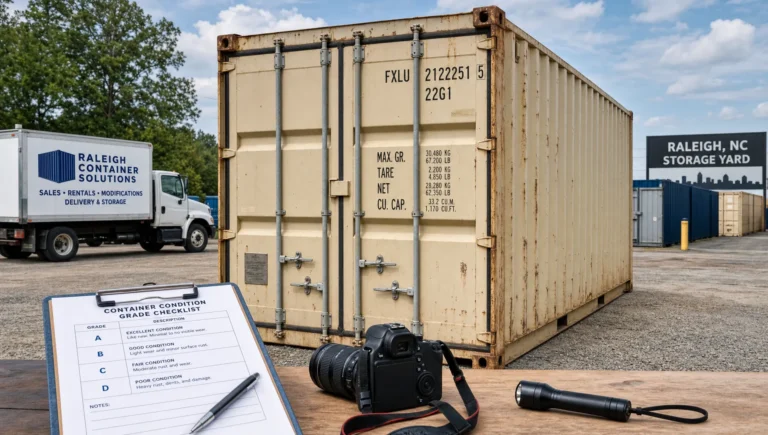
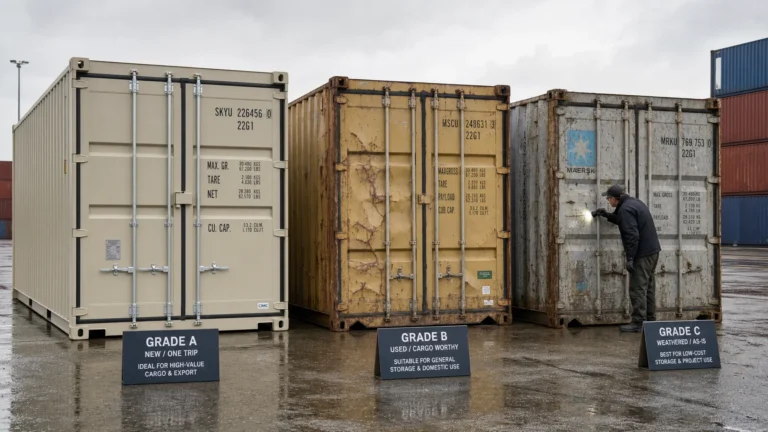
Understand common container “grades” (and verify them)
Sellers often describe containers using industry terms, but the same label can be used loosely. Treat grades as a starting point and confirm with photos, an inspection, or written condition notes.
If you want a clearer breakdown of common grades, read our Container Conditions guide for a deeper look at one-trip, cargo-worthy, and wind and watertight options.
Here are common terms you will see:
-
New (often called “one-trip”): Typically used for a single overseas shipment, then sold. Usually the cleanest option with minimal wear.
-
Used (storage-worthy or similar): Usually functional for storage, with visible dents, surface rust, and cosmetic wear.
-
Cargo-worthy / CSC-plated: Often implies the container meets requirements to move in international transport, which is tied to having a valid safety approval plate and condition. If you need this for shipping, ask for specifics.
-
Wind and watertight (WWT): Generally means no holes and no active leaks under normal conditions. Ask how this was verified.
-
As-is: Expect issues, which might be fine for parts, heavy modification projects, or tight budgets.
Buyers considering a cleaner, lower-wear option can also review our Buyers Guide to see when a one-trip container is worth the extra cost.
If your use is on-site storage, a wind and watertight container with solid doors and floors is usually the practical baseline. If you are planning international transport, you may need documentation related to the International Convention for Safe Containers (CSC). For background on container safety requirements, see the International Maritime Organization (IMO) overview of containers and the CSC Convention.
A step-by-step inspection checklist (what to look for in person)
If you can inspect in person, even a 10 minute walkthrough can prevent expensive surprises. Bring a flashlight, gloves, and (if allowed) a small step stool so you can see the roofline.
If you already know you need a compact storage unit, start by comparing our current 20ft shipping containers to see what condition levels and price points are available.
1) Check the container is square and structurally sound
Start with the big picture: does it look straight?
-
Stand at each corner and sight down the sides. Major waviness can be normal, but watch for signs of twist.
-
Look at the corner castings (the heavy corner blocks). Cracks, severe deformation, or obvious repairs should prompt questions.
-
Examine the top and bottom rails along the long sides. Severe kinks can indicate impact damage.
Why this matters: A twisted frame can make doors hard to open and close, and it can compromise weather sealing.
2) Inspect the roof (a top source of leaks)
Container roofs are thin compared to the rest of the structure, and they take abuse from loading and stacking.
Look for:
-
Roof bows or large dents where water can pool.
-
Patches or welds (not always bad, but they should look professional and sealed).
-
Pinholes from rust, which can drip only during certain rain conditions.
If you cannot get above it, inspect the interior ceiling carefully for rust trails or water staining.
3) Test the doors like you mean it
Doors are where “looks fine” often turns into “constant frustration.”
-
Open and close both door leaves fully.
-
Check the cam rods and locking gear for bending.
-
Look at the gaskets (rubber seals). Missing or torn gaskets can lead to water intrusion.
-
Confirm the handle area is not severely bent (a common sign of forced entry attempts).
A quality storage container should have doors that operate smoothly and seal consistently.
4) Evaluate the floor (the hidden deal-breaker)
Floors take the most abuse and can be expensive to fix correctly.
Look for:
-
Soft spots: Walk the full interior, especially near the doors and side edges.
-
Delamination: Plywood layers separating or flaking.
-
Oil staining: Some stains are harmless, some are not. If there is a strong odor or sticky residue, ask about prior use.
-
Wavy steel crossmembers underneath (if you can see below), which may indicate overloading.
Many container floors are marine-grade plywood and may have been treated for durability. If you are sensitive to odors or plan to convert the container into a workspace, be extra cautious about floor condition and interior smell.
5) Do a light test for holes and leaks
A simple test: close the doors (or stand inside while someone else closes them) and look for daylight.
-
Tiny points of light can indicate pinholes.
-
Larger slivers of light near the door perimeter can indicate sealing issues.
Follow up by inspecting the exterior at those exact locations.
6) Check vents, interior cleanliness, and odor
Most standard containers have vents. Confirm they are present and intact.
Inside, quality for storage usually means:
-
No strong chemical smell.
-
No standing moisture.
-
No signs of active mold growth.
A musty odor can be a sign of long-term moisture intrusion, which could mean hidden leaks or poor door sealing.

Quick reference table: what “good” looks like vs red flags
Use this table when comparing multiple containers or reviewing a seller’s photos.
| Inspection area | What you want to see | Red flags | Why it matters |
|---|---|---|---|
| Roof | No ponding dents, no rust-through | Rust pinholes, large bowed dents, heavy patchwork | Roof issues are a top leak source |
| Doors | Open/close smoothly, gaskets intact | Bent locking rods, missing seals, warped door frame | Affects security and watertightness |
| Floor | Solid underfoot, no soft spots | Soft areas, delamination, strong chemical odor | Floor repairs can be costly |
| Side panels | Normal dents, no holes | Holes, severe creases, heavy corrosion | Impacts weatherproofing and strength |
| Corner castings/frame | Straight, no major cracks | Cracks, obvious distortion, poor weld repairs | Structural and handling safety |
| Interior | Dry, minimal odor, no active mold | Musty smell, wet surfaces, staining trails | Suggests leaks or contamination |
When you cannot inspect in person: what to request
If the container will be delivered directly to your property, you may not get a chance to inspect it on a yard first. In that case, request proof that matches the exact unit.
Ask for:
-
Photos of the actual container (not “example photos”), including:
-
All four exterior sides
-
Close-ups of door seals and locking gear
-
Interior from both ends
-
Floor close-ups near the doors
-
Roof (if possible)
-
-
The container number (so photos can be tied to a specific unit).
-
Clear condition notes in writing (for example, wind and watertight confirmation, door function, floor condition).
-
Warranty terms and what is covered.
If a seller cannot or will not provide unit-specific photos and condition details, treat that as a meaningful signal.
Match container condition to your use case
Not everyone needs the “best looking” container. You need the right condition for your job.
| Your use case | Practical condition target | Notes |
|---|---|---|
| General on-site storage | Wind and watertight, solid floor, good doors | Cosmetics matter less than dry storage |
| Jobsite tools/materials | Strong doors, secure locking area, minimal leaks | Expect dents, prioritize function |
| Business inventory | Cleaner interior, odor-free, reliable sealing | Consider new or higher-condition used |
| Conversion (office, workshop) | Straight frame, clean interior, fewer patches | Modifications go smoother on better shells |
| International transport | Verify CSC-related requirements with seller | Ask for documentation and specifics |
For buyers who need extra room for storage, equipment, or conversion projects, our available 40ft shipping containers are a practical next step to compare.
Common “too good to be true” red flags
Some warning signs show up again and again.
Fresh paint with no explanation
A quick paint job can make a tired container look “like new” in photos. Paint is not bad, but you should still verify:
-
Roof condition
-
Floor integrity
-
Door operation
-
Rust-through areas that may have been covered
If your priority is value over appearance, you can review our current used shipping containers and focus on structural condition, doors, and floor integrity rather than cosmetic wear alone.
“Watertight” without details
Ask how it was verified. Was it visually checked, light tested, or pressure tested? Not every seller uses the same standard.
Heavy floor damage near the doors
The first few feet inside the doors often take the hardest abuse from forklifts and pallet impacts. If those boards are compromised, your storage may not be safe or level.
Severe corrosion at the bottom rails
Surface rust is normal on used containers. Rust that has eaten into the steel at the bottom rails or around corner castings can be a serious durability issue.
Questions to ask the seller before you buy
A short, direct Q&A can reveal a lot about quality and transparency.
-
Is the listing for the exact unit I will receive?
-
Has the container been confirmed wind and watertight? If yes, how was it checked?
-
Do the doors open and close smoothly? Are the gasket seals intact?
-
Are there any known floor soft spots, holes, or patches?
-
What was the container used for previously (general cargo, specific goods, unknown)?
-
What are the delivery requirements at my property (clearance, slope limits, surface type)?
-
What warranty is included, and what does it cover?
Clear answers are often as important as condition, because they signal you are dealing with a seller who will support you if something goes wrong.
Do not overlook delivery and placement (quality includes the “last mile”)
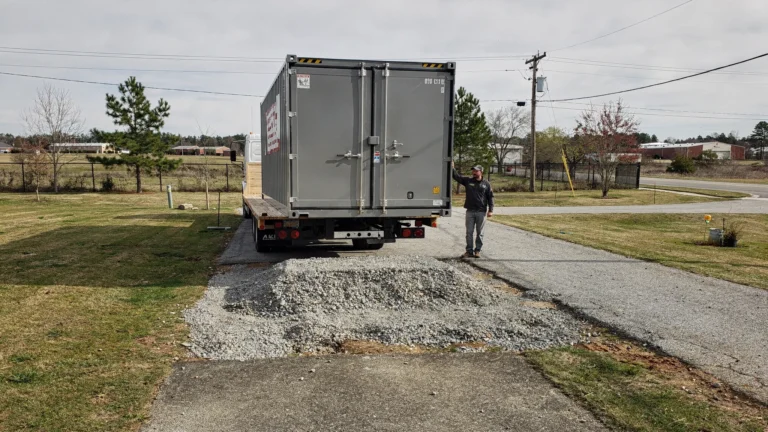
A quality container delivered poorly can arrive damaged, or end up placed in a spot that creates long-term problems (standing water, blocked doors, difficult access).
Before delivery day:
-
Choose a level, well-drained location.
-
Plan clearance for the truck to enter, turn (if needed), and exit.
-
Decide door orientation (think about how you will access items).
-
Consider a stable base (gravel, concrete, or appropriately prepared supports, depending on your site).
Before ordering, review our Shipping Policy so you understand delivery coverage, timing, and what to prepare at your site in advance.
Lease Lane Containers LLC emphasizes helping customers plan the drop spot and understand pricing clearly. That kind of pre-delivery planning is often what separates a smooth purchase from a stressful one.

Frequently Asked Questions
What is the best way to spot quality containers quickly? Focus on the roof, doors, and floor first. A container that is dry (no leaks), has working doors and intact seals, and a solid floor is usually a strong storage candidate.
Are dents a problem on a used shipping container? Often, no. Many used containers have dents from normal service. Prioritize structural issues (twist, frame damage, holes, severe corrosion) over cosmetics.
How can I tell if a container is really wind and watertight? Do a light test for pinholes and inspect for water stains on the ceiling and wall seams. If buying remotely, request photos of the exact unit and written condition notes.
What should I ask for if I need a container for international shipping? Ask the seller about CSC-related documentation and whether the container is suitable for your shipping requirements. Requirements can vary by situation, so confirm with the carrier as well.
Is a “one-trip” container worth the extra cost? For many buyers, yes, especially if you want a cleaner interior, fewer repairs, and smoother doors. For basic storage, a good used wind and watertight container can be a better value.
Need help choosing a container you can trust?
If you want a straightforward buying process and guidance picking the right container for your site, Lease Lane Containers LLC offers new and used shipping containers, trailers, and custom container solutions with transparent pricing, reliable delivery, and local expert support.
Explore our full container selection or contact our team for help choosing the right size, condition, and delivery setup for your property.

13 Comments