7 Practical Open Top Container Uses
If your cargo cannot clear standard container doors or needs to be loaded from above by crane, open top container uses become very practical very quickly. This is not a niche equipment choice for rare edge cases. For contractors, equipment operators, and shippers moving awkward, tall, or heavy materials, an open-top unit often solves a handling problem that a standard dry container cannot.
An open top container is built with the same basic footprint as a standard ISO shipping container, but the roof is removable or covered with a tarpaulin instead of fixed steel. Many units also have removable roof bows and, depending on the model, removable door headers to improve loading access. That matters when you are dealing with machinery, pipes, steel components, timber, scrap, or palletized materials that are easier to lower in from above than push through end doors.
For most buyers, the question is not whether open-top containers are useful. It is whether they are the right choice for your specific cargo, site conditions, and delivery plan. That depends on what you are loading, how often you need access, and whether weather protection or stacking strength is a priority.
If you are comparing specialized containers against standard storage options, browse our shipping container inventory so you can match access needs, cargo type, and delivery fit before buying.
Where open top container uses make the most sense
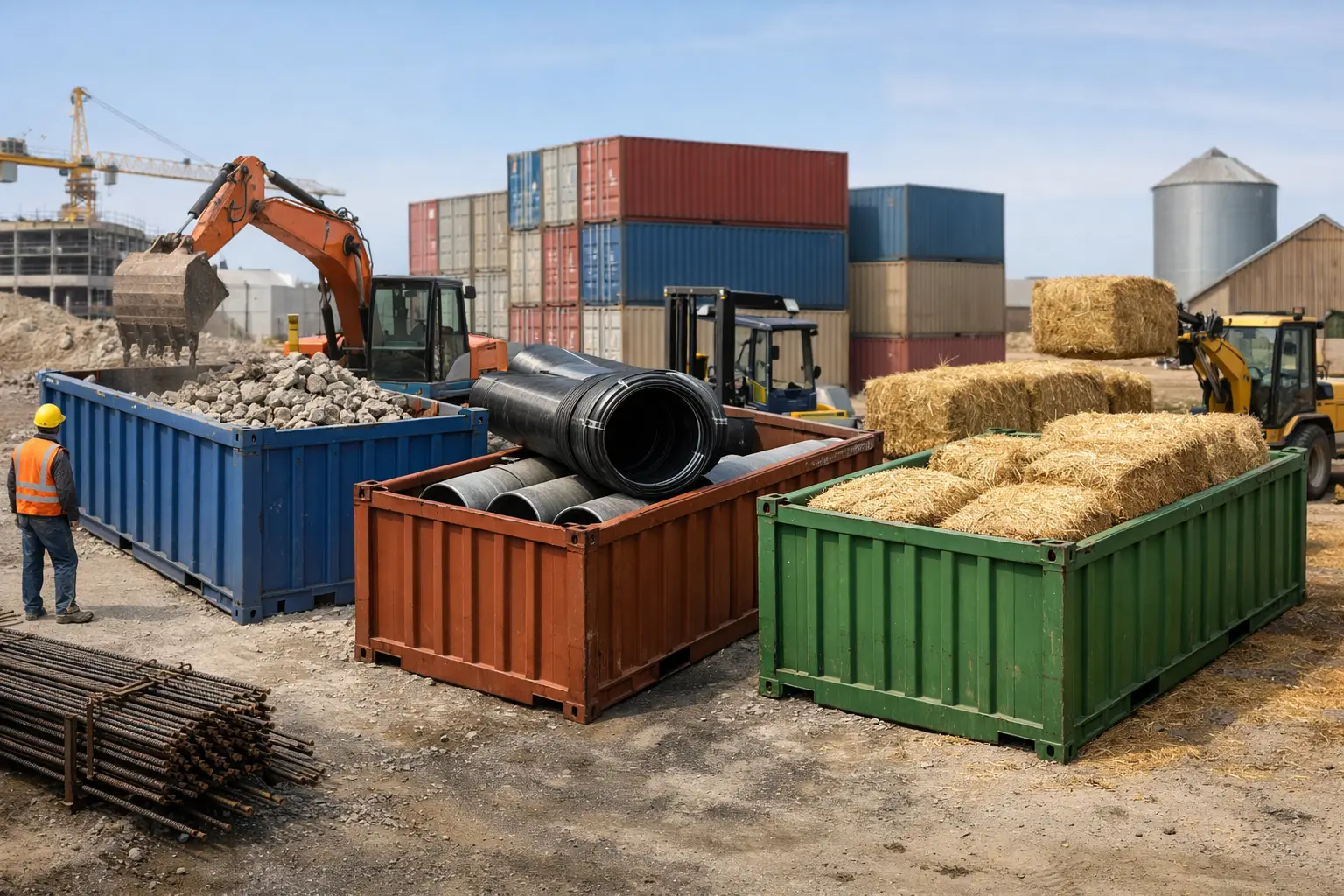
The strongest use case is oversized or top-loaded cargo. On construction sites, that often means generators, compact equipment attachments, rebar bundles, scaffolding components, and fabricated steel sections. If a forklift cannot safely maneuver the load through standard doors, or if the cargo height creates clearance issues, top loading with a crane or other lifting equipment is usually more controlled.
Agricultural operators also use open-top containers for seasonal storage and transport of bulky materials. Feed equipment, irrigation parts, fencing supplies, and odd-shaped implements do not always fit neatly through standard container openings. An open top unit gives more flexibility when the load is long, uneven, or simply difficult to stage by forklift.
Industrial buyers tend to use them for machinery parts, dense materials, and project cargo. In those cases, loading path matters as much as interior dimensions. A standard container may have enough cubic capacity on paper, but if the item cannot physically pass through the door opening, the specification does not help. Open-top units solve that issue without moving to a flat rack, which may expose cargo more fully and provide less enclosure.
If you are still comparing top-loading access against standard door loading, our shipping container size guide helps you choose the right format before committing to a specialty unit.
Common open top container uses by industry
Construction and job sites
Construction firms often choose open-top containers when they need secure on-site storage for materials that arrive by crane or telehandler. Steel beams, formwork, demolition equipment, and concrete accessories can be lowered directly into the container, then secured and covered. This reduces repeated handling, which saves time and lowers the chance of damage.
There is also a site logistics benefit. When materials are staged inside a lockable steel container instead of left under loose tarps or temporary sheds, inventory is easier to control. For high-value tools and parts, that matters as much as weather protection.
For buyers who may not actually need an open top, our 20ft shipping containers are often the simpler choice for secure on-site storage with normal forklift access.
Heavy equipment and machinery
Some machinery components are not especially long, but they are too tall or too awkward for a standard container door frame. Engines, pumps, tanks, and fabricated assemblies often fall into this category. With an open top unit, crews can lower the item vertically, brace it properly, and avoid the angle changes required to force a fit through end doors.
That said, this only works if the floor rating and payload limits match the cargo. Concentrated loads can create problems if weight is not distributed correctly. A container may be structurally sound overall, but point loading one section of the floor is a different issue entirely.
If vertical clearance is the real problem rather than top loading, compare a 40ft High Cube container before moving to a fully specialized format.
Agriculture and rural properties
For farms and rural operations, open-top containers can function as practical storage for bulky seasonal equipment, pipe, lumber, and maintenance supplies. They are also useful where loading equipment is available but maneuvering room is limited. Dropping items in from above can be more efficient than trying to reverse a forklift into a narrow approach.
For long-term static storage, weather exposure becomes the trade-off. The tarpaulin cover protects contents, but it is not the same as a permanent steel roof. If you need frequent overhead loading, that flexibility is valuable. If you need the strongest possible weather barrier for years of unattended storage, a standard or high-cube dry container may be the better fit.
Scrap, recyclables, and bulk materials
Another one of the more common open top container uses is temporary containment for scrap metal, recyclables, and demolition debris. Top loading is fast, and the container walls provide more containment than open bins in some site environments. This can be useful when the material needs to remain more secure before pickup or transfer.
Still, not every scrap application is ideal for this format. Sharp edges, shifting loads, and moisture buildup can accelerate wear. Buyers using containers in heavy debris cycles should think carefully about condition grade and expected service life.
Why not just use a standard container?
A standard container is still the default for many storage and transport jobs because it gives full steel roof protection, strong security, and broad availability. In many cases, it is also more economical and easier to source quickly. If your cargo fits through the doors and can be forklifted normally, a dry van container may be the simpler answer.
Open-top containers earn their keep when handling access is the real constraint. That is the difference many first-time buyers miss. Interior volume alone does not decide the purchase. Door clearance, loading method, and site equipment often matter more.
If your cargo still fits through standard doors and your priority is weather-tight long-term storage, our used shipping containers may be the better-value fit.
There is also a middle ground. Some buyers initially ask for an open top container when what they actually need is a high-cube unit for extra vertical clearance. Others need a flat rack because the cargo exceeds not only roof height but sidewall limitations as well. The right equipment depends on dimensions, weight, and how exposed the cargo can be during storage or transit.
What to verify before choosing an open-top unit
Cargo dimensions and lift plan
Measure more than overall length, width, and height. Include lifting points, rigging clearance, and the path the load will take into the container. A piece of equipment may technically fit inside but still be difficult to lower safely if the crane angle, spreader bar, or sling setup requires additional clearance.
Container grade and condition
If the container will be used for static storage on a job site, many buyers focus on whether it is Wind & Watertight or Cargo Worthy. WWT generally means the container is suited for secure storage with no active leaks and solid doors and floors. Cargo Worthy usually refers to a higher standard for international transport readiness, though exact requirements should always be verified.
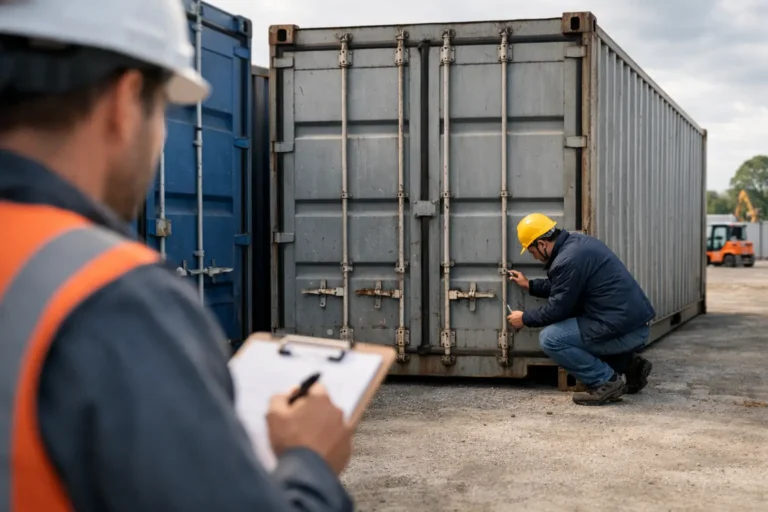
For open-top units, pay close attention to the tarpaulin, roof bows, corner castings, door seals, and floor condition. Those components affect real-world performance more than a simple grade label.
For a clearer breakdown of WWT, Cargo Worthy, and One-Trip standards, review our Container Conditions guide before choosing by format alone.
Site access and delivery method
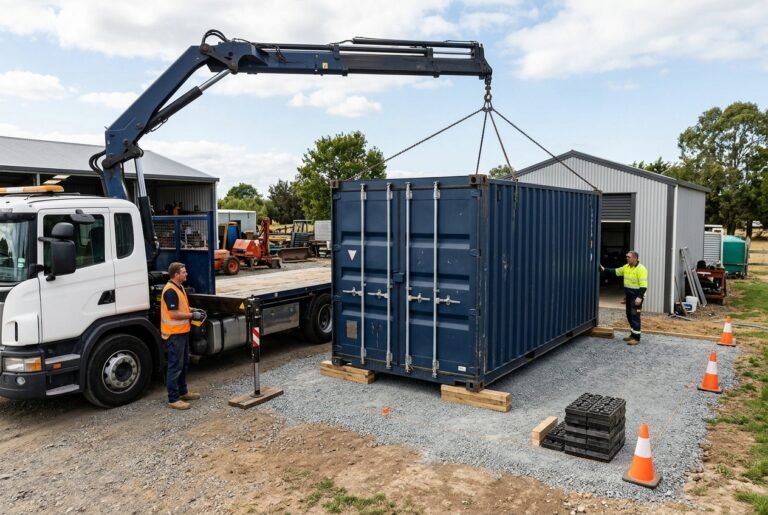
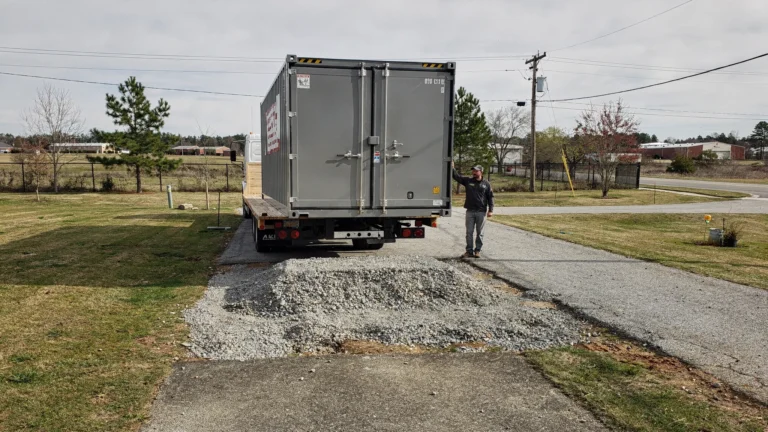
Delivery is not a small detail. An open-top container still needs adequate clearance for truck access, placement, and unloading. If your site has tight turns, soft ground, overhead power lines, or a narrow gate, those factors should be reviewed before the unit ships. Tilt-Bed and Ground-Level delivery options can be a major advantage, but only if the site is prepared correctly.
If you are unsure whether your property can handle specialty delivery access, contact our team before ordering so you can confirm truck approach, unloading space, and clearance.
Security and weather exposure
Open-top containers are secure steel units, but their roof system is different by design. If your inventory includes electronics, fine-finish materials, paper goods, or anything highly moisture-sensitive, be realistic about that limitation. For some cargo, convenience in loading is worth it. For others, it creates unnecessary risk.
When an open-top container is the right call
The best candidates are buyers with oversized, heavy, or crane-loaded materials who still want the sidewall protection and lockable security of a container. Contractors storing fabricated components, farms managing awkward seasonal equipment, and industrial operators loading dense parts from above are all common examples.
The wrong fit is usually someone trying to force a specialized container into a general storage role. If your main need is long-term weather-tight storage with simple forklift access, a standard unit is often better value. If your cargo exceeds the practical limits of the sidewalls or requires side loading, you may need a different piece of equipment entirely.
At Lease Lane Containers, these are the details worth sorting out before delivery, not after. The right container should match the cargo, the site, and the handling plan with clear pricing and verified specifications.
If you want to compare specialized access needs against standard ownership costs, review our Ultimate Shipping Container Buyers Guide before making the final call.
A good container decision usually comes down to one simple question: are you solving for space, or are you solving for access? If access is the real issue, an open-top unit can save time, reduce handling headaches, and give you a cleaner operation from day one.