Open Top Container Guide: Loading, Tarps, and Common Uses
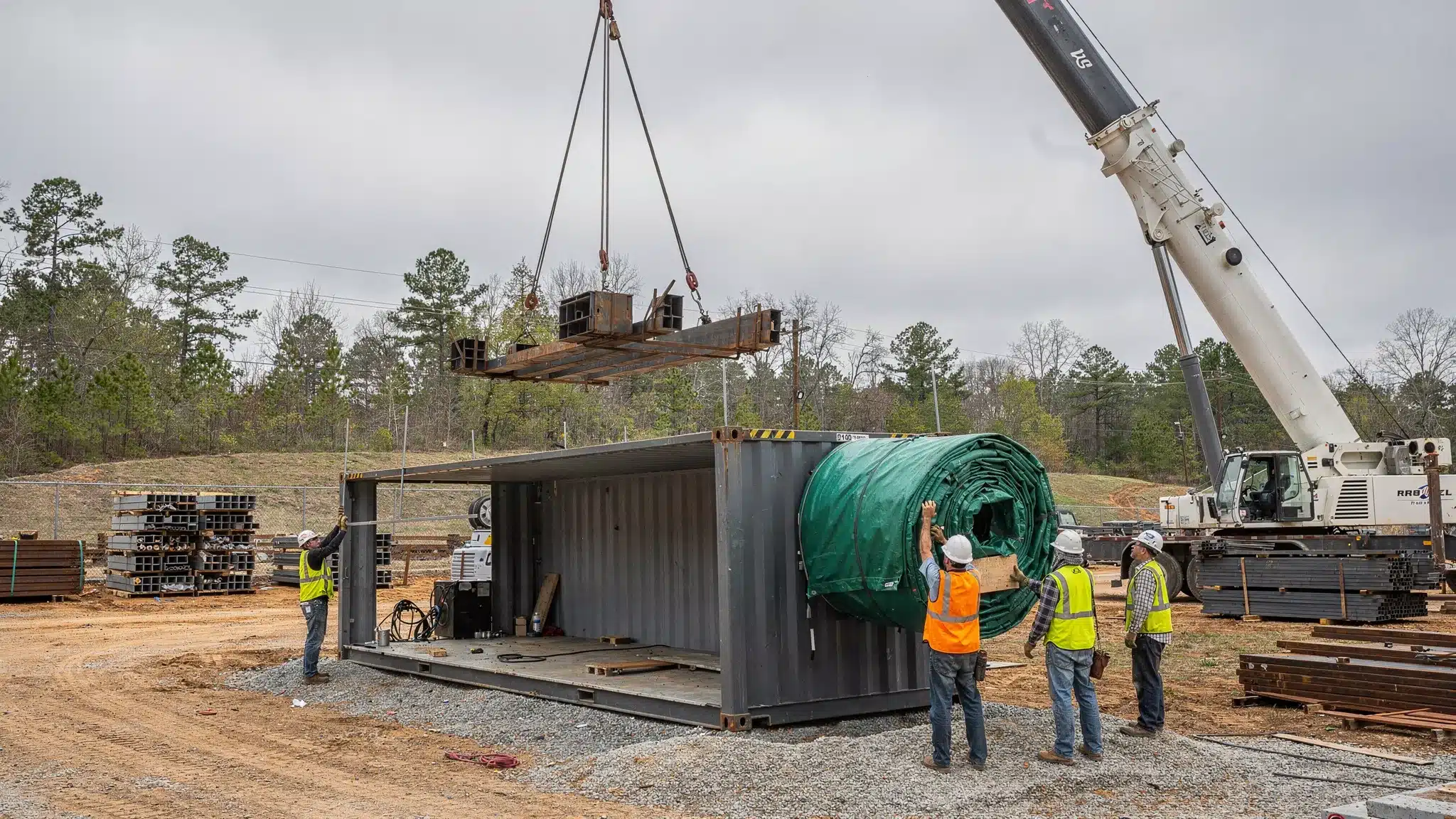
Open top containers solve a very specific problem: your cargo is too tall, too heavy, or too awkward to load through standard swing doors. If you are moving steel, machinery, demolition debris, or oversized pallets across North Carolina or through the Port of Wilmington, an open top container can be the safest and fastest way to load from above using a crane or forklift.
This guide breaks down how open top containers work, how tarps and roof bows keep cargo protected, and which use cases actually justify choosing an open top over a standard dry van. Along the way, we will also cover container grades (One Trip vs Cargo Worthy vs Wind and Watertight), because the right “type” of container still needs the right “condition” for the job.
What is an open top container?
An open top container is an ISO shipping container built with the same Corten steel sidewalls, end frames, and corner castings you would expect on a standard dry container, but with a removable roof system instead of a fixed steel roof. Most commonly, the roof is closed using:
-
Removable roof bows (steel supports spanning side to side)
-
A heavy-duty tarpaulin (tarp) secured to the top rails and end headers
The result is a container that can be loaded from above, then covered for transport.
Open top vs standard vs flat rack (quick comparison)
| Container type | Best for | Key limitation | Typical question to ask |
|---|---|---|---|
| Standard dry container | General boxed or palletized freight, secure storage | Must load through doors | “Can it fit through the door opening?” |
| Open top container | Over-height cargo, crane loading, top-loading bulk items | Weather protection depends on tarp system | “Can it be safely tarped and secured?” |
| Flat rack | Extremely wide cargo, heavy equipment with over-width | Less security, more exposure | “Do I need sidewalls or just a platform?” |
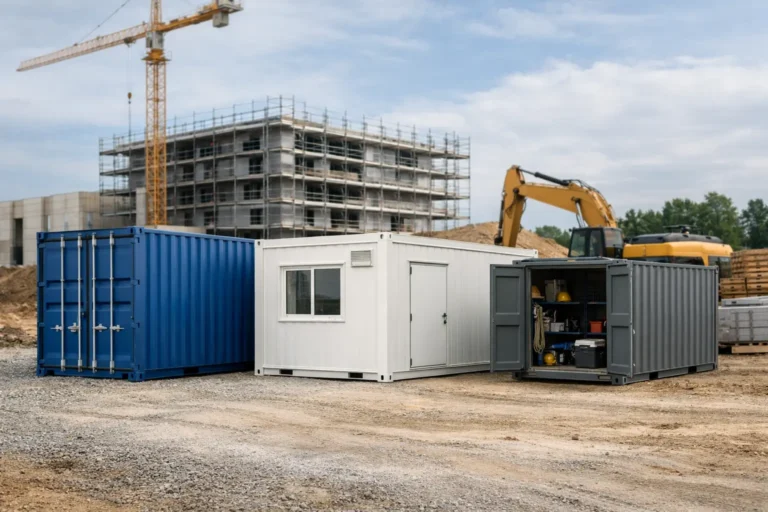
Open tops are popular for transport, but they can also be used on jobsites around Raleigh when you need top access, for example loading scrap or material drops. For long-term outdoor storage in the Southeast’s rain and humidity, a standard dry container is often the more practical choice.
If you are comparing specialty units against conventional storage, review our shipping container inventory to see which container types are actually available for your use case.
Sizes and ISO standards (what to expect)
Open top containers are most often sourced in 20ft and 40ft footprints. They follow ISO container form factors so they can be handled on common chassis, rail, and vessel equipment.
A few technical notes that matter when you are buying or shipping:
-
ISO standards: Shipping containers are designed around ISO handling conventions (corner castings, stacking geometry, and standardized lengths). In practice, you should verify the unit’s ID markings and physical condition rather than assuming every used unit is identical.
-
CSC plate: If the container is intended for international transport, it typically needs a valid CSC Safety Approval Plate under the International Convention for Safe Containers (CSC). Always confirm requirements with your freight forwarder or carrier.
If you are comparing footprints before choosing an open top, it also helps to review our 40ft high cube container dimensions guide for projects where extra vertical clearance may solve the problem without switching container type.
If you are still deciding between 20ft and 40ft for your project, start with our size resources on shipping container dimensions and the practical decision framework in how to choose shipping container size.
Container grades for open tops: One Trip vs Cargo Worthy vs WWT
“Open top” describes the roof design, not the condition. For buyers in Raleigh, across North Carolina, and nationwide, getting the grade right is what prevents leaks, door problems, and surprise repair costs.
One Trip (new, one voyage)
A One Trip container has typically made a single loaded voyage from the factory and is the closest thing to new in the resale market. For open tops, One Trip is often preferred when:
-
You need predictable door operation and intact gaskets
-
You want the best chance at a tight tarp seal because the top rails and end headers are straighter
-
The container will be customer-facing or part of a higher-end build
If you want a deeper overview, see what is a one trip container?.
Cargo Worthy (CW)
Cargo Worthy generally indicates the container is suitable for transport and has structural integrity appropriate for shipping use, with doors that function and a sound frame. For open tops being used in logistics, CW is often the minimum bar, but you should still confirm what documentation your carrier requires.
Wind and Watertight (WWT)
Wind and Watertight usually means the container keeps out wind and water in normal conditions for storage purposes. With open tops, it is important to be precise here:
-
A standard WWT dry container relies on a solid steel roof.
-
An open top relies on the tarp system, roof bows, and tie-down points.
So for open tops, “WWT” should be interpreted as “weather protected when properly tarped and maintained,” not as a permanent hard-roof seal.
For buyers comparing condition and price, our buyers guide and new vs used container breakdown will help you evaluate the real trade-offs.
If your priority is weather resistance for static storage rather than top-loading access, compare those grades with our general container conditions guide before choosing an open top.
How loading an open top container works (and why it is different)
Because the roof opens, you can load cargo straight down into the container. That sounds simple, but it changes your planning in three key ways:
1) You are planning around lifting, not just rolling
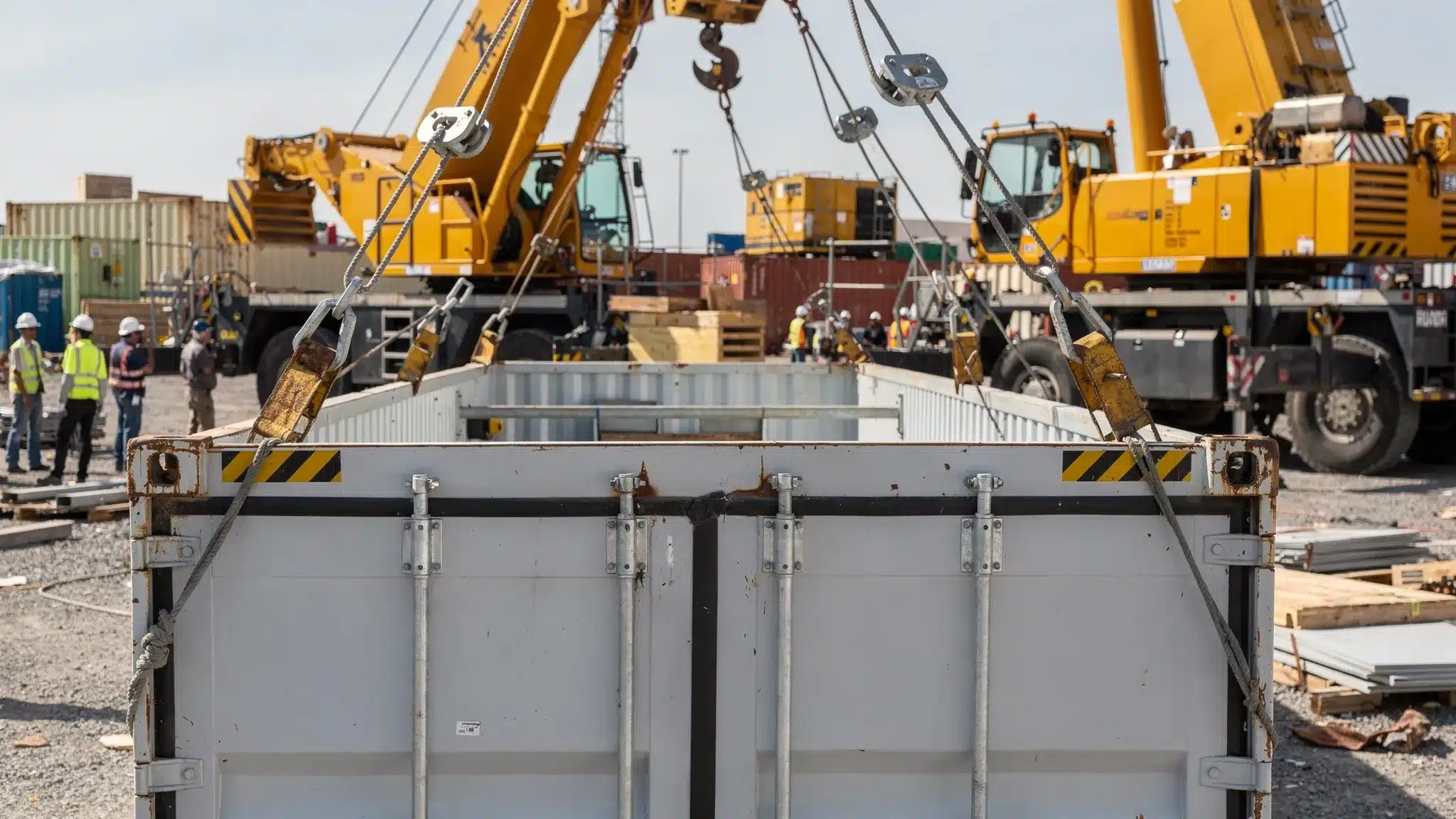
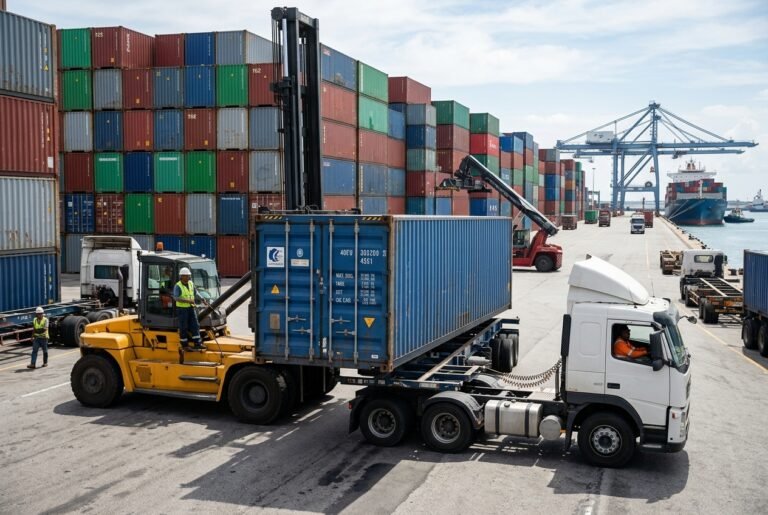
Most open top loads involve a crane, gantry, or heavy forklift. That means you need:
-
A clear lift path above the container
-
Proper rigging and trained operators
-
A loading plan that considers center of gravity and final securement
For jobsites in Raleigh and the Southeast, overhead clearance is often the hidden constraint (trees, power lines, and tight suburban access). If you are scheduling delivery and a crane on the same day, confirm access early.
2) Door access still matters
Even if you load from above, you may still want to unload through the doors. Think about:
-
Whether your cargo blocks the door opening
-
Whether you need to brace cargo to prevent shifting into the doors
-
Whether you will need a forklift inside the container (and therefore a clear floor plan)
3) Securement is not optional
Open tops are often used for heavy, dense cargo that can cause structural damage if it shifts. Use the container’s lashing points properly, and follow the securement rules required by your carrier and route.
If you are evaluating a used unit, use an inspection approach similar to our general checklist in how to spot quality containers before you buy, with extra attention to top rails, tarp hardware, and end header straightness.
For projects where loading method and cargo shape matter more than standard storage access, our 7 practical open top container uses guide can help confirm whether this format is really the best match.
Tarps and roof bows: how weather protection actually works
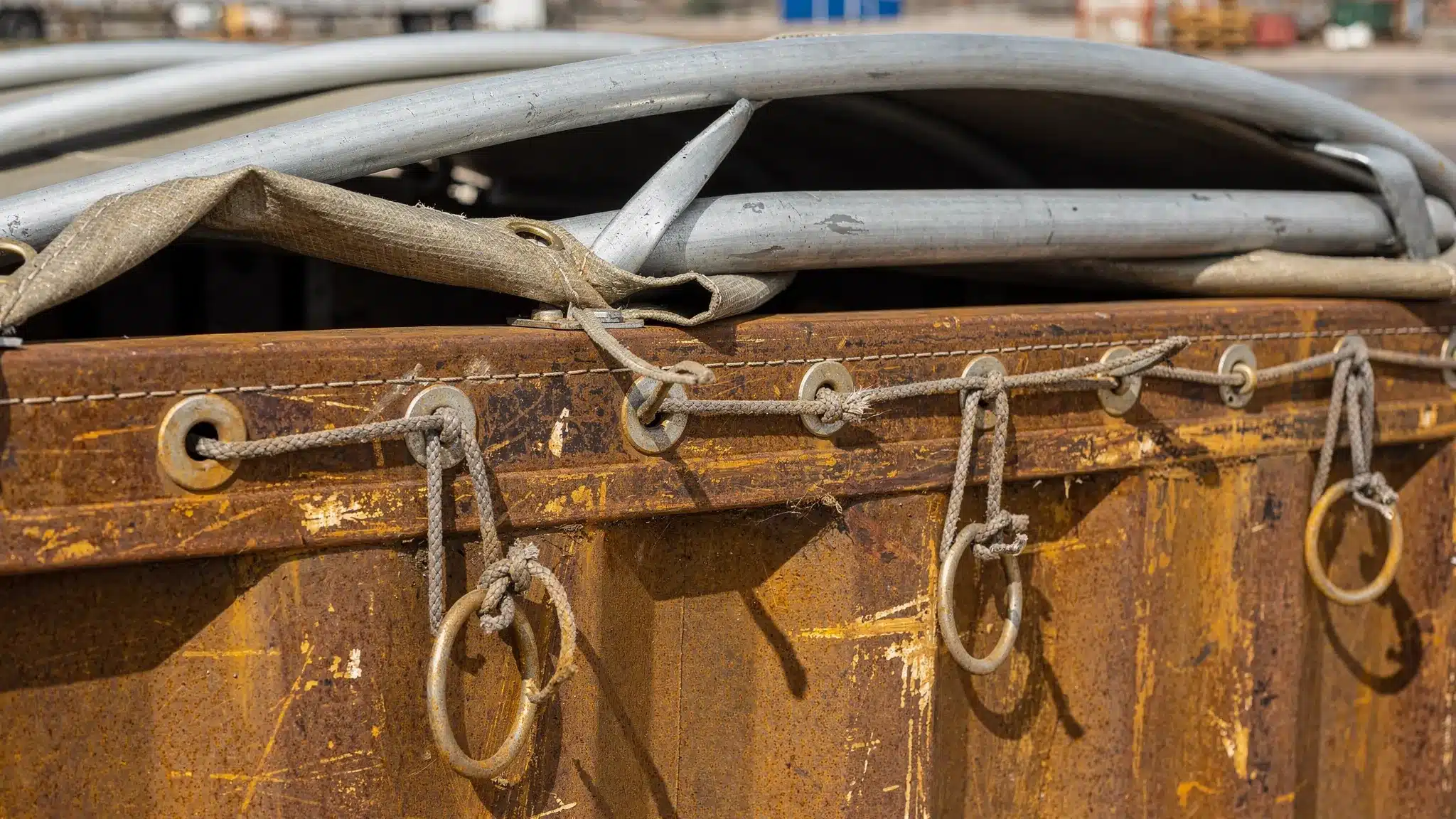
The tarp system is what makes an open top viable for transport. A good setup resists wind uplift, sheds water, and stays tight over long miles.
Key components to check
-
Roof bows: These supports create shape and keep the tarp from sagging. Missing or bent bows are a common reason open tops leak.
-
Tarp material and seams: Look for tears, seam separation, or UV cracking.
-
Grommets and tie points: These take real load at highway speeds.
-
Top rails and end headers: If these are bent, the tarp will never seat correctly.
Common tarp mistakes (that lead to leaks and damage)
-
Leaving low spots where water ponds, then stretches the tarp and loosens it further
-
Over-tightening one side, which pulls the tarp off-center and creates gaps
-
Tarping over sharp cargo edges without protection, causing abrasion and tears
Practical tarp tips for Southeast weather
In North Carolina, heavy rain and sudden wind gusts are common, especially during storm season. If your open top will sit on-site in Raleigh for more than a short staging period:
-
Plan for drainage around the container so water does not collect near the base
-
Re-check tarp tension after the first heavy rain, because wet tarps can relax
-
Consider whether a standard dry container would be a better storage tool long-term
If full-time weather protection matters more than top access, compare the trade-offs with our Wind & Watertight container guide before choosing an open-top unit for long-term storage.
Common uses for open top containers
Open tops earn their keep when top-loading prevents damage, reduces labor, or avoids impossible door-fit issues.
Over-height machinery and industrial equipment
If you cannot safely tilt or angle the load through standard doors, a crane-assisted top load can be safer and faster. This is common for compressors, specialized fabrication equipment, and irregular skids.
Steel, pipe, and construction materials
Steel products, long bundles, and awkward pallets often load more cleanly from above. General contractors working around Raleigh often use open tops for short-term transport or staging when the project workflow involves crane lifts anyway.
Scrap, recycling, and demolition debris
For certain controlled waste streams, open tops can be practical because material can be dropped in from above. Make sure you understand local regulations and transport requirements before using any container for waste.
Bulk cargo that is hard to hand-load
Some commodities and dense cargo can be loaded efficiently from above using proper equipment, then secured for transit.
When an open top is not necessary
If your cargo is standard boxed inventory, pallets, or items that fit easily through container doors, a standard dry container is usually a better value and more weatherproof. A good example is typical retail inventory such as sneakers and streetwear shipments that ship well in enclosed dry containers because they do not require crane loading or top access.
If your cargo actually fits through the doors, compare standard storage options in our container solutions for jobsites, farms, and small business guide before paying for a specialized unit.
Choosing the right size and grade for your use case
Below is a decision table you can use as a starting point, then validate with your carrier and loading plan.
| Use case | Typical container choice | Grade guidance | Notes |
|---|---|---|---|
| Heavy equipment that cannot fit through doors | 20ft or 40ft open top | Cargo Worthy or One Trip | Confirm securement points and tarp condition |
| Steel bundles or long materials | 40ft open top | Cargo Worthy commonly used | Pay attention to load distribution and dunnage |
| Jobsite staging with frequent top access | 20ft open top | WWT may be acceptable for short-term | In Raleigh rain, tarp maintenance matters |
| General storage, tools, boxed inventory | Standard dry 20ft or 40ft | WWT or One Trip | Better security and weather protection overall |
If you are budgeting for a standard storage unit instead, this pricing reference can help set expectations: 20ft shipping container price: what to expect.
For a broader budgeting view across sizes and grades, our container shipping prices guide can help you estimate the full project cost more accurately.
Delivery and placement considerations (especially around Raleigh)
Even if your main question is “tarp and loading,” the project often succeeds or fails at delivery.
Open tops frequently involve:
-
Tilt-bed or flatbed delivery plus separate crane scheduling
-
More overhead clearance needs than a standard door-load scenario
-
More on-site coordination (rigging, staging area, and truck turnaround)
Before you commit, review the practical constraints in our shipping container delivery requirements guide. This is particularly important in the Raleigh area where access can be tight in neighborhoods, active job sites, or wooded lots.
If your site has soft ground, slope, or access restrictions, review our ground-level delivery guide before scheduling the drop and crane work.
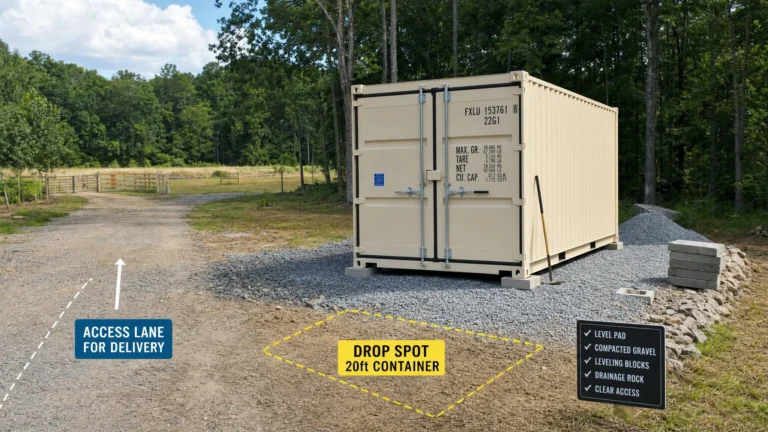
Pro-Tip: Prep your site like you are prepping for a crane day
If you plan to load or unload from above, treat your site preparation as a lifting operation, not just a “drop a container” operation.
-
Leveling: A container that is out of level can twist, making doors hard to operate and creating gaps that compromise tarp fit.
-
Base: Use a compacted gravel pad or properly placed supports at the corners to reduce settling, especially after rain.
-
Clearances: Confirm overhead clearance for delivery, then add clearance for lifting (boom height, rigging, and load swing). Watch for branches and power lines.
-
Permits and approvals: In Raleigh and surrounding towns, permitting and HOA rules can apply depending on zoning, duration, and placement. Verify before delivery day to avoid delays.
Need help sourcing the right container in North Carolina?
Whether you are planning a specialized open top shipment or deciding if a standard unit is a smarter fit, Lease Lane Containers LLC can help you choose the right size, explain grades clearly (One Trip vs Cargo Worthy vs WWT), and plan delivery and placement.
You can also contact our team for help comparing open top, flat rack, standard dry, and high-cube options before delivery is booked.



2 Comments