Wind and Watertight Shipping Containers in Raleigh, NC
If you’re shopping for a used shipping container in the Raleigh area, you’ve probably come across the term “wind and watertight” more than once. It’s one of the most common grades on the market, and for good reason: a WWT container offers solid, functional storage at a price point well below a one-trip unit. But the grade itself can be misunderstood, and not every WWT container is in the same condition. Understanding what you’re actually buying, how to inspect it, and how to prepare your site makes the difference between a smart investment and an expensive headache. For buyers across the Triangle, from general contractors managing job-site materials to homeowners clearing out a garage, a wind and watertight shipping container in Raleigh, NC, is often the sweet spot between cost and quality. This guide breaks down the WWT standard, what to look for during inspection, how these containers are used locally, and what it takes to get one delivered and set up on your property.
Table of Contents
- Understanding Wind and Watertight (WWT) Standards for Raleigh Storage
- The Difference Between WWT and Cargo Worthy Containers
- Why WWT is Ideal for North Carolina’s Humid Climate
- Key Features of a Reliable WWT Shipping Container
- Inspecting Door Seals and Gaskets
- Evaluating Structural Integrity and Floor Conditions
- Common Uses for WWT Containers in the Triangle Area
- On-Site Storage for Raleigh Construction Projects
- Agricultural and Residential Storage Solutions
- Sourcing and Purchasing WWT Containers Locally in Raleigh
- Delivery Logistics and Site Preparation in Central NC
- Choosing the Right Foundation: Gravel, Concrete, or Wood
- Navigating Delivery Clearance for Roll-Off Trucks
- Maintaining Your Container Against Raleigh Weather Extremes
- Maximizing Value: Modifications and Upgrades for WWT Units
Understanding Wind and Watertight (WWT) Standards for Raleigh Storage
The WWT grade describes a used shipping container that keeps wind and rain out but is no longer certified for ocean freight. These containers have been retired from international shipping, typically after 10 to 15 years of active service. They show cosmetic wear: surface rust, dents, scuffed paint, and minor patching. None of that affects their ability to protect your stored goods from the elements.
What matters is function. A WWT container still has intact roof panels, working doors, and seals that prevent moisture intrusion. It won’t pass a structural survey for overseas cargo transport, but it doesn’t need to. For stationary ground-level storage, the WWT grade delivers the protection most buyers actually need without the premium price of a higher-rated unit.
The Difference Between WWT and Cargo Worthy Containers
Cargo Worthy (CW) containers have passed a formal inspection by a certified surveyor and are approved for international ocean transport. They carry a valid CSC plate and meet stricter structural requirements. WWT containers don’t carry that certification. The doors close and seal properly, the roof doesn’t leak, and the walls are sound, but the unit hasn’t been surveyed for stacking loads or sea travel.
If you’re placing a container on a job site, farm, or residential lot for storage, the CW certification adds cost without adding practical value. You’re paying for a rating you’ll never use. CW makes sense if you plan to ship goods internationally or if a specific permit or contract requires it. For everything else, WWT is the more cost-effective choice.
Why WWT is Ideal for North Carolina’s Humid Climate
Raleigh sits in a humid subtropical zone. Summers bring heavy rain, high humidity, and temperatures that regularly push past 90°F. Winters are mild but wet. That combination creates real moisture management challenges for anyone storing tools, equipment, furniture, or inventory outdoors.
A properly sealed WWT container handles these conditions well. The corrugated steel walls resist wind-driven rain, and the rubber door gaskets create a tight seal when the doors are latched. You won’t get the same protection from a tarp-covered trailer or a basic shed. Some buyers add a vent kit or desiccant packs to reduce condensation inside the container, which is a smart move if you’re storing anything sensitive to moisture. The steel structure itself won’t rot, warp, or attract termites, giving it a clear advantage over wood-framed alternatives in North Carolina’s climate.
Key Features of a Reliable WWT Shipping Container
Not every WWT unit is equal. Age, prior use, and storage history all affect condition. When you’re evaluating a container, you need to look beyond the grade label and check specific components that determine whether the unit will actually perform as expected.
A reliable WWT container has doors that open and close smoothly, a roof free of holes or heavy corrosion, walls without punctures, and a floor that’s solid underfoot. Surface rust on exterior panels is normal and cosmetic. Deep rust that has eaten through the steel is a different story. The goal is to confirm that the container’s weather barrier is intact from every angle.
Inspecting Door Seals and Gaskets
The doors are the most vulnerable point on any shipping container. Start by swinging both doors fully open and then closing them. They should move without excessive force or grinding. If the hinges are seized or the cam locks won’t engage, you’ll have ongoing access problems.
Check the rubber gaskets that line the door frame. These seals compress when the doors close, creating the watertight barrier. Look for cracking, hardening, or sections where the gasket has pulled away from the frame. Replacing gaskets isn’t expensive, but it’s a repair you want to know about before you buy. A quick way to test seal integrity: close the doors from inside during daylight and look for light gaps. Any visible light means water can get in.
Evaluating Structural Integrity and Floor Conditions
Run your eyes along the roof panels. Dents are fine. Holes, even small ones, are not. Check the corner posts and bottom rails for deep corrosion, since these bear the container’s structural load. If the bottom rail is rusted through, the container’s long-term stability is compromised.
Step inside and walk the floor. Standard shipping containers have marine-grade plywood flooring over steel cross-members. Soft spots, warping, or visible rot indicate water damage from above or below. Press firmly with your heel in several areas, especially near the doors and along the walls. A solid floor should feel firm and uniform. If you’re planning to store heavy equipment or palletized goods, the floor condition matters even more. Replacing a container floor is possible but adds $500 to $1,500 depending on the extent of the damage.
Common Uses for WWT Containers in the Triangle Area
The Raleigh-Durham-Chapel Hill corridor has a diverse mix of construction activity, agricultural operations, and growing residential neighborhoods. WWT containers fit into all three categories because they’re affordable, durable, and easy to place.
From downtown Raleigh infill projects to rural properties in Johnston or Wake County, these containers serve as tool sheds, equipment lockups, seasonal storage, and overflow inventory space. Their steel construction deters theft far better than a standard storage shed, and they require almost no maintenance once placed.
On-Site Storage for Raleigh Construction Projects
General contractors and subcontractors working across the Triangle use WWT containers to secure tools, materials, and equipment on active job sites. A 20ft container fits most residential and small commercial sites without dominating the lot. A 40ft unit works better for larger projects where you’re storing lumber, drywall, or mechanical equipment.
The container stays on site for the duration of the project, eliminating daily trips to offsite storage. Padlock-compatible locking bars provide security, and the steel walls resist forced entry far better than a job-site trailer. If you’re managing multiple sites, buying a WWT container outright often costs less than renting one for six months.
Agricultural and Residential Storage Solutions
Farms and rural properties throughout central North Carolina use WWT containers for feed storage, equipment protection, and seasonal supply management. A container keeps rodents, rain, and humidity away from stored hay, seed, or fertilizer more reliably than a pole barn with open sides.
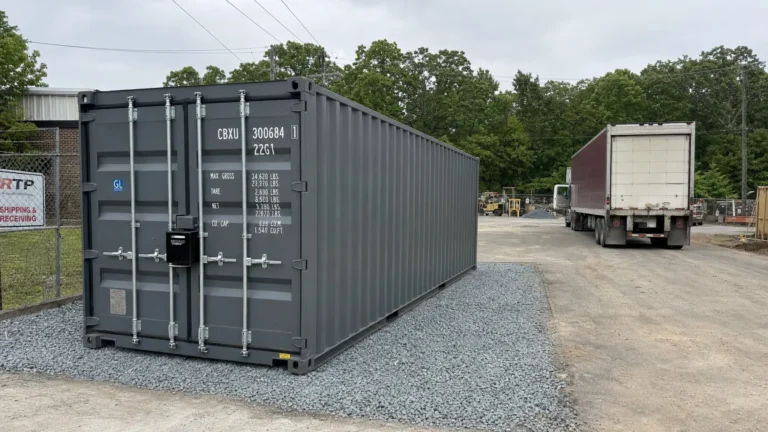
Homeowners in suburban Raleigh neighborhoods use them for overflow storage during renovations, as workshop space, or to hold lawn and garden equipment. Some HOAs have restrictions on container placement, so check your covenants before purchasing. For properties without HOA oversight, a WWT container placed on a gravel pad behind the house is one of the most cost-effective storage solutions available.
Sourcing and Purchasing WWT Containers Locally in Raleigh
Buying locally gives you the chance to inspect a container in person before committing. It also reduces delivery costs significantly compared to shipping a container from a coastal depot hundreds of miles away.
Lease Lane Containers, based in Raleigh, offers both new and used shipping containers with transparent grading guidance. Their team can walk you through the differences between WWT and other grades, help you match the right container dimensions to your project, and coordinate delivery logistics specific to your site. When you’re comparing options, ask about the container’s age, prior use, and any repairs that have been made. A reputable supplier will share that information upfront.
Pricing for WWT containers varies based on size, condition, and market demand. As a general rule, a 20ft WWT unit runs between $1,800 and $3,000, while a 40ft WWT container typically falls between $2,200 and $4,500. One-trip containers cost more but arrive in near-new condition. Your budget and intended use should drive the decision.
Delivery Logistics and Site Preparation in Central NC
Getting a container to your property requires more planning than most buyers expect. The container itself weighs between 4,500 and 8,500 pounds empty, depending on size. It arrives on a tilt-bed or roll-off truck that needs adequate space to operate.
Before scheduling delivery, confirm your site is ready. A poorly prepared site leads to delays, extra charges, or a container sitting in the wrong spot.
Choosing the Right Foundation: Gravel, Concrete, or Wood
Your container needs a level surface that promotes drainage. The three most common options each have trade-offs.
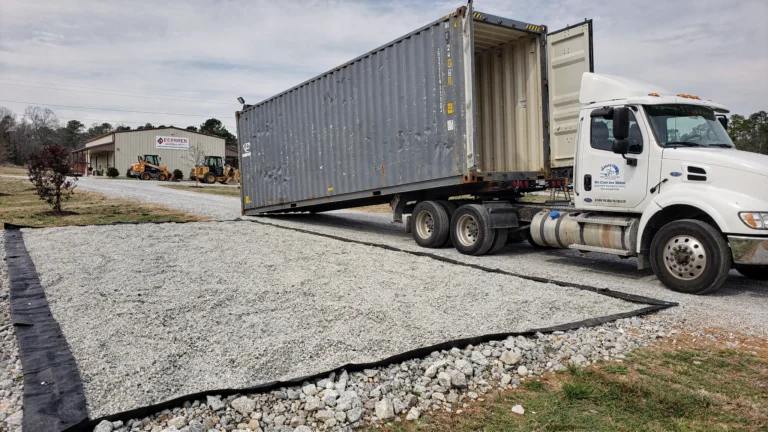
- Compacted gravel pad: the most popular choice. Affordable, drains well, and easy to prepare. A 4- to 6-inch layer of compacted crushed stone works for most residential and commercial placements.
- Concrete slab: the most permanent option. Ideal if you’re planning long-term use or modifications like electrical hookups. More expensive and requires curing time before the container can be placed.
- Railroad ties or treated lumber: a budget-friendly option for level ground. Place ties under the container’s corner castings and along the bottom rails to keep the steel off bare soil.
Avoid placing a container directly on grass or dirt. Moisture trapped underneath accelerates corrosion on the bottom rails and floor cross-members.
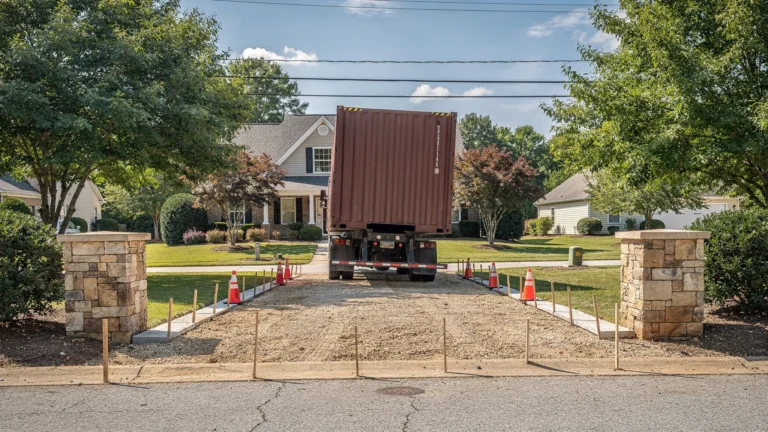
Navigating Delivery Clearance for Roll-Off Trucks
A standard delivery truck with a 40ft container needs roughly 100 feet of straight clearance to slide the container off the bed. For a 20ft unit, you’ll need about 60 feet. The truck itself is around 60 to 70 feet long and requires a turning radius of at least 30 feet.
Check for overhead obstructions: power lines, tree branches, and carport overhangs are common problems. The truck bed tilts to an angle of about 20 degrees during offload, so anything above 14 feet in the delivery path is a potential issue. Lease Lane Containers provides delivery planning support to help you measure access, identify obstacles, and confirm placement before the truck arrives. Getting this right the first time saves you from repositioning fees and scheduling headaches.
Maintaining Your Container Against Raleigh Weather Extremes
Once your container is placed, ongoing maintenance is minimal but not zero. Raleigh’s humidity and seasonal storms mean you should inspect your container at least twice a year.
Check door gaskets for wear and replace them if they’ve hardened or cracked. Look at the roof for pooling water, which accelerates rust. If you spot surface rust on walls or doors, clean the area with a wire brush and apply a rust-inhibiting primer followed by exterior-grade paint. A quart of marine-grade paint and an afternoon of work can add years to the container’s life.
Keep vegetation trimmed away from the container walls. Vines and shrubs trap moisture against the steel and create conditions for accelerated corrosion. If condensation is an issue inside the container, install a pair of louvered vents on opposite ends to promote airflow. Budget roughly $100 to $200 per year for basic upkeep supplies.
Maximizing Value: Modifications and Upgrades for WWT Units
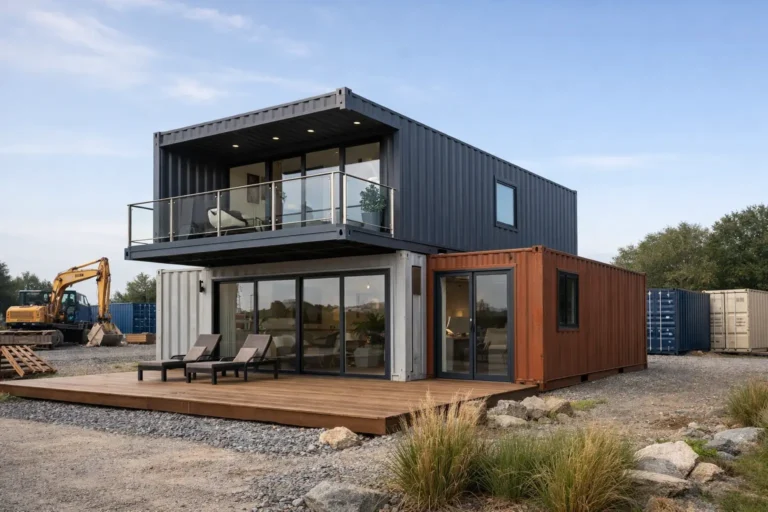
A WWT container is a blank canvas for practical upgrades. Common modifications include adding shelving, installing interior lighting, cutting in windows or personnel doors, and applying spray-foam insulation.
For workshop or office use, insulation and a small HVAC unit make the container comfortable year-round. Electrical packages with outlets, LED lighting, and a sub-panel typically run between $1,500 and $3,500 depending on complexity. If you’re using the container strictly for storage, simple additions like a lock box (a welded steel shroud over the padlock) and interior tie-down rings add security and organization at minimal cost.
The key is matching your modifications to your actual use case. A contractor storing tools doesn’t need insulation. A homeowner converting a container into a backyard office does. Start with the basics, and add upgrades as your needs evolve. WWT containers accept welding and cutting just as well as higher-grade units, so you’re not sacrificing flexibility by choosing the more affordable grade.
If you’re ready to find the right container for your project, browse available inventory from Lease Lane Containers to compare sizes, grades, and pricing. Their Raleigh-based team can help you match a WWT or one-trip container to your specific needs and walk you through delivery planning for your site.