What Is a Used 40ft Shipping Container Price?
Table of Contents
- Table of Contents
- Current Market Ranges for 40ft Shipping Containers
- Standard vs. High Cube Pricing Differences
- The Impact of Container Grades on Cost
- Key Factors Influencing Used Container Costs
- Supply Chain Fluctuations and Global Demand
- Structural Integrity and Cosmetic Condition
- The Role of Location and Delivery Logistics
- Proximity to Major Port Cities
- Calculating Tilt-Bed and Flatbed Delivery Fees
- Comparing One-Trip vs. Cargo Worthy Units
- Additional Costs Beyond the Base Purchase Price
- Site Preparation and Foundation Expenses
- Modification and Customization Upgrades
- How to Safely Source and Inspect a Used Container
- Maximizing Value for Your Container Investment
Table of Contents
- Current Market Ranges for 40ft Shipping Containers
- Standard vs. High Cube Pricing Differences
- The Impact of Container Grades on Cost
- Key Factors Influencing Used Container Costs
- Supply Chain Fluctuations and Global Demand
- Structural Integrity and Cosmetic Condition
- The Role of Location and Delivery Logistics
- Proximity to Major Port Cities
- Calculating Tilt-Bed and Flatbed Delivery Fees
- Comparing One-Trip vs. Cargo Worthy Units
- Additional Costs Beyond the Base Purchase Price
- Site Preparation and Foundation Expenses
- Modification and Customization Upgrades
- How to Safely Source and Inspect a Used Container
- Maximizing Value for Your Container Investment
If you’re shopping for a 40ft shipping container, you’ve probably noticed that pricing isn’t as straightforward as you’d hope. A quick search returns numbers ranging from $1,800 to $6,000 or more, and the gap between those figures can feel confusing. The truth is that a used 40ft shipping container price depends on several overlapping variables: the container’s grade, its structural condition, where it’s located, and how far it needs to travel to reach your property.
Whether you’re a contractor staging materials on a job site, a small business owner who needs inventory overflow space, or a homeowner planning a backyard workshop, understanding what drives these costs puts you in a much stronger negotiating position. The container market shifts with global trade patterns, regional supply, and seasonal demand. Knowing what to expect before you start comparing quotes helps you avoid overpaying and ensures you get a container that actually fits your project. This guide breaks down every cost factor you’re likely to encounter, from the sticker price to delivery fees, site prep, and modifications.
Current Market Ranges for 40ft Shipping Containers
As of 2024 and into early 2025, a used 40ft shipping container typically costs between $2,000 and $5,500 depending on grade and condition. That’s a wide spread, and the reason comes down to the massive differences between a retired ocean freight container with 15 years of service and a lightly used unit that’s crossed the Pacific just once.
Prices have settled somewhat after the extreme spikes of 2021-2022, when global shipping disruptions pushed container costs to record highs. A container that sold for $5,000 in mid-2021 might now go for $3,200 in the same grade and location. That said, prices haven’t returned to pre-pandemic lows, and regional availability still creates significant variation.
Standard vs. High Cube Pricing Differences
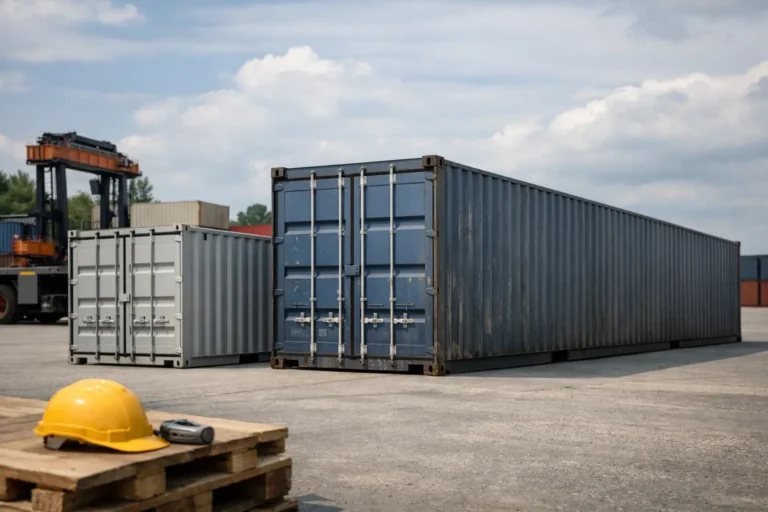
A standard 40ft shipping container has exterior dimensions of roughly 40 feet long, 8 feet wide, and 8 feet 6 inches tall, with about 2,390 cubic feet of interior space. A 40ft high cube shipping container adds an extra foot of height, bringing the exterior to 9 feet 6 inches and the usable interior volume to approximately 2,700 cubic feet.
That extra 12 inches of headroom matters more than you’d think. For container offices, workshops, or any project where people will spend time inside, the high cube version feels noticeably more comfortable. Expect to pay $300 to $800 more for a high cube unit in the same condition grade. If you’re purely storing palletized goods or equipment, the standard height works fine and saves you money.
The Impact of Container Grades on Cost
Container grades are the single biggest factor in pricing after size. The industry uses three common grades for used units:
- Cargo Worthy (CW): Certified for ocean transport. Structurally sound with functioning doors, intact flooring, and a valid CSC plate. Expect surface rust and cosmetic wear. Prices typically fall between $2,200 and $3,800.
- Wind and Watertight (WWT): No longer certified for shipping but still keeps weather out. May have minor patches, dents, or floor wear. These run $1,800 to $2,800.
- As-Is: Sold without guarantees. Could have holes, damaged doors, or compromised flooring. Priced below $2,000 but carries real risk.
A Cargo Worthy container holds its resale value better and gives you more flexibility if you ever need to move or sell it. For most buyers, that grade represents the best balance of cost and reliability.
Key Factors Influencing Used Container Costs
Beyond the grade stamped on a container, several market-level and unit-specific factors push prices up or down. Understanding these helps you time your purchase and spot fair deals.
Supply Chain Fluctuations and Global Demand
Container prices track global trade volume. When imports to the U.S. surge, ports accumulate surplus containers, and used inventory increases. Higher supply means lower prices, especially at major port cities like Savannah, Houston, and Los Angeles. When trade slows or shipping lines reposition containers overseas, domestic supply tightens and prices climb.
Seasonal patterns also play a role. Late summer and early fall often see higher demand from construction contractors and agricultural buyers preparing for harvest storage. If your timeline is flexible, shopping in late winter or early spring can sometimes save you $200 to $500 on the same container.
Structural Integrity and Cosmetic Condition
Two containers with the same grade can still vary in actual condition. One Cargo Worthy unit might have light surface oxidation and a few small dents. Another might have heavier corrosion along the bottom rails, patched wall panels, or a floor that’s starting to delaminate.
Exterior dents and surface rust are mostly cosmetic and don’t affect the container’s ability to keep water out. Corrosion along the bottom cross members, corner castings, or door headers is a different story entirely. Those are structural components, and damage there can compromise the container’s integrity under load or during transport. Always distinguish between cosmetic wear and structural compromise when evaluating a container’s condition relative to its price.
The Role of Location and Delivery Logistics
The price you see listed for a container is almost never the price you’ll actually pay. Delivery is a major cost component, and it varies dramatically based on where the container sits and where your site is located.
Proximity to Major Port Cities
If you’re within 50 miles of a major port or container depot, delivery might add $200 to $500 to your total. Move 150 to 300 miles inland, and that figure jumps to $800 to $1,500 or more. Buyers in landlocked states or rural areas often face delivery costs that rival the container price itself.
In the Southeast, proximity to the Port of Savannah or the Port of Wilmington creates favorable pricing for buyers in North Carolina, Georgia, and surrounding states. Lease Lane Containers operates out of Raleigh, North Carolina, which provides a strong logistics position for serving buyers across the Triangle, the broader Southeast, and nationwide through established carrier networks.
Calculating Tilt-Bed and Flatbed Delivery Fees
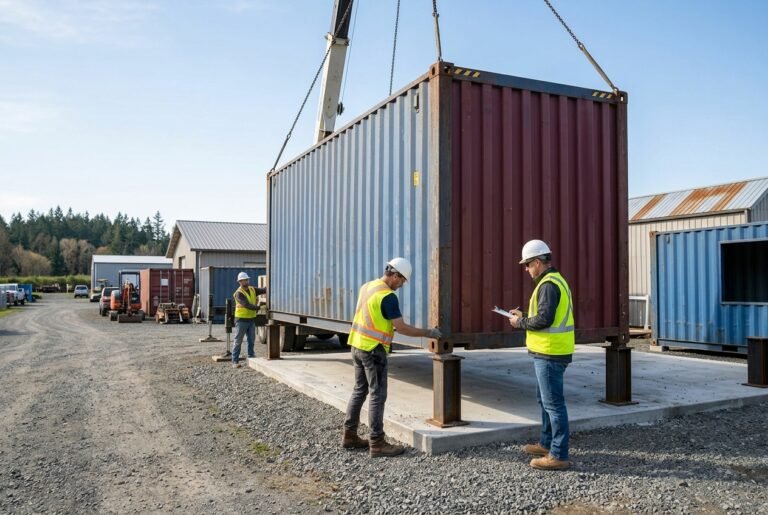
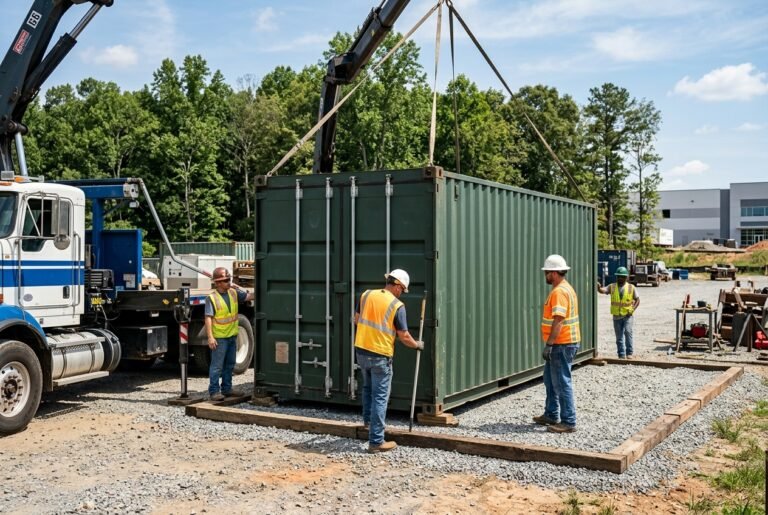
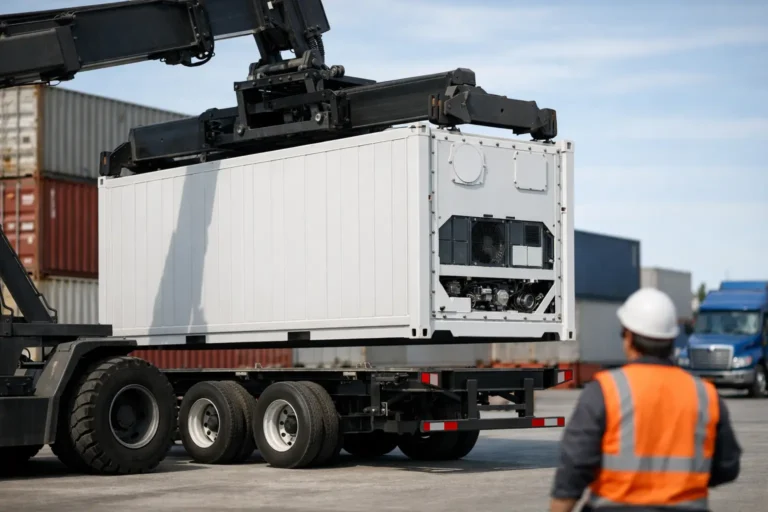
The delivery method affects your cost and your site requirements. A tilt-bed truck slides the container off the back of the trailer and needs roughly 100 feet of straight, level clearance behind the truck. A flatbed with a crane can place containers in tighter spots but costs more per delivery.
You’ll also need to verify overhead clearance. Power lines, tree branches, and low-hanging cables can block a tilt-bed delivery entirely. The minimum overhead clearance for a standard height container on a tilt-bed is approximately 14 to 16 feet. For a high cube, add another foot. Getting delivery planning right the first time avoids costly rescheduling fees, which can run $150 to $300 per failed attempt.
Comparing One-Trip vs. Cargo Worthy Units
The distinction between one-trip and Cargo Worthy containers is one of the most misunderstood topics in the container market. A one-trip container was manufactured overseas, loaded with cargo for a single voyage to the U.S., and then sold domestically. It’s essentially new: clean interior, minimal wear, original paint, and factory-fresh doors and seals.
A Cargo Worthy container, by contrast, has years of ocean service behind it. It’s been inspected and certified as structurally sound, but it shows its age. Dents, surface rust, faded paint, and minor floor scuffing are all normal.
The price gap is significant. A one-trip 40ft container typically runs $4,500 to $6,500, while a Cargo Worthy unit in the same size might cost $2,500 to $3,800. That $1,500 to $3,000 difference buys you better aesthetics and longer remaining lifespan, but it doesn’t always make financial sense. If you’re using the container for job site storage or agricultural equipment, a Cargo Worthy unit does the job at a fraction of the cost. If you’re building a container office or customer-facing structure, the cleaner appearance of a one-trip unit might justify the premium.
Additional Costs Beyond the Base Purchase Price
Your total investment extends beyond the container and delivery fee. Two categories of additional costs catch buyers off guard most often.
Site Preparation and Foundation Expenses
A shipping container weighs roughly 8,000 to 8,500 pounds empty. Loaded, it can exceed 60,000 pounds. That weight needs proper support. Setting a container directly on bare soil invites settling, moisture problems, and difficulty opening doors as the frame shifts.
Common foundation options include:
- Compacted gravel pad (4 to 6 inches deep): $300 to $800 depending on pad size and local gravel prices
- Concrete piers at the four corners: $400 to $1,200 for materials and labor
- Railroad ties or treated timber runners: $100 to $300
For most storage applications, a level gravel pad with proper drainage works well. If you’re in Wake County or elsewhere in the Raleigh area, your local building department can confirm whether your intended use requires a permit or engineered foundation.
Modification and Customization Upgrades
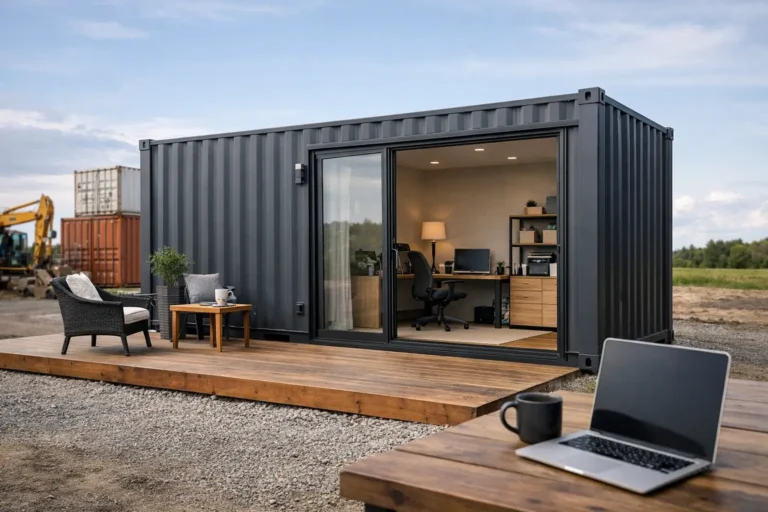
Basic modifications can turn a standard shipping container into a functional workspace or specialized storage unit. Common upgrades and their approximate costs include:
- Roll-up door installation: $1,200 to $2,500
- Personnel door and frame: $800 to $1,500
- Window cut-out with security bars: $500 to $1,000
- Interior insulation and vapor barrier: $1,500 to $3,500
- Electrical panel and basic wiring: $1,000 to $2,500
- HVAC mini-split installation: $1,500 to $3,000
These costs add up quickly. A container that starts at $3,000 can easily become a $10,000 to $15,000 project after modifications, delivery, and site prep. Budgeting for the full scope from the start prevents unpleasant surprises.
How to Safely Source and Inspect a Used Container
Buying a used shipping container without inspecting it is a gamble. Even reputable sellers occasionally have units with hidden problems. If you can’t visit the depot in person, request detailed photos of the interior, exterior, roof, undercarriage, door operation, and floor condition.
When inspecting a container yourself, focus on these areas:
- Door operation: Both doors should swing freely, latch securely, and seal tightly when closed. Sticky or misaligned doors often indicate frame damage.
- Floor condition: Marine-grade plywood flooring should be firm underfoot with no soft spots, delamination, or heavy staining that suggests chemical contamination.
- Roof panels: Walk the roof if possible. Look for dents that hold water, rust-through spots, or patches that weren’t properly sealed.
- Bottom rails and cross members: Crawl underneath or use a flashlight. Corrosion here is the most expensive problem to repair and the easiest to miss.
- Corner castings: These are the structural connection points. Cracks or heavy corrosion compromise the container’s ability to be safely lifted and transported.
Suppliers like Lease Lane Containers provide transparent grading guidance and can walk you through the condition details of specific units before you commit. That kind of straightforward support saves you from buying a container that doesn’t match your expectations.
Maximizing Value for Your Container Investment
Getting the best value from a used 40ft container purchase comes down to matching the right grade to your actual use case, planning for total project costs upfront, and choosing a supplier who gives you honest condition information.
Don’t overspend on a one-trip container if you’re storing lawn equipment. Don’t underspend on an As-Is unit if you need reliable weather protection for sensitive inventory. The sweet spot for most buyers is a Cargo Worthy container with verified structural integrity, delivered to a properly prepared site.
A realistic budget for a complete setup, including a used 40ft shipping container, delivery within 150 miles, a gravel pad foundation, and one or two basic modifications, typically falls between $4,500 and $8,000. Knowing that number before you start shopping keeps you focused and prevents scope creep.
If you’re ready to compare options, browse available inventory at Lease Lane Containers to see current container choices by size and grade. The Raleigh-based team can help you match the right container to your project and plan delivery logistics so everything goes smoothly on drop-off day.