The Current Price for a New 20ft Shipping Container
Table of Contents
- Table of Contents
- Current Market Ranges for New 20ft Containers
- Standard vs. High Cube Pricing
- One-Trip vs. Factory Direct Conditions
- Key Factors Influencing Purchase Costs
- Global Steel Prices and Manufacturing Trends
- Supply Chain Disruptions and Port Congestion
- Geographic Price Variations Across Regions
- Port City vs. Inland Delivery Premiums
- Additional Costs Beyond the Base Price
- Delivery Logistics and Tilt-Bed Fees
- Siting and Foundation Preparation
- Specialty Features and Their Financial Impact
- Double Doors, Side Openings, and Ventilation
- Strategies for Securing the Best Current Rate
- Bulk Purchasing and Seasonal Discounts
- Future Outlook for 20ft Container Valuations
- Final Checklist Before You Buy
Table of Contents
- Current Market Ranges for New 20ft Containers
- Standard vs. High Cube Pricing
- One-Trip vs. Factory Direct Conditions
- Key Factors Influencing Purchase Costs
- Global Steel Prices and Manufacturing Trends
- Supply Chain Disruptions and Port Congestion
- Geographic Price Variations Across Regions
- Port City vs. Inland Delivery Premiums
- Additional Costs Beyond the Base Price
- Delivery Logistics and Tilt-Bed Fees
- Siting and Foundation Preparation
- Specialty Features and Their Financial Impact
- Double Doors, Side Openings, and Ventilation
- Strategies for Securing the Best Current Rate
- Bulk Purchasing and Seasonal Discounts
- Future Outlook for 20ft Container Valuations
If you’re budgeting for a storage project, job site setup, or small business expansion, knowing the current price for a new 20ft shipping container is one of the first practical steps you can take. Pricing has shifted significantly over the past few years, influenced by steel costs, shipping lane disruptions, and regional demand fluctuations. A container that cost $3,200 in early 2020 might have peaked above $6,000 during the supply chain crunch of 2021-2022, and those swings haven’t fully stabilized.
For buyers in the Southeast, the Triangle region, or anywhere across the U.S., getting a clear read on what you’ll actually pay requires looking beyond a single sticker price. Delivery fees, site access, container grade, and even the time of year all factor into your total cost. This breakdown covers the real numbers, the hidden expenses, and the strategies that help you avoid overpaying. Whether you’re a contractor planning a job site in Wake County or a homeowner looking at backyard storage, the figures here reflect what the market looks like right now.
Current Market Ranges for New 20ft Containers
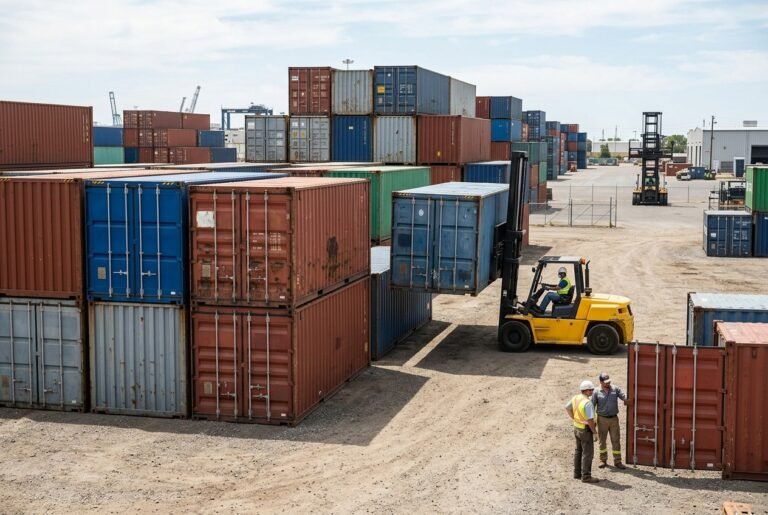
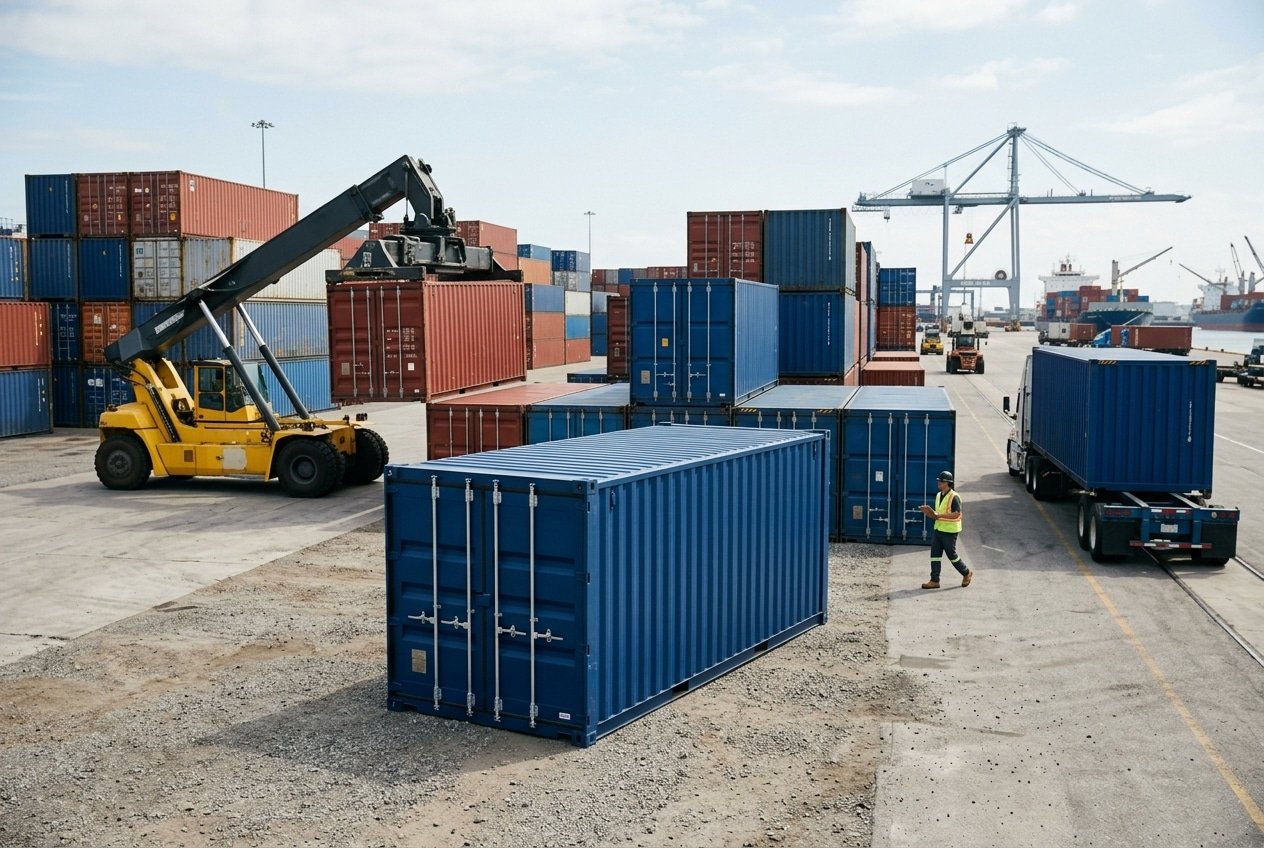
As of mid-2025, a new 20ft shipping container generally falls between $3,800 and $5,500 for most buyers in the continental United States. That range depends heavily on condition classification, location relative to a major port, and whether you’re purchasing through a dealer or direct from a depot. Containers on the lower end of that spectrum are typically available near port cities like Savannah, Houston, or Newark, where inventory turnover is high and transport costs are minimal.
The upper end of the range reflects inland delivery, high cube configurations, or containers with factory-applied upgrades. If you’re comparing quotes and seeing prices outside this window, it’s worth asking about the specific grade, delivery distance, and any included modifications.
Standard vs. High Cube Pricing
A standard 20ft container stands 8 feet 6 inches tall, while a high cube version adds an extra foot, bringing the exterior height to 9 feet 6 inches. That additional 12 inches of interior clearance matters for certain applications: container offices, workshops, or any conversion where ceiling height affects usability.
Expect to pay roughly $400 to $800 more for a high cube over its standard-height counterpart. A standard new 20ft unit might run $3,800 to $4,800, while a high cube in the same condition could land between $4,200 and $5,500. The premium is modest relative to the added versatility, especially if you’re planning any interior buildout.
One-Trip vs. Factory Direct Conditions
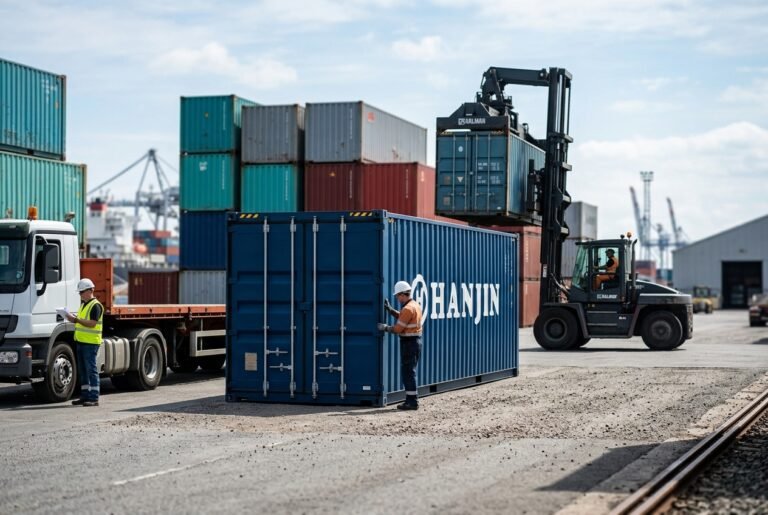
The term “new” in the container world almost always means “one-trip.” These containers are manufactured overseas, typically in China, loaded with cargo for a single voyage, and then sold at U.S. ports. They arrive with minimal wear: maybe a few scuffs from transit, but structurally and cosmetically near-perfect.
True factory-direct containers that have never carried cargo do exist, but they’re rare in the U.S. market and carry a significant premium, sometimes 20-30% above one-trip pricing. For most buyers, a one-trip container is the practical definition of new. It comes with original paint, intact seals, and a clean interior free of rust or residue. Lease Lane Containers provides transparent grading guidance so you can understand exactly what you’re getting before placing an order.
Key Factors Influencing Purchase Costs
No single variable determines what you’ll pay. Container pricing is the product of several overlapping forces, some global and some hyperlocal. Understanding these factors helps you time your purchase and evaluate whether a quote is fair.
Global Steel Prices and Manufacturing Trends
Shipping containers are made primarily from Corten steel, a weathering steel alloy prized for its corrosion resistance. When raw steel prices climb, manufacturing costs follow. Between 2020 and 2022, hot-rolled steel prices in the U.S. surged from around $500 per ton to over $1,900 per ton before correcting. Container prices tracked that trajectory with a lag of roughly three to six months.
Chinese manufacturing output also plays a role. Over 95% of new shipping containers are built in China, and production decisions by major manufacturers like CIMC and Singamas directly affect global supply. When production slows due to regulatory changes, energy costs, or demand shifts, fewer containers reach U.S. ports, and prices rise accordingly.
Supply Chain Disruptions and Port Congestion
Port congestion has a compounding effect on container pricing. When vessels queue for days or weeks at major ports, containers sit idle on chassis or in stacking yards rather than cycling back into commerce. This artificial scarcity inflates prices even when manufacturing output remains steady.
The 2021 congestion crisis at Los Angeles and Long Beach demonstrated this clearly, with container prices nearly doubling in some categories over a six-month period. While conditions have improved since then, periodic disruptions from labor actions, weather events, or geopolitical tensions continue to create pricing volatility. Buyers who monitor port conditions and order during calmer periods often secure better rates.
Geographic Price Variations Across Regions
Where you take delivery has a direct impact on your total cost. A container sitting at a depot in Savannah, Georgia, is going to cost less to get to Raleigh, North Carolina, than one shipped from the Port of Oakland.
Regional demand patterns also matter. Areas with heavy construction activity, oil field operations, or agricultural storage needs tend to see higher local prices because inventory moves faster. Conversely, regions with surplus container inventory, often near major import hubs, offer more competitive pricing.
Port City vs. Inland Delivery Premiums
If you’re within 50-75 miles of a major port or container depot, delivery fees typically run $150 to $400. Move that distance to 200 or 300 miles inland, and you’re looking at $600 to $1,200 or more in transport costs. For buyers in central states or rural areas far from port infrastructure, delivery can add 15-25% to the base container price.
Here’s a rough breakdown of delivery cost ranges based on distance from a depot:
- 0-50 miles: $150-$400
- 50-150 miles: $400-$800
- 150-300 miles: $800-$1,200
- 300+ miles: $1,200-$2,000+
Lease Lane Containers, based in Raleigh, offers delivery planning support that accounts for distance, access requirements, and regional depot availability, helping buyers across the U.S. understand their true delivered cost before committing.
Additional Costs Beyond the Base Price
The quoted price for a 20ft container rarely represents your total investment. Several ancillary costs can add $500 to $3,000 or more to your project, depending on your site and intended use.
Delivery Logistics and Tilt-Bed Fees
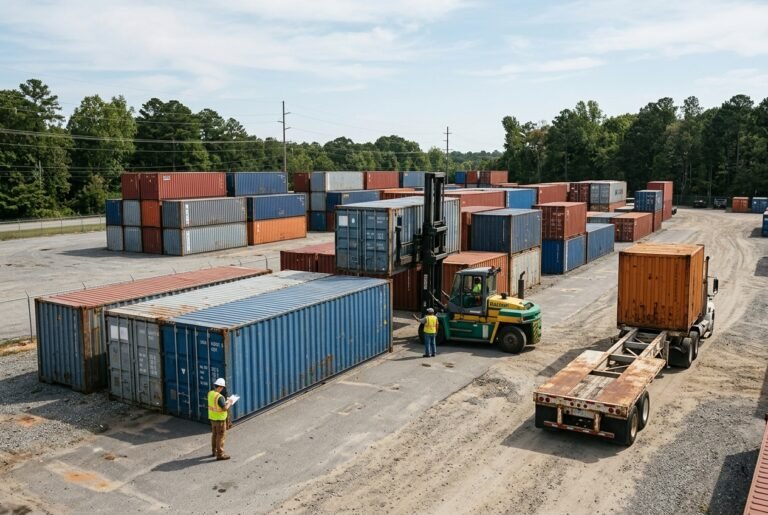
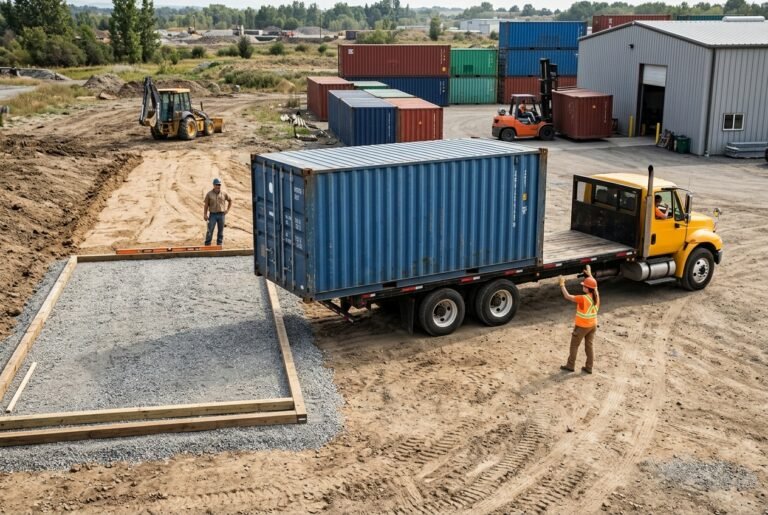
Most containers are delivered on tilt-bed trailers, which require specific clearance to operate. A tilt-bed truck typically needs about 100 feet of straight-line clearance to slide the container off the back, plus 14 feet of overhead clearance for power lines and tree branches. If your site can’t accommodate a tilt-bed, a roll-off truck or crane placement may be necessary, and those options cost more.
Tilt-bed delivery generally runs $150 to $500 for local drops. Crane placement can add $500 to $1,500 depending on equipment availability and duration. When you’re getting quotes, always confirm the delivery method and whether the quoted price includes placement or just transport to your property line.
Siting and Foundation Preparation
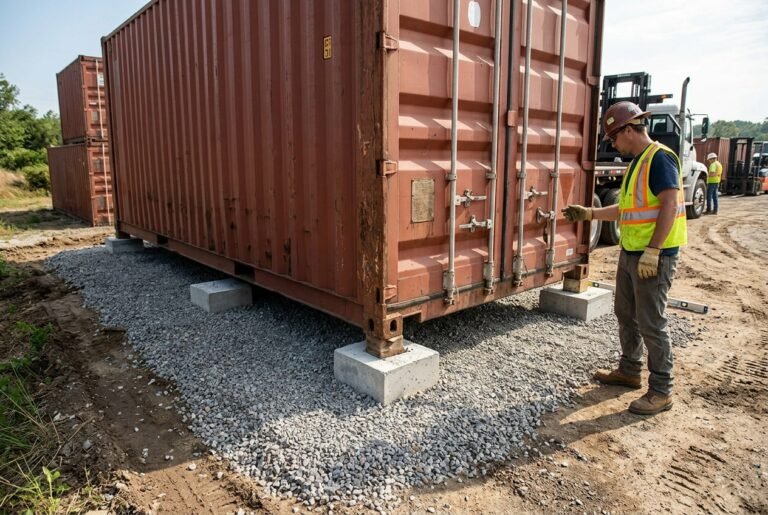
Setting a container directly on bare ground is possible but not recommended for long-term use. Moisture trapped beneath the container accelerates floor corrosion and can cause settling. A basic gravel pad, typically 4-6 inches of compacted crushed stone extending 2 feet beyond the container footprint, costs $300 to $800 depending on your region and soil conditions.
For more permanent installations, concrete piers or a full slab foundation may be appropriate. Concrete piers at the four corners typically run $400 to $1,000, while a full slab can cost $1,500 to $3,000 or more. If you’re in Wake County or the broader Triangle area, local soil conditions are generally favorable for gravel pads, though clay-heavy areas may require additional drainage planning.
Specialty Features and Their Financial Impact
A standard container comes with double doors on one end, a plywood floor, and a basic lockbox. Anything beyond that configuration adds cost, but the right features can dramatically improve usability for specific applications.
Double Doors, Side Openings, and Ventilation
Dual-end door containers, sometimes called tunnel containers, feature double doors on both ends. This configuration is popular for drive-through access on job sites or farms. Expect to pay $500 to $1,000 above the standard price for factory-installed dual-end doors.
Side-opening containers replace one or both long walls with bi-fold or roll-up doors, providing full lateral access. These specialty units typically cost $1,500 to $3,000 more than standard configurations. Factory-installed ventilation louvers, useful for storing equipment that generates heat or moisture, add $200 to $500.
Here’s a quick reference for common upgrades on a 20ft unit:
- Dual-end doors: +$500-$1,000
- Side-opening doors: +$1,500-$3,000
- Ventilation louvers: +$200-$500
- Turbine roof vents: +$100-$250
- Lock box upgrades: +$50-$150
Strategies for Securing the Best Current Rate
Paying less for the same container isn’t about haggling. It’s about timing, volume, and flexibility.
Bulk Purchasing and Seasonal Discounts
If you need multiple containers for a development project, farm operation, or business expansion, buying two or more units at once often triggers volume pricing. Discounts of 5-10% per unit are common on orders of three or more containers, and some suppliers offer steeper breaks on five-plus orders.
Seasonal patterns also affect pricing. Late fall and winter tend to be slower periods for container sales, particularly in northern states where ground conditions make delivery and placement more difficult. Buying during these quieter months can save you $200 to $500 per unit compared to peak spring and summer demand. Flexibility on delivery timing helps too: if you can accept delivery within a two-to-three-week window rather than requiring a specific date, suppliers can often route your container more efficiently and pass along the savings.
Future Outlook for 20ft Container Valuations
Steel prices have stabilized relative to their 2021-2022 peaks, and manufacturing output from Chinese facilities has returned to pre-pandemic levels. These factors suggest that the current 20ft shipping container price range of $3,800 to $5,500 is likely to hold steady through the remainder of 2025, barring a major disruption.
Two variables could push prices upward: renewed trade tensions leading to tariffs on Chinese-manufactured containers, and any significant port labor disputes. On the other hand, a global economic slowdown would reduce shipping volumes, increase surplus container inventory, and put downward pressure on prices.
For most buyers, waiting for a dramatic price drop isn’t a practical strategy. Container prices don’t swing like stock markets. If you need a container in the next three to six months, current pricing represents a reasonable baseline, and locking in a quote now protects you against any near-term increases.
Final Checklist Before You Buy
- Confirm the container grade: one-trip, cargo worthy, or wind and watertight
- Verify total delivered cost, not just the base price
- Measure your site for tilt-bed clearance: 100 feet of length and 14 feet of overhead
- Plan your foundation: gravel pad, concrete piers, or slab
- Check local permit requirements with your county planning department
- Ask about bulk pricing if you need more than one unit
- Confirm delivery method and whether placement is included
If you’re ready to compare real options, browse current inventory at Lease Lane Containers to see available sizes, grades, and pricing. The Raleigh-based team can help you sort through the details and plan delivery to your specific site, whether you’re local to North Carolina or anywhere across the country.