What Is the Price of a New 40ft Shipping Container?
Table of Contents
- Table of Contents
- Current Market Rates for New 40ft Shipping Containers
- Standard vs. High Cube Pricing
- The One-Trip Advantage
- Key Factors Influencing Container Costs
- Steel Market Volatility and Production Trends
- Global Logistics and Port Congestion
- Geographic Location and Availability
- Proximity to Major Coastal Ports
- Delivery and Logistics Expenses
- Tilt-Bed vs. Flatbed Trailer Fees
- Site Preparation and Access Requirements
- Customization and Modification Add-Ons
- Doors, Windows, and Ventilation Upgrades
- Comparing New vs. Used 40ft Containers
- How to Secure the Best Price and Avoid Scams
- Bulk Purchase Discounts and Financing Options
- Final Checklist
Table of Contents
- Current Market Rates for New 40ft Shipping Containers
- Standard vs. High Cube Pricing
- The One-Trip Advantage
- Key Factors Influencing Container Costs
- Steel Market Volatility and Production Trends
- Global Logistics and Port Congestion
- Geographic Location and Availability
- Proximity to Major Coastal Ports
- Delivery and Logistics Expenses
- Tilt-Bed vs. Flatbed Trailer Fees
- Site Preparation and Access Requirements
- Customization and Modification Add-Ons
- Doors, Windows, and Ventilation Upgrades
- Comparing New vs. Used 40ft Containers
- How to Secure the Best Price and Avoid Scams
- Bulk Purchase Discounts and Financing Options
- Final Checklist
If you’re budgeting for a 40ft shipping container, the sticker price you’ll find online rarely tells the full story. Steel costs, port proximity, delivery logistics, and the condition grade you choose all push that number up or down by thousands of dollars. For contractors staging materials on a job site near Raleigh, a farmer in rural North Carolina needing equipment storage, or a small business expanding inventory space, the price you actually pay depends on decisions you make before you ever sign a purchase order. Understanding what drives those costs puts you in a stronger position to compare quotes, avoid overpaying, and match the right container to your project. This guide breaks down the real pricing factors behind a new 40ft shipping container so you can plan with confidence and fewer surprises.
Current Market Rates for New 40ft Shipping Containers
A brand-new 40ft shipping container typically costs between $4,500 and $8,000 in the current U.S. market, though prices can stretch higher depending on features and location. That range reflects the difference between a standard-height unit and a high cube model, as well as regional supply fluctuations. Coastal markets with heavy port activity tend to sit at the lower end, while inland buyers often pay a premium once delivery is factored in.
The price you’re quoted also depends on whether you’re buying from a dealer with existing inventory or ordering directly through a manufacturer’s pipeline. Dealers who stock containers at regional depots can often offer faster turnaround, while direct orders from overseas may take weeks or months. Getting multiple quotes from suppliers who serve your area is the simplest way to benchmark what’s reasonable.
Standard vs. High Cube Pricing
A standard 40ft container stands 8 feet 6 inches tall, while a high cube shipping container adds an extra foot, reaching 9 feet 6 inches. That additional 12 inches of interior height makes a meaningful difference for storing tall equipment, building out a container office, or creating livable converted spaces.
Expect to pay $300 to $800 more for a high cube model compared to a standard-height unit. The price gap is relatively small given the added usable volume: roughly 344 cubic feet of extra space. If your project involves shelving, overhead lighting, or insulation that eats into headroom, the high cube option is almost always worth the upcharge.
The One-Trip Advantage
In the container industry, “new” almost always means “one-trip.” These containers are manufactured overseas, typically in China, loaded with cargo for a single voyage to a U.S. port, then sold as new units. They arrive with minimal wear: fresh paint, intact factory seals, and clean interiors free of rust or odor.
One-trip containers carry the highest price point among available grades, but they also offer the longest usable lifespan, often 25 years or more with basic maintenance. If you’re investing in a permanent structure, a workshop, or climate-sensitive storage, a one-trip unit gives you the cleanest starting point. Lease Lane Containers provides transparent grading guidance so you can see exactly what distinguishes a one-trip container from Cargo Worthy or Wind and Watertight grades.
Key Factors Influencing Container Costs
No single variable determines your final cost. Instead, several market forces interact to push new 40ft container prices higher or lower throughout the year. Knowing which factors matter most helps you time your purchase and ask better questions when comparing suppliers.
Steel Market Volatility and Production Trends
Shipping containers are built primarily from Corten steel, a weather-resistant alloy that accounts for a significant portion of manufacturing costs. When global steel prices spike, as they did during the post-2020 supply chain disruptions, container prices follow within a few months.
Chinese steel production trends have an outsized influence here, since the majority of new containers are manufactured in Chinese factories. Government subsidies, environmental regulations, and raw material costs in that market ripple directly into U.S. retail pricing. Tracking steel commodity indexes gives you a rough sense of where container prices are headed over the next quarter.
Global Logistics and Port Congestion
Shipping rates between Asia and North America directly affect the landed cost of a one-trip container. When trans-Pacific freight rates surge, suppliers pass those costs through to buyers. Port congestion compounds the problem by adding demurrage fees and delaying inventory turnover at dealer depots.
During the 2021-2022 congestion crisis, some 40ft container prices doubled in a matter of months. While conditions have stabilized, seasonal demand spikes still create temporary price bumps. Buying during slower periods, typically late fall and early winter, can save you $500 to $1,000 compared to peak spring and summer pricing.
Geographic Location and Availability
Where you’re located relative to major container depots has a direct impact on your total cost. A buyer in Newark, New Jersey pays a very different delivered price than someone on a rural property in western North Carolina, even if the base container cost is identical.
Proximity to Major Coastal Ports
The cheapest new 40ft containers are almost always found near high-volume ports: Savannah, Houston, Los Angeles/Long Beach, and the Port of New York/New Jersey. These hubs receive thousands of one-trip containers each month, creating competitive local markets with lower per-unit prices.
If you’re buying from an inland location, you’ll need to account for the cost of transporting the container from the nearest depot to your site. For buyers in the Raleigh area or elsewhere in the Southeast, the Port of Savannah is typically the closest major source. Lease Lane Containers, based in Raleigh, North Carolina, helps buyers across the state and nationwide by coordinating delivery logistics from regional depots, which can reduce transit costs compared to arranging your own hauling.
Delivery and Logistics Expenses
The price tag on the container itself is only part of your budget. Delivery can add $1,000 to $5,000 or more depending on distance, truck type, and site conditions. Ignoring these costs during the quoting phase is one of the most common budgeting mistakes buyers make.
Tilt-Bed vs. Flatbed Trailer Fees
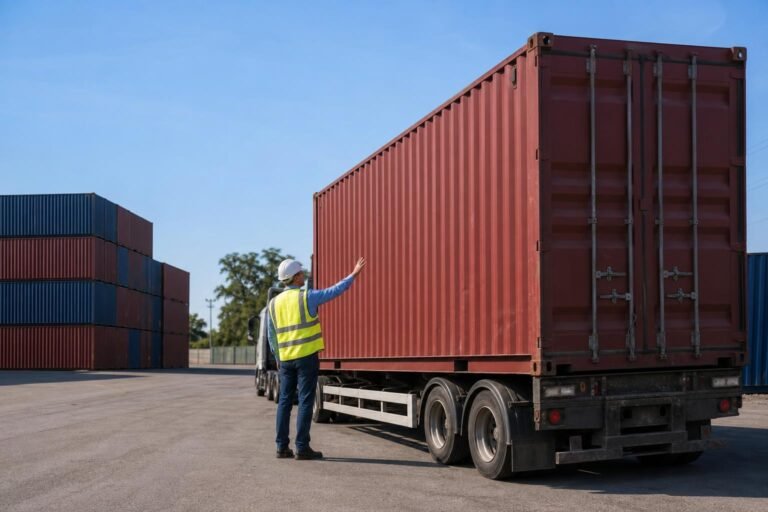
A tilt-bed truck is the most common delivery method for residential and small commercial sites. The truck tilts its bed hydraulically, sliding the container off the back onto your prepared surface. This method works well on flat ground with at least 100 feet of straight-line clearance behind the drop point.
Flatbed trailers with crane or forklift offloading are used when tilt-bed access isn’t possible: tight lots, uneven terrain, or placements that require lifting over obstacles. Crane delivery can add $500 to $2,000 to your total cost. Always confirm the delivery method with your supplier before signing, since the truck type affects both price and site requirements.
Site Preparation and Access Requirements
Your site needs to be ready before the truck arrives. At minimum, you’ll need a level surface, adequate overhead clearance (at least 14 feet for a tilt-bed), and a path wide enough for a full-size truck to maneuver. Low-hanging power lines, narrow driveways, and soft ground are the most common delivery obstacles.
For a solid foundation, many buyers use a compacted gravel pad or concrete piers placed at the container’s corner castings. A 4-inch gravel pad across the full footprint typically costs $300 to $800 depending on local material prices. Lease Lane Containers offers delivery planning support that covers turning radius, overhead clearance, and placement specifics so the container lands correctly on the first attempt.
Customization and Modification Add-Ons
A stock container is a blank canvas. Many buyers need modifications to make the unit functional for their specific use case, and those add-ons affect your total investment.
Doors, Windows, and Ventilation Upgrades
The most common modifications include:
- Roll-up doors: Replacing the standard swing doors with a roll-up door on one or both ends, typically $800 to $1,500 per door installed.
- Personnel doors: Adding a standard 36-inch walk-through door on a side wall, usually $600 to $1,200 including framing and hardware.
- Windows: A basic fixed window runs $300 to $600 installed, while operable windows with screens cost slightly more.
- Ventilation louvers: Passive vents on opposite walls cost $150 to $300 each and help reduce condensation inside the container.
- Electrical packages: Basic wiring with outlets, lighting, and a breaker panel typically starts around $1,500 to $3,000 depending on complexity.
If you’re planning a container office, workshop, or retail space, budget for modifications early. Ordering a pre-modified unit from your supplier is almost always cheaper than hiring a welder after delivery.
Comparing New vs. Used 40ft Containers
The price gap between a new one-trip container and a used unit can be substantial. A used 40ft container in Cargo Worthy condition typically costs $2,000 to $4,500, while a Wind and Watertight unit might run $1,500 to $3,000. That’s a savings of 30% to 60% compared to a new 40ft shipping container price.
But the savings come with trade-offs. Used containers show cosmetic wear: dents, surface rust, faded paint, and possibly minor floor patches. Cargo Worthy units are structurally sound and certified for ocean transport, but they won’t look as clean as a one-trip container. Wind and Watertight units keep weather out but may have more visible wear and aren’t certified for shipping.
For basic storage on a farm, construction site, or commercial lot, a used container often makes perfect financial sense. If appearance matters, or if you’re planning a conversion project where interior wall condition affects insulation and finishing, a one-trip unit saves you time and rework costs down the line. The right choice depends on your intended use, your budget, and how long you plan to keep the container.
How to Secure the Best Price and Avoid Scams
Getting a fair deal on a 40ft container requires some basic diligence. The container resale market includes reputable dealers alongside fly-by-night operators who collect deposits and disappear.
Start by verifying the supplier’s physical address and business registration. A legitimate dealer will have a depot you can visit or at least a verifiable office location. Ask for container photos with the unit number visible, and request a condition report before committing. Be wary of prices that seem dramatically below market: if a new 40ft container is listed at $2,500, something is wrong.
Get quotes from at least three suppliers, and make sure each quote includes delivery to your site. A lower container price from a distant depot can easily cost more once trucking is added. Always ask about warranty coverage, return policies, and what happens if the container arrives damaged.
Bulk Purchase Discounts and Financing Options
If you need multiple containers for a job site, retail development, or storage yard, most dealers offer volume pricing. Discounts of 5% to 15% per unit are common on orders of three or more containers. Some suppliers also offer financing terms, spreading the cost over 12 to 60 months with interest rates that vary based on credit and order size.
For businesses, leasing can be an alternative to purchasing outright. Monthly lease rates for a new 40ft container typically run $150 to $300 depending on term length and location. Leasing preserves cash flow and may offer tax advantages, though you won’t build equity in the unit.
Final Checklist
Before you commit to a purchase, run through these steps:
- Confirm whether you need a standard-height or high cube shipping container based on your intended use and interior clearance needs.
- Get at least three quotes that include delivery to your specific site address.
- Verify the supplier’s physical location, business registration, and customer references.
- Assess your site for overhead clearance (minimum 14 feet for tilt-bed delivery), turning radius, and ground conditions.
- Budget for delivery separately: expect $1,000 to $5,000 depending on distance and truck type.
- Decide on modifications early and get them quoted before purchase, not after.
- Compare total cost between new one-trip and used Cargo Worthy units based on your project’s requirements.
A new 40ft container is a significant purchase, and the right preparation keeps your costs predictable. If you’re ready to compare options, browse Lease Lane Containers’ inventory to see available sizes, grades, and pricing. Their Raleigh-based team can help you match the right container to your project and plan delivery logistics before you spend a dollar.