

Is a Cargo Worthy Container Good for Storage?
Table of Contents
- Table of Contents
- Defining Cargo Worthy Standards for Storage
- The Difference Between CW and Wind and Watertight Grades
- Structural Integrity and CSC Plate Validation
- Key Benefits of Using Cargo Worthy Containers for Storage
- Superior Weatherproofing and Pest Resistance
- Long-term Durability and Resale Value
- Potential Drawbacks and Aesthetic Considerations
- Surface Rust and Cosmetic Wear from Sea Service
- Ideal Use Cases for Cargo Worthy Storage Units
- Sensitive Inventory and Industrial Equipment
- High-Stacking Requirements for Space Optimization
- Cost-Benefit Analysis: Is the Premium Worth It?
- Comparing Price Points with As-Is and One-Trip Containers
- Maintenance Tips to Extend Storage Life
- Final Verdict: Selecting the Right Container for Your Needs
Table of Contents
- Defining Cargo Worthy Standards for Storage
- The Difference Between CW and Wind and Watertight Grades
- Structural Integrity and CSC Plate Validation
- Key Benefits of Using Cargo Worthy Containers for Storage
- Superior Weatherproofing and Pest Resistance
- Long-term Durability and Resale Value
- Potential Drawbacks and Aesthetic Considerations
- Surface Rust and Cosmetic Wear from Sea Service
- Ideal Use Cases for Cargo Worthy Storage Units
- Sensitive Inventory and Industrial Equipment
- High-Stacking Requirements for Space Optimization
- Cost-Benefit Analysis: Is the Premium Worth It?
- Comparing Price Points with As-Is and One-Trip Containers
- Maintenance Tips to Extend Storage Life
- Final Verdict: Selecting the Right Container for Your Needs
Buying a used shipping container for storage sounds simple enough until you start comparing grades. One of the most common questions buyers ask is whether a cargo worthy container is good for storage, or if they should spend more on a one-trip unit or save money with a lower grade. The answer depends on what you’re storing, how long you plan to keep the container, and where it will sit on your property. A cargo worthy (CW) rating means the container has been inspected and certified fit for international ocean transport, which is a higher bar than most people realize. That certification tells you something specific about structural soundness, weather resistance, and overall condition. For the majority of storage applications, from farm equipment to retail inventory to personal belongings, a CW container hits a practical sweet spot between cost and quality. But there are trade-offs worth understanding before you commit. This guide breaks down what the CW grade actually means, where it excels, where it falls short, and how to decide if it’s the right fit for your project.
Defining Cargo Worthy Standards for Storage
The term “cargo worthy” has a precise meaning in the shipping industry. It refers to a container that has passed inspection by a certified surveyor and meets the standards required for loaded international ocean transport. This is not a casual label or a marketing term. A CW-rated container must satisfy criteria established by the International Convention for Safe Containers (CSC), which governs structural performance under the stresses of sea transit: stacking loads, dynamic forces during storms, and exposure to saltwater environments.
For storage buyers, that certification acts as a reliable quality floor. If a container is strong enough to carry 25 to 30 tons of cargo across the Pacific Ocean while stacked several units high on a vessel, it can certainly handle stationary storage on your property. The inspection covers wall integrity, floor condition, door operation, roof panels, and corner castings. Any container that passes this inspection is structurally sound, weather-resistant, and functional.
The Difference Between CW and Wind and Watertight Grades
These two grades get confused constantly, and the distinction matters. A wind and watertight (WWT) container will keep rain and wind out, but it has not been inspected to the CSC standard. It may have minor structural issues: a dented corner casting, a slightly bent rail, or corroded locking bars. None of those issues necessarily affect its ability to store dry goods, but they do mean the container wouldn’t pass muster for ocean freight.
A CW container, by contrast, has been formally inspected and carries a valid CSC plate. That plate confirms the container meets international structural standards. The practical difference for storage buyers is this: a CW unit gives you a verified baseline of quality, while a WWT container requires more trust in the seller’s assessment. If you’re buying sight unseen or having a container delivered from out of state, the CW certification provides meaningful peace of mind.
WWT containers typically cost $200 to $600 less than CW units of the same size. Whether that savings matters depends on your risk tolerance and what you’re storing.
Structural Integrity and CSC Plate Validation
The CSC plate riveted to a cargo worthy container is more than a sticker. It contains the container’s maximum gross weight, stacking weight capacity (typically rated for loads up to 192,000 kg or roughly 423,000 lbs when stacked), and the date of the last inspection. For a container to maintain its CW status, it must pass re-inspection at intervals specified by the convention, typically every 30 months for containers in active shipping service.
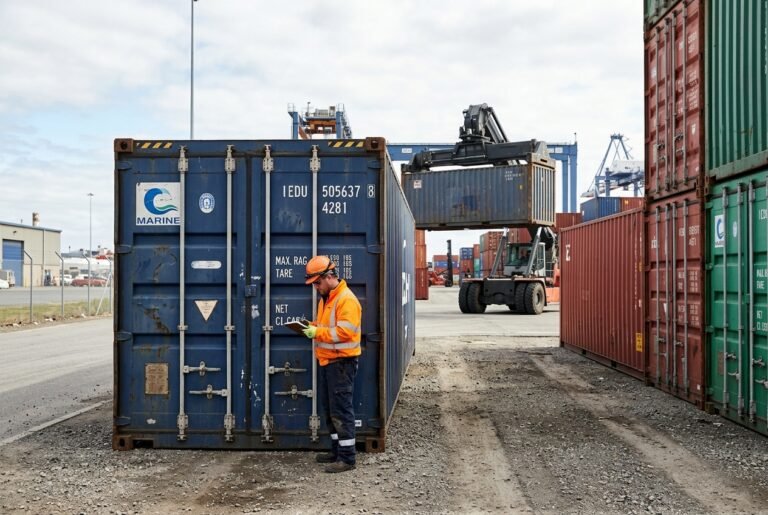
When a container is retired from ocean service and sold for storage, the CSC plate reflects its last inspection date. Buyers should check this plate during any pre-purchase evaluation. Look for the approval number, the maximum operating gross mass, and the allowable stacking weight. If the plate is missing, illegible, or shows an inspection date more than five years old, ask the seller for documentation or consider having the container re-inspected.
The structural elements that matter most are the corner castings (the thick steel fittings at all eight corners), the top and bottom rails, the cross members beneath the floor, and the corrugated wall panels. A CW inspection confirms all of these are functional and within acceptable tolerances.
Key Benefits of Using Cargo Worthy Containers for Storage
A CW shipping container offers a combination of verified quality and reasonable cost that makes it the most popular grade for long-term storage. Here’s why.
Superior Weatherproofing and Pest Resistance
Every cargo worthy container is, by definition, wind and watertight. The door gaskets seal properly, the roof panels show no perforations, and the wall panels are free of holes. For storage applications, this means your contents stay dry through heavy rain, snow, and humidity fluctuations.
The steel construction also provides excellent pest resistance. Unlike wooden sheds or fabric-covered structures, a steel shipping container is impervious to rodents, termites, and insects. The marine-grade plywood flooring (typically 28mm thick in standard containers) is treated to resist insect damage, and the steel walls offer no entry points for pests. Farmers storing feed, seed, or equipment in rural areas of North Carolina and the Southeast find this particularly valuable, since wooden outbuildings in humid climates are constantly under siege from moisture and pests.
One practical tip: ensure the door gaskets are intact and flexible. Rubber gaskets dry out over time, and cracked gaskets allow moisture intrusion even on an otherwise sound container. Replacement gaskets cost $50 to $150 and take about an hour to install.
Long-term Durability and Resale Value
COR-TEN steel, the weathering steel used in shipping container construction, is designed to form a protective oxide layer that slows further corrosion. A cargo worthy container in reasonable condition will last 15 to 25 years in stationary storage with minimal maintenance. Some last considerably longer, depending on climate and care.
Resale value is another practical consideration. CW containers hold their value better than lower grades because the certification provides buyers with confidence. A 20ft CW container purchased for $2,500 to $3,500 today might resell for 60% to 75% of that price five to ten years from now, assuming basic upkeep. WWT and as-is containers depreciate faster because they lack the same documented quality assurance.
This matters for contractors who use containers on job sites for two to three years and then sell them, or for small businesses that outgrow their storage needs. The CW grade protects your investment.
Potential Drawbacks and Aesthetic Considerations
No used shipping container is perfect. CW containers have been working vessels, and they carry the evidence of that service.
Surface Rust and Cosmetic Wear from Sea Service
A typical CW container has spent 8 to 15 years in ocean service before being retired and sold. That means surface rust, paint fading, dents, scratches, and sometimes patches where minor repairs have been welded. None of these cosmetic issues affect the container’s ability to store your belongings safely, but they do affect appearance.
If you’re placing a container on a residential property in a neighborhood with an HOA, or on a commercial lot where appearance matters, the cosmetic condition of a CW unit might be a concern. Surface rust is normal and does not indicate structural failure. COR-TEN steel is designed to rust on the surface as a protective mechanism. But it doesn’t look great.
The fix is straightforward: wire-brush any loose rust, apply a rust-converting primer, and paint the container with industrial-grade exterior paint. Budget $200 to $500 in materials for a 20ft container, or $400 to $800 for a 40ft unit. Professional painting runs $1,000 to $2,500 depending on your area and the level of prep work needed.
For buyers who want a clean, factory-fresh look without the prep work, a one-trip container is the better choice. These units have made a single ocean voyage (typically carrying goods from the manufacturer in China to a U.S. port) and arrive in near-new condition with minimal cosmetic wear. They cost more, but the aesthetic difference is significant.
Ideal Use Cases for Cargo Worthy Storage Units
Not every storage situation demands the same container grade. CW containers are particularly well-suited to specific applications.
Sensitive Inventory and Industrial Equipment
If you’re storing items that are sensitive to moisture, temperature swings, or contamination, the verified seal of a CW container matters. Small businesses storing retail inventory, electronics, or paper goods benefit from the confirmed weatherproofing. The same applies to contractors storing power tools, welding equipment, or materials that degrade when exposed to moisture.
Pharmaceutical distributors, food-adjacent businesses, and anyone storing items with regulatory requirements should consider CW as the minimum acceptable grade. The documented inspection history provides a paper trail that lower grades cannot offer.
For farms and agricultural operations across the Southeast, CW containers protect expensive equipment like tractors, implements, and irrigation components from both weather and theft. The heavy-gauge steel and secure locking bars make these containers far more secure than most purpose-built outbuildings.
High-Stacking Requirements for Space Optimization
One of the less obvious advantages of the CW grade is its verified stacking capacity. If you plan to stack containers two or three high to maximize storage density on a limited footprint, you need containers rated for the load. The CSC plate on a CW container specifies the maximum stacking weight, typically allowing for stacking up to nine containers high when fully loaded.
Industrial yards, distribution centers, and large-scale construction projects regularly stack containers. Without verified structural ratings, stacking becomes a liability issue. CW certification gives you documented proof that the container can handle the load, which matters for insurance purposes and OSHA compliance on job sites.
Even residential buyers occasionally stack a 20ft container on top of a 40ft unit to create a two-level storage or workshop setup. The CW rating ensures the lower container’s corner castings and rails can support the weight safely.
Cost-Benefit Analysis: Is the Premium Worth It?
The price difference between container grades is real but often smaller than buyers expect.
Comparing Price Points with As-Is and One-Trip Containers
Here’s a general pricing framework for 20ft shipping containers in the current U.S. market, though prices vary by region and availability:
- As-is containers: $1,200 to $2,000. These are sold without any condition guarantee. You might get a solid unit, or you might get one with holes in the roof. Buyer beware.
- Wind and watertight (WWT): $1,800 to $2,800. Confirmed to keep weather out, but no structural certification.
- Cargo worthy (CW): $2,500 to $3,500. Inspected and certified to CSC standards.
- One-trip: $3,500 to $5,500. Near-new condition with minimal cosmetic wear.
For 40ft containers and 40ft high cube shipping containers, add roughly 30% to 50% to each range.
The price gap between WWT and CW is typically $400 to $800. For that premium, you get a certified inspection, verified structural integrity, and better resale value. For most buyers storing anything of meaningful value, that’s a straightforward investment.
The gap between CW and one-trip is larger, often $1,000 to $2,000. That premium buys you cosmetic condition and a longer remaining lifespan. If appearance matters or you plan to keep the container for 20-plus years, the one-trip grade makes sense. For five to fifteen years of functional storage, CW delivers excellent value.
Teams like the Raleigh-based crew at Lease Lane Containers can walk you through the specific pricing and availability for each grade, helping you match your budget to the right container condition for your project.
Maintenance Tips to Extend Storage Life
A CW container requires minimal maintenance, but “minimal” is not “zero.” Follow these guidelines to get the longest possible service life from your unit.
Inspect the roof annually. Flat spots where water pools are the primary cause of roof failure on older containers. If you find standing water after rain, apply a bead of marine-grade sealant or consider installing a slight pitch using simple framing on top of the container.
Check door gaskets every six months. Open and close the doors fully to confirm they swing freely and seal tightly. Lubricate the door hinges and locking bars with white lithium grease or a silicone-based spray twice a year. Stiff locking bars are the most common complaint from container owners, and they’re almost always caused by lack of lubrication rather than structural problems.
Address surface rust promptly. Small rust spots are normal and cosmetic. But if you see rust bubbling through from the inside, or if you can push a screwdriver through a rusted area, that section needs a patch weld or plate repair. Catching rust early keeps repair costs under $100. Ignoring it leads to panel replacement at $300 to $800.
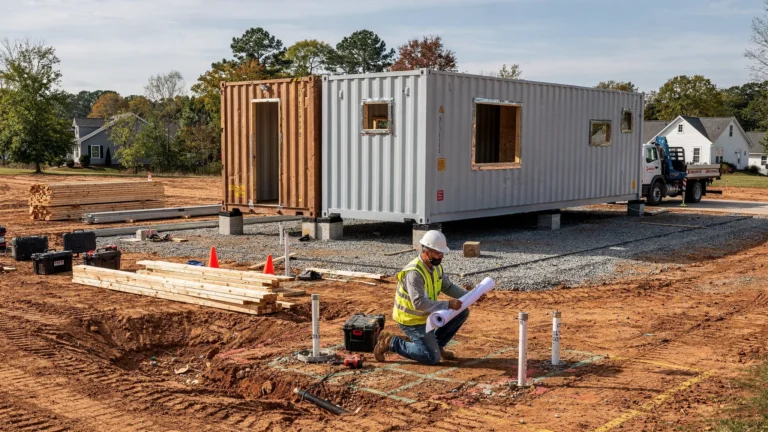
Keep the container elevated off bare ground. Place it on a gravel pad (4 to 6 inches of compacted 57-stone works well), concrete piers, or railroad ties. Direct ground contact accelerates underside corrosion and can cause the floor cross members to deteriorate within a few years. This is especially important in the humid climate across North Carolina and the broader Southeast, where ground moisture is a constant factor.
Budget roughly $100 to $200 per year for basic maintenance supplies. That small investment protects a container worth several thousand dollars and extends its useful life by years.
Final Verdict: Selecting the Right Container for Your Needs
For the majority of storage applications, a cargo worthy shipping container is not just good enough: it’s the right choice. The CW grade gives you verified structural integrity, confirmed weatherproofing, and a documented inspection history, all at a price point that sits comfortably between budget-grade units and premium one-trip containers.
The exceptions are few. If you need a pristine appearance for a customer-facing location, go one-trip. If you’re storing low-value items temporarily and cost is the primary concern, a WWT unit might suffice. But for contractors, farmers, small business owners, and homeowners who want reliable, long-term storage without overpaying, the CW grade consistently delivers the best balance of quality and value.
Before purchasing, confirm the CSC plate is present and legible, inspect the door gaskets, check the roof for pooling areas, and plan your site prep so the container sits on a stable, elevated surface. Those four steps eliminate the most common problems buyers encounter.
If you’re ready to compare options, browse available inventory at Lease Lane Containers to see current container sizes, grades, and pricing. Their Raleigh-based team provides straightforward guidance on choosing the right grade and planning delivery logistics, whether you’re in the Triangle or anywhere else in the U.S.


One Comment