Where to Buy a 20ft Shipping Container in Raleigh, NC
If you're looking for a 20ft shipping container for sale in Raleigh, NC, you're in a strong position. The Triangle area sits along major freight corridors, which means container inventory moves through the region regularly. That proximity to port traffic and inland distribution hubs keeps prices competitive and delivery timelines short. But finding the right container still takes some homework. You need to compare grades, understand pricing, confirm delivery logistics, and check local permit rules before you commit. This guide walks through each of those steps so you can buy with confidence, whether you're a contractor setting up a job site, a homeowner adding backyard storage, or a small business owner managing inventory overflow.
Table of Contents
- Overview of the Raleigh Shipping Container Market
- Top Local Suppliers and Dealers in Raleigh
- Choosing Between New and Used 20ft Containers
- Pricing Factors for Containers in Central North Carolina
- Delivery and Logistics Requirements in Wake County
- Raleigh Zoning and Permit Regulations for Containers
- Customization Services Available Near the Research Triangle
- Final Checklist for Purchasing Your Raleigh Container
Overview of the Raleigh Shipping Container Market
Raleigh's container market has grown steadily over the past several years. Growth in the construction, small business, and residential storage sectors has driven demand across Wake County and surrounding areas. The city's position along I-40 and I-95 makes it a natural stop for containers coming inland from the Port of Wilmington and the Port of Virginia in Norfolk.
Buyers here benefit from a mix of local dealers, national suppliers with regional depots, and independent brokers who source containers from multiple yards. That competition keeps pricing honest and gives you more options to compare before purchasing.
Local Demand and Availability in the Triangle Area
The Triangle, covering Raleigh, Durham, and Chapel Hill, has seen consistent population and commercial growth. New residential developments, expanding small businesses, and ongoing construction projects all create steady demand for portable storage and workspace solutions.
A 20ft shipping container is the most popular size for buyers who need practical storage without a large footprint. It fits on most residential driveways and smaller commercial lots. Because of this demand, local inventory for 20ft units tends to move quickly. If you find a container that meets your grade and price requirements, don't wait too long. Stock rotates, and the specific unit you inspected today might not be available next week.
Top Local Suppliers and Dealers in Raleigh
Raleigh has several reliable sources for shipping containers. Knowing the difference between national chains and independent brokers helps you shop smarter.
National Chains with Raleigh Depots
Large companies like PODS, Mobile Mini (now part of WillScot), and various national container resellers maintain depot locations within driving distance of Raleigh. These companies typically stock both new and used containers, offer standardized pricing, and handle delivery through their own fleet.
The advantage of buying from a national chain is consistency. You'll get a predictable buying experience with clear terms. The downside is that pricing can be less flexible, and you may have fewer options for customization or negotiation on individual units.
Independent North Carolina Container Brokers
Independent brokers and regional dealers often provide more flexibility. They source containers from multiple depots and shipping yards, which means they can sometimes find better deals or specific grades that larger companies don't carry at a given time.
Lease Lane Containers, based right here in Raleigh, is one example of a local supplier that offers both new and used shipping containers with practical buying guidance. Working with a Raleigh-based team gives you the benefit of local delivery planning knowledge, including familiarity with common site access challenges in Wake County neighborhoods and commercial areas. Independent brokers also tend to offer more transparent grading explanations, helping you understand exactly what you're paying for.
Choosing Between New and Used 20ft Containers
The new-versus-used decision affects your budget, the container's appearance, and its expected lifespan. Both options work well for storage and on-site use, but the right choice depends on your priorities.
A one-trip container (often called "new") has made a single ocean voyage from the manufacturing facility, typically in China, to a U.S. port. It arrives in near-perfect condition with minimal cosmetic wear. A used shipping container has completed multiple ocean voyages and will show varying degrees of surface rust, dents, and paint wear.
Understanding One-Trip vs. Cargo Worthy Grades
Container grades tell you what condition a unit is in and what it's suitable for. Here are the three most common grades you'll encounter:
- One-Trip: Near-new condition. Minimal wear, original paint, clean interior. Expect to pay a premium, but you're getting a container that could last 25 years or more with basic maintenance.
- Cargo Worthy (CW): Structurally sound and certified for ocean transport. Will have visible dents, surface rust, and paint wear. Doors seal properly. This is the most popular grade for buyers who want a solid container at a lower price.
- Wind and Watertight (WWT): Keeps weather out but may not meet ocean shipping standards. Suitable for ground-level storage. Expect more cosmetic wear and possibly minor repairs to door seals.
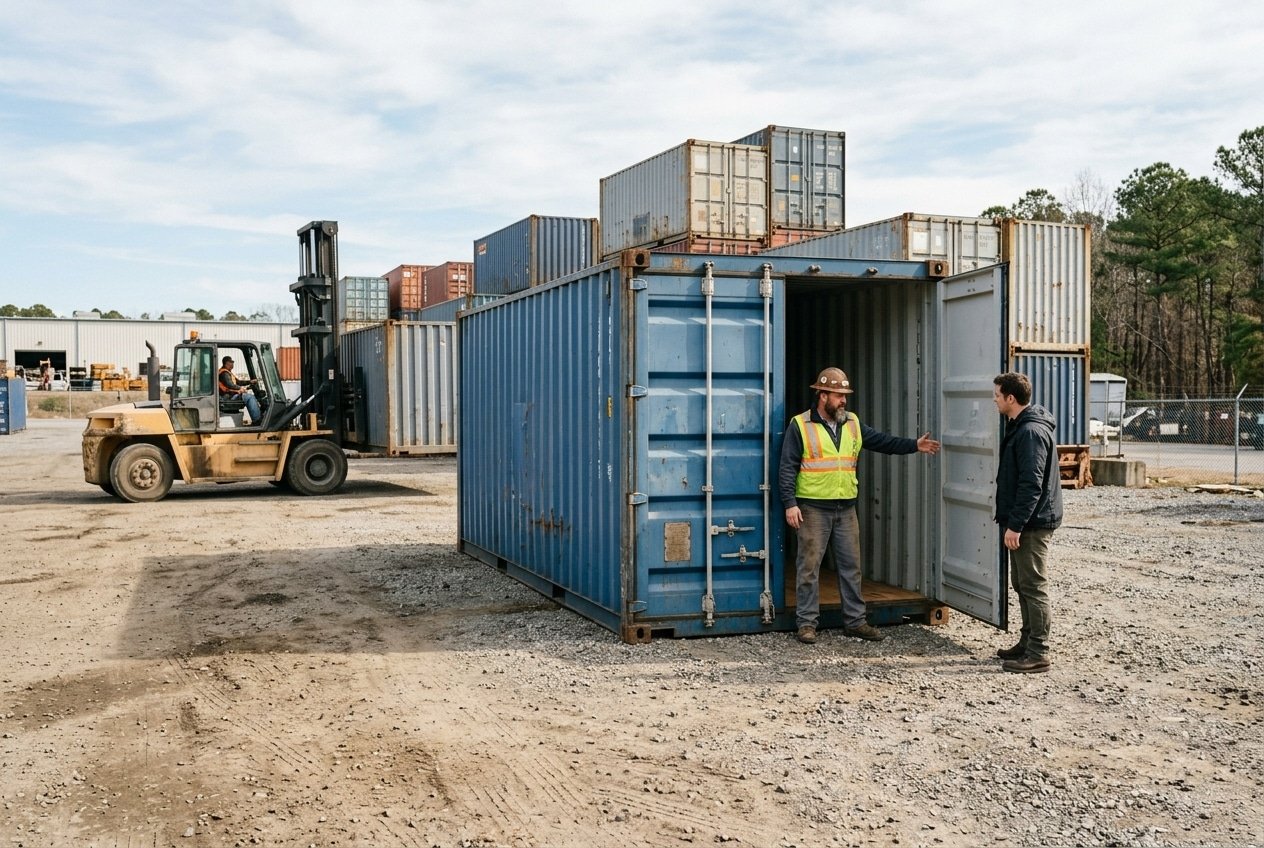
When inspecting a used unit, check for excessive floor rust, holes in the corrugated panels, and door gasket condition. A container that looks rough on the outside can still be perfectly functional if the structure and seals are intact.
Pricing Factors for Containers in Central North Carolina
Several variables affect what you'll pay for a 20ft container in the Raleigh area. Distance from the nearest depot matters, but so do the current supply levels, the container's grade, and whether you need delivery included.
Market pricing fluctuates with global shipping trends. When ocean freight rates drop, more containers come off ships and enter the resale market, pushing used container prices down. When rates spike, fewer containers get retired, and used inventory tightens.
Estimated Costs for 20ft Standard Units
As of recent market conditions, here's a rough pricing range for 20ft containers in the Raleigh area:
- One-Trip: $3,200 to $4,800, depending on supplier and current inventory levels
- Cargo Worthy: $2,000 to $3,200
- Wind and Watertight: $1,500 to $2,400
These figures don't always include delivery. Expect to add $200 to $600 for local delivery within Wake County, depending on the delivery method and distance from the container yard. Always ask for a delivered price so you can compare quotes accurately.
Delivery and Logistics Requirements in Wake County
Getting a container to your site is half the battle. A 20ft shipping container weighs roughly 5,000 pounds empty, so you'll need a truck and enough space to place it safely.
Before scheduling delivery, walk your site and measure. You need a clear path at least 10 feet wide and roughly 60 feet of straight-line clearance for the truck to back in and offload. Overhead obstructions like power lines and tree branches need at least 14 feet of vertical clearance.
Site Preparation and Ground Leveling
Your container needs a firm, level surface. Placing a container on soft or uneven ground leads to door alignment problems, pooling water, and potential structural stress over time.
Common foundation options include compacted gravel pads, concrete blocks at the corners, or poured concrete slabs. For most residential and small business uses, a 6-inch compacted gravel pad works well and costs significantly less than poured concrete. Make sure the ground slopes slightly away from the container to prevent water from collecting underneath.
Tilt-Bed vs. Flatbed Delivery Options
Two primary delivery methods are used for 20ft containers:
- Tilt-bed truck: The truck bed tilts hydraulically, and the container slides off the back onto the ground. This is the most common method for residential deliveries. It requires roughly 60 feet of straight clearance behind the truck.
- Flatbed with crane or forklift: The container is lifted off the truck and placed on-site. This method works better for tight spaces or elevated placements but costs more and requires a crane operator.
Lease Lane Containers provides delivery planning support that covers site access, turning radius, overhead clearance, and placement logistics. Getting this right the first time saves you from costly rescheduling or equipment damage.
Raleigh Zoning and Permit Regulations for Containers
Zoning rules for shipping containers vary by jurisdiction within Wake County. The City of Raleigh treats shipping containers differently depending on whether they're used for temporary storage during construction or as permanent structures on residential or commercial property.
For temporary use on a construction site, you typically won't need a special permit as long as the container is removed when the project wraps up. For permanent placement on residential property, you'll likely need to check with Raleigh's Planning and Development department. Some neighborhoods governed by HOAs may prohibit containers entirely or require screening such as fencing or landscaping.
If you're placing a container in an unincorporated area of Wake County, county zoning rules apply instead of city rules. These tend to be less restrictive, especially on larger rural lots. Always confirm requirements with your local planning office before purchasing. A quick phone call can save you from fines or forced removal down the road.
Customization Services Available Near the Research Triangle
A standard 20ft container works well for basic storage, but many buyers want modifications. The Research Triangle area has several fabrication shops and container modification companies that can handle common upgrades.
Popular customizations include:
- Roll-up doors or personnel doors: Easier access than the standard double cargo doors
- Ventilation and insulation: Essential if you're storing temperature-sensitive items or converting the container into a workspace
- Electrical wiring and lighting: Turns a storage container into a functional workshop or container office
- Shelving and interior partition walls: Helps organize tools, inventory, or equipment
- Exterior paint and branding: Useful for businesses that want their container to look professional on-site
Costs for modifications vary widely. A basic ventilation and personnel door installation might run $800 to $1,500, while a full container office conversion with electrical, insulation, and HVAC can exceed $10,000. Get modification quotes before you buy the container itself so you can budget the full project cost upfront.
Final Checklist for Purchasing Your Raleigh Container
Before you sign a purchase agreement, run through these steps to make sure you've covered everything:
- Confirm the container grade and inspect it in person if possible. Check floors, walls, door seals, and corner castings for damage.
- Get a delivered price quote, not just the container cost. Compare at least two or three suppliers.
- Measure your site for delivery access: width, length, overhead clearance, and ground conditions.
- Prepare your foundation before delivery day. A gravel pad or concrete blocks should be in place and level.
- Check with Raleigh's Planning and Development office or Wake County zoning about permit requirements for your intended use.
- If you need modifications, get quotes from local fabricators and factor those costs into your total budget.
- Verify the delivery method, whether tilt-bed or crane, and confirm your site can accommodate it.
Buying a 20ft shipping container in the Raleigh area doesn't have to be complicated. The key is doing your homework on grades, pricing, delivery logistics, and local regulations before you commit. A little preparation upfront prevents surprises after the container lands on your property.
If you're ready to start comparing options, browse available inventory at Lease Lane Containers to see current container sizes, grades, and pricing. Their Raleigh-based team can help you match the right container to your project and plan delivery so it goes smoothly from the start.