

Find a 40ft Shipping Container for Sale in Raleigh, NC
Raleigh’s growing mix of contractors, small businesses, and property owners has created steady demand for large-format storage and workspace solutions. A 40ft shipping container offers roughly 2,400 cubic feet of usable interior space, making it one of the most practical purchases for anyone who needs serious room without the cost or timeline of a permanent building. If you’re searching for a 40ft shipping container for sale in Raleigh, NC, you’ll want to understand the differences between grades, know what local regulations require, and plan your site before a delivery truck ever rolls in. This guide covers each of those steps so you can make a confident buying decision. Whether you’re staging materials on a job site near Capital Boulevard, storing farm equipment outside city limits, or setting up overflow inventory for a retail operation in the Triangle, the right container at the right grade can save you thousands compared to alternatives. The key is knowing what to look for and how to prepare.
Table of Contents
- Benefits of Choosing a 40ft Shipping Container in Raleigh
- Maximizing Storage Capacity for Local Businesses
- Cost-Effectiveness Compared to Permanent Structures
- Understanding Container Conditions: New vs. Used
- One-Trip Containers for Long-Term Durability
- Cargo Worthy and Wind/Watertight Options
- Key Features of Standard and High Cube 40ft Units
- Where to Find Reliable Container Suppliers in North Carolina
- Evaluating Local Raleigh Dealers vs. National Brokers
- Raleigh Zoning Laws and Permit Requirements
- Residential vs. Commercial Placement Regulations
- Site Preparation and Delivery Logistics in the Triangle Area
- Ground Leveling and Foundation Basics
- Ensuring Adequate Clearance for Tilt-Bed Trucks
- Customization Options for Specialized Projects
- Final Inspection Checklist Before Purchase
Benefits of Choosing a 40ft Shipping Container in Raleigh
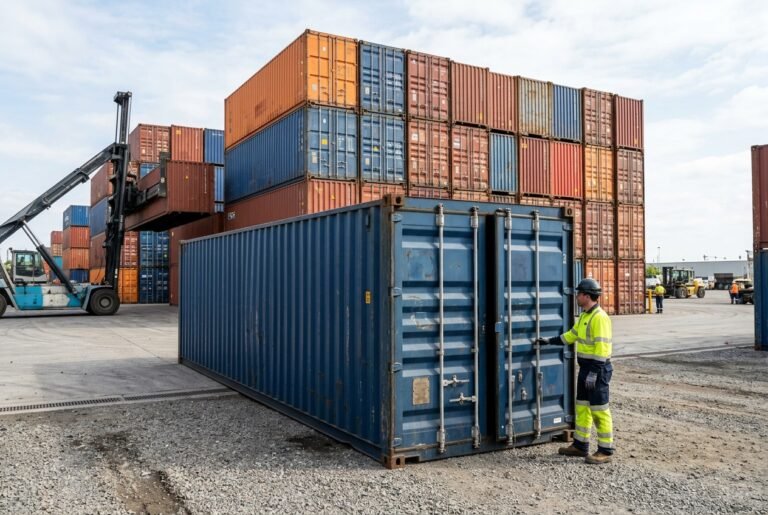
The Triangle area’s construction activity and small business growth make 40ft containers a popular choice across Wake County and surrounding areas. A standard 40ft unit measures roughly 40 feet long by 8 feet wide by 8 feet 6 inches tall on the exterior, giving you enough room to store the contents of a three-bedroom house or a full season’s worth of landscaping equipment. That footprint works well on commercial lots, farm properties, and even some residential parcels where zoning allows it.
Raleigh’s climate also plays a role. Summers are humid and winters bring occasional freezing temperatures, so having a steel container rated as wind and watertight means your contents stay protected year-round without the maintenance headaches of a wood-frame shed.
Maximizing Storage Capacity for Local Businesses
A 40ft container holds approximately 2,390 cubic feet of cargo. For a contractor running multiple jobs across Raleigh and Durham, that’s enough room for scaffolding, power tools, lumber, and safety equipment in a single unit. Retail businesses that deal with seasonal inventory surges can stage product inside a container on their lot rather than paying for off-site warehouse space.
Organization matters just as much as raw volume. Many buyers install shelving systems, partition walls, or tool racks inside their containers. Because the interior width sits just under 7 feet 9 inches, standard pallet racking fits comfortably. If you’re running a landscaping company or HVAC business, you can park a 40ft unit at your shop and treat it as a dedicated parts room.
Cost-Effectiveness Compared to Permanent Structures
Building a 320-square-foot permanent structure in Wake County means permits, foundation work, framing, roofing, and inspections. That process can easily run $15,000 to $30,000 depending on finishes and contractor availability. A used 40ft shipping container in good condition typically costs a fraction of that, and it arrives ready to use within days of purchase.
You also avoid property tax increases in many cases, since containers placed on a property without a permanent foundation may not be assessed as real property improvements. Check with Wake County’s tax office for your specific situation, but this distinction saves many buyers ongoing costs. The container itself retains resale value too: a well-maintained unit can sell for 60 to 80 percent of its original purchase price years later.
Understanding Container Conditions: New vs. Used
Container grading isn’t complicated once you know the terminology. The three grades you’ll encounter most often are One-Trip, Cargo Worthy, and Wind and Watertight. Each grade reflects a different level of cosmetic and structural condition, and the right choice depends on how long you plan to keep the container and what you’re using it for.
Lease Lane Containers provides transparent grading guidance so buyers understand exactly what they’re getting. Knowing the difference before you shop prevents surprises on delivery day.
One-Trip Containers for Long-Term Durability
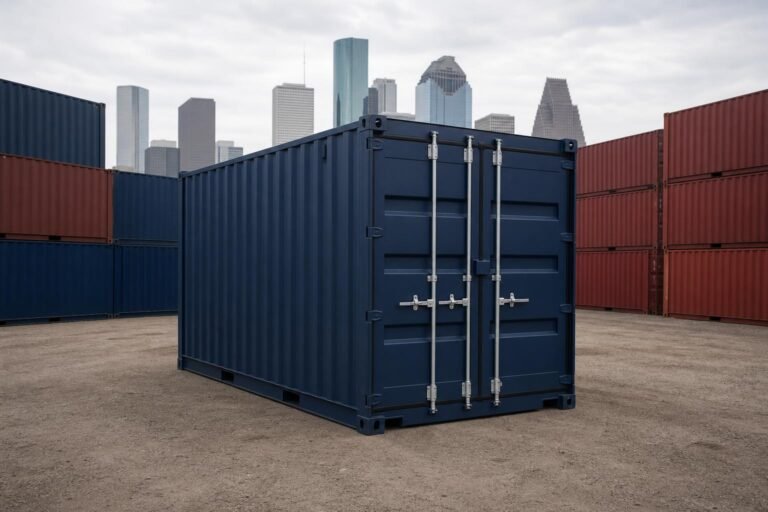
A one-trip container has made a single ocean voyage, typically from the manufacturing facility in Asia to a U.S. port. These units arrive with minimal cosmetic wear: expect clean paint, intact floor boards, and hardware that operates smoothly. Doors swing open and close without resistance, and the corrugated steel panels show little to no surface rust.
If you’re planning a long-term installation, a conversion project, or a customer-facing use like a pop-up shop, a one-trip unit is the best starting point. The premium over a used container usually runs $1,500 to $3,000 for a 40ft unit, but you’re getting a container that can serve you for 20 to 25 years with minimal maintenance.
Cargo Worthy and Wind/Watertight Options
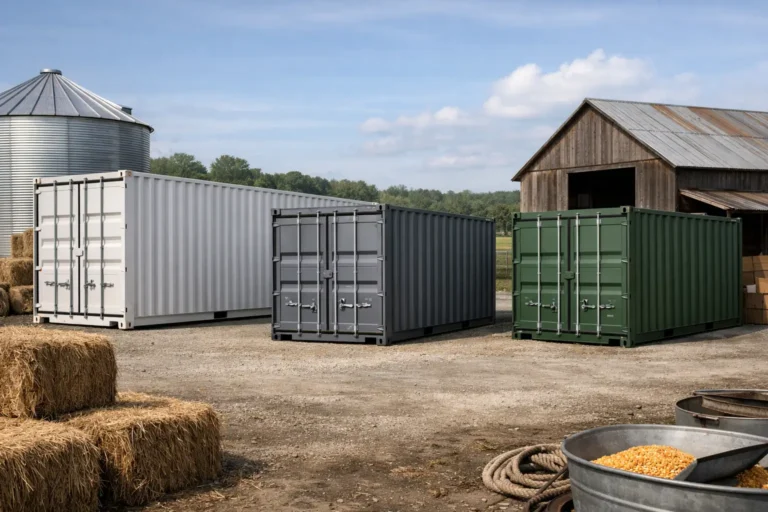
Cargo Worthy containers have been certified for international ocean transport. They’re structurally sound, with intact floors, functional doors, and no holes in the walls or roof. You’ll see surface rust, dents, and scratched paint, but these are cosmetic issues that don’t affect performance. A Cargo Worthy 40ft unit works well for job-site storage, farm use, and general inventory overflow.
Wind and Watertight is the most economical grade. These containers keep weather out but may no longer meet international shipping certification standards. Expect heavier cosmetic wear, possible patch repairs, and doors that might need some adjustment. For on-site storage where appearance isn’t a priority, this grade delivers solid value at the lowest price point. Always inspect the door gaskets and roof seams before committing.
Key Features of Standard and High Cube 40ft Units
Standard 40ft containers stand 8 feet 6 inches tall on the exterior, with an interior height of about 7 feet 10 inches. That’s enough clearance for most storage needs, but it can feel tight if you’re building out an interior workspace or stacking pallets two-high.
High cube 40ft containers add an extra foot of height, bringing the exterior to 9 feet 6 inches and the interior to roughly 8 feet 10 inches. That additional 12 inches matters more than you’d expect. It allows for ceiling-mounted lighting, insulation panels, drop ceilings, and HVAC ductwork without sacrificing usable headroom. High cube units have become the standard for container offices, workshops, and conversion projects.
Both versions share the same 40-foot length and 8-foot width. Door openings on standard units measure about 7 feet 6 inches tall, while high cube doors open to approximately 8 feet 6 inches. If you’re moving tall equipment or machinery in and out, the high cube door clearance makes a noticeable difference. Weight capacity is similar across both types: a 40ft container can handle a payload of roughly 58,000 to 59,000 pounds, though you’ll rarely approach that limit in a stationary storage application.
Where to Find Reliable Container Suppliers in North Carolina
North Carolina sits within easy reach of major port cities like Wilmington, Norfolk, and Charleston. That proximity keeps container inventory flowing into the state and helps hold delivery costs down for Raleigh-area buyers. You’ll find containers available through local dealers, national brokers, and direct-from-depot sellers.
The most important factor isn’t where a supplier is headquartered. It’s whether they can give you accurate grading information, clear photos of the actual unit you’re buying, and honest delivery planning support.
Evaluating Local Raleigh Dealers vs. National Brokers
A local dealer like Lease Lane Containers, based right in Raleigh, offers a practical advantage: they know the delivery routes, common site access challenges, and permit requirements specific to Wake County and the Triangle. When you call with questions about whether a tilt-bed truck can reach your property off a narrow rural road in Johnston County, a local team can give you a direct answer.
National brokers can sometimes offer competitive pricing because they pull from depots across the country. The trade-off is that you may not see your specific container before delivery, and the broker may not understand local logistics. Ask any supplier, local or national, for dated photos of the exact unit, a written condition description, and a clear delivery quote that includes all fees.
Raleigh Zoning Laws and Permit Requirements
Placing a shipping container on your property in Raleigh requires attention to local zoning codes. The City of Raleigh’s Unified Development Ordinance governs what’s allowed on residential and commercial parcels, and the rules differ depending on your zoning district.
Don’t assume that because your neighbor has a container, you’re automatically cleared. Zoning enforcement in Wake County is complaint-driven in many cases, which means violations can go unnoticed until someone reports them.
Residential vs. Commercial Placement Regulations
On residentially zoned parcels within Raleigh city limits, shipping containers are generally treated as accessory structures. That means setback requirements, lot coverage limits, and screening rules may apply. Some neighborhoods governed by HOAs prohibit containers entirely, so check your covenants before purchasing.
Commercial and industrial zones are typically more permissive. Containers used for on-site storage at a business often fall under temporary structure provisions, but you may still need a zoning permit or site plan approval depending on the duration and placement. Properties outside city limits in unincorporated Wake County follow county zoning rules, which tend to be less restrictive. Contact Wake County Planning Services or the City of Raleigh’s Development Services Center to confirm what’s required for your specific parcel.
Site Preparation and Delivery Logistics in the Triangle Area
Getting a 40ft container to your property is straightforward if you plan ahead. The container itself weighs roughly 8,000 to 8,500 pounds empty, and the delivery vehicle adds significant weight and length. Most 40ft containers arrive on a tilt-bed truck that needs a clear, straight path to the placement spot.
Ground Leveling and Foundation Basics
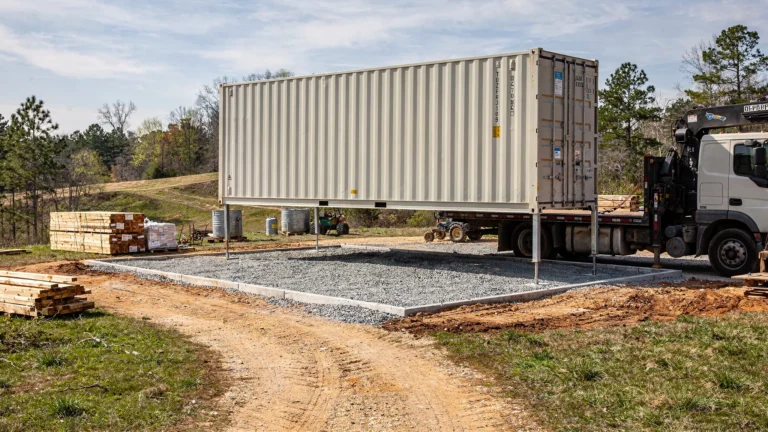
Your container needs a level surface. Even a slight slope can cause doors to bind and create water pooling issues along one side. For most applications, a compacted gravel pad works well. Aim for a pad that extends at least 2 feet beyond the container footprint on all sides, using 4 to 6 inches of compacted crushed stone over a geotextile fabric layer.
Concrete footings or railroad tie supports placed at the four corners and midpoints are another common approach, especially on properties where drainage is a concern. The goal is to keep the container off bare soil, prevent settling, and allow airflow underneath to reduce moisture buildup. Spending a few hundred dollars on proper ground prep protects your investment for years.
Ensuring Adequate Clearance for Tilt-Bed Trucks
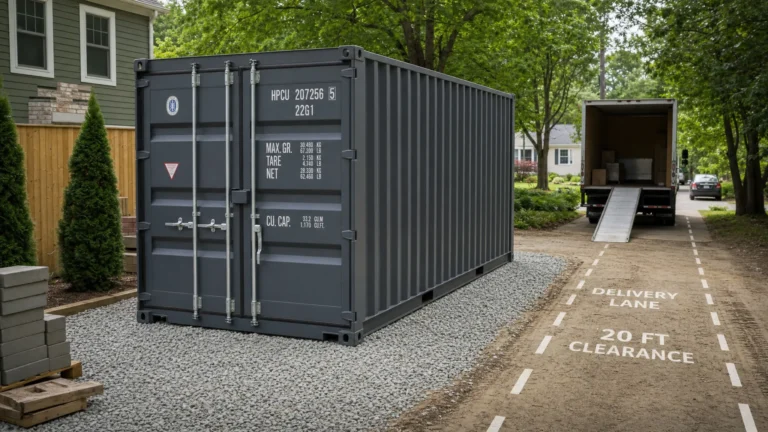
A tilt-bed delivery truck carrying a 40ft container needs roughly 100 feet of straight, unobstructed space to slide the container off the back. Overhead clearance matters too: power lines, tree branches, and carport overhangs can all interfere with the tilting mechanism. You’ll need at least 14 to 16 feet of vertical clearance along the delivery path.
Lease Lane Containers offers delivery planning support to help you measure access routes, identify potential obstacles, and confirm that your site can accommodate the truck’s turning radius. If your property has a tight entrance or a curved driveway, discuss this with your supplier before scheduling delivery. A site visit or satellite imagery review can prevent costly rescheduling.
Customization Options for Specialized Projects
A bare container is a blank canvas. Common modifications for Raleigh-area buyers include roll-up doors for equipment access, personnel doors with locksets, ventilation louvers, and electrical packages with interior lighting and outlets. Insulation and climate control turn a storage container into a comfortable workspace, which is especially useful during North Carolina’s hot summers.
For contractors, adding a workbench, tool peg boards, and interior partition walls creates a mobile shop that can move between job sites. Retail operators sometimes install serving windows, interior finishes, and exterior cladding to create branded pop-up locations. Farm buyers often add shelving and wide door modifications for tractor attachment storage.
If you’re planning modifications, start with a one-trip or Cargo Worthy container. Welding and cutting into a container with heavy corrosion or patch repairs can create structural concerns. Discuss your project goals with your supplier early so they can recommend the right base unit.
Final Inspection Checklist Before Purchase
Before you finalize any container purchase, run through these checks either in person or through detailed photos from your supplier:
- Door operation: Both doors should open fully to 270 degrees and close with the cam locks engaging smoothly. Check the rubber gaskets for cracks or gaps.
- Floor condition: Look for soft spots, water stains, or damaged boards. The standard marine-grade plywood floor should feel solid underfoot.
- Roof and walls: Inspect for holes, heavy rust patches, or dents that compromise the corrugated panels. Minor surface rust is normal on used units.
- Corner castings: These are the structural connection points. Cracks or heavy corrosion here affect the container’s ability to be safely lifted and transported.
- Undercarriage: Check the cross members beneath the container for corrosion. Significant rust on the undercarriage can shorten the container’s usable life.
- CSC plate: A valid CSC (Convention for Safe Containers) plate confirms the container’s manufacturing specs and inspection history.
Taking 15 minutes to verify these items saves you from dealing with warranty claims or unexpected repairs after delivery. If you’re buying remotely, ask for time-stamped photos of each area listed above.
Ready to find the right 40ft container for your project? You can browse available inventory from Lease Lane Containers to compare sizes, grades, and pricing. If you have questions about delivery logistics or site prep in the Raleigh area, the team is available by phone at (984) 313-6158 to help you plan your purchase with confidence.

2 Comments