Preparing for Shipping Container Delivery Clearance
Table of Contents
- Table of Contents
- Essential Site Assessment and Ground Preparation
- Surface Leveling and Stability Requirements
- Foundation Options: Concrete Pads vs. Gravel Footings
- Measuring Clearance for Delivery Truck Access
- Calculating Vertical and Horizontal Entry Points
- Accounting for Tilt-Bed and Roll-Off Mechanics
- Navigating Local Zoning Laws and Permit Requirements
- Removing Obstructions and Overhead Hazards
- Managing Low-Hanging Branches and Utility Lines
- Determining Container Orientation and Placement Strategy
- Doors Forward vs. Doors Aft Loading Decisions
- Safety Protocols for Delivery Day Coordination
- Communication with the Driver and Spotter Roles
- Post-Delivery Inspection and Final Positioning
- Final Delivery Prep Checklist
Table of Contents
- Essential Site Assessment and Ground Preparation
- Surface Leveling and Stability Requirements
- Foundation Options: Concrete Pads vs. Gravel Footings
- Measuring Clearance for Delivery Truck Access
- Calculating Vertical and Horizontal Entry Points
- Accounting for Tilt-Bed and Roll-Off Mechanics
- Navigating Local Zoning Laws and Permit Requirements
- Removing Obstructions and Overhead Hazards
- Managing Low-Hanging Branches and Utility Lines
- Determining Container Orientation and Placement Strategy
- Doors Forward vs. Doors Aft Loading Decisions
- Safety Protocols for Delivery Day Coordination
- Communication with the Driver and Spotter Roles
- Post-Delivery Inspection and Final Positioning
- Final Delivery Prep Checklist
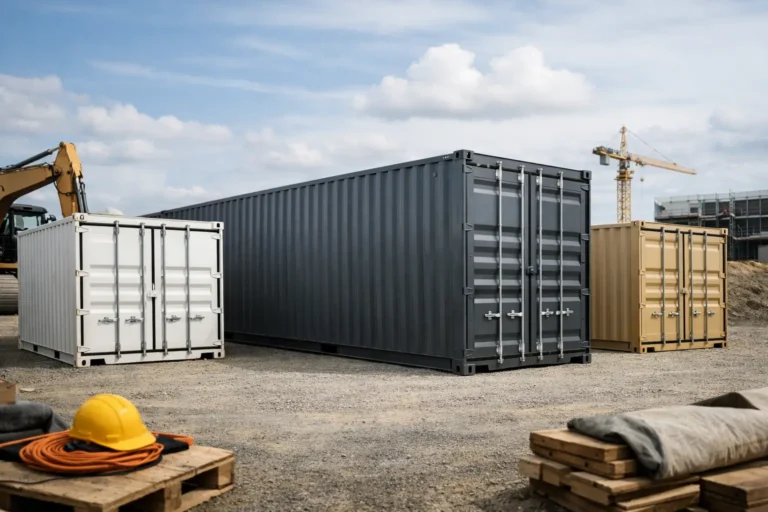
A 40-foot shipping container weighs roughly 8,000 lbs empty and arrives on a truck that stretches 65 feet or more from bumper to bumper. That truck needs a clear path, solid ground, and enough room to offload without clipping a power line, sinking into soft soil, or jackknifing in a tight driveway. Most failed deliveries don’t happen because of a bad container or an inexperienced driver – they happen because the site wasn’t ready. Understanding the delivery clearance requirements for your specific property is the single most important step between placing an order and having a functional container on your land. Whether you’re a contractor staging equipment on a job site, a homeowner adding backyard storage, or a farm operation expanding capacity in a rural area, the preparation steps are the same. The difference between a smooth drop and a costly rescheduling fee comes down to about two hours of measuring, clearing, and planning. This guide breaks down every factor you need to address before the truck rolls in, from ground prep and access measurements to zoning rules and delivery day coordination. If you’re still comparing container sizes and grades, sort that out first – but once you’ve chosen your container, this is your next move.
Essential Site Assessment and Ground Preparation
The ground where your container will sit determines everything about its long-term performance. A container placed on uneven or unstable ground will rack over time, meaning the frame twists just enough to make the doors bind, the roof panels flex, and the floor develop low spots where water pools. This isn’t a cosmetic issue. A racked container loses its structural integrity and becomes harder to reseal if you ever need to relocate it.
Start your site assessment at least two weeks before your scheduled delivery. Walk the intended placement area and look for signs of poor drainage: standing water after rain, soft or spongy soil, visible erosion channels, or a noticeable slope. Bring a long carpenter’s level or use a laser level to check grade across the full footprint of the container you’ve ordered. A 20-foot container needs a footprint roughly 20 ft x 8 ft. A 40-foot container doubles that length. For a high cube shipping container, you’re working with 9.5 ft of height instead of the standard 8.5 ft, which matters for overhead clearance but not for ground prep dimensions.
Surface Leveling and Stability Requirements
The ground should be level within 1 inch across the full length of the container. Anything beyond that and you risk door alignment problems within the first season. For a 40-foot container, that’s 1 inch of tolerance over 40 feet – a tight margin that most natural terrain won’t meet without grading work.
Clay soils compact well but drain poorly. Sandy soils drain well but shift under heavy loads. The ideal base is compacted gravel or crushed stone, 4 to 6 inches deep, spread over geotextile fabric to prevent the stone from migrating into the subsoil. If your site has a slope greater than 3%, you’ll likely need to cut and fill before laying any base material. A skid steer or small excavator handles this work in a few hours for most residential or small commercial sites.
Foundation Options: Concrete Pads vs. Gravel Footings
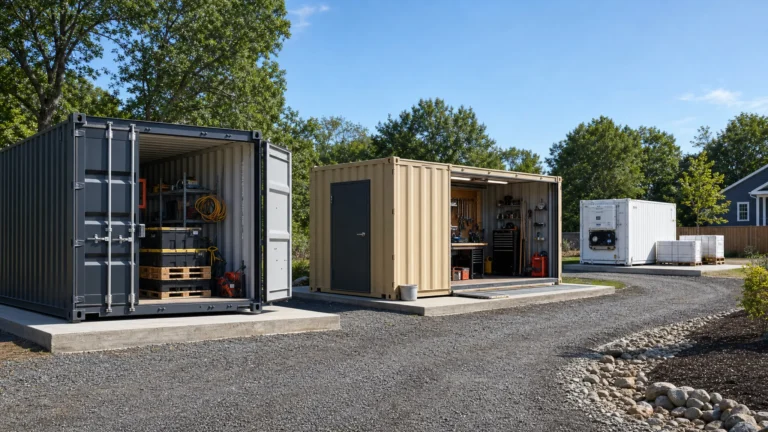
A full concrete slab is the most permanent option but also the most expensive, typically running $2,500 to $5,000 for a 40-foot container pad depending on your region and concrete prices. Slabs make sense for permanent installations, container offices, or situations where the container will bear significant internal load.
Gravel footings, sometimes called pier pads, are the more common choice. Four to six concrete blocks or railroad ties placed at the corner castings and midpoints of the container keep it off the ground and allow airflow underneath, which reduces condensation and rust on the underside. This approach costs a fraction of a full slab and works well for storage use, farm applications, and temporary job site staging. Whichever foundation you choose, verify that the support points align with the container’s corner castings and bottom rails – these are the structural load-bearing points engineered to carry the weight.
Measuring Clearance for Delivery Truck Access
This is where most delivery problems originate. The container itself might be 20 or 40 feet long, but the truck delivering it is significantly larger and needs room to maneuver, position, and offload. Measuring your access route is not optional – it’s the step that prevents a $300 to $500 dry run fee when a driver shows up and can’t make the turn.
Calculating Vertical and Horizontal Entry Points
The delivery truck with a loaded container stands approximately 13.5 to 14 feet tall. Any overhead obstruction below that height along the access route will block delivery. Measure every overhead element: tree canopy, garage eaves, carport roofs, awnings, and especially power lines. Utility lines along residential streets often hang at 18 to 20 feet, which clears most trucks, but private property lines, especially those running from a pole to a house, can sag to 12 feet or lower.
For horizontal clearance, the truck and container combination needs a minimum of 12 feet of width along the entire route. That includes the driveway, any gate openings, and the space between structures. If your driveway passes between a fence and a building, measure the narrowest point. The truck also needs a straight approach or a turning radius of at least 60 feet for a standard delivery rig. Tight 90-degree turns from a public road onto a narrow driveway are the most common deal-breakers. Walk the route with a tape measure and note every pinch point.
Accounting for Tilt-Bed and Roll-Off Mechanics
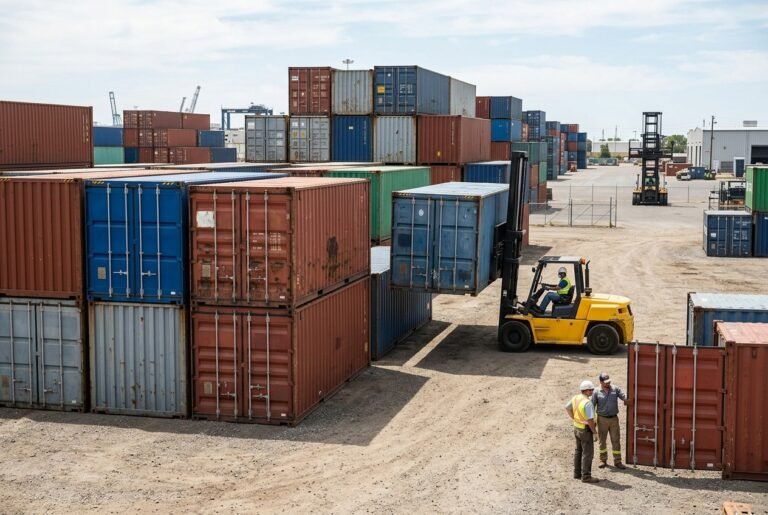
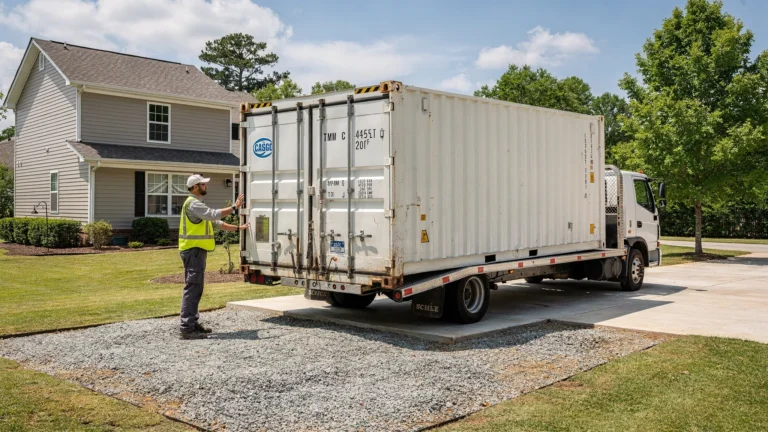
The delivery method determines how much space you need beyond the container’s final resting spot. Tilt-bed trucks (also called rollback or slide-off trucks) carry the container on a flatbed that tilts hydraulically, sliding the container off the back. This method requires the truck to pull forward past the placement spot by roughly 1.5 times the container length, then back up to position the bed. For a 40-foot container on a tilt-bed, plan for at least 100 feet of straight, level space behind the truck’s final position.
Roll-off trucks use a hook-lift or cable system to pull the container off the back of the chassis. They need less forward space but more vertical clearance during the lift, as the container tilts at an angle during offloading. Roll-off delivery typically needs about 75 to 80 feet of total length. Ask your supplier which delivery method they use before you measure – the clearance requirements differ significantly. Lease Lane Containers provides delivery planning support that covers these specifics based on your property layout and the container size you’ve selected.
Navigating Local Zoning Laws and Permit Requirements
Zoning regulations for shipping containers vary dramatically by municipality, and assuming your area allows them without checking is a risk that can result in fines, forced removal, or both. In Wake County, North Carolina, for example, shipping containers used for storage on residential property may require a zoning permit or be subject to setback requirements that dictate how far the container must sit from property lines, structures, and easements.
Start by calling your local planning or zoning department. Ask specifically about shipping containers – some jurisdictions classify them as accessory structures, others as temporary storage, and some have no specific classification at all, which creates its own complications. You’ll want answers to these questions: Is a permit required? Are there setback requirements? Is there a time limit on how long the container can remain on the property? Are there aesthetic requirements such as screening or fencing?
For commercial properties, the rules tend to be more clearly defined but also more restrictive. Many commercial zones require site plan approval for any new structure, including containers. Contractors using containers for job site storage often operate under temporary use permits that expire after 6 to 12 months. If you’re placing a container on agricultural land, rural counties tend to be more permissive, but don’t assume – verify. The 20 minutes you spend on the phone with your local planning office can save you thousands in compliance headaches later. Keep a record of the permit number, the name of the person you spoke with, and any conditions attached to the approval.
Removing Obstructions and Overhead Hazards
Once you’ve measured the access route and confirmed your permits, the next step is physically clearing the path. A delivery driver won’t move obstacles for you, and most delivery contracts specify that the customer is responsible for providing unobstructed access. If the driver arrives and can’t safely reach the placement site, you’ll pay for the trip regardless.
Walk the entire route from the street to the placement spot. Look for anything within 14 feet of the ground and 12 feet of width: mailboxes, decorative posts, parked vehicles, dumpsters, landscape boulders, basketball hoops, and fencing. Temporary fencing or gate sections should be removed entirely rather than just opened – a swinging gate in a tight space is a liability during a delivery. Soft ground near the access route can also be a problem if the truck’s rear wheels drop off the edge of a paved driveway onto wet soil.
Managing Low-Hanging Branches and Utility Lines
Tree branches are the most common overhead obstruction on residential deliveries. A branch that seems high enough when you’re standing under it may not clear a 14-foot truck. Use a tape measure attached to a pole or a laser distance tool to check actual heights. Trim any branches below 15 feet along the access path to give a safe margin.
Utility lines require a different approach – you cannot trim or move them yourself. If a power line, cable line, or phone line crosses your access route below 15 feet, contact the utility company at least two weeks before delivery to request a temporary lift or disconnect. In many areas, the utility company will raise the line at no charge for a scheduled delivery, but they need advance notice. For properties along rural roads where lines may sag between widely spaced poles, this step is especially critical. Document the clearance height of every overhead element on your access route and share this information with your delivery coordinator.
Determining Container Orientation and Placement Strategy
Where the container sits and which direction it faces affects daily usability more than most buyers realize. A poorly oriented container means walking around it to access the doors, dealing with water runoff toward a structure, or discovering that the doors open directly into a fence.
Think about how you’ll use the container before the truck arrives. Storage containers that you’ll access frequently should have doors facing your primary approach path – usually toward a driveway, parking area, or building entrance. Containers used for seasonal storage or archive purposes can face away from traffic areas since you won’t open them daily. Consider prevailing wind direction too: doors facing into the wind will catch rain and debris every time you open them. In the Raleigh area, prevailing winds come from the southwest for most of the year, so orienting doors to the northeast or east reduces weather exposure.
Doors Forward vs. Doors Aft Loading Decisions
“Doors forward” means the container’s door end faces the direction the truck approaches from. This orientation works best when the delivery truck can pull straight through and slide the container off with the doors closest to your access point. It’s the most common setup for properties where the container sits at the end of a driveway.
“Doors aft” places the door end away from the truck’s approach, which can work better when you want the doors facing a building or work area that’s behind the container’s position relative to the driveway. The catch is that some tilt-bed trucks can only offload in one direction, so your orientation preference needs to be communicated early. When you’re working with a supplier like Lease Lane Containers, discuss your preferred orientation during the delivery planning phase so the driver loads the container onto the truck in the correct direction. Changing orientation after delivery requires heavy equipment and additional cost.
Safety Protocols for Delivery Day Coordination
Delivery day is not the time for improvisation. A loaded delivery truck is one of the heaviest vehicles that will ever enter your property, and the offloading process involves hydraulic equipment, shifting loads, and limited driver visibility. Having a plan and communicating it clearly reduces risk for everyone involved.
Clear the area of all people, pets, and vehicles before the truck arrives. Establish a safety perimeter of at least 30 feet around the offloading zone – this accounts for the possibility of the container shifting during placement. No one should stand behind or beside the container while it’s being offloaded. Children and animals should be inside a building or well away from the work area. If you’re on a commercial site, this is an OSHA consideration under 29 CFR 1926 general safety provisions: the area around a crane or rigging operation must be controlled.
Communication with the Driver and Spotter Roles
Designate one person as the primary contact for the driver. This person should be on-site at least 30 minutes before the scheduled delivery window, have a charged phone, and know exactly where the container goes. Conflicting instructions from multiple people slow the process down and create confusion.
A spotter is someone who stands at a safe vantage point and guides the driver during backing and positioning. The spotter watches for obstacles the driver can’t see from the cab: low branches the mirrors miss, soft ground at the edge of the pad, or a property line marker that’s too close. Use clear hand signals or a two-way radio. Don’t rely on shouting – truck engines and hydraulic pumps are loud. The spotter should never stand directly behind the truck or between the truck and any fixed object. Confirm placement position, orientation, and any last-minute adjustments with the driver before offloading begins, not during.
Post-Delivery Inspection and Final Positioning
Once the container is on the ground, you have a narrow window to identify any delivery-related damage and confirm that the placement meets your requirements. Most delivery contracts require you to note damage at the time of delivery – claims filed days later are harder to resolve.
Inspect all four sides of the container, the roof, and the undercarriage. Look for fresh dents, scrapes, or gouges that weren’t present in pre-delivery photos. Open both doors fully and check that they swing freely, latch securely, and seal against the rubber gaskets without gaps. Test the lock rod handles and the cam locks. If you ordered a one-trip container, the doors should operate smoothly with minimal effort. On a used shipping container graded as cargo worthy or wind and watertight, some cosmetic wear is expected, but the doors should still function properly and the seals should be intact.
Check that the container sits level by placing a 4-foot level on the floor inside, both lengthwise and across the width. Minor adjustments can be made with a hydraulic jack and shims at the corner castings, but significant leveling issues mean the foundation wasn’t prepared correctly. Verify the container’s position relative to property lines, setback requirements, and any structures. Take photos of the container from all angles, including the data plate and any existing damage, for your records. If anything is wrong, note it on the delivery receipt before the driver leaves.
Final Delivery Prep Checklist
Getting a shipping container delivered correctly the first time comes down to preparation, not luck. The clearance requirements for your delivery depend on your specific property, access route, and the container size you’ve chosen – but the fundamentals apply everywhere.
- Confirm ground is level within 1 inch across the full container footprint
- Foundation supports aligned with corner castings and bottom rails
- Overhead clearance of 15 feet minimum along entire access route
- Horizontal clearance of 12 feet minimum at every pinch point
- Turning radius of 60 feet or more at entry from the road
- 75 to 100 feet of straight space for offloading, depending on truck type
- Zoning permit secured and setback requirements confirmed
- All branches trimmed and utility line heights verified
- Delivery orientation communicated to supplier in advance
- One designated site contact and one spotter assigned for delivery day
- Camera or phone ready for post-delivery inspection photos
Spending a weekend on site prep and access verification protects your investment and keeps the delivery on schedule. If you’re still selecting the right container for your project, browse available inventory to compare sizes, grades, and conditions. For questions about delivery access, placement planning, or anything else covered here, contact the Lease Lane Containers team for straightforward guidance based on your specific property and use case.