Used Shipping Container Prices in Raleigh, NC
Table of Contents
- Table of Contents
- Current Market Overview for Shipping Containers in Raleigh
- Economic Factors Impacting Central North Carolina Prices
- Average Price Ranges by Container Size and Condition
- Standard 20ft vs. 40ft High Cube Pricing
- One-Trip vs. Cargo Worthy (CWO) Grade Costs
- Key Variables Influencing Local Raleigh Delivery Fees
- Tilt-Bed vs. Flatbed Delivery Methods
- Where to Buy Used Containers in the Research Triangle Area
- Local Suppliers vs. National Online Brokers
- Raleigh Zoning Laws and Container Permit Costs
- Residential vs. Commercial Placement Regulations
- Inspection Checklist to Ensure Value for Your Purchase
- Long-Term Savings: Maintenance and Modification Costs
Table of Contents
- Current Market Overview for Shipping Containers in Raleigh
- Average Price Ranges by Container Size and Condition
- Key Variables Influencing Local Raleigh Delivery Fees
- Where to Buy Used Containers in the Research Triangle Area
- Raleigh Zoning Laws and Container Permit Costs
- Inspection Checklist to Ensure Value for Your Purchase
- Long-Term Savings: Maintenance and Modification Costs
If you’re shopping for a used shipping container in the Raleigh, NC area, you’ve probably noticed that pricing isn’t as straightforward as checking a single number. A 20ft unit on one website might be listed at $1,800 while another supplier quotes $3,200 for what looks like the same thing. The difference usually comes down to grade, condition, delivery distance, and how honest the seller is about what you’re actually getting. Raleigh sits in a strong position for container buyers: the city is close to the Port of Wilmington and connected by I-40 and I-95 corridors, which keeps transport costs lower than many inland markets. Whether you’re a contractor needing job-site storage, a homeowner planning a backyard workshop, or a small business owner dealing with inventory overflow, understanding used shipping container prices in Raleigh, NC starts with knowing what drives those numbers up or down. This guide breaks down real pricing factors, local delivery considerations, zoning rules, and what to inspect before you commit to a purchase.
Current Market Overview for Shipping Containers in Raleigh
The container market in Raleigh has shifted noticeably since the supply chain disruptions of 2021-2022. During that period, a standard 40ft used container could run $5,000 to $8,000 or more. Prices have since corrected as global shipping volumes normalized and surplus inventory returned to domestic depots.
Right now, Raleigh buyers can expect more reasonable pricing, though costs still fluctuate based on seasonal demand and depot inventory levels. Spring and summer tend to push prices up slightly as construction activity increases across Wake County and the broader Triangle region. Winter months often bring softer pricing and better selection.
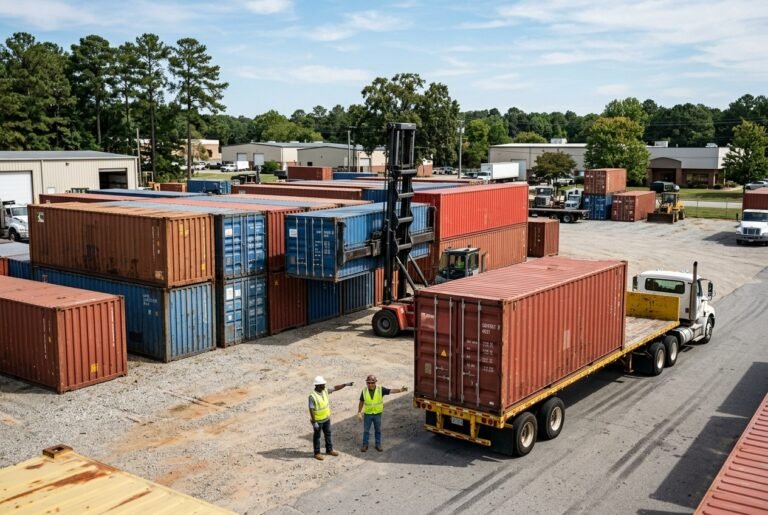
The Raleigh market benefits from proximity to East Coast port infrastructure. Containers cycling out of service at Wilmington or Norfolk often end up at regional depots within a few hours’ drive, which means local inventory stays relatively healthy compared to landlocked markets in the Midwest.
Economic Factors Impacting Central North Carolina Prices
Steel prices directly affect what you’ll pay. When raw steel costs rise, even used containers hold more value because replacement costs climb. The reverse is also true: lower steel prices tend to soften the used market.
Fuel costs play a role too. Diesel prices affect both the cost of repositioning containers from ports to inland depots and the final delivery fee to your site. A $0.50 per gallon swing in diesel can shift delivery charges by $75 to $150 depending on distance.
Local demand from the Triangle’s construction and small business sectors also matters. Raleigh, Durham, and Chapel Hill have all seen strong commercial growth, which keeps demand for on-site storage steady. That demand supports pricing but hasn’t created the kind of shortages seen in faster-growing Sun Belt metros like Austin or Nashville.
Average Price Ranges by Container Size and Condition
Pricing for used containers in the Raleigh area generally falls within predictable ranges, but the spread between the cheapest and most expensive units can be significant. The two biggest variables are physical size and condition grade.
A rough pricing framework for mid-2024 through early 2025 looks like this:
- 20ft Cargo Worthy: $1,500 to $2,800
- 20ft One-Trip: $2,800 to $4,000
- 40ft Cargo Worthy: $2,000 to $3,500
- 40ft High Cube One-Trip: $4,000 to $5,500
- 40ft High Cube Wind and Watertight: $1,800 to $2,800
These ranges assume pickup or short-distance delivery within the Triangle. Prices shift based on depot inventory, time of year, and the specific seller’s sourcing costs.
Standard 20ft vs. 40ft High Cube Pricing
A standard 20ft container measures roughly 20′ x 8′ x 8’6″ and offers about 1,170 cubic feet of storage. It’s the most common choice for homeowners and small job sites. A 40ft high cube measures 40′ x 8′ x 9’6″, giving you roughly 2,700 cubic feet and an extra foot of interior height compared to standard-height units. That extra headroom matters if you’re storing tall equipment, building shelving systems, or planning a conversion.
The price gap between a 20ft and a 40ft high cube isn’t always proportional to the size difference. You’re often getting more than double the space for only 40-60% more money, which makes the 40ft high cube the better value per square foot for buyers who have the site space.
One-Trip vs. Cargo Worthy (CWO) Grade Costs
One-trip containers have made a single ocean voyage from the manufacturing facility, typically in China, to a U.S. port. They arrive in near-new condition with minimal cosmetic wear, original paint, intact floor boards, and factory-fresh door seals. Expect to pay a premium of $1,000 to $2,000 over comparable cargo worthy units.
Cargo worthy containers have been certified for continued ocean transport. They’re structurally sound with functioning doors and intact weatherproofing, but they show visible use: surface rust, dents, patched areas, and worn paint. For pure storage or workshop use, cargo worthy units deliver solid value.
Wind and watertight is a step below cargo worthy. These containers keep weather out but may not pass international shipping certification. They’re the budget option and work well for dry storage on farms, construction staging, or seasonal inventory.
Key Variables Influencing Local Raleigh Delivery Fees
Delivery is where many buyers get surprised. The container itself might cost $2,500, but delivery can add $200 to $600 or more depending on distance and method. Within Wake County, most suppliers charge between $150 and $350 for standard delivery. Destinations in Johnston, Harnett, or Chatham counties may run higher.
Your site conditions matter just as much as distance. The delivery driver needs a clear path at least 12 feet wide, overhead clearance of 14 to 16 feet depending on the truck type, and a relatively flat, firm surface for placement. Soft ground, tight driveways, low-hanging power lines, or overhanging tree branches can all complicate delivery and sometimes require additional equipment.
Tilt-Bed vs. Flatbed Delivery Methods
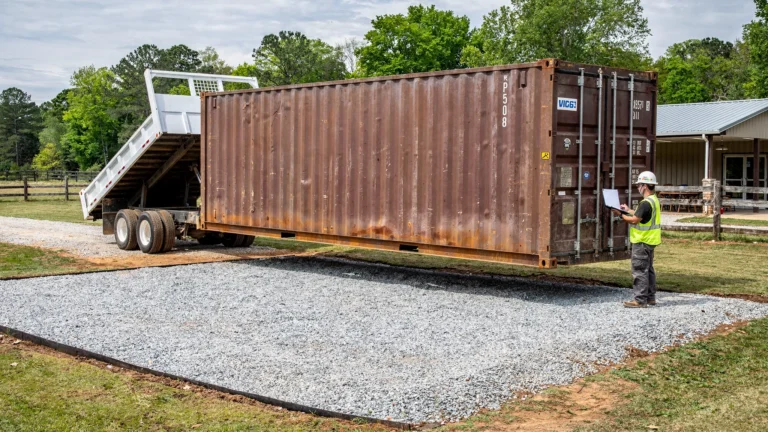
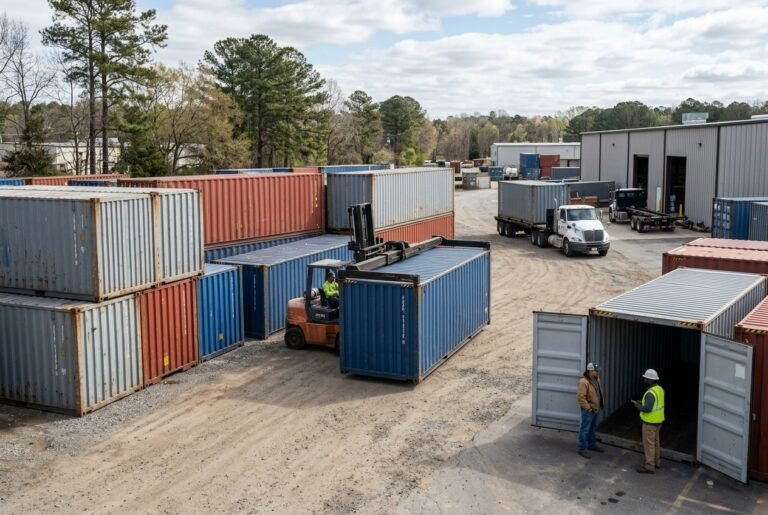
Tilt-bed trucks slide the container off the back of the truck onto the ground. They need roughly 100 feet of straight clearance behind the truck for a 40ft container. This method works well for level sites with good access but doesn’t allow precise placement in tight spots.
Flatbed delivery with a crane or side-loader offers more placement flexibility. The container can be lifted and set in a specific location, which is useful for fenced yards, narrow lots, or sites where the container needs to sit perpendicular to the delivery path. Crane delivery typically adds $200 to $500 to the total cost.
If you’re unsure which method your site requires, Lease Lane Containers offers delivery planning support that covers access width, turning radius, overhead clearance, and surface conditions before the truck arrives. Getting this right the first time avoids costly re-delivery fees.
Where to Buy Used Containers in the Research Triangle Area
Raleigh buyers have several sourcing options, each with trade-offs in price, convenience, and transparency.
Regional container depots operate along the I-40 and I-95 corridors. Some allow on-site inspection before purchase, which is valuable if you want to verify condition firsthand. Others sell sight-unseen from depot inventory with photos only.
Online marketplaces list containers from multiple sellers, but pricing and quality vary widely. Some listings are from brokers who don’t own inventory and add a markup for coordination. Others are direct from depot operators.
Local Suppliers vs. National Online Brokers
Local suppliers like Lease Lane Containers, based right here in Raleigh, offer a few practical advantages. You can often get honest grading guidance, realistic delivery timelines, and someone who understands Wake County site conditions. When something goes wrong with a delivery or a container doesn’t match its description, having a local contact matters.
National brokers can sometimes offer lower base prices because they source from multiple depots and move high volume. The trade-off is less personalized service, potential inconsistency in grading standards between depots, and longer resolution times if there’s a problem. You may also face higher delivery fees if the nearest depot with available inventory is farther than expected.
A practical approach is to get quotes from both local and national sources, then compare the total delivered cost, not just the container price. Factor in the grade, the delivery method, and the level of support you’ll get after the sale.
Raleigh Zoning Laws and Container Permit Costs
Placing a shipping container on your property in Raleigh isn’t always as simple as scheduling delivery. The City of Raleigh and Wake County both have zoning regulations that affect where and how containers can be placed.
For residential properties within Raleigh city limits, shipping containers used as permanent storage typically require a zoning permit. The city classifies them as accessory structures, which means setback requirements, lot coverage limits, and screening rules may apply. Permit fees for accessory structures generally run $100 to $300 depending on the scope.
Contact the Raleigh Planning and Development office at (919) 996-2626 or visit raleighnc.gov for current requirements. Rules can differ between zoning districts, so confirm your specific property’s classification before purchasing.
Residential vs. Commercial Placement Regulations
Residential zones often require containers to be placed behind the front building line and may require screening such as fencing or landscaping to block the container from street view. Some HOAs prohibit containers entirely, so check your covenants before committing.
Commercial and industrial zones are generally more permissive. Containers used for on-site storage at construction sites, warehouses, or retail operations typically face fewer restrictions, though building permits may still be required if the container is being modified with electrical, plumbing, or structural changes.
Temporary placement permits are available for construction projects and usually allow containers on-site for 6 to 12 months. If your project timeline is short, this may be the simplest path.
Inspection Checklist to Ensure Value for Your Purchase
Whether you inspect in person or review detailed photos, checking these items protects your investment:
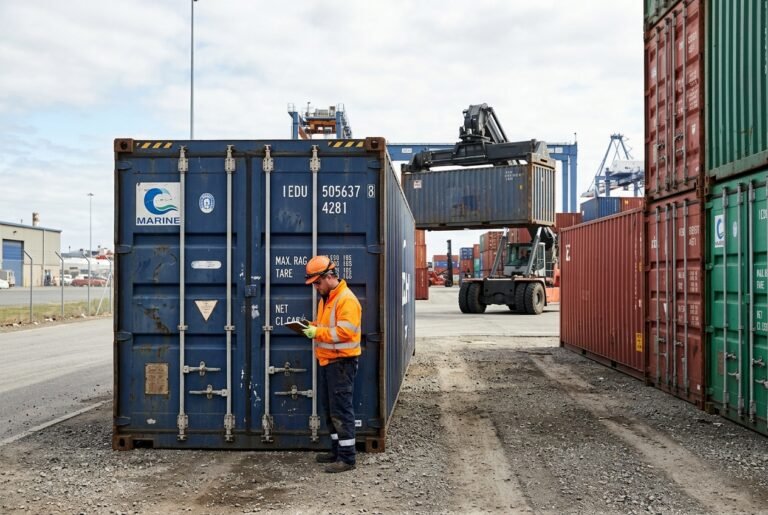
- Door operation: Both doors should open and close smoothly. Check the cam locks, handle bars, and gaskets. Stiff or misaligned doors suggest frame damage.
- Floor condition: Inspect the marine-grade plywood flooring for soft spots, water damage, or heavy staining. Replacement flooring costs $500 to $1,200 for a 40ft unit.
- Roof panels: Look for dents, rust-through spots, or patched areas. Minor surface rust is normal on used units, but any holes compromise weatherproofing.
- Corner posts and rails: These are structural. Cracks, heavy corrosion, or weld repairs at corner castings are red flags.
- Wall panels: Dents are cosmetic. Holes or heavy corrosion along the bottom rails indicate water pooling and potential structural issues.
- CSC plate: A valid Convention for Safe Containers plate confirms the unit’s manufacturing specs and inspection history.
If you’re buying from a supplier that provides transparent grading guidance, like Lease Lane Containers, you should receive clear information about the container’s grade and what to expect before delivery.
Long-Term Savings: Maintenance and Modification Costs
A well-maintained used shipping container can last 15 to 25 years in stationary use. Annual maintenance costs are minimal: budget $50 to $150 per year for rust treatment, lubricating door hardware, and clearing drainage channels along the roof.
Common modifications and their approximate costs include:
- Roll-up door installation: $1,200 to $2,500
- Personnel door with frame: $800 to $1,500
- Electrical panel and lighting: $1,500 to $3,500
- Insulation and interior wall finish: $2,000 to $5,000 for a 20ft unit
- Window installation: $400 to $900 per window
The 80% load rule is a useful guideline: don’t load a container beyond 80% of its rated payload capacity for long-term stationary use. This reduces floor stress and extends the life of the unit.
Resale value holds reasonably well. A cargo worthy container purchased for $2,500 and maintained for five years can typically resell for 50-70% of its original price, especially if it’s been kept on a gravel pad or concrete piers rather than sitting directly on bare ground.
Buying a used shipping container in the Raleigh area is a practical investment if you understand what you’re paying for and plan your site correctly. Prices are reasonable right now, local inventory is accessible, and the total cost of ownership stays low with basic maintenance. Before you buy, compare grades, get a total delivered price, and verify your local zoning requirements. If you’re ready to start comparing options, browse available inventory from Lease Lane Containers to see current sizes, grades, and pricing. Their Raleigh-based team can help you match the right container to your project and plan delivery to your specific site.