Shipping Container Accessories List That Matters
If you are buying a container for a job site, farm, workshop, or modular build, the wrong add-ons can create more problems than they solve. A smart shipping container accessories list is not about checking every option box. It is about matching accessories to the way the container will actually be used, delivered, secured, and maintained.
For most buyers, the best accessory package comes down to four priorities – security, access, airflow, and usability. A contractor storing tools has different needs than a homeowner building a backyard workshop, and both differ from a business using a container for inventory overflow. The container itself matters too. A one-trip unit, a used Wind & Watertight container, and a reefer all start from different baselines.
Shipping container accessories list by real-world use
The fastest way to choose accessories is to start with the use case, not the catalog. Buyers often ask for vents, shelving, lights, and lock protection all at once. Sometimes that is right. Sometimes it adds cost without improving performance.
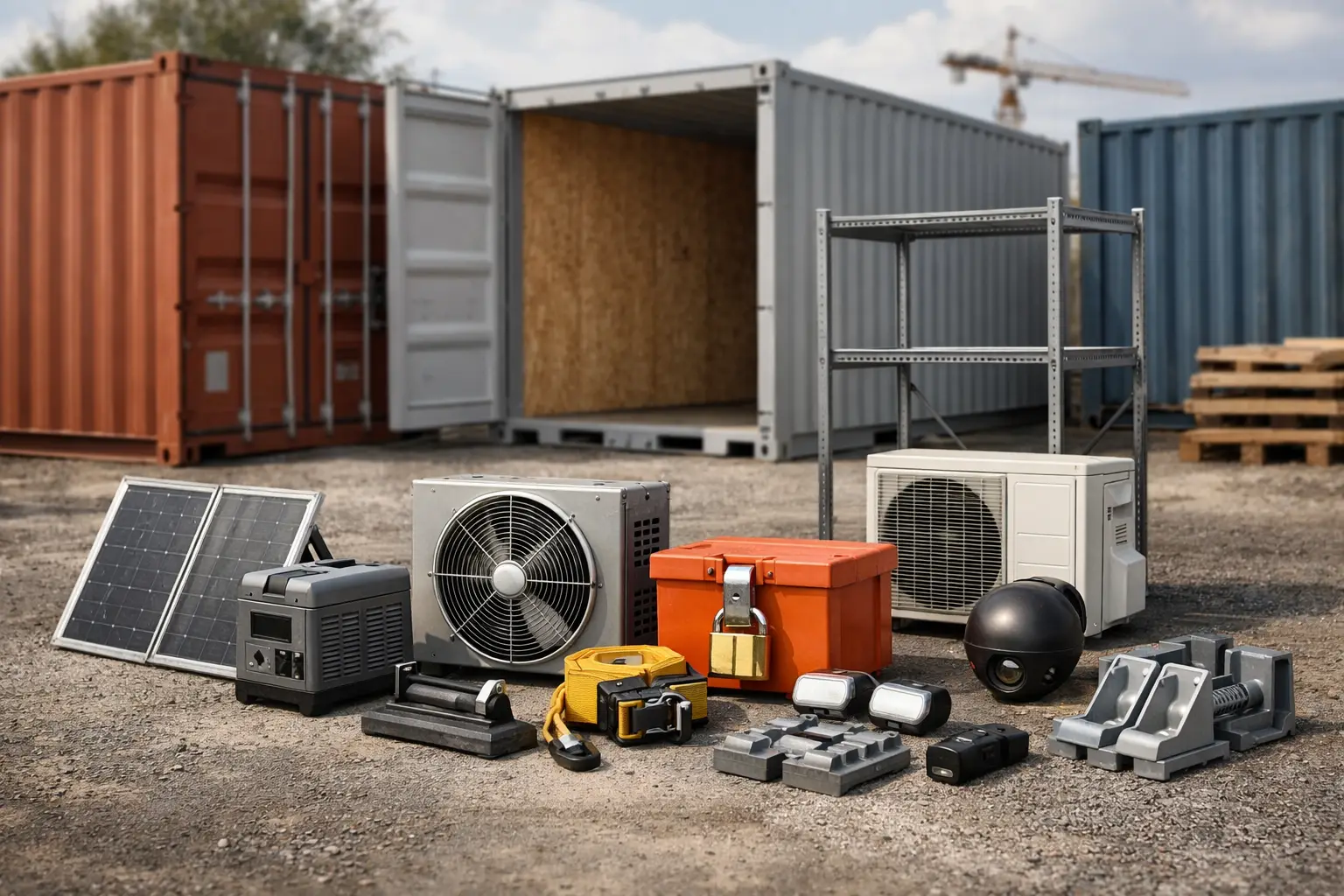
For secure storage, the core accessories are usually a lock box, high-security padlock, interior shelving, and better lighting. For frequent access, a roll-up door or personnel door may make more sense than opening heavy cargo doors several times a day. For workshop or office conversions, insulation, electrical packages, windows, and personnel doors move higher on the list. For agricultural use, airflow and moisture control often matter more than cosmetics.
That is why accessory planning should happen before delivery, not after. Some upgrades are cleaner and more cost-effective when installed before the container reaches your site. Others depend on where the unit sits, how often it is opened, and whether power is available.
Security accessories
Security is the first category most commercial buyers should address. Standard cargo doors are strong, but the locking setup is only as good as the hardware protecting it.
A welded lock box is one of the most practical upgrades. It shields the padlock shackle from bolt cutters and makes forced entry harder. This is especially useful on construction sites, equipment yards, and rural properties where a container may sit unattended overnight or over a weekend.
A high-security puck lock or container-specific padlock is the natural companion. Not every lock fits every lock box, so the hardware should be matched correctly. Cheap locks are a false economy when the container holds power tools, copper, inventory, or records.
Some buyers also add interior security bars or alarm systems. These can make sense for high-theft environments, but they are not always necessary. If your site already has controlled access, lighting, and cameras, a lock box and quality lock may be enough.
Access and entry upgrades
Cargo doors are durable, weather-resistant, and part of what makes an ISO container structurally reliable. But they are not always convenient. If staff needs daily walk-in access, a personnel door can save time and wear.
A personnel door is common for mobile offices, workshops, and retail storage. It gives you a normal entry point without opening the full end of the container. The trade-off is simple – cutting a sidewall or end wall changes the original structure, so the work needs to be done properly with reinforcement where required.
Roll-up doors are another popular option, especially for tool cribs, retail inventory, and service operations. They allow quick loading and unloading, but they can reduce weather resistance compared with factory cargo doors if not installed and sealed correctly. On dusty job sites or in areas with wind-driven rain, that detail matters.
Ramps are worth considering when wheeled equipment, pallet jacks, or lawn equipment will move in and out regularly. The right ramp depends on door height, equipment weight, and whether the site is level. A light-duty ramp for hand carts is not enough for a skid steer attachment or dense pallet loads.
Ventilation and moisture control
Moisture is one of the most common container complaints, and accessories can help if they are chosen for the actual conditions. Standard containers are built from Corten steel and designed to be Wind & Watertight, but that does not eliminate condensation inside the box.
Extra vents are often the first upgrade people request. They can help, especially in hot, humid climates or when the container stores items that trap moisture. Still, more ventilation is not a cure-all. If the container sits on damp ground, gets little sun, or stores wet materials, vents alone will not solve the problem.
For sensitive contents, a vapor barrier, insulation, or dehumidification strategy may be more effective. This is especially true for paper goods, furniture, electronics, and anything stored long term. Agricultural operators storing feed, seed, or supplies should think carefully about airflow and condensation before loading the first pallet.
Louvered vents, turbine vents, and powered fans all have a place, but the right choice depends on whether the container has electrical service and whether passive airflow is enough. The practical question is not “do I need ventilation?” It is “what kind of moisture problem am I trying to prevent?”
Interior organization accessories
A bare steel box works for some jobs. For others, interior organization is what makes the container useful day to day.
Shelving is one of the best upgrades for contractors and maintenance teams. It keeps smaller tools, fittings, safety supplies, and boxed inventory off the floor and easier to count. Welded shelving offers durability, while bolt-in systems can be more flexible if the layout may change.
Tie-down points and E-track systems are also valuable when contents need to stay in place during loading, unloading, or repositioning. This matters for mobile operations, staged equipment, and mixed inventory storage. Loose items in a container become a safety problem fast.
Workbench installations make sense for service yards, farms, and workshop conversions. If the container will function as an active workspace rather than passive storage, bench height, lighting, and outlet placement should be planned together. Piecemeal upgrades tend to create frustration later.
Floor coatings can also be worth adding. Many containers have marine-grade plywood floors that are durable but absorb stains and can show wear over time. An epoxy or protective coating may help in cleaner commercial applications, though it is less critical for rough storage use.
Electrical and lighting options
Lighting changes how usable a container feels. If workers are accessing stored materials before sunrise, after dark, or in covered areas, basic factory light conditions are not enough.
LED lighting is the standard choice because it runs efficiently, produces strong illumination, and holds up well in demanding environments. For containers used only occasionally, a simple battery or solar light setup may be enough. For workshops, offices, or containers with powered tools, a full electrical package is the better route.
That package may include outlets, breaker panels, exterior connections, and task lighting. The right setup depends on whether the unit will connect to site power, generator power, or a solar system. Buyers should also think about code requirements if the container is becoming occupied space rather than storage.
It is easy to overspend here. A storage container does not need the same electrical plan as a mobile office or fabrication space. Clear use-case planning keeps the build practical.
Climate, comfort, and conversion accessories
If the container is moving beyond storage, comfort-related accessories start to matter. Insulation is usually first. Without it, steel containers heat up and cool down quickly, which is uncomfortable for people and hard on temperature-sensitive contents.
Spray foam, rigid board, and framed wall systems all have advantages. Spray foam can help control condensation and maximize thermal performance, but it reduces some interior dimensions and can complicate future wall changes. Framed systems create cleaner finished walls but add labor and take up space.
Windows improve daylight and appearance, especially for offices, retail pop-ups, and backyard studios. They also create security and weatherproofing considerations. More glass means more natural light, but also more exposure and more heat gain if poorly placed.
HVAC is another category where it depends. A small mini-split may be perfect for a finished office or workshop. It would be unnecessary cost for basic equipment storage.
A practical way to prioritize accessories
The best shipping container accessories list usually starts with what protects the container and what saves labor. For many buyers, that means lock protection, lighting, shelving, and either ventilation or a personnel door. After that, the next layer depends on whether the container is storage, workspace, or customer-facing space.
It also helps to think in terms of permanence. If this is a short-term job-site container, keep the upgrade package lean and functional. If this is a long-term workshop or branded commercial space, better access, insulation, and power may pay off quickly.
Just as important, not every container grade needs the same accessory budget. A one-trip container may need fewer corrective upgrades because door seals, flooring, and overall condition are already strong. A used unit can still be an excellent value, but buyers should be realistic about where accessories improve usability and where they simply compensate for an unsuitable starting point.
If you are comparing options, ask for verified specifications, clear pricing, and straightforward guidance on which modifications should happen before delivery. That is where experienced container providers such as Lease Lane Containers can save buyers from expensive rework and avoidable surprises.
The right accessories should make your container easier to secure, easier to use, and better suited to the job from day one. If an upgrade does not do one of those three things, it probably belongs off the list.