The Best Cargo Worthy Container Prices Today
Table of Contents
- Table of Contents
- Understanding Cargo Worthy (CW) Container Standards
- Certification and CSC Plate Requirements
- Cargo Worthy vs. Wind and Watertight (WWT)
- Current Market Trends for Cargo Worthy Prices
- Average Costs for 20ft vs. 40ft Units
- Factors Influencing Real-Time Container Pricing
- Global Steel Prices and Manufacturing Output
- Regional Availability and Port Proximity
- Where to Find the Best Cargo Worthy Deals
- Wholesale Suppliers vs. Local Retailers
- Evaluating Condition to Ensure Best Value
- Critical Inspection Points for Buyers
- Hidden Costs Beyond the Sticker Price
- Delivery Fees and Site Preparation Requirements
- Strategies for Negotiating and Securing Your Container
Table of Contents
- Understanding Cargo Worthy (CW) Container Standards
- Certification and CSC Plate Requirements
- Cargo Worthy vs. Wind and Watertight (WWT)
- Current Market Trends for Cargo Worthy Prices
- Average Costs for 20ft vs. 40ft Units
- Factors Influencing Real-Time Container Pricing
- Global Steel Prices and Manufacturing Output
- Regional Availability and Port Proximity
- Where to Find the Best Cargo Worthy Deals
- Wholesale Suppliers vs. Local Retailers
- Evaluating Condition to Ensure Best Value
- Critical Inspection Points for Buyers
- Hidden Costs Beyond the Sticker Price
- Delivery Fees and Site Preparation Requirements
- Strategies for Negotiating and Securing Your Container
Buying a used shipping container is one of the most practical investments a contractor, farmer, or small business owner can make. But the sticker price on a listing only tells part of the story. A cargo worthy container price depends on the unit’s structural condition, its location relative to major ports, the current cost of steel, and whether delivery logistics are straightforward or complicated. If you’re comparing options for on-site storage, inventory overflow, or a container-based project, understanding how these prices are set will save you real money.
The difference between a good deal and a costly mistake often comes down to knowing what “cargo worthy” actually means, what drives pricing shifts month to month, and where the hidden costs live. Whether you’re shopping locally in the Raleigh, North Carolina area or sourcing a container from across the country, this breakdown will help you buy smarter and spend less.
Understanding Cargo Worthy (CW) Container Standards
A cargo worthy designation isn’t just a marketing label. It’s a formal classification confirming that a used shipping container meets structural and safety requirements for international ocean transport. That means the doors seal properly, the floor can support full cargo loads, and the steel frame is free of holes, severe rust-through, or structural compromise.
Containers earn this grade through a physical inspection performed by a certified surveyor, typically someone accredited by a recognized classification society. The surveyor checks wall integrity, roof condition, door operation, floor strength, and the overall structural frame. If the container passes, it receives documentation confirming the grade. If it doesn’t, it may be downgraded to a lower classification.
For buyers who plan to use the container for ground-level storage rather than ocean shipping, a CW-rated unit still represents a strong value. It confirms the container has been professionally evaluated and meets a meaningful structural standard, not just a seller’s word.
Certification and CSC Plate Requirements
Every shipping container built for international transport carries a CSC plate (Convention for Safe Containers). This metal plate, typically riveted near the door end, displays critical data: the manufacturer, the date of manufacture, the maximum gross weight (usually around 67,200 lbs for a standard 20ft unit), and the date of the last inspection.
For a container to be classified as cargo worthy, its CSC plate must be current. That means the inspection date hasn’t lapsed beyond the allowable period. If the plate is missing, illegible, or expired, the container can’t legally be used for ocean freight, and it shouldn’t carry a CW price tag.
When you’re evaluating a purchase, always check the CSC plate yourself. It’s one of the fastest ways to verify that a seller’s grading is legitimate.
Cargo Worthy vs. Wind and Watertight (WWT)
These two grades sound similar, but they represent different levels of quality and intended use. A cargo worthy container has been inspected and certified for ocean transport. A wind and watertight (WWT) container simply keeps weather out: rain won’t get in, and wind won’t blow through. There’s no formal certification process for WWT.
WWT containers are typically older units that no longer qualify for ocean shipping. They may have dents, surface rust, patched areas, or minor floor wear. They’re perfectly fine for ground-level storage on a job site or farm, but they haven’t passed the same structural scrutiny as a CW unit.
Price reflects this gap. A WWT 40ft container might run $1,200 to $2,200, while a comparable CW unit could cost $2,000 to $3,500 depending on location and condition. If you need a container that meets a higher structural standard or want better resale value down the road, the CW grade is worth the premium.
Current Market Trends for Cargo Worthy Prices
Pricing for used shipping containers has fluctuated significantly since 2020. During the pandemic-era shipping crunch, prices spiked as container shortages drove demand through the roof. A 40ft CW unit that might have sold for $2,500 in 2019 briefly reached $5,000 or more in some markets during 2021.
Since then, prices have corrected as global shipping volumes normalized and surplus containers returned to domestic markets. As of mid-2025, the cargo worthy container price has settled into a more predictable range, though regional variation remains significant. Buyers near major port cities like Savannah, Houston, or Los Angeles tend to find lower prices than those in landlocked states.
Seasonal trends also play a role. Spring and early summer typically see higher demand from construction firms and agricultural buyers preparing for busy seasons. If you can plan your purchase for late fall or winter, you may find better pricing and faster delivery windows.
Average Costs for 20ft vs. 40ft Units
A 20ft CW shipping container generally costs between $1,800 and $3,000, depending on condition and location. These units measure roughly 20 feet long, 8 feet wide, and 8 feet 6 inches tall (or 9 feet 6 inches for a high cube variant). They’re popular for residential storage, small business inventory, and tight job sites where space is limited.
A 40ft CW unit typically falls between $2,200 and $3,800. You get double the length at roughly 40 feet, with the same width and height options. The per-square-foot cost is lower on a 40ft container, making it a better value if you have the space and the delivery access to accommodate it.
High cube versions of both sizes command a slight premium, usually $200 to $500 more, because the extra foot of interior height is useful for shelving, workspace conversions, or storing taller equipment.
Factors Influencing Real-Time Container Pricing
No single factor determines what you’ll pay. Container pricing is shaped by a combination of global supply chain dynamics, raw material costs, and local market conditions. Understanding these forces helps you time your purchase and recognize a fair deal.
Demand from overseas shipping lines also affects domestic availability. When international freight rates climb, shipping companies hold onto containers longer, which reduces the supply of used units entering the domestic resale market. When freight rates drop, surplus containers flood port cities and prices soften.
Global Steel Prices and Manufacturing Output
Shipping containers are built primarily from Corten steel (weathering steel), and the cost of that raw material directly impacts new container production costs. When steel prices rise, new container prices increase, which pushes up the value of used units too. A spike in Chinese steel output, for example, can lower new container production costs and eventually bring used prices down as more units enter circulation.
Between 2022 and 2024, steel prices fluctuated between roughly $600 and $900 per metric ton on international markets. Those swings rippled through to container pricing within six to twelve months. Keeping an eye on steel market trends can give you a rough sense of where container prices are heading.
Regional Availability and Port Proximity
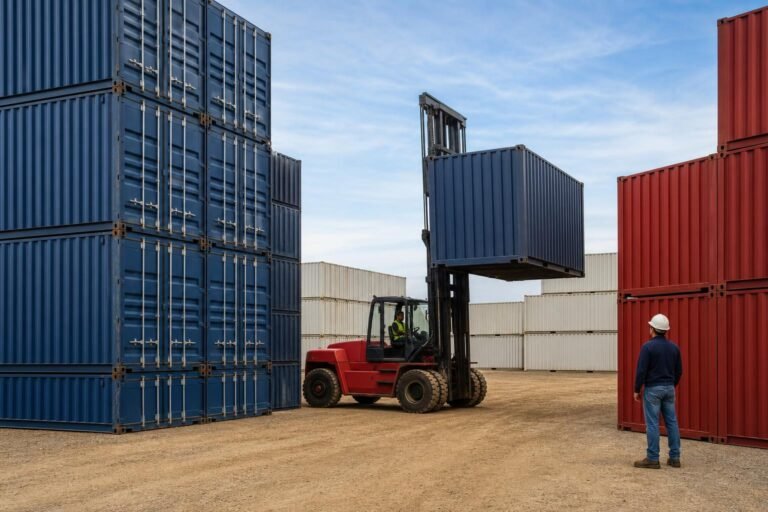
Your distance from a major container depot is one of the biggest factors in what you’ll pay. Containers are most plentiful (and cheapest) within 50 to 100 miles of major ports. Cities like Savannah, Norfolk, Houston, and Newark have large depots where retired shipping containers are graded, sorted, and sold.
If you’re buying from a location farther inland, like central North Carolina, you’ll still find competitive pricing because of proximity to the Port of Wilmington and the Norfolk, Virginia corridor. Lease Lane Containers, based in Raleigh, sources from these regional depots and provides delivery planning support so buyers across the Southeast and beyond can access fair pricing without guessing at logistics.
Where to Find the Best Cargo Worthy Deals
Shopping for a shipping container isn’t like buying something off a shelf. Prices vary dramatically between sellers, and the cheapest listing isn’t always the best value. Where you buy matters just as much as what you buy.
Online marketplaces can be useful for comparing prices across regions, but they often lack transparency about actual container condition. Photos may be generic stock images rather than pictures of the specific unit you’ll receive. Whenever possible, buy from a supplier who can provide details about the container’s grade, condition, and inspection history.
Wholesale Suppliers vs. Local Retailers
Wholesale suppliers and depot-direct sellers typically offer the lowest per-unit pricing because they deal in volume. If you’re buying multiple containers for a commercial project, this route can save you 10% to 20% compared to retail pricing. The trade-off is that wholesale sellers may offer fewer services: no delivery, no site planning, and limited flexibility on timing.
Local and regional retailers, on the other hand, often include delivery coordination, honest grading explanations, and practical guidance on site access. A supplier like Lease Lane Containers provides transparent grading guidance so you know exactly what CW, WWT, and one-trip designations mean before you commit. That kind of support matters when you’re spending $2,000 to $4,000 on a container and need it placed correctly on your property.
The best approach is to get quotes from two or three sources, compare not just the price but also what’s included, and ask specific questions about the container’s age, condition, and CSC plate status.
Evaluating Condition to Ensure Best Value
Two containers with the same CW grade can look and perform very differently. One might be a 10-year-old unit with minor cosmetic wear. Another could be 18 years old with heavier patching and more floor wear. Both technically pass inspection, but their long-term value and appearance aren’t equal.
Asking for photos of the specific unit (not stock images) is a reasonable request. Reputable sellers will provide them. If a seller can’t or won’t show you the actual container, that’s a red flag.
Critical Inspection Points for Buyers
If you have the opportunity to inspect a container in person or review detailed photos, focus on these areas:
- Door operation: both doors should open and close smoothly, and the rubber gaskets should compress evenly to create a tight seal.
- Roof condition: check for dents that could pool water and accelerate rust. Surface rust is normal; holes or soft spots are not.
- Floor integrity: marine-grade plywood flooring should be firm underfoot with no soft, spongy, or broken sections. Expect some scuffing and staining on a used unit.
- Corner castings and frame rails: these are the structural skeleton of the container. Cracks, bends, or heavy corrosion here compromise the entire unit.
- Wall panels: minor dents and surface rust are typical. Patches are acceptable if they’re welded properly. Light should not be visible through any wall seam.
A container that checks all these boxes at a fair CW price is a solid buy, even if it’s not cosmetically perfect.
Hidden Costs Beyond the Sticker Price
The listed price for a CW container is only the starting point. Several additional costs can add $500 to $2,000 or more to your total spend, and they catch first-time buyers off guard.
Taxes vary by state and municipality. In North Carolina, for example, shipping containers are generally subject to sales tax. Some states treat them as personal property, which may trigger annual property tax assessments. Check with your county assessor’s office: in Wake County, you can reach the tax office at (919) 856-5400 for clarification.
Delivery Fees and Site Preparation Requirements
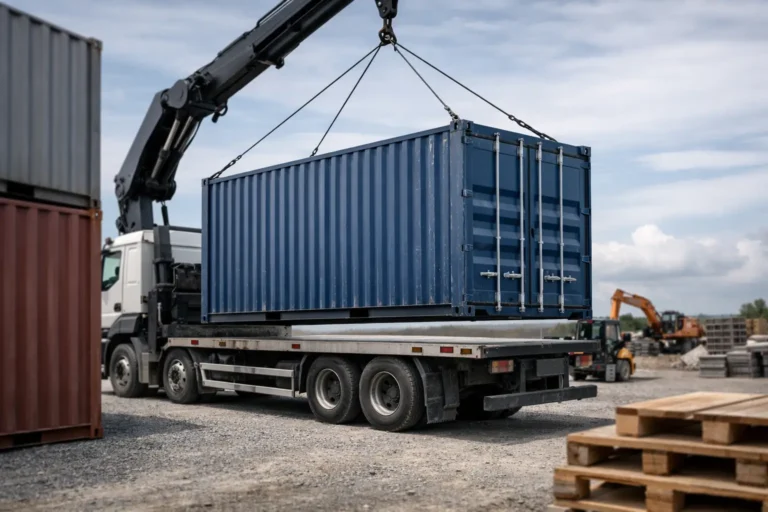
Delivery is often the single largest added cost. A standard tilt-bed truck delivery within 50 miles of a depot might run $250 to $500. Longer distances, especially 150 miles or more, can push delivery fees to $800 to $1,500 or higher.
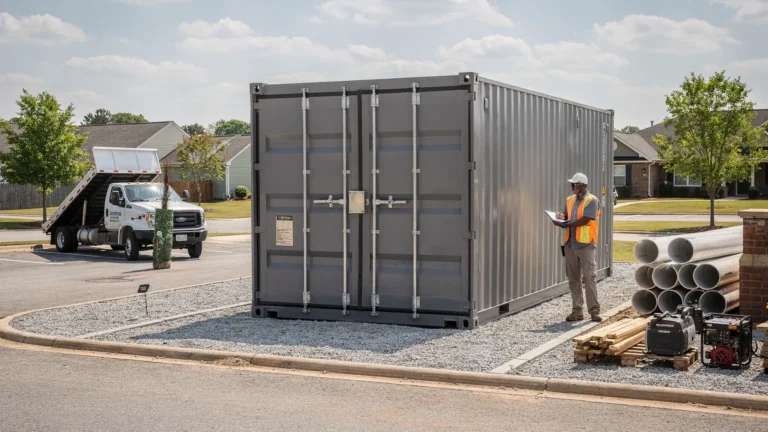
Site preparation is another expense that’s easy to overlook. Your placement area needs to be level, firm, and accessible. A tilt-bed truck typically needs at least 100 feet of straight clearance to slide a 40ft container off the back. Overhead power lines, tree branches, and narrow driveways can all create problems.
For ground preparation, many buyers use a compacted gravel pad (roughly 4 to 6 inches deep) or concrete piers at the corner castings. Budget $200 to $800 depending on your soil conditions and the size of the pad. Placing a container directly on bare ground invites moisture problems and uneven settling over time.
Strategies for Negotiating and Securing Your Container
Getting the best cargo worthy container price isn’t just about finding the lowest listing. It’s about understanding what you’re buying, knowing the market, and being ready to act when the right unit becomes available.
Start by getting quotes from at least two or three suppliers. Compare the total cost, including delivery, not just the container price. Ask each seller about the container’s age, its CSC plate status, and whether the price includes any delivery or site support.
If you’re flexible on timing, tell the seller. Suppliers sometimes offer better pricing on units they need to move quickly, especially at the end of a quarter or when depot space is tight. Buying during slower months (November through February) can also work in your favor.
For buyers purchasing multiple units, ask about volume pricing. Even two containers may qualify for a discount. And don’t overlook the value of working with a supplier who provides delivery planning support: avoiding a failed delivery attempt saves you the cost of a second truck trip, which can easily run $300 to $500.
A quick final checklist before you commit: verify the CW grade and CSC plate, confirm the total delivered price, check your site access dimensions (length, width, overhead clearance), and prepare your placement area before the truck arrives.
If you’re ready to compare options, browse available inventory at Lease Lane Containers to see current container sizes, grades, and pricing. The Raleigh-based team can help you match the right container to your project and plan delivery so everything goes smoothly on drop-off day.