How Much Does a Shipping Container Cost in North Carolina?
Table of Contents
- Table of Contents
- Overview of Shipping Container Pricing in North Carolina
- Average Costs Based on Container Size and Type
- Standard 20-Foot vs. 40-Foot Units
- Specialty High Cube and Refrigerated Containers
- Impact of Container Condition on Total Price
- New ‘One-Trip’ Containers vs. Used Cargo Worthy Units
- As-Is and Wind and Watertight (WWT) Options
- Regional Delivery Fees and Logistics in NC
- Proximity to Port of Wilmington and Charlotte Hubs
- Additional Costs: Site Prep and Modifications
- Seasonal Market Trends and Availability in the Carolinas
- Tips for Securing the Best Container Rates in North Carolina
- Final Checklist
Table of Contents
- Overview of Shipping Container Pricing in North Carolina
- Average Costs Based on Container Size and Type
- Standard 20-Foot vs. 40-Foot Units
- Specialty High Cube and Refrigerated Containers
- Impact of Container Condition on Total Price
- New ‘One-Trip’ Containers vs. Used Cargo Worthy Units
- As-Is and Wind and Watertight (WWT) Options
- Regional Delivery Fees and Logistics in NC
- Proximity to Port of Wilmington and Charlotte Hubs
- Additional Costs: Site Prep and Modifications
- Seasonal Market Trends and Availability in the Carolinas
- Tips for Securing the Best Container Rates in North Carolina
- Final Checklist
If you’re pricing a shipping container in North Carolina, your total spend will depend on more than just the sticker price. Container size, condition grade, delivery distance, and site prep all factor into the final number. A 20-foot used unit delivered to a flat gravel pad in Wake County costs considerably less than a 40-foot high cube shipped to a mountain property near Asheville. Knowing where the costs stack up helps you avoid surprises and budget with confidence. Whether you’re a contractor setting up job-site storage, a homeowner adding backyard space, or a small business handling inventory overflow, the breakdown below will give you a realistic picture of what to expect. North Carolina’s mix of coastal ports, inland distribution hubs, and varied terrain makes the pricing picture more nuanced than a simple national average. Here’s how it all breaks down.
Overview of Shipping Container Pricing in North Carolina
Shipping container costs in North Carolina typically range from about $1,400 for an older used 20-foot unit to $6,500 or more for a new one-trip 40-foot high cube. That’s a wide spread, and the number you’ll actually pay depends on a handful of specific variables.
The state sits in a favorable position for container availability. The Port of Wilmington handles steady cargo volume, and Charlotte serves as a major inland logistics hub connected by I-85 and I-77. Both of these corridors keep supply flowing through the region, which generally holds prices below what you’d see in landlocked states farther from port infrastructure.
Your final cost breaks into three main categories: the container itself, delivery, and any site work or modifications. Most buyers focus on the container price alone and get caught off guard by a $500 to $1,500 delivery fee or the cost of grading a pad. The sections below walk through each of these cost layers so you can build a realistic total budget before placing an order.
Average Costs Based on Container Size and Type
Standard 20-Foot vs. 40-Foot Units
The two most common sizes are the 20-foot and 40-foot standard containers. A 20-foot unit measures roughly 20 ft long by 8 ft wide by 8 ft 6 in tall, offering about 1,170 cubic feet of interior space. A 40-foot unit doubles the length and provides roughly 2,390 cubic feet.
For used cargo-worthy 20-foot containers in North Carolina, expect to pay between $1,800 and $3,000 depending on condition and availability. Used 40-foot units in the same grade typically run $2,200 to $4,000. One-trip (essentially new) containers carry a premium: $3,500 to $4,800 for a 20-foot and $4,500 to $6,500 for a 40-foot.
If you’re storing equipment for a single job site or adding backyard storage, a 20-foot unit usually does the job. Contractors managing larger inventories or businesses staging seasonal stock often find the 40-foot container more cost-effective per square foot. The price-per-foot drops as you go bigger, so if space allows, the larger unit is often the better value.
Specialty High Cube and Refrigerated Containers
High cube shipping containers add an extra foot of interior height, standing 9 ft 6 in tall instead of the standard 8 ft 6 in. That additional 12 inches matters if you’re converting the container into a workspace, container office, or workshop where headroom affects comfort and usability. A used 40-foot high cube in cargo-worthy condition typically costs $2,800 to $4,500 in North Carolina, while a one-trip version can reach $5,500 to $7,000.
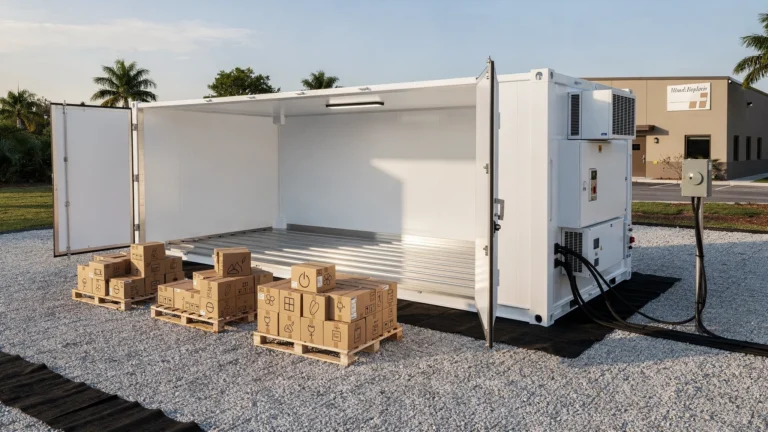
Refrigerated containers (reefers) are a different category entirely. These units include built-in cooling systems and insulated walls, and they require an external power source: typically a 3-phase 460V connection or a generator. Prices for a used working reefer start around $4,500 for a 20-foot unit and can exceed $8,000 for a 40-foot model in good operating condition. Always verify compressor hours and cooling performance before purchasing a used reefer, as repair costs for the refrigeration unit alone can run $2,000 to $5,000.
Impact of Container Condition on Total Price
New ‘One-Trip’ Containers vs. Used Cargo Worthy Units
Container grading directly affects price, and understanding the difference between grades saves you from overpaying or buying something that doesn’t meet your needs.
A one-trip container has made a single ocean voyage, usually from the manufacturing facility in Asia to a U.S. port. These units arrive with minimal wear: clean floors, intact paint, functioning doors, and no dents or rust patches. They’re the closest thing to a new container you can buy, and they’re the right choice for conversions, customer-facing projects, or situations where appearance matters.
Cargo-worthy (CW) containers have passed an inspection certifying they’re structurally sound and suitable for ocean transport. They’ll show cosmetic wear: surface rust, minor dents, some paint fading. But the floors are solid, the doors seal properly, and the corrugated steel panels are intact. For straightforward storage on a farm, construction site, or behind a warehouse, a CW unit delivers the function you need at a significantly lower price point. The savings between a one-trip and a CW container of the same size can be $1,500 to $2,500.
As-Is and Wind and Watertight (WWT) Options
Below cargo-worthy, you’ll find wind and watertight (WWT) containers. These units keep rain and wind out but may not pass a formal cargo-worthy inspection. Expect more visible wear: heavier surface rust, patched areas, and doors that may need some effort to operate smoothly. WWT containers work well for dry storage of tools, hay, or equipment that doesn’t need a pristine environment. Prices for a WWT 40-foot container in NC typically fall between $1,800 and $2,800.
As-is containers sit at the bottom of the grading scale. These are sold without guarantees about condition. Some are perfectly usable for non-critical storage; others have holes, damaged floors, or seized door hardware. If you’re considering an as-is unit, inspect it in person or request detailed photos. The savings can be real, sometimes $500 to $1,000 below WWT pricing, but so can the risk. Lease Lane Containers provides transparent grading guidance so buyers understand exactly what each condition level means before committing.
Regional Delivery Fees and Logistics in NC
Delivery is one of the most overlooked costs in any container purchase. In North Carolina, delivery fees typically range from $150 for short hauls near a depot to $1,500 or more for remote mountain locations.
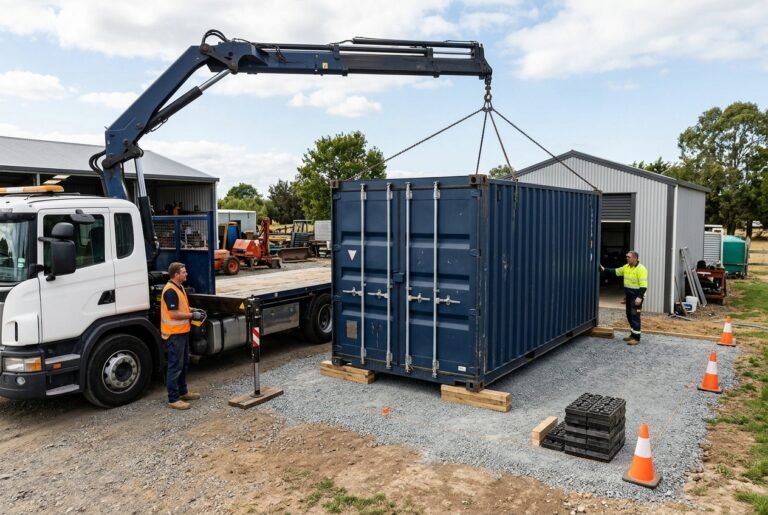
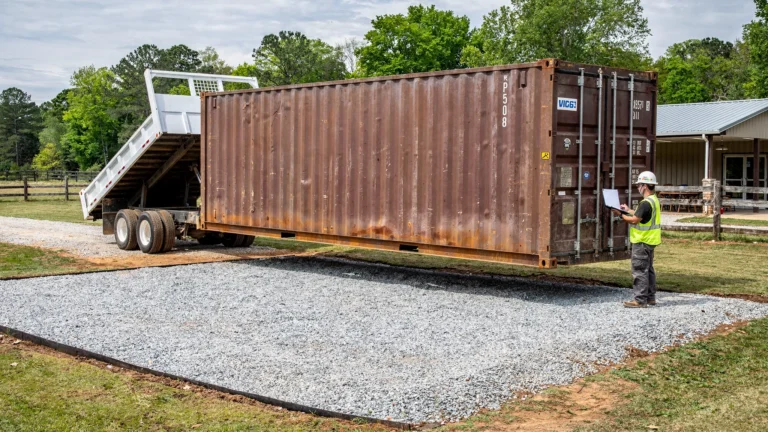
Most containers ship on either a tilt-bed trailer or a roll-off truck. Tilt-bed delivery requires roughly 100 feet of straight clearance for a 40-foot container, and the truck needs a firm, level surface to tilt and slide the unit off. Roll-off trucks need less length but still require overhead clearance of at least 14 feet for power lines and tree branches. If your property has a narrow driveway, a tight turning radius, or soft ground, you’ll need to plan ahead.
Proximity to Port of Wilmington and Charlotte Hubs
Your distance from major container depots is the single biggest factor in delivery cost. Properties within 50 miles of Wilmington, Charlotte, or the Raleigh-Durham Triangle area typically see delivery fees between $150 and $500. These areas benefit from high container inventory turnover and multiple depot options.
Move farther into the Piedmont or up into the western mountains near Boone or Asheville, and delivery costs climb. Runs of 150 to 250 miles can push delivery fees to $800 to $1,500. Access roads in mountain terrain also create logistical challenges: steep grades, tight switchbacks, and limited turnaround space. If you’re in a rural area off I-40 or I-95, confirm delivery access with your supplier before placing an order. Lease Lane Containers, based in Raleigh, offers delivery planning support that covers site access, turning radius, overhead clearance, and placement logistics so your container arrives and gets set without complications.
Additional Costs: Site Prep and Modifications
The container itself and its delivery are just two pieces of the total cost. Site preparation and any modifications you need will add to your budget, sometimes significantly.
For site prep, plan on these common expenses:
- Gravel pad (recommended for most placements): $300 to $1,200 depending on size and depth
- Concrete piers or footings for permanent installations: $500 to $2,000
- Grading or leveling uneven ground: $200 to $800
- Tree removal or overhead line clearance: varies widely by scope
Modifications are where costs can escalate quickly. Adding a personnel door runs $300 to $700 installed. Window cutouts with welded frames cost $250 to $500 each. Electrical wiring for lights, outlets, and a panel typically runs $800 to $2,500 depending on complexity. Insulation with interior wall finishing for a container office or workshop can add $2,000 to $5,000 for a 20-foot unit.
A useful rule of thumb: budget 15% to 25% above the container purchase price for basic site prep and delivery combined. If you’re planning modifications, that number can double. Getting clear on your total project scope before you buy prevents the common mistake of choosing a cheaper container only to overspend on aftermarket work.
Seasonal Market Trends and Availability in the Carolinas
Container pricing in the Carolinas isn’t static. It fluctuates with global shipping patterns, port congestion, and regional demand cycles.
Spring and early summer tend to see the highest demand in North Carolina. Contractors ramp up projects, farmers need seasonal storage, and homeowners start property improvement work. This increased demand can push prices up 5% to 15% compared to winter months. If your timeline is flexible, buying in late fall or winter often means better selection and lower prices.
Global supply chain conditions also play a role. When international shipping rates spike, fewer containers get released into the domestic resale market, tightening supply and raising prices. Conversely, when ocean freight rates drop, more containers flow into surplus inventory at ports like Wilmington, and buyers benefit from increased availability and competitive pricing.
Keep an eye on local inventory levels too. North Carolina’s position along the East Coast shipping corridor means supply is generally more stable here than in inland states, but popular sizes and grades, especially one-trip 40-foot high cubes, can sell out quickly during peak months.
Tips for Securing the Best Container Rates in North Carolina
Getting the best price on a container isn’t just about finding the cheapest listing. It’s about matching the right size, grade, and delivery setup to your actual needs so you don’t waste money on features you don’t use or repairs you didn’t anticipate.
- Know your grade requirements before you shop. If you’re storing lawn equipment, a WWT container saves you hundreds over a one-trip unit. If you’re building a customer-facing pop-up shop, the one-trip finish is worth the premium.
- Measure your delivery site carefully. Confirm that a truck can access your property, that you have adequate overhead clearance (minimum 14 feet), and that the ground can support a loaded container weighing 5,000 to 8,500 lbs empty.
- Ask about depot proximity. Choosing a supplier with inventory near your delivery location reduces freight costs directly.
- Compare total cost, not just container price. A $200 cheaper container from a depot 150 miles farther away may cost more after delivery fees.
- Check local permit requirements. Some municipalities in Wake County, Mecklenburg County, and other NC jurisdictions require permits for container placement, especially in residential zones. Call your local planning department before your container arrives.
- Buy during off-peak months if your schedule allows. Late fall and winter purchases often come with better pricing and faster delivery windows.
Final Checklist
Before you commit to a container purchase in North Carolina, run through these steps:
- Define your use case: storage, workspace, conversion, or transport.
- Choose the right size and grade for that use case.
- Confirm delivery access: driveway length, width, overhead clearance, and ground conditions.
- Budget for delivery fees based on your distance from the nearest depot.
- Factor in site prep costs: gravel pad, grading, or foundation work.
- Check local zoning and permit requirements with your county planning office.
- Request detailed photos or inspection reports for any used container.
The total cost of a shipping container in North Carolina depends on how well you plan before you buy. A few phone calls and measurements upfront can save you hundreds in unexpected fees and delays. If you’re ready to compare options, browse available inventory at Lease Lane Containers to see current sizes, grades, and pricing. Their Raleigh-based team can help you match the right container to your project and plan delivery so everything goes smoothly the first time.