Buy Used Cargo Container: Paperwork, Condition, and Delivery
Buying a used cargo container can be one of the fastest ways to add secure, weather-resistant storage or deployable space to a jobsite, farm, or small business. It can also go sideways quickly if you don’t confirm three things up front: paperwork, condition (grade), and delivery requirements.
From our Raleigh, North Carolina team at Lease Lane Containers LLC, we see the same avoidable problems across the Southeast and nationwide, missing documentation for shipping use, containers that were described as “cargo worthy” but are really just “wind & watertight,” and deliveries that fail because the site is not level or accessible.
This guide gives you a practical way to buy used with confidence, whether you need a 20ft unit for tools and materials or a 40ft High Cube for inventory overflow.
Step 1: Confirm the container grade (because “used” is not a grade)
Used containers are typically built to ISO standards and made from Corten steel (weathering steel used for corrosion resistance in marine environments), but their remaining service life depends heavily on how they were used and maintained.
Here are the three most common conditions you’ll see when shopping:
- One-Trip: A “nearly new” container that has made one loaded voyage from the factory and entered the resale market. Best when appearance matters, when you’re modifying the unit, or when you want the longest lifespan. If you’re weighing new vs. used value, start with the definitions in What Is a One Trip Container?.
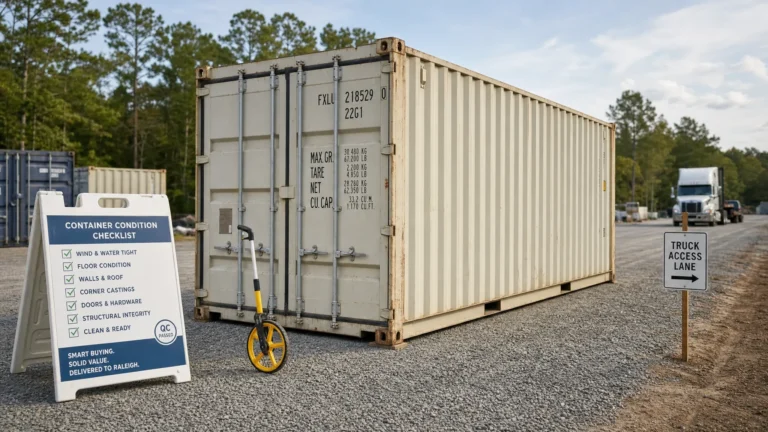
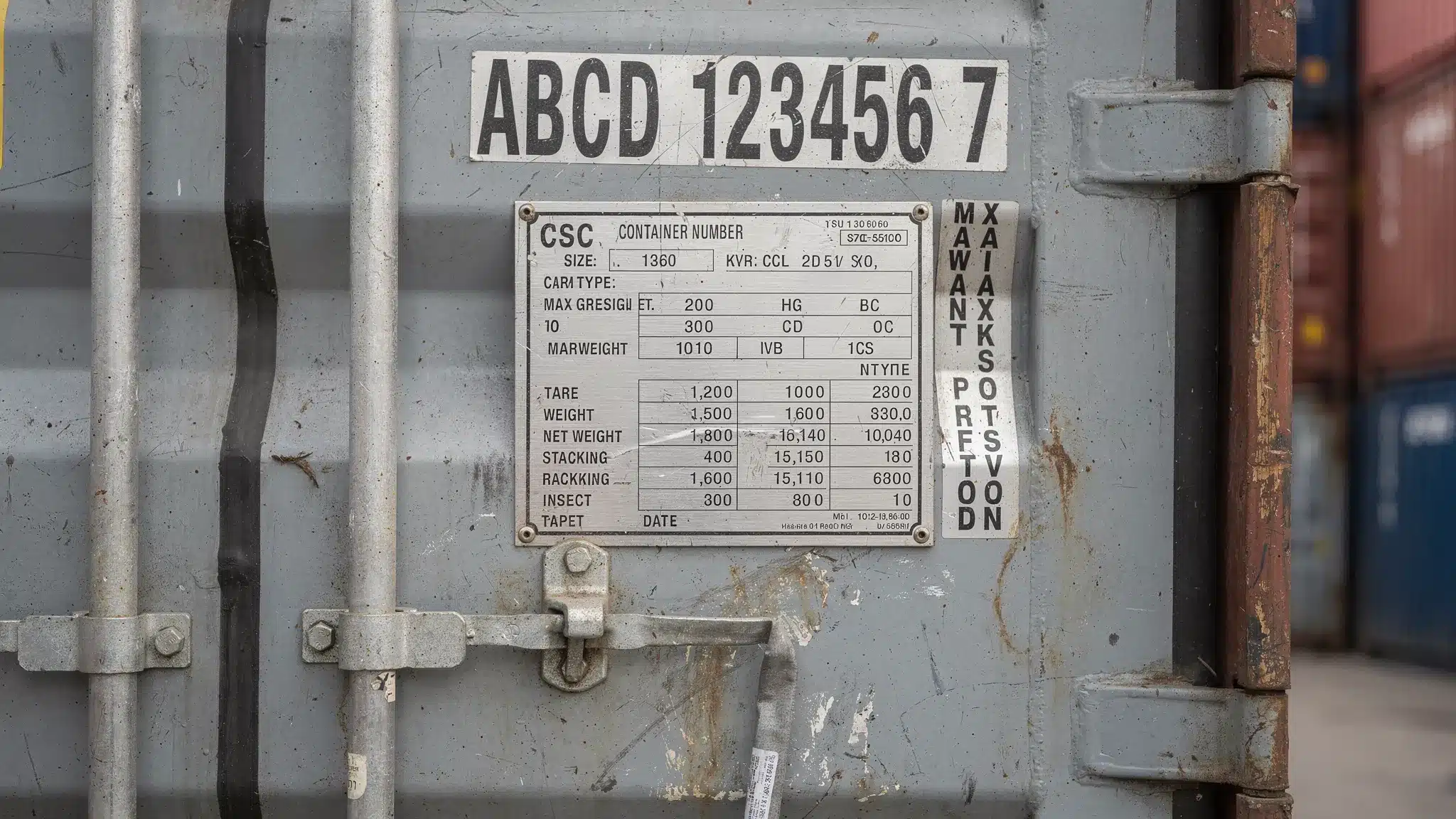
- Cargo Worthy (CW): A used unit intended to meet structural requirements for intermodal transport. For international shipping, this usually ties to the presence and validity of the CSC Safety Approval Plate (more on this below). If your project involves export, a cargo-worthy unit is the baseline, and you should also read What Is a Cargo Worthy Container? Key Standards Explained.
- Wind & Watertight (WWT): A used unit that’s structurally serviceable for ground storage and keeps out wind and water under normal conditions, but may not be suitable for ocean export. WWT is often the best value for stationary storage in Raleigh’s humid climate if you verify doors, roof, and seals. (For a deep dive, see Cargo Worthy vs. Wind and Watertight Containers: Which to Buy?.)
If you’re unsure what grade fits your use case, the most complete overview is Lease Lane’s Ultimate Shipping Container Buyers Guide.
Step 2: Get the paperwork right (what you should receive, and why it matters)
If you’re buying a used cargo container for on-site storage, paperwork is mostly about proving what you bought and protecting yourself if a dispute comes up. If you’re buying for transport or export, documentation becomes mission-critical.
A reputable seller should be willing to provide documents that tie directly to the physical unit, usually by container number and photos.
Paperwork checklist (storage vs. shipping)
| Document | What it should include | Why it matters | When you need it |
|---|---|---|---|
| Invoice and/or Bill of Sale | Seller info, buyer info, container number, size (20ft/40ft), type (Standard/High Cube/Reefer), grade (One-Trip/CW/WWT), price, delivery terms | Proof of purchase and what was promised | Always |
| Container number confirmation | Photos showing the container number on the unit you’re buying | Prevents “bait and switch” where photos don’t match the delivered container | Always |
| Condition photos or walkaround video | Doors, gaskets, roof, corner castings, floor, interior walls | Your record of pre-delivery condition and a baseline for acceptance | Always (especially if buying sight unseen) |
| CSC Safety Approval Plate photo | Plate legible, with dates and markings visible | Often required for international shipping acceptance | Export, intermodal shipping |
| Written grade definition | A clear statement of what “CW” or “WWT” means for that seller | Stops vague listings like “good condition” | Always |
| Delivery receipt / POD | Date, address, signature, notes, container number | Confirms delivery and condition at handoff | Always |
| Warranty terms (if offered) | What is covered, time window, exclusions | Sets expectations and reduces ambiguity | Recommended |
CSC plate note: The International Convention for Safe Containers (CSC) is administered internationally, and it’s the framework behind the CSC plate you see on a shipping container. For an authoritative reference, see the International Maritime Organization (IMO) overview of the CSC. If you are exporting, confirm your documentation requirements with your freight forwarder or carrier, since acceptance rules can vary.
A practical paperwork workflow for contractors and operations teams
If you’re buying for a company, paperwork can get messy fast, especially when multiple people are collecting quotes, inspection photos, and delivery notes.
One simple approach is to route vendor quotes and confirmation emails into a dedicated inbox for each job. If your team prefers a more automated workflow, a tool like Mailhook’s programmable disposable inboxes can help you collect supplier messages and keep records structured for internal approvals (especially useful when you’re comparing multiple sellers across different cities).
Step 3: Verify condition against the grade you’re paying for
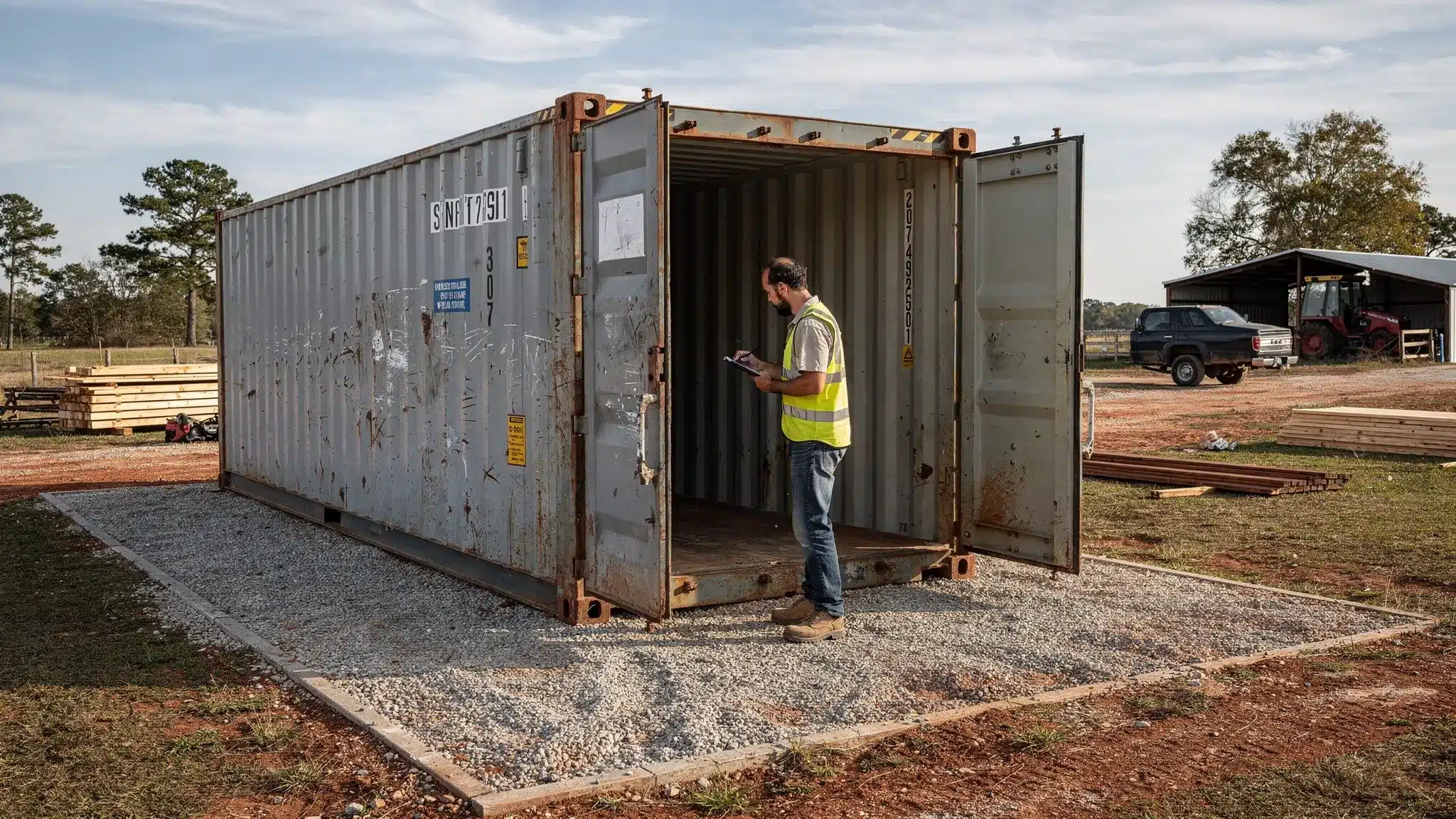
The fastest way to overpay is to inspect a container as if all grades are equal. A WWT unit can be perfect for a farm or jobsite in Wake County, but it may have dents, patches, or cosmetic rust that would be unacceptable for a customer-facing retail build. A CW unit should clear a higher bar for structural integrity.
Instead of repeating a full inspection checklist here, focus on these grade-specific “must confirm” items, then use a detailed guide when you’re ready to inspect.
If you’re buying Wind & Watertight (WWT)
WWT should be evaluated like a weather shell:
- Doors and gaskets: Doors should open and close without binding. Gaskets should be present and reasonably intact.
- Roof condition: Avoid severe roof deformation that can hold standing water.
- Light test basics: In daylight, check for pinholes that indicate punctures (small pinholes can sometimes be repaired, but they should be disclosed).
- Floor integrity: Look for soft spots, delamination, or signs of chemical spills.
For a detailed walkthrough, use How to Check Used Shipping Container Conditions and How to Spot Quality Containers Before You Buy.
If you’re buying Cargo Worthy (CW)
CW should be evaluated like a structure designed to be lifted and moved:
- Corner castings and frame: These are the backbone of ISO handling. Damage here is a major red flag.
- Door gear and seal line: Doors should seal properly and lock rods should function smoothly.
- CSC plate presence and legibility: If you’re shipping internationally, missing or illegible plates can become an expensive problem.
If your container will leave the ground (stacking, transport, export, or modification where squareness matters), a CW unit is often the safer decision. This is also where High Cube units can add value if you need extra vertical clearance for racking, equipment, or buildouts.
Step 4: Plan delivery before you pay (most “container problems” are really site problems)
Delivery is where good purchases turn into bad experiences. In Raleigh and across the Southeast, common issues include soft shoulders after rain, clay soils that rut under a loaded truck, and tight residential streets where a tilt-bed cannot align.
Before you place the order, confirm:
- Delivery method: Tilt-bed, flatbed, or crane placement, and what your quote assumes.
- Access width and turning: Gates, driveways, cul-de-sacs, and approach angles.
- Overhead clearance: Branches and lines, especially important for 40ft and High Cube deliveries.
- Drop zone condition: Firm, level, and drained, with room to set the container square.
If you want the most practical delivery planning references, start here:
Pro Tip: Build the pad to prevent door bind (and premature corrosion)
A container can be structurally sound and still become frustrating if it’s installed on an uneven base. Even a small twist across the frame can cause doors to bind, gaps to form, and water to track inside.
For Raleigh, Wake County, and much of North Carolina where seasonal rain and drainage matter, a reliable baseline approach is:
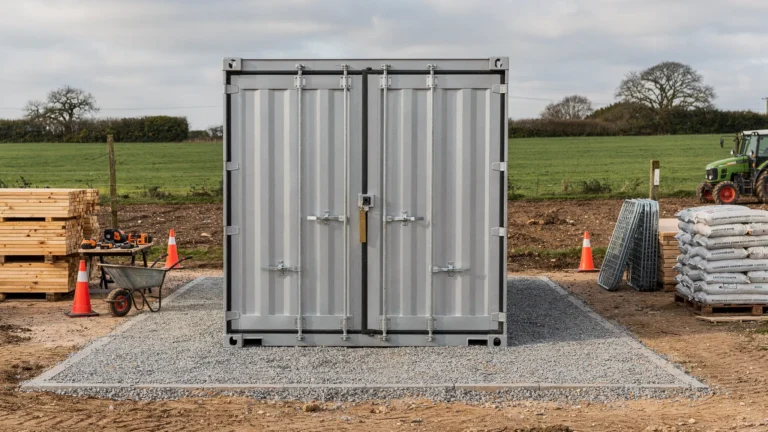
- Use a compacted gravel pad with geotextile for many storage installations, especially on soil that stays wet.
- Support at the corners (and additional points as needed) to keep the frame square.
- Plan drainage away from the container, so water does not sit under the rails.
For step-by-step ground prep, use 5 Steps for Proper Shipping Container Ground Preparation and consider local permitting or HOA rules before delivery.
Step 5: Make sure your quote matches the real scope (paperwork, condition, delivery)
When comparing sellers, don’t compare “20ft container price” to “20ft container price.” Compare this instead:
- Size and type: 20ft vs 40ft, Standard vs High Cube, dry vs Reefer.
- Grade and definition: One-Trip vs CW vs WWT, with written expectations.
- Delivery assumptions: Mileage, offload method, redelivery fees if access fails.
- Documentation included: Photos of the actual unit, container number confirmation, CSC plate photo if needed.
If you’re still deciding between sizes, these local-and-national guides help you narrow it down quickly:
- For 20-foot units: 20ft Shipping Container Price: What to Expect
- For 40-foot units: Find a 40ft Shipping Container for Sale in Raleigh, NC
- For used inventory context: Best Used Shipping Containers for Sale in Raleigh, NC
Why buying from a Raleigh-based team can reduce risk (even with nationwide delivery)
Even if your delivery is outside North Carolina, working with a team that’s used to real site constraints (tight residential access, soft soils, humid conditions, permitting and HOA questions) tends to produce better outcomes than a purely transactional listing.
Lease Lane Containers LLC focuses on clear grading (One-Trip, Cargo Worthy, WWT), common sizes like 20ft and 40ft (including High Cube options), and practical delivery planning, so customers know what they’re getting and how it will arrive.
Ready to buy a used cargo container with confidence?
If you want help choosing the right grade, confirming documentation (including CSC considerations for shipping), and planning a clean delivery the first time, contact our team at sales@leaselanecontainers.com or visit our Raleigh, NC office to talk through your project and get clear pricing.