Freight Containers for Sale: What Buyers Should Check
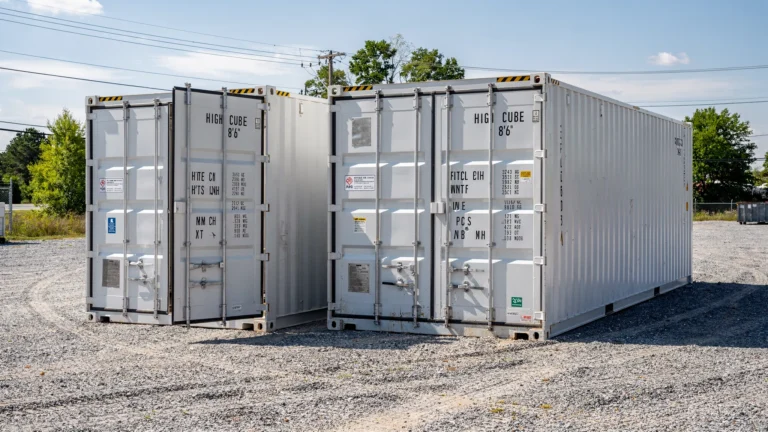
If you are comparing freight containers for sale, the most important question is not simply which unit is cheapest. It is whether that container is structurally sound, properly graded, deliverable to your site, and suitable for the way you plan to use it.
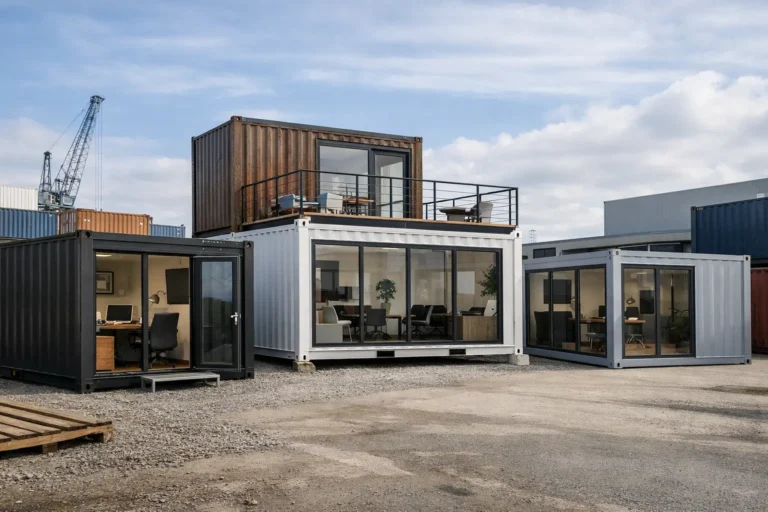
A Raleigh general contractor storing tools on a muddy jobsite has different needs than a logistics manager buying a Cargo Worthy unit for export. A homeowner in Wake County may care most about door operation, weather protection, and permit rules. A developer planning a modular build may need a clean One-Trip High Cube with minimal corrosion and strong modification potential.
The right purchase starts with a disciplined check of grade, structure, documentation, and delivery conditions before money changes hands.
Start by confirming what kind of freight container you are buying
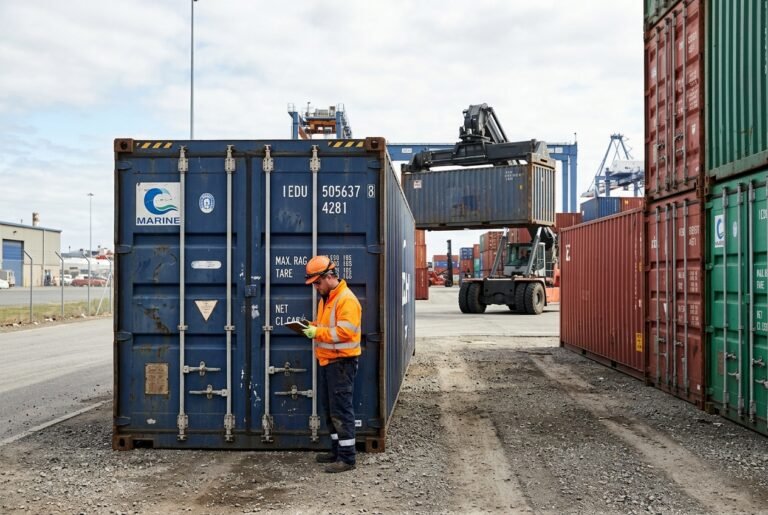
In the resale market, freight container, shipping container, cargo container, and storage container are often used interchangeably. Technically, most buyers are looking at ISO intermodal containers, built to move cargo by ship, rail, and truck. ISO standardization matters because it helps ensure consistent dimensions, corner castings, stacking capability, and handling compatibility. The ISO freight container standards committee is the global reference point for this type of equipment.
Most dry freight containers are built with Corten Steel, a weathering steel designed to resist atmospheric corrosion better than ordinary mild steel. That does not mean the container is rust-proof. Corten Steel performs best when it can dry between wet cycles. Standing water, trapped debris, coastal salt exposure, and deep abrasion can still lead to serious corrosion.
Before you compare prices, make sure the listing clearly identifies the basics.
| Buyer check | Why it matters | What to confirm |
|---|---|---|
| Container size | Affects capacity, delivery access, and cost | 20ft, 40ft, 40ft High Cube, or specialty size |
| Container type | Determines suitability for storage, transport, or temperature control | Dry van, High Cube, refrigerated Reefer, open top, or other configuration |
| Grade | Tells you the expected condition and certification level | One-Trip, Cargo Worthy, Wind and Watertight, or As-Is |
| Door style | Affects loading and access | Standard end doors, double doors, side doors, or tunnel configuration |
| Delivery method | Can make or break the purchase | Tilt-bed, flatbed, chassis, crane, or side-loader |
| Photos and unit details | Helps verify the actual container | Unit number, current photos, CSC plate when relevant, and interior condition |
If a seller cannot provide this information, pause before sending a deposit.
Check the grade before checking the paint
Paint can hide problems. Grade tells you much more about what the container is expected to do. At Lease Lane Containers, buyers are typically comparing three core grades: One-Trip, Cargo Worthy, and Wind and Watertight.
| Grade | What it means | Best fit | What buyers should not assume |
|---|---|---|---|
| One-Trip | A newer container that has usually made one loaded trip from the factory before resale | Premium storage, retail, offices, homes, modular projects, customer-facing uses | It may still have minor handling marks from transport |
| Cargo Worthy | A used container considered structurally suitable for cargo transport, often with valid CSC inspection when required | Export, intermodal shipping, heavy-duty storage, logistics, equipment | It is not guaranteed to look new cosmetically |
| Wind and Watertight | A used container that should keep out wind and rain when stationary | Jobsite storage, farm storage, household goods, inventory overflow | It may not be certified for ocean export or stacking under cargo conditions |
| As-Is | A container sold in its present condition with limited expectations | Salvage, parts, low-risk projects | It may have leaks, floor issues, door problems, or structural damage |
A common mistake is buying Wind and Watertight when Cargo Worthy is required. WWT can be excellent for stationary storage in Raleigh, across North Carolina, and throughout the Southeast, but it is not the same as export-ready. If the container will move loaded through ports, rail yards, or international shipping lanes, ask specifically about Cargo Worthy status, CSC plate condition, and whether a current survey is needed.
For deeper grade comparisons, review Lease Lane Containers’ guide to used container grades before choosing a unit.
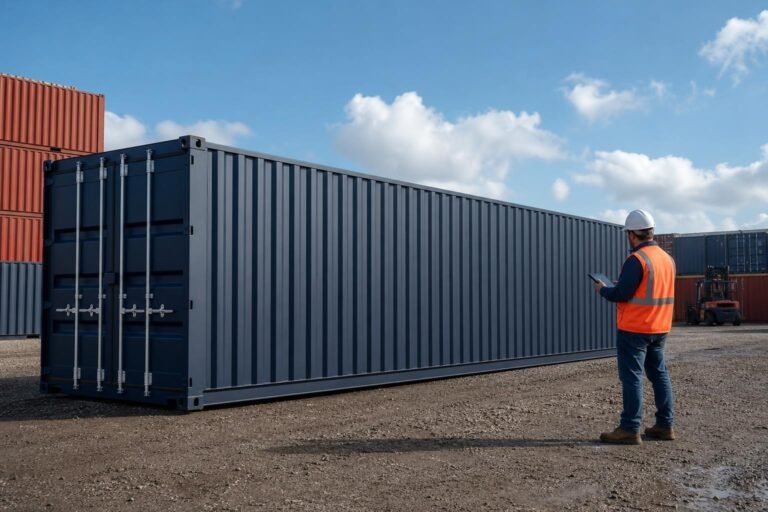
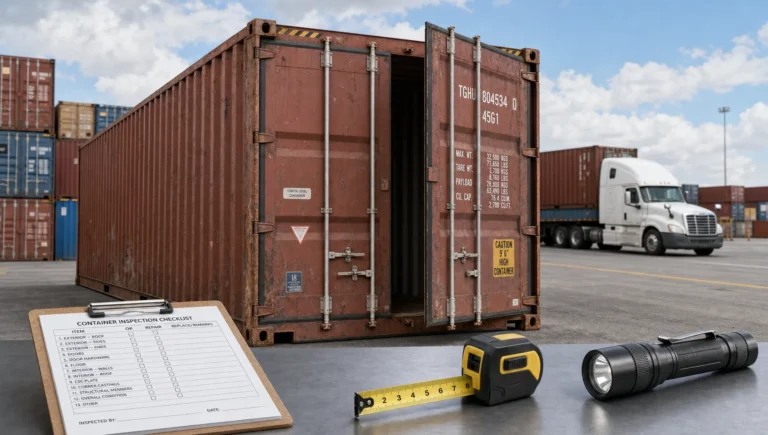
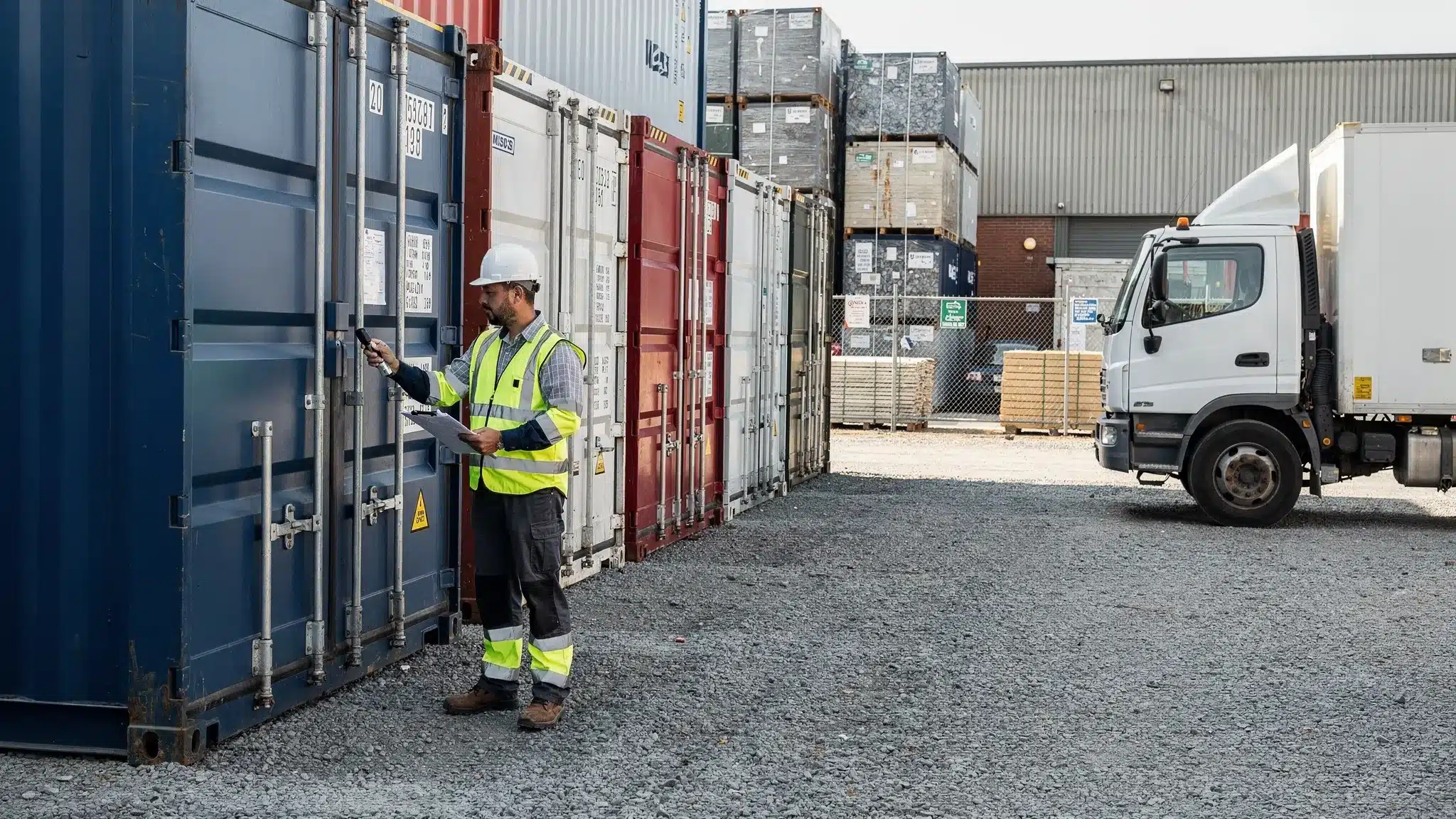
Inspect the structure, not just the side panels
Surface dents and faded paint are common on used freight containers. They do not always affect performance. The real question is whether the structural frame, roof, floor, and doors can still do their job.
Start with the corner castings. These reinforced fittings at each corner allow containers to be lifted, locked, stacked, and secured. Cracks, heavy deformation, or compromised welds around corner castings are serious concerns, especially for Cargo Worthy use.
Next, look at the corner posts, top rails, and bottom rails. These frame members carry load and help keep the container square. Deep impact damage, severe bending, or corrosion through the rail can affect door alignment and structural integrity.
The roof deserves special attention. Many used containers develop roof dents from stacking, handling, or debris. A shallow dent may be only cosmetic, but a dent that holds water can accelerate rust. Pinholes, patched punctures, and heavy roof corrosion should be evaluated carefully. Inside the container, a simple daylight test can reveal small holes: close the doors during daylight and look for light entering through the roof, side panels, floor edges, or door seals.
Rust should be classified, not ignored. Light surface rust is normal on many used units. Scaling rust, flaking steel, soft spots, and perforations are a different matter. In the humid Southeast, especially around Raleigh’s rainy seasons and red clay soils, keeping the container elevated and drained is just as important as the condition at purchase.
Test the doors before you commit
Doors are one of the most important checkpoints because they reveal whether the container is square, level, and functional. A freight container with doors that will not seal or latch properly may become frustrating immediately, even if the shell looks acceptable.
Open and close both doors. They should swing without excessive force. Check the locking rods, cams, keepers, hinges, handles, and rubber gaskets. Stiff doors are common on used containers, but extreme resistance can indicate frame racking, hinge damage, settled foundation issues, or previous impact.
Door gaskets should be continuous enough to keep out wind-driven rain. Look for missing sections, brittle rubber, cracked corners, gaps, or daylight around the seal. For contractors storing tools, small business owners storing inventory, or homeowners storing furniture, poor gaskets can lead to moisture problems quickly.
If you are buying remotely, ask for a short door-operation video. Photos are helpful, but a video can reveal whether the doors actually open, close, latch, and seal.
Check the interior floor and cargo history
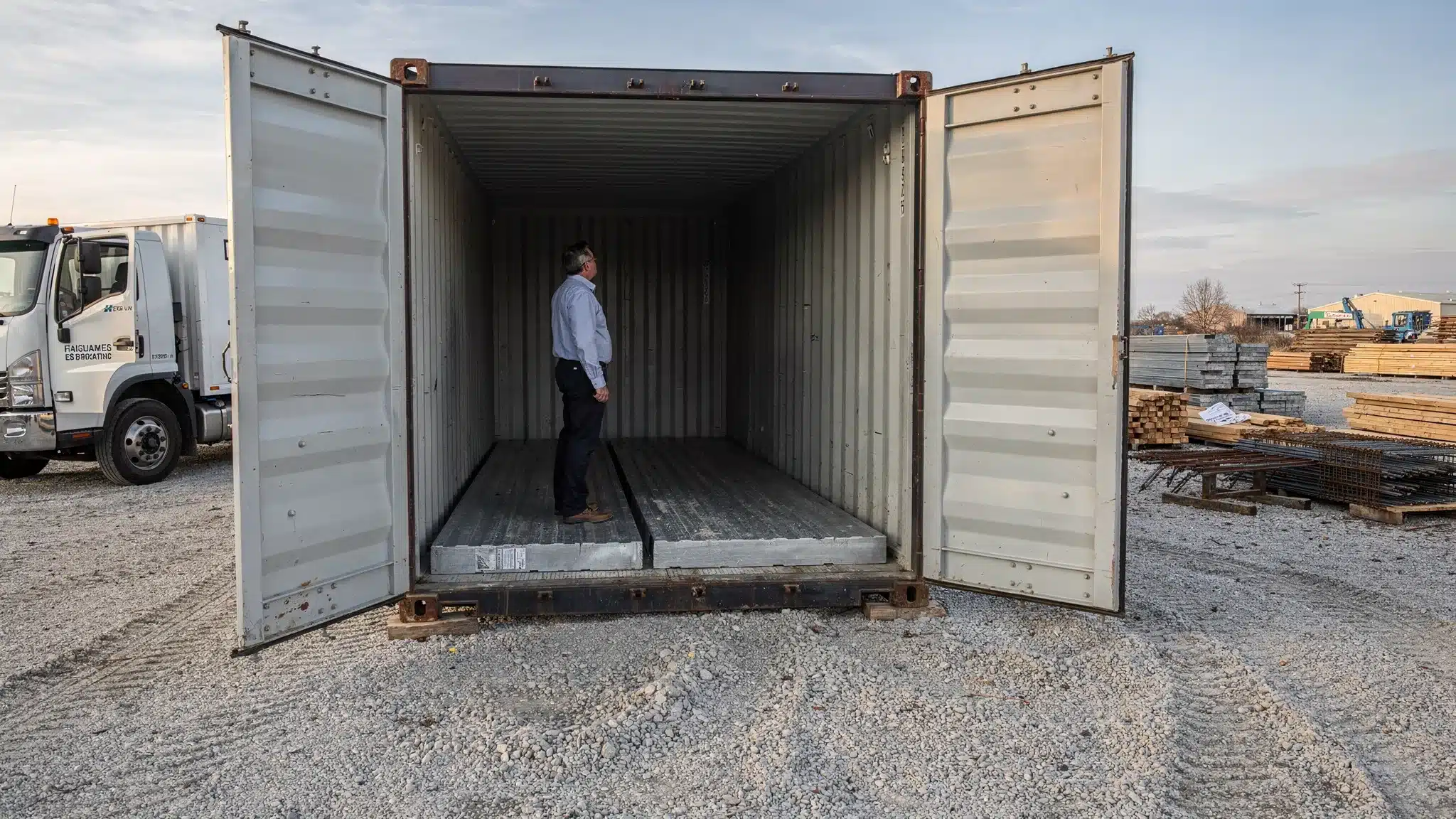
Most standard dry containers have heavy-duty plywood flooring, commonly marine-grade or hardwood plywood over steel crossmembers. Used floors can still perform well, but buyers should look for delamination, soft spots, oil staining, chemical odor, rot, and uneven repairs.
For construction storage, minor scuffs and stains may be acceptable. For retail inventory, household goods, food-adjacent storage, or office conversions, interior cleanliness matters more. A One-Trip unit may justify the premium if you need a cleaner interior, fewer unknowns, and a better starting point for modifications.
If the container smells strongly of chemicals, fuel, mildew, or rot, do not assume ventilation alone will solve it. Odors can linger in floors and wall cavities, especially after long cargo service. For container offices, cabins, pop-ups, or residential projects, interior condition can affect build cost and indoor comfort.
Match the size to the use case
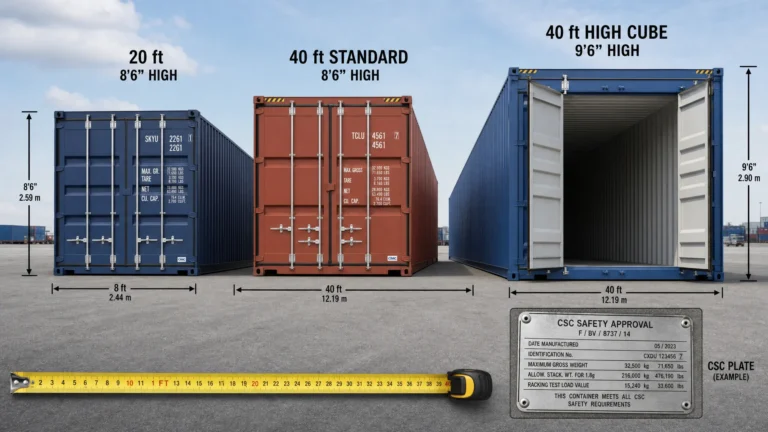
Many buyers focus on grade first, but size and height are just as important. A 20ft container is often easier to place on residential properties, tighter commercial lots, farms, and smaller job sites. A 40ft container gives more storage per delivery but requires more access room, a longer pad, and a more careful placement plan.
High Cube containers are typically 9ft 6in tall on the exterior, compared with 8ft 6in for standard-height containers. That extra foot is valuable for palletized goods, taller equipment, insulation, HVAC runs, ceiling fans, and office conversions. For modular builders and developers, a High Cube often provides a more practical shell for finished interiors.
| Buyer type | Common need | Good starting point | Grade to consider |
|---|---|---|---|
| General contractor | Secure tool and material storage | 20ft or 40ft dry container | WWT or Cargo Worthy |
| Small business owner | Inventory overflow or retail pop-up | 20ft, 40ft, or High Cube | One-Trip or WWT depending on finish expectations |
| Homeowner or farm | Long-term property storage | 20ft or 40ft dry container | WWT for value, One-Trip for cleaner appearance |
| Real estate developer | Modular shell or conversion | 40ft High Cube | One-Trip or high-quality Cargo Worthy |
| Logistics manager | Freight movement or export | 20ft or 40ft ISO container | Cargo Worthy with proper documentation |
| Cold storage operator | Temperature-controlled inventory | 20ft or 40ft Reefer | Tested refrigerated unit with power requirements verified |
For a broader sizing comparison, Lease Lane Containers’ shipping container buyers guide can help you compare dimensions, grades, and delivery considerations.
Verify the quote, documentation, and delivery assumptions
A freight container quote should be more than a number. It should clearly identify the size, grade, condition, delivery location, and unloading method. Two quotes can look similar until you realize one includes delivery and the other does not, or one is quoting a WWT unit while the other is quoting Cargo Worthy.
For any serious purchase, confirm the following before paying:
- The container size, height, and type are listed in writing.
- The condition grade is written clearly, not described with vague terms like nice or storage grade.
- Photos show the actual unit when possible, including exterior, interior, roof condition, doors, floor, and identification markings.
- Delivery charges, placement method, taxes, and potential access-related fees are explained.
- For export or intermodal use, CSC plate status and any required survey documentation are addressed.
- The seller asks about your site access, ground conditions, and placement orientation before scheduling delivery.
This last point is important. A reliable supplier should care where the container is going. In Raleigh, the Triangle, and rural North Carolina, access can change quickly because of soft shoulders, sloped driveways, trees, overhead utilities, wet clay, and narrow farm lanes. Nationwide buyers should also expect delivery planning to vary by truck type and local conditions.
For practical drop-off planning, read Lease Lane Containers’ guide to shipping container delivery requirements.
Watch for red flags in freight container listings
Not every poor listing is a scam, but unclear information should make you cautious. The most common problems are vague grades, recycled stock photos, unrealistic prices, and sellers who avoid delivery questions.
Be careful when a listing does not identify whether the unit is One-Trip, Cargo Worthy, or Wind and Watertight. Storage grade is not an industry-standard guarantee by itself. It could mean WWT, or it could mean a unit the seller simply hopes will work for storage.
Also be cautious with fresh paint. Repainting can be part of legitimate refurbishment, but paint can also cover rust, patches, or mismatched repairs. Ask what prep work was done, whether holes were repaired, and whether the roof and doors were inspected before painting.
A reputable seller should be willing to discuss grade, site access, expected use, and delivery limitations. If the entire conversation is only about speed and payment, slow down.
Pro-Tip: prepare the drop spot before the truck arrives
A strong container can still perform poorly if it is placed on uneven or unstable ground. Before delivery, prepare a level area with drainage away from the container. For many Raleigh and Southeast properties, a compacted gravel pad over stable soil is a practical option because it improves drainage and helps reduce under-container corrosion. Concrete pads, piers, and blocking can also work when designed for the load and site conditions.
Support the container at the corner castings or along structurally appropriate points, and avoid letting it twist across uneven ground. If the frame racks, the doors may become hard to open even when the container itself is in good condition. Confirm door orientation before delivery, leave enough room for the doors to swing, and keep the route clear of low branches, parked vehicles, soft shoulders, and overhead wires.
Check local zoning, HOA rules, and permit requirements before the delivery date. Requirements can differ between the City of Raleigh, Wake County, nearby municipalities, commercial properties, and agricultural land. If excavation is involved, call 811 before digging.
Frequently Asked Questions
Are freight containers for sale the same as shipping containers? In most buying contexts, yes. Buyers often use freight container, shipping container, cargo container, and storage container to describe ISO intermodal steel containers. The key is to confirm the exact size, type, grade, and delivery method before purchasing.
What is the best grade for basic storage? Wind and Watertight is often a cost-effective choice for stationary storage because it should keep out wind and rain. For cleaner appearance, longer-term value, or customer-facing uses, One-Trip may be better. For export or loaded transport, choose Cargo Worthy when required.
Do I need a Cargo Worthy container if it will never leave my property? Usually not. If the unit will only sit on-site for tools, household goods, farm supplies, or overflow inventory, a properly inspected WWT container may be enough. Cargo Worthy matters more when the container will be loaded, transported, stacked, or used in intermodal shipping.
Should I buy a High Cube container? Choose a High Cube if you need extra interior height for tall equipment, palletized goods, insulation, lighting, HVAC, or a finished office buildout. Standard-height containers may be sufficient for basic storage and can be easier to source in some markets.
Can a container sit directly on the ground? It can, but it is not ideal for long-term use. Direct ground contact can trap moisture, accelerate corrosion, and cause settling that affects door operation. A level gravel pad, concrete base, piers, or proper corner supports usually performs better.
Ready to compare freight containers with a local expert?
Whether you are buying in Raleigh, elsewhere in North Carolina, across the Southeast, or nationwide, Lease Lane Containers LLC can help you evaluate container size, grade, condition, and delivery requirements before you commit. Our team supplies high-quality One-Trip and used containers, including Standard, High Cube, Cargo Worthy, Wind and Watertight, and Refrigerated options.
To discuss current availability or plan your delivery, contact the sales team at sales@leaselanecontainers.com or visit the Raleigh office to speak with a local container specialist.