Best shipping containers for sale in Los Angeles, California | 2026 Guide
Table of Contents
- Table of Contents
- Los Angeles shipping containers for sale Quick Facts
- shipping containers for sale in Los Angeles: What You Need to Know
- Top shipping containers for sale Options in Los Angeles
- Budget-Friendly: Wind and Watertight Containers
- Mid-Range: Cargo Worthy Containers
- Premium: One-Trip Containers
- How to Choose the Right shipping containers for sale in Los Angeles
- Match the Container to Your Use Case
- Verify the Container Grade
- Confirm Delivery Access Before You Buy
- Check Local Permit Requirements
- Watch for Red Flags
- Los Angeles shipping containers for sale Market in 2026
- Los Angeles shipping containers for sale FAQ
- How much does a shipping container cost in Los Angeles?
- Do I need a permit to place a shipping container on my property in LA?
- How long does delivery take?
- What size container should I get?
- Can I place a container on a dirt or gravel surface?
- What should I inspect on a used shipping container before buying?
- Get shipping containers for sale in Los Angeles Today
- Final Checklist
Table of Contents
- Los Angeles Shipping Containers for Sale Quick Facts
- Shipping Containers for Sale in Los Angeles: What You Need to Know
- Top Shipping Container Options in Los Angeles
- How to Choose the Right Shipping Container in Los Angeles
- Los Angeles Shipping Container Market in 2026
- Los Angeles Shipping Containers for Sale FAQ
- Get Shipping Containers for Sale in Los Angeles Today
- Final Checklist
Los Angeles is one of the busiest container markets in the country, and for good reason. The Port of Los Angeles and the Port of Long Beach together handle roughly 40% of all containerized cargo entering the United States, which means a steady supply of both new and used shipping containers flows through the region year-round. Whether you’re a contractor looking for secure jobsite storage, a small business owner needing extra inventory space, or a homeowner planning a container-based project, finding the right container in LA requires understanding local pricing, delivery logistics, and condition grades. This 2026 guide breaks down what Los Angeles buyers need to know about purchasing shipping containers, from budget-friendly used units to premium one-trip containers, so you can make a confident decision without overpaying. Lease Lane Containers works with buyers across the country, including those in the greater LA area, providing practical buying guidance and delivery planning support that reduces surprises on delivery day.
Los Angeles shipping containers for sale Quick Facts
Here’s what LA buyers should know before spending time researching individual sellers:
- Typical pricing ranges from $1,800 to $3,200 for a used 20-foot shipping container in wind and watertight condition, while a 40-foot high cube shipping container in one-trip condition runs between $4,500 and $7,000 depending on availability and delivery distance.
- Delivery lead times in the greater Los Angeles area average 3 to 10 business days from order confirmation, though availability near the ports can sometimes shorten this window.
- Service coverage extends across the entire LA basin, from the San Fernando Valley and Pasadena down through Long Beach, Torrance, and out to the Inland Empire cities of Riverside and San Bernardino.
- Local providers benefit from proximity to the largest port complex in the Western Hemisphere, giving LA buyers access to a wider selection of container grades and sizes than most U.S. markets.
- Condition matters as much as size: a cargo worthy container that passed a recent CSC inspection will hold up far better than a wind and watertight unit with significant surface rust and older door gaskets.
shipping containers for sale in Los Angeles: What You Need to Know
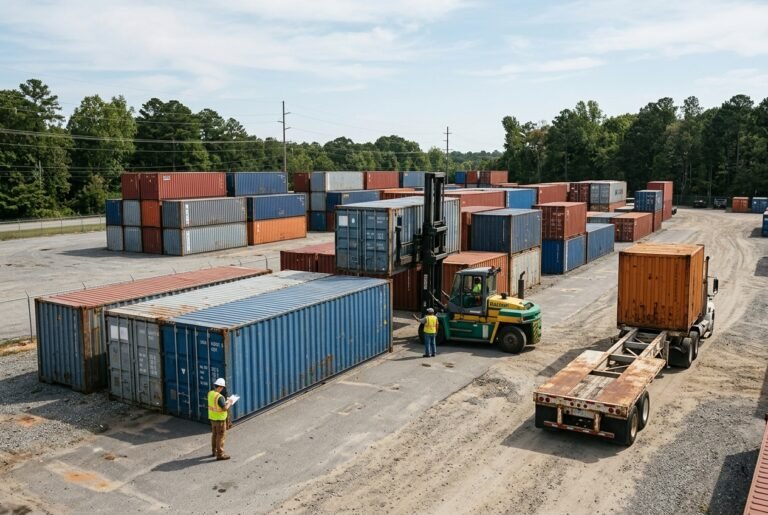
The LA container market is unlike most other U.S. cities because of its direct access to international shipping routes. Containers arrive daily at the San Pedro Bay port complex, and once they’ve completed their ocean voyage, many are sold into the secondary market rather than being shipped back empty. This creates a surplus that keeps prices competitive compared to inland cities like Phoenix or Las Vegas, where containers must be trucked in at additional cost.
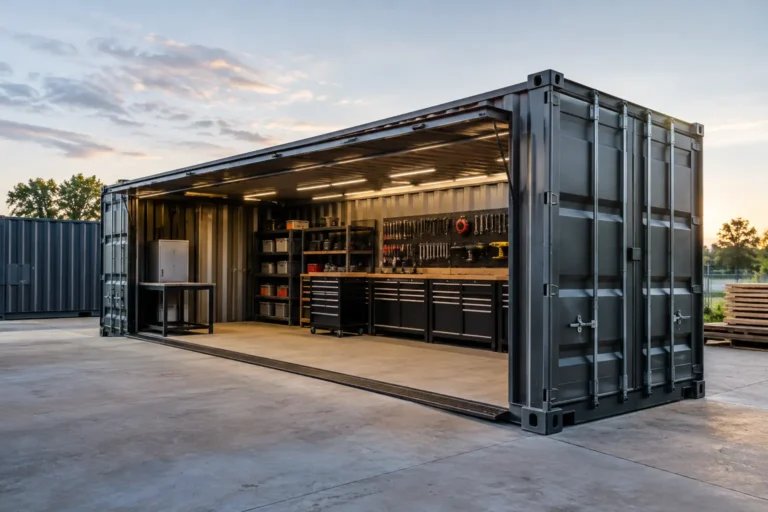
Services available to LA buyers include standard container sales in 20-foot and 40-foot lengths, high cube shipping containers with an extra foot of interior height (9’6″ total), container offices, refrigerated units, and open-top containers for oversized cargo. Some sellers also offer basic modifications like roll-up door installations, ventilation, and interior shelving.
Location matters significantly for two reasons: delivery cost and site access. A buyer in downtown LA or Hollywood will face tighter delivery constraints than someone in Commerce or the Inland Empire. Tilt-bed trucks, which are the most common delivery method for single containers, need roughly 100 feet of straight-line clearance and adequate overhead space for power lines and tree branches. Neighborhoods like Silver Lake, Echo Park, and parts of the Hollywood Hills can present real challenges for container placement due to narrow streets and steep grades.
The industrial corridors along the 710 freeway, the warehouse districts in Vernon and the City of Industry, and the commercial zones in Torrance and Carson are where container deliveries tend to go smoothly. If you’re placing a container at a residential property in a denser neighborhood, you’ll want to confirm delivery access before committing to a purchase. Lease Lane Containers provides delivery planning guidance that covers turning radius, overhead clearance, and site preparation so you can avoid costly delivery failures.
Top shipping containers for sale Options in Los Angeles
Budget-Friendly: Wind and Watertight Containers
Wind and watertight (WWT) containers are the most affordable option, typically priced between $1,500 and $2,800 for a 20-foot unit in the LA market. These containers have cosmetic wear: dents, surface rust, and faded paint are standard. However, they remain structurally sound and keep water out, making them suitable for basic storage of tools, equipment, seasonal inventory, and household items.
WWT containers work best for buyers who need functional storage without caring about appearance. A contractor storing lumber and power tools on a jobsite in Downey doesn’t need a pristine container. The trade-off is that door seals may be worn, floors could show scuffing, and you might find minor corrosion around the bottom rails. Always inspect the door gaskets and check for light penetration inside with the doors closed.
Mid-Range: Cargo Worthy Containers
Cargo worthy (CW) containers have passed a current CSC inspection, meaning they’re certified for international ocean transport. In LA, these typically run $2,200 to $3,800 for a 20-foot unit and $3,000 to $5,000 for a 40-foot unit. They’re in better overall condition than WWT containers, with functional door hardware, intact floor panels, and no structural damage.
This tier is the sweet spot for most buyers. Small businesses in areas like the Arts District or Culver City use cargo worthy containers for retail pop-ups, overflow inventory, and workshop space. Farms and rural properties in the outskirts of LA County, toward Lancaster or Palmdale, often choose this grade for equipment and feed storage. If you’re planning any modifications, starting with a cargo worthy container gives you a better foundation. You can compare container grades and conditions to see what’s currently available in each tier.
Premium: One-Trip Containers
One-trip containers are manufactured overseas, typically in China, loaded with cargo for a single voyage, and then sold upon arrival. They’re essentially new. Expect to pay $4,200 to $5,500 for a 20-foot one-trip unit and $5,500 to $7,000 for a 40-foot high cube in the Los Angeles market.
These containers feature factory-fresh paint, pristine marine-grade plywood flooring (typically 28mm Apitong or bamboo), and perfect door seals. They’re the right choice for container offices, retail builds, or any application where appearance and long-term durability matter. A restaurant owner building a container bar concept in Venice Beach or a tech startup creating modular office space in El Segundo would want one-trip containers as their starting point.
How to Choose the Right shipping containers for sale in Los Angeles
Picking the right container comes down to five practical factors, and getting any one of them wrong can turn a straightforward purchase into an expensive headache.
Match the Container to Your Use Case
A 20-foot container provides roughly 160 square feet of interior space and holds about 1,170 cubic feet of cargo. A 40-foot container doubles that. If you’re storing a vehicle, you need a 40-foot minimum. For household storage during a renovation, a 20-foot container handles most situations. High cube shipping containers add 12 inches of vertical clearance, which matters for shelving systems, standing workspace, or any build-out with interior framing and insulation.
Verify the Container Grade
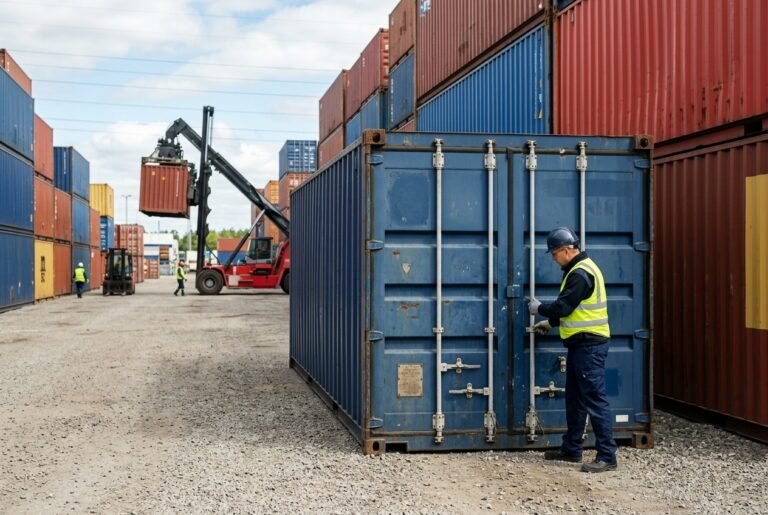
Don’t rely on photos alone. The three standard grades you’ll encounter are one-trip, cargo worthy, and wind and watertight. Each carries specific expectations about structural integrity, cosmetic condition, and remaining service life. Ask sellers for the CSC plate details on cargo worthy units and request multiple photos showing all four sides, the interior floor, the roof, and close-ups of the door seals and locking bars. Lease Lane Containers offers transparent grading guidance that explains exactly what to expect from each condition level.
Confirm Delivery Access Before You Buy
This is where LA buyers run into the most problems. Measure your delivery site carefully. A standard tilt-bed truck carrying a 40-foot container needs at least 100 feet of clear, level ground for offloading. Overhead clearance should be a minimum of 14 feet. Check for low-hanging power lines, tree branches, and any gates or fences that could block access.
If your property is on a hillside in areas like Mount Washington or the Hollywood Hills, a crane delivery might be necessary, which can add $1,500 to $3,000 to your total cost. Flat commercial lots in the Valley or Inland Empire are far simpler.
Check Local Permit Requirements
The City of Los Angeles requires permits for shipping containers placed on residential and commercial properties in most cases. Zoning regulations vary by neighborhood, and unincorporated areas of LA County may have different rules than the city proper. Contact the Los Angeles Department of Building and Safety (LADBS) at (213) 482-0000 or visit their website to verify permit requirements for your specific address. Some areas allow temporary placement without permits for construction projects, but permanent placement almost always requires approval.
Watch for Red Flags
Avoid sellers who won’t provide photos of the specific container you’re purchasing, refuse to disclose the container grade, or quote prices dramatically below market rates. A 40-foot container listed at $1,200 in the LA market is either in terrible condition or doesn’t exist. Legitimate sellers will provide the container’s unique BIC code (the alphanumeric identifier on every container), current photos, and clear terms on delivery and returns.
Los Angeles shipping containers for sale Market in 2026
The LA container market in 2026 reflects broader shifts in both global shipping patterns and local construction trends. Container prices peaked nationally in late 2021 and early 2022 during the supply chain disruptions, with some 40-foot units selling for over $10,000. Prices have since corrected substantially, and the LA market has stabilized with used 40-foot containers averaging $2,800 to $4,500 depending on condition.
Demand in Los Angeles remains strong across several sectors. The construction industry continues to drive purchases for jobsite storage, particularly as large residential and mixed-use developments expand across neighborhoods like Playa Vista, Inglewood near the SoFi Stadium corridor, and the ongoing LA Metro transit projects. Small businesses, especially in food service and retail, are using containers for pop-up concepts and auxiliary storage as commercial rents in areas like Santa Monica and West Hollywood continue to climb.
Seasonal patterns affect the LA market differently than colder climates. There’s no winter slowdown in construction activity, so demand stays relatively consistent year-round. However, the summer months tend to see slightly higher prices due to increased construction activity and homeowner projects. Buying in January or February can sometimes yield better pricing and faster delivery.
California’s regulatory environment adds a layer of complexity. The California Building Code requires that permanently placed containers meet specific structural and fire-resistance standards. Assembly Bill 1266, which took effect in recent years, streamlined permitting for accessory dwelling units (ADUs) built from shipping containers in certain jurisdictions, though LA’s implementation has been uneven. Buyers planning container homes or ADUs should consult with a local architect or contractor familiar with LA’s specific requirements.
Compared to the rest of California, Los Angeles offers the best combination of supply, competitive pricing, and delivery infrastructure. San Francisco and San Diego have smaller inventories and higher average prices due to less direct port access and tighter zoning restrictions. The Inland Empire benefits from lower delivery costs for buyers east of the I-15 corridor but has fewer sellers with on-the-ground inventory.
Los Angeles shipping containers for sale FAQ
How much does a shipping container cost in Los Angeles?
A used 20-foot shipping container in wind and watertight condition typically costs $1,500 to $2,800. Cargo worthy units run $2,200 to $3,800. One-trip 20-foot containers range from $4,200 to $5,500. For 40-foot units, add roughly 40% to 60% to these figures. Delivery within the LA basin usually adds $200 to $600 depending on distance from the seller’s yard.
Do I need a permit to place a shipping container on my property in LA?
In most cases, yes. The City of Los Angeles requires building permits for containers placed on residential and commercial properties. Temporary construction storage may be exempt for limited periods, but check with LADBS at (213) 482-0000 to confirm. Unincorporated LA County areas and neighboring cities like Burbank, Glendale, and Pasadena each have their own zoning rules.
How long does delivery take?
Most LA-area deliveries happen within 3 to 10 business days after order confirmation. Rush delivery is sometimes available for an additional fee. The timeline depends on inventory availability, delivery distance, and scheduling with the trucking company.
What size container should I get?
For most residential storage needs, a 20-foot container is sufficient. It holds the equivalent of a one-bedroom apartment’s worth of furniture and boxes. Contractors and businesses typically prefer 40-foot containers for the additional space. If ceiling height matters for your application, choose a high cube shipping container with 9’6″ exterior height instead of the standard 8’6″.
Can I place a container on a dirt or gravel surface?
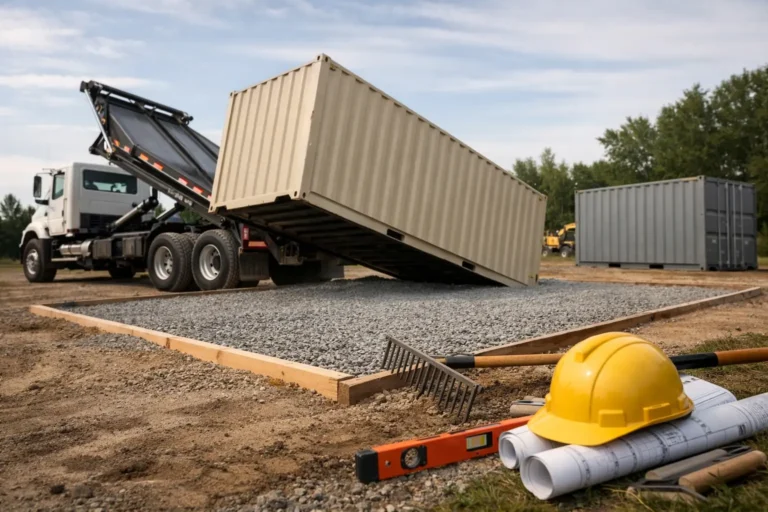
Yes, but proper site preparation matters. A level gravel pad at least 4 inches deep is the minimum recommendation. Placing a container directly on bare soil can lead to moisture buildup, uneven settling, and accelerated corrosion along the bottom rails. Concrete piers or railroad ties at the four corners provide better long-term support and airflow underneath the container.
What should I inspect on a used shipping container before buying?
Check the door operation first: both doors should swing freely and seal tightly. Look at the roof for dents or punctures that could allow water entry. Examine the floor for soft spots, especially near the door end where moisture accumulates. Inspect the bottom rails and corner castings for significant rust or structural damage. Step inside, close the doors, and look for any light coming through the walls or ceiling.
Get shipping containers for sale in Los Angeles Today
If you’ve read this far, you have a solid understanding of what the LA container market looks like in 2026, what different grades cost, and what to watch for during the buying process. The next step is straightforward: determine your size and grade requirements, confirm your delivery site meets access specifications, and check local permit requirements with LADBS before placing an order.
Have your property address, desired container size, and preferred condition grade ready when you contact sellers. This speeds up the quoting process and helps you get accurate delivery pricing. If you’re unsure about site access, take photos or video of your delivery path, including any turns, gates, overhead lines, and the final placement spot.
Lease Lane Containers, based in Raleigh, North Carolina, delivers containers nationwide and provides buying guidance that helps you compare sizes, grades, and pricing before committing. Whether you’re in Torrance, Pasadena, or out in the Inland Empire, you can browse available inventory to see current container options and find the right fit for your project. If you have questions about delivery planning, grading, or which container suits your specific use case, contact us for straightforward guidance.
Final Checklist
Before purchasing a shipping container in Los Angeles, run through these steps:
- Determine your required container size: 20-foot, 40-foot, or 40-foot high cube
- Choose your condition grade: one-trip, cargo worthy, or wind and watertight
- Measure your delivery site for clearance: 100 feet minimum for tilt-bed, 14 feet overhead
- Check for overhead power lines, tree branches, and narrow access points
- Prepare a level surface: gravel pad, concrete piers, or railroad ties
- Contact LADBS at (213) 482-0000 to verify permit requirements for your address
- Request specific container photos, including the CSC plate and BIC code
- Get a written quote that includes delivery cost and any offloading fees
- Confirm the seller’s return or dispute policy before finalizing payment
- Schedule delivery for a time when you or a representative can be on-site to direct placement