Best shipping containers for sale in Chicago, Illinois | 2026 Guide
Table of Contents
- Table of Contents
- Chicago shipping containers for sale Quick Facts
- shipping containers for sale in Chicago: What You Need to Know
- Top shipping containers for sale Options in Chicago
- Budget-Friendly: Wind and Watertight (WWT) Containers
- Mid-Range: Cargo Worthy (CW) Containers
- Premium: One-Trip Containers
- How to Choose the Right shipping containers for sale in Chicago
- Verify What You Are Actually Buying
- Red Flags to Watch For
- Site Prep and Delivery Planning
- Chicago shipping containers for sale Market in 2026
- Chicago shipping containers for sale FAQ
- How much does a shipping container cost in Chicago in 2026?
- Do I need a permit to put a shipping container on my property in Chicago?
- How long does delivery take?
- Can I inspect a container before buying?
- What size container do most Chicago buyers choose?
- What should I put under the container?
- Get shipping containers for sale in Chicago Today
- Final Checklist
Table of Contents
- Chicago Shipping Containers for Sale: Quick Facts
- Shipping Containers for Sale in Chicago: What You Need to Know
- Top Shipping Container Options in Chicago
- How to Choose the Right Shipping Container in Chicago
- Chicago Shipping Container Market in 2026
- Chicago Shipping Containers for Sale FAQ
- Get Shipping Containers for Sale in Chicago Today
- Final Checklist
Chicago has always been a city that moves things. From the rail yards that built the Midwest to the sprawling industrial corridors along the South Side, this is a place where logistics and practical infrastructure are woven into daily life. That same infrastructure makes it one of the strongest markets in the country for buying shipping containers, whether you need on-site storage for a construction project in Lincoln Park, a mobile workshop near the Back of the Yards, or overflow inventory space for a small business operating out of Pilsen. The challenge is not finding containers for sale in the Chicago area: it is finding the right one at a fair price, in the condition you actually need, with delivery that works for your specific site. Pricing shifts by season, container grades vary wildly between suppliers, and delivery logistics in a dense metro area require real planning. This 2026 guide breaks down what Chicago buyers should know before spending a dollar, from typical costs and container grades to site prep, permits, and the questions that separate a smart purchase from an expensive headache. If you are comparing shipping container sizes or trying to understand what “cargo worthy” actually means for your project, the details here will save you time and money.
Chicago shipping containers for sale Quick Facts
Before you start calling suppliers or browsing listings, here are the numbers and details that matter most for Chicago buyers in 2026.
- Typical pricing for a 20-foot used shipping container in the Chicago metro ranges from $2,200 to $3,800, depending on condition and grade. A 40-foot used container generally falls between $2,800 and $5,200. One-trip containers (often called “new”) run $4,500 to $6,500 for a 20-foot and $5,500 to $8,000 for a 40-foot unit.
- Delivery lead times in the Chicago area average 5 to 14 business days from order confirmation, though availability of specific grades can push that timeline out during peak construction season (April through October).
- Service area coverage is broad: most suppliers delivering to Chicago can reach the full metro, including suburbs like Naperville, Schaumburg, Joliet, and Aurora. Delivery fees within a 50-mile radius of central Chicago typically range from $250 to $600 depending on the truck type required.
- What sets the Chicago market apart is access. The city’s position as a major intermodal hub means container inventory flows through regularly, keeping prices competitive compared to smaller Midwest cities. Buyers here benefit from proximity to massive container depots near the rail yards on the South Side and in the southwest suburbs.
These figures give you a baseline. The rest of this guide explains how to use them.
shipping containers for sale in Chicago: What You Need to Know
Chicago’s shipping container market is shaped by the city’s identity as a transportation crossroads. Containers arrive by rail from West Coast ports, cycle through intermodal yards, and become available for resale once they’ve completed their shipping life. This constant flow means Chicago buyers typically have access to better inventory selection and more competitive pricing than buyers in cities farther from major rail corridors.
The services available go well beyond simple box sales. Chicago-area suppliers offer standard dry storage containers in 20-foot and 40-foot lengths, high cube shipping containers with an extra foot of interior height (9’6″ versus the standard 8’6″), container offices, and specialty units with side doors or double-door configurations. Some suppliers also handle basic modifications like adding ventilation, shelving, or roll-up doors before delivery.
Location matters more than most buyers realize. A contractor working on a tight lot in Wicker Park faces completely different delivery constraints than a farm operation in Will County. Urban Chicago sites often require tilt-bed delivery trucks because there is no room for a chassis to roll a container off. Suburban and rural sites may have more space but still need to account for overhead power lines, soft ground, and turning radius. Lease Lane Containers provides delivery planning guidance that covers access dimensions, clearance needs, and foundation options: details that prevent costly delivery failures.
Neighborhoods like the West Loop, Bridgeport, and Logan Square see heavy demand from small businesses using containers for inventory overflow and pop-up retail storage. Industrial corridors along Cicero Avenue and in the Clearing area remain popular for contractors and logistics operations that need multiple units on-site. The South Side, particularly near the Norfolk Southern and BNSF intermodal yards, is where much of the container inventory originates before being sold to end buyers.
Top shipping containers for sale Options in Chicago
Not every buyer needs the same container, and not every container suits every budget. Here is how the options break down for Chicago residents and businesses in 2026.
Budget-Friendly: Wind and Watertight (WWT) Containers
Wind and watertight containers are the entry point for buyers who need functional storage without cosmetic perfection. These units have visible wear: surface rust, dents, patched areas, and faded paint. But they hold up against rain, snow, and wind, which is what matters for most storage applications.
- 20-foot WWT: $2,200 to $2,800
- 40-foot WWT: $2,800 to $3,600
Best for: seasonal equipment storage, agricultural use, overflow inventory on construction sites, and rural property owners who need a secure, dry space. Chicago’s freeze-thaw cycles mean you should inspect door seals carefully on any WWT unit. A container that passes inspection in July might leak by February if the gaskets are marginal.
Mid-Range: Cargo Worthy (CW) Containers
Cargo worthy containers meet the structural and weatherproofing standards required for international ocean transport. They are in better overall shape than WWT units: fewer dents, intact floor boards, and functioning door hardware. Understanding container grades helps you avoid paying cargo worthy prices for wind and watertight quality.
- 20-foot CW: $2,800 to $3,800
- 40-foot CW: $3,500 to $5,200
Best for: small businesses needing presentable on-site storage, contractors who move containers between job sites, and anyone who may want to resell the unit later. Cargo worthy containers hold resale value better because they carry a current CSC plate (Container Safety Convention), which matters if the next buyer needs to ship internationally.
Premium: One-Trip Containers
One-trip containers have made a single ocean voyage from the manufacturing facility (typically in China) to a U.S. port. They arrive in near-new condition: minimal cosmetic wear, fresh paint, intact flooring, and factory-original door seals. These are the best option for projects where appearance, longevity, or modification potential matters.
- 20-foot one-trip: $4,500 to $6,500
- 40-foot one-trip: $5,500 to $8,000
- 40-foot high cube one-trip: $6,000 to $8,500
Best for: container offices, retail conversions, long-term storage where you want 20+ years of service life, and any project involving significant modification. The clean surfaces and consistent structure of one-trip containers make welding, cutting, and finishing work far easier and less expensive. Lease Lane Containers stocks both new and used shipping containers for buyers who want to compare options side by side.
Chicago-specific note: high cube containers are increasingly popular in the metro area because the extra interior height (9’6″) makes them more practical for container offices and workshop conversions. Standard-height units work fine for pure storage, but if you plan to spend time inside the container, that extra 12 inches of headroom is worth the price difference.
How to Choose the Right shipping containers for sale in Chicago
Buying a shipping container sounds simple until you are standing in front of three different quotes with three different grade descriptions and no clear way to compare them. Here is a decision framework that works for Chicago buyers.
Verify What You Are Actually Buying
Illinois does not require a specific license to sell shipping containers, which means the barrier to entry for suppliers is low. Some sellers are established depot operators with hundreds of units on-site. Others are brokers who have never touched a container and are marking up someone else’s inventory by 15% to 25%.
Ask every supplier these questions before placing an order:
- Where is the container currently located? (A container sitting in a Chicago-area depot can be inspected in person. One “in transit” from another state cannot.)
- What is the exact grade: WWT, CW, or one-trip? Get this in writing.
- Can you provide photos of the specific unit I am purchasing, not stock photos?
- What does the delivery price include: drop-off only, or placement to a specific spot on my property?
- What is your return or dispute policy if the container arrives in worse condition than described?
Red Flags to Watch For
Prices that seem dramatically below market (a 40-foot one-trip container for $3,000, for example) almost always indicate a bait-and-switch, where the unit that arrives is a lower grade than what was advertised. Suppliers who refuse to provide specific-unit photos or who cannot tell you the container’s current depot location are worth avoiding.
Watch for vague grade descriptions like “good condition” or “storage quality.” These are not industry-standard terms and usually mean the seller is obscuring the container’s actual grade. Stick with suppliers who use standard terminology: one-trip, cargo worthy, or wind and watertight.
Site Prep and Delivery Planning
Chicago’s urban density creates real delivery challenges. A standard tilt-bed truck needs approximately 100 feet of straight-line space to slide a 40-foot container off the back. If your site does not have that, you will need a crane or a specialized roll-off truck, both of which add $300 to $800 to the delivery cost.
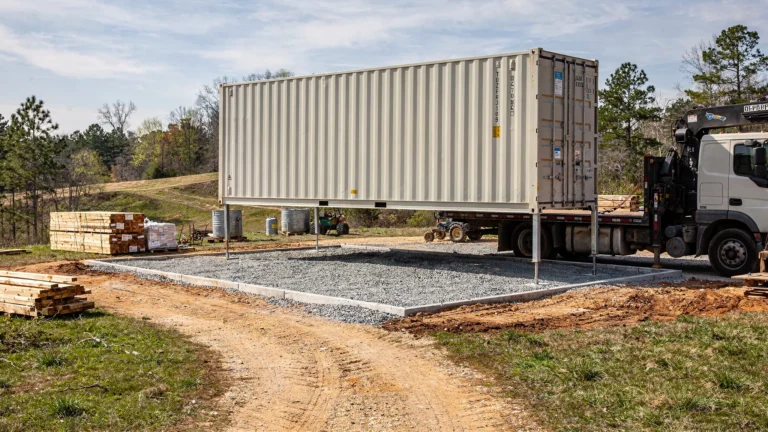
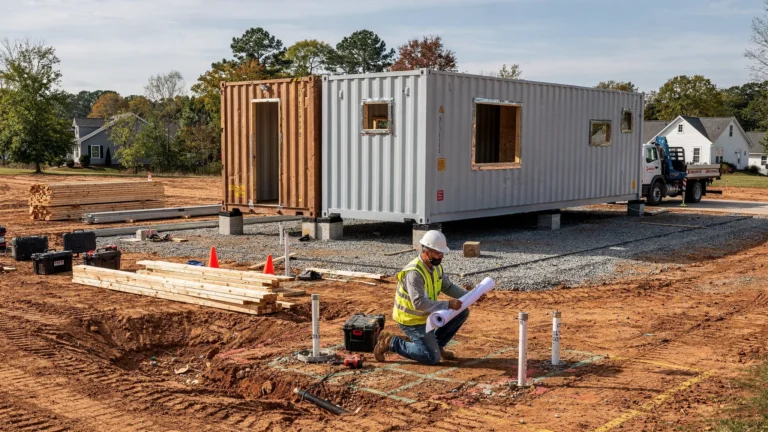
The foundation matters too. Placing a container directly on bare soil in Chicago invites problems: the freeze-thaw cycle will shift the container, and moisture will accelerate corrosion on the bottom rails. A gravel pad (4 to 6 inches of compacted crushed stone) is the minimum recommended foundation. For permanent installations, concrete piers or a poured slab provide the best long-term stability.
Chicago shipping containers for sale Market in 2026
The Chicago container market in 2026 reflects broader national trends, but with local characteristics that buyers should understand.
Demand has been climbing steadily since 2023, driven primarily by three sectors: small business storage, residential property improvement, and construction site logistics. The construction boom along the Chicago River corridor and in neighborhoods like Bronzeville and Humboldt Park has kept job-site container demand high through the first half of 2026. Residential buyers, particularly in the outer suburbs and exurban areas like McHenry County and Kendall County, are purchasing containers for workshop space, equipment storage, and hobby buildings.
Pricing has stabilized after the volatility of 2021 through 2023, when global shipping disruptions caused container prices to spike by 40% to 60% above historical norms. In 2026, used container prices in Chicago sit roughly 10% to 15% above pre-pandemic levels, which is consistent with the national average. One-trip container pricing has come down more noticeably, dropping about 8% from 2024 peaks as manufacturing output from Chinese factories has increased.
Seasonal patterns are pronounced in Chicago. Prices and delivery wait times both climb between April and October, when construction activity peaks. Buying during the November-to-March window can save you 5% to 12% on the container itself and often means faster delivery because truck availability improves. The trade-off is that site prep (pouring gravel pads, for instance) is harder during winter months.
On the regulatory side, the City of Chicago requires permits for containers placed on residential property if they will remain for more than 30 days. Suburban municipalities vary: DuPage County communities tend to have stricter zoning rules around containers than Will or Kane County. Always check with your local building department before purchase. The Chicago Department of Buildings can be reached at (312) 744-3449 for permit questions within city limits.
Compared to the rest of Illinois, Chicago’s market benefits from higher inventory turnover and more supplier competition. Buyers in downstate markets like Springfield or Champaign often pay $200 to $500 more per unit due to longer delivery distances and fewer local depot options.
Chicago shipping containers for sale FAQ
How much does a shipping container cost in Chicago in 2026?
A 20-foot used shipping container in cargo worthy condition typically costs $2,800 to $3,800. A 40-foot used container runs $3,500 to $5,200. One-trip containers cost more: expect $4,500 to $6,500 for a 20-foot and $5,500 to $8,000 for a 40-foot. Delivery within the Chicago metro adds $250 to $600 depending on distance and truck type.
Do I need a permit to put a shipping container on my property in Chicago?
Within Chicago city limits, yes: any container remaining on residential property for more than 30 days requires a permit from the Chicago Department of Buildings. Commercial and industrial zones have different rules. Suburban municipalities set their own requirements, so contact your local zoning office before ordering. Some communities in Cook County prohibit containers on residential lots entirely.
How long does delivery take?
Most Chicago-area deliveries happen within 5 to 14 business days of order confirmation. During peak season (April through October), timelines can stretch to 2 to 3 weeks, especially for specific grades or sizes that are in high demand. Ordering during the off-season (November through March) typically means faster fulfillment.
Can I inspect a container before buying?
If the container is stored at a local depot in the Chicago area, most suppliers will allow in-person inspection. This is the best way to verify condition. If you are buying from a supplier who ships from out of state, request specific photos of the exact unit (not stock images) and get the grade confirmed in writing. Lease Lane Containers provides transparent grading guidance so buyers know exactly what each condition level means before committing.
What size container do most Chicago buyers choose?
The 40-foot high cube shipping container is the most popular choice for both commercial and residential buyers in the Chicago area. The 40-foot length provides approximately 320 square feet of floor space, and the high cube height (9’6″ exterior) gives enough interior clearance for shelving, workbenches, or standing-height use. Buyers with limited space or lighter storage needs often go with a 20-foot container instead.
What should I put under the container?
Never place a shipping container directly on bare soil in Chicago. The freeze-thaw cycle will cause the container to shift and settle unevenly, and ground moisture accelerates rust on the bottom cross-members. A compacted gravel pad (4 to 6 inches deep, extending 2 feet beyond the container footprint) is the most common and cost-effective foundation. For permanent installations, concrete piers under the four corner castings provide excellent stability.
Get shipping containers for sale in Chicago Today
If you have read this far, you have a solid understanding of what the Chicago container market looks like in 2026: the pricing benchmarks, the grade distinctions, the delivery logistics, and the permit requirements. The next step is straightforward.
Before you contact any supplier, have these details ready: the container size you need (20-foot or 40-foot, standard or high cube), the grade that fits your use case, your delivery address, and a basic understanding of your site access. Know whether a tilt-bed truck can reach your placement spot with 100 feet of clearance, or whether you will need crane service. Know whether your municipality requires a permit. These details save time and prevent surprises on delivery day.
Lease Lane Containers, based in Raleigh, North Carolina with nationwide delivery including the Chicago metro, offers practical buying guidance that covers sizing, grading, and delivery planning. Their team helps you match the right container to your actual project rather than just selling you whatever is available.
Start by comparing your options. Browse available inventory to see current container sizes, grades, and pricing. If you have questions about delivery access, site prep, or which grade fits your situation, contact the team directly for straightforward guidance. Getting this right the first time costs nothing extra: getting it wrong almost always does.
Final Checklist
Use this before placing your order:
- Confirmed the container size and grade you need (one-trip, cargo worthy, or wind and watertight)
- Verified your site has adequate delivery access: turning radius, overhead clearance, and straight-line distance for the truck
- Checked local permit requirements with your municipality or the Chicago Department of Buildings at (312) 744-3449
- Prepared a foundation: minimum 4 to 6 inches of compacted gravel, or concrete piers for permanent placement
- Requested specific photos of the exact container you are purchasing (not stock images)
- Confirmed the delivery price and what it includes (drop-off versus specific placement)
- Obtained the grade and condition in writing from the supplier
- Compared at least two to three quotes to verify pricing is within the ranges listed in this guide