Best used shipping containers in Chicago, Illinois | 2026 Guide
Table of Contents
- Table of Contents
- Chicago Used Shipping Containers Quick Facts
- Used Shipping Containers in Chicago: What You Need to Know
- Top Used Shipping Containers Options in Chicago
- Budget-Friendly: Wind and Watertight Grade
- Mid-Range: Cargo Worthy Grade
- Premium: One-Trip Containers
- How to Choose the Right Used Shipping Containers in Chicago
- Verify the Supplier’s Credibility
- Ask These Questions Before You Buy
- Red Flags to Watch For
- Inspection Criteria for Used Units
- Chicago Used Shipping Containers Market in 2026
- Demand Trends
- Seasonal Patterns
- Regulatory Considerations
- How Chicago Compares to the Rest of Illinois
- Chicago Used Shipping Containers FAQ
- How much does a used shipping container cost in Chicago?
- Do I need a permit to place a shipping container on my property in Chicago?
- How long does delivery take?
- What size container should I get?
- Can I place a container in my backyard in the suburbs?
- What’s the difference between cargo worthy and wind and watertight?
- Get Used Shipping Containers in Chicago Today
- Final Checklist
Table of Contents
- Chicago Used Shipping Containers Quick Facts
- Used Shipping Containers in Chicago: What You Need to Know
- Top Used Shipping Containers Options in Chicago
- How to Choose the Right Used Shipping Containers in Chicago
- Chicago Used Shipping Containers Market in 2026
- Chicago Used Shipping Containers FAQ
- Get Used Shipping Containers in Chicago Today
Chicago’s construction, logistics, and small business sectors run on practical infrastructure, and few assets deliver as much value per dollar as a used shipping container. Whether you need on-site storage for a Bridgeport renovation project, overflow inventory space for a warehouse operation near O’Hare, or a workshop shell on a rural lot outside the metro area, buying used is the fastest way to get a functional steel structure without overspending. This 2026 guide to finding the best used shipping containers in Chicago breaks down pricing, grades, delivery logistics, and the specific factors that make the Windy City market different from anywhere else in the Midwest. If you’re comparing container sizes and grades for the first time, you’ll find the decision framework here especially useful. The goal is straightforward: help you pick the right container, at the right price, and get it delivered without surprises.
Chicago Used Shipping Containers Quick Facts
The Chicago used container market is one of the most active in the Midwest, driven by proximity to major rail yards and intermodal hubs. Here’s what you need to know before you start shopping:
- Typical pricing for a 20 ft used shipping container in the Chicago area ranges from $1,800 to $3,500 depending on grade. A 40 ft unit runs between $2,200 and $5,000. One-trip containers (technically “new” with a single voyage) cost more, typically $4,500 to $6,500 for a 40 ft unit.
- Delivery lead times average 5 to 14 business days from order confirmation, though availability from nearby depots can shorten this to under a week during slower months.
- Service area coverage extends well beyond Cook County. Most reputable suppliers deliver throughout the greater Chicagoland region, including DuPage, Will, Lake, Kane, and McHenry counties, with some offering statewide shipping across Illinois.
- What sets local providers apart is depot access. Chicago sits at the intersection of six Class I railroads, meaning container inventory turns over frequently. This gives buyers more options across grades and conditions than markets farther from intermodal infrastructure.
Condition matters as much as size. A cargo worthy container that’s been inspected and certified will hold up for years of storage use, while a wind and watertight unit may show more cosmetic wear but still keeps weather out reliably.
Used Shipping Containers in Chicago: What You Need to Know
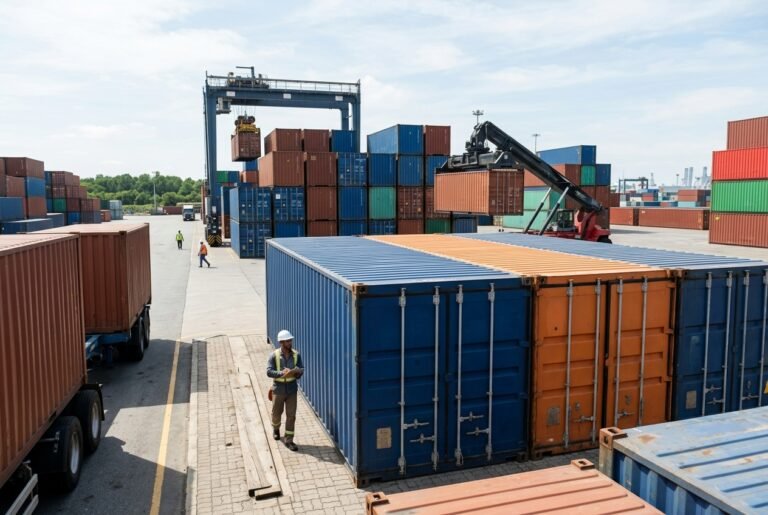
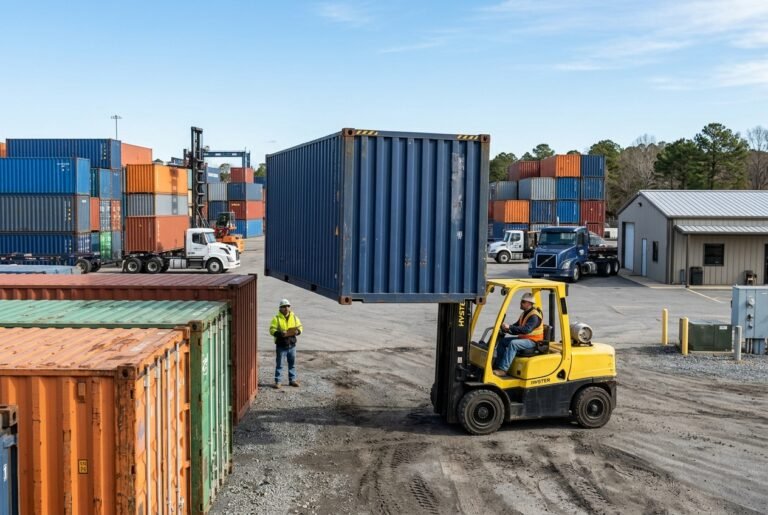
Chicago’s position as a freight crossroads shapes everything about its used container market. The city’s intermodal facilities in places like Bedford Park, Hodgkins, and Elwood process thousands of containers monthly. Many of these units get retired from active shipping duty and enter the resale market right here, which means Chicago buyers often get first access to recently decommissioned inventory.
The services available go well beyond simple buy-and-deliver transactions. Chicago-area buyers can find standard dry storage containers in 20 ft and 40 ft lengths, high cube shipping containers with an extra foot of interior height (9 ft 6 in versus the standard 8 ft 6 in), open-top units for equipment loading, and side-opening containers for walk-in access. Some suppliers also offer containers pre-modified with roll-up doors, ventilation, or basic electrical work.
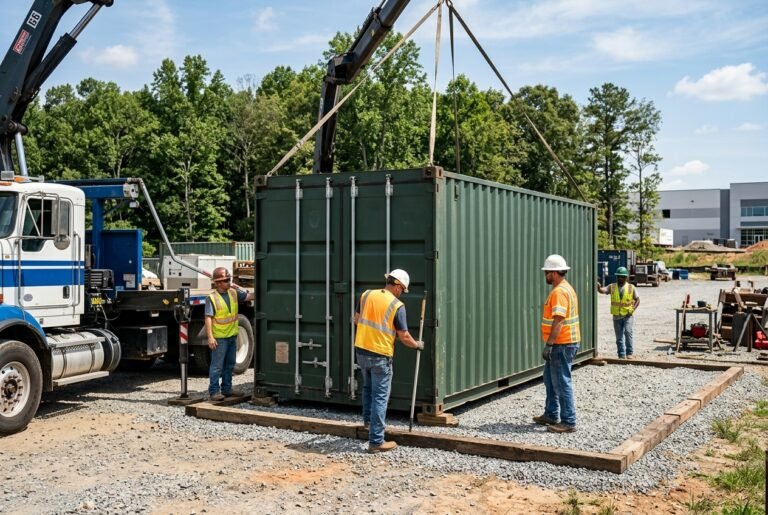
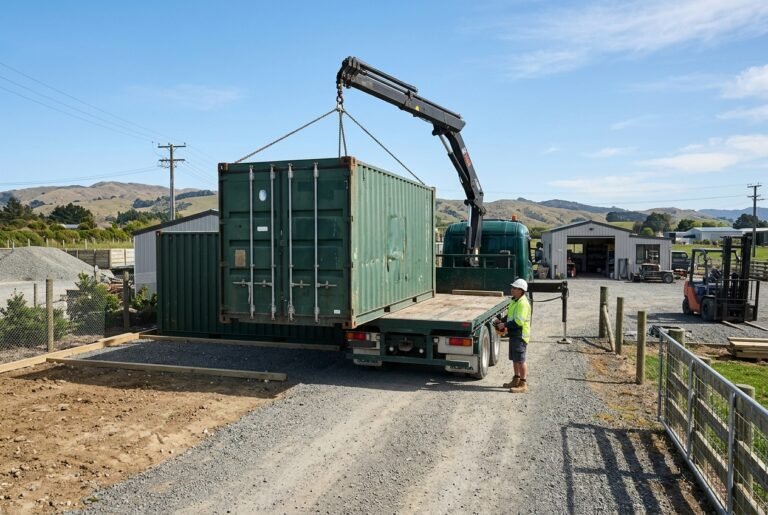
Location matters for two practical reasons. First, proximity to a depot directly affects your delivery cost. A container shipped from a yard in Joliet to a job site in Naperville costs significantly less than one trucked from a depot in St. Louis or Indianapolis. Second, Chicago’s urban density creates real delivery challenges. Narrow alleys in neighborhoods like Pilsen, Logan Square, and Wicker Park demand careful delivery planning. You need to confirm overhead clearance (minimum 14 ft for most tilt-bed trucks), turning radius (a standard chassis needs roughly 60 ft to make a 90-degree turn), and ground conditions at the placement site.
For buyers on the South Side or in industrial corridors along the Calumet River, access is generally easier with wider streets and more open lots. Suburban buyers in areas like Schaumburg, Orland Park, or Evanston typically have fewer obstacles, but HOA restrictions and municipal codes can add a layer of complexity.
Top Used Shipping Containers Options in Chicago
Not every buyer needs the same thing, and the Chicago market offers enough variety to match different budgets and use cases. Here’s how the options break down by tier.
Budget-Friendly: Wind and Watertight Grade
These containers have visible wear: surface rust, dents, patched panels, and older door gaskets. They’ve been retired from cargo shipping but still keep rain, snow, and wind out. Expect to pay $1,800 to $2,500 for a 20 ft unit and $2,200 to $3,200 for a 40 ft unit.
Best for: seasonal storage, equipment lockup on construction sites, agricultural use on properties outside the metro area, and situations where appearance doesn’t matter. If you’re storing tools on a job site in Cicero or keeping feed dry on a farm in DeKalb County, this grade does the job.
Mid-Range: Cargo Worthy Grade
Cargo worthy containers have been inspected and certified as structurally sound enough to be loaded onto a vessel for international shipping. Doors seal properly, floors are intact, and the corrugated steel panels are free of holes. Pricing in Chicago typically runs $2,500 to $3,500 for a 20 ft and $3,200 to $4,500 for a 40 ft.
Best for: longer-term storage, small business inventory, retail pop-up shells, and any application where you want a container that looks presentable and performs reliably for 10+ years. Lease Lane Containers provides transparent grading guidance on cargo worthy versus wind and watertight conditions so buyers can match the grade to the job without overpaying.
Premium: One-Trip Containers
One-trip containers were manufactured overseas (usually in China), loaded with cargo for a single voyage, and then sold upon arrival in the U.S. They look nearly new: clean paint, minimal wear, factory-fresh door hardware, and marine-grade plywood flooring. Prices range from $3,800 to $5,000 for a 20 ft and $4,500 to $6,500 for a 40 ft.
Best for: container offices, retail builds, residential projects, and any application where appearance and long-term durability are priorities. If you’re building a container workspace in the West Loop or a backyard studio in Oak Park, one-trip is the right starting point.
Chicago-specific availability note: one-trip inventory fluctuates with international shipping patterns. In 2025 and into 2026, supply has been relatively steady due to increased container manufacturing, but popular sizes like the 40 ft high cube can sell out quickly during spring and summer.
How to Choose the Right Used Shipping Containers in Chicago
Picking the right container isn’t complicated, but it does require asking the right questions upfront. Here’s a practical decision framework.
Verify the Supplier’s Credibility
Illinois doesn’t require a specific license to sell shipping containers, which means the barrier to entry is low. Look for suppliers who can provide clear photos of the actual unit you’re buying (not stock images), offer transparent grading descriptions, and have a physical business presence or verifiable track record. Ask whether the container has been inspected and whether they provide any documentation of its condition.
Ask These Questions Before You Buy
- What grade is this container, and what does that mean for its condition? A reputable supplier will explain the difference between cargo worthy and wind and watertight without hesitation.
- Can I see photos of the specific unit, including the interior, floor, door seals, and roof?
- What’s the total delivered price? Some sellers quote a low container price but add steep delivery fees. Get a single number that includes everything.
- What’s the delivery method: tilt-bed, roll-off, or chassis drop? This affects the site requirements.
- Is there a return policy or dispute process if the container arrives in worse condition than described?
Red Flags to Watch For
Avoid sellers who refuse to provide unit-specific photos, quote prices that seem dramatically below market (a 40 ft cargo worthy container for $1,500 should raise questions), or can’t explain their grading system. Be cautious of listings on general classifieds that lack business details or verifiable reviews.
Inspection Criteria for Used Units
If you have the option to inspect in person or receive detailed photos, check these areas: the roof for rust-through or standing water damage, the floor for soft spots or rot in the marine plywood, door gaskets for compression and seal quality, corner castings for cracks, and the undercarriage for structural corrosion. A container that looks rough on the outside but has solid structural bones is a better buy than one with fresh paint hiding compromised steel.
Lease Lane Containers offers container buying guidance that walks buyers through comparing sizes, grades, and pricing factors, which is especially helpful for first-time buyers trying to sort through Chicago-area options.
Chicago Used Shipping Containers Market in 2026
The Chicago container market in 2026 reflects broader national trends, but with a few local twists worth understanding.
Demand Trends
Demand for used shipping containers in the Chicago metro area has climbed steadily since 2023, driven by three factors: continued growth in small business storage needs, increased interest in container-based construction (particularly for ADUs and commercial pop-ups), and rising traditional warehouse rental costs. Industrial vacancy rates in Chicago dropped below 4% in late 2025, pushing more businesses toward container-based storage as a cost-effective alternative to leasing warehouse space at $8 to $12 per square foot annually.
Seasonal Patterns
Spring and summer are peak buying seasons. Construction activity ramps up across the metro area starting in April, and demand for job-site storage containers spikes accordingly. Prices during March through August can run 10% to 15% higher than winter months. If your timeline is flexible, buying in November through February often gets you better pricing and faster delivery.
Regulatory Considerations
Chicago’s zoning code treats shipping containers differently depending on location and use. In most residential zones, placing a container requires a permit, and some aldermanic offices enforce stricter rules than others. Industrial and commercial zones are generally more permissive. Cook County’s unincorporated areas and many suburban municipalities have their own codes, so always check with your local building department before purchasing.
The City of Chicago’s Department of Buildings can be reached at (312) 744-3449 for permit questions. Suburban buyers should contact their municipal planning department directly.
How Chicago Compares to the Rest of Illinois
Chicago consistently offers lower per-unit pricing than downstate markets like Springfield, Champaign, or Peoria, primarily because of depot proximity. A 40 ft cargo worthy container that costs $3,500 delivered in Chicago might run $4,200 to $4,800 delivered to a central Illinois location due to additional trucking distance. Buyers outside the metro area should factor in $2 to $4 per mile for delivery when budgeting.
Chicago Used Shipping Containers FAQ
How much does a used shipping container cost in Chicago?
A 20 ft wind and watertight container typically costs $1,800 to $2,500, while a 40 ft cargo worthy unit runs $3,200 to $4,500. One-trip containers in 40 ft high cube configurations range from $5,000 to $6,500. Delivery within the Chicagoland area usually adds $200 to $600 depending on distance from the depot.
Do I need a permit to place a shipping container on my property in Chicago?
In most cases, yes. The City of Chicago requires permits for containers placed on residential and many commercial properties. The specific requirements vary by zoning district. Contact the Department of Buildings or your alderman’s office before placing an order. In suburban Cook County and collar counties, rules vary by municipality: some require permits, others don’t for temporary placement under 30 or 60 days.
How long does delivery take?
Most Chicago-area deliveries happen within 5 to 14 business days after order confirmation. Inventory availability, delivery scheduling, and site readiness all affect timing. If your site needs grading, a gravel pad, or other prep work, build that into your timeline. Lease Lane Containers provides delivery planning support that covers access requirements, turning radius, overhead clearance, and placement logistics.
What size container should I get?
A 20 ft container (roughly 160 sq ft of floor space) works well for residential storage, small tool collections, or single-project job sites. A 40 ft container (roughly 320 sq ft) suits businesses with larger inventory, contractors running multi-trade sites, or anyone planning a conversion project. High cube variants add an extra foot of headroom, which matters for container offices or any space where people will stand and work inside.
Can I place a container in my backyard in the suburbs?
This depends entirely on your municipality. Some suburbs like Naperville and Arlington Heights have strict codes limiting container placement to commercial or industrial zones. Others, particularly in Will and McHenry counties, are more flexible. Always verify local zoning before purchasing.
What’s the difference between cargo worthy and wind and watertight?
Cargo worthy means the container has been inspected and certified as structurally fit for loaded ocean transport. Wind and watertight means it keeps weather out but may not meet the structural standards required for shipping. For static storage on your property, wind and watertight is often sufficient. For anything involving transport, resale, or long-term investment, cargo worthy is the better choice.
Get Used Shipping Containers in Chicago Today
Finding the right used shipping container in Chicago comes down to matching three things: the grade to your use case, the size to your space needs, and the delivery logistics to your site conditions. Buyers who get these three factors right avoid the most common headaches: overpaying for a grade they don’t need, underestimating delivery access requirements, or discovering permit issues after the container is already on a truck.
Start by confirming your site is ready. Measure your available space, check overhead clearance (14 ft minimum for tilt-bed delivery), verify that the delivery truck can access and turn around at your location, and call your local building department about permit requirements. Having this information ready before you contact a supplier saves time and prevents costly delivery failures.
The Chicago market gives you more options than most cities in the Midwest. Take advantage of that by comparing at least two or three suppliers, requesting photos of the specific unit, and getting all-inclusive delivered pricing in writing.
Final Checklist
- Confirm your required container size: 20 ft, 40 ft, or 40 ft high cube
- Determine the right grade for your use case: wind and watertight, cargo worthy, or one-trip
- Measure site dimensions and verify delivery access (turning radius, overhead clearance, ground conditions)
- Check local permit requirements with your municipality or the Chicago Department of Buildings
- Request unit-specific photos and an all-inclusive delivered price from your supplier
- Plan your foundation: level ground, gravel pad, or concrete piers depending on duration and use
If you’re ready to compare options, browse available inventory from Lease Lane Containers to see current container sizes, grades, and pricing. For questions about delivery logistics, site prep, or choosing the right container for your Chicago project, contact us directly for straightforward guidance from a team that handles this every day.