Current 40ft Shipping Container Prices in Raleigh, NC
Table of Contents
- Table of Contents
- Overview of the Raleigh Shipping Container Market
- Local Demand Drivers in the Research Triangle
- Current Price Ranges for 40ft Containers in North Carolina
- New vs. Used Unit Cost Comparisons
- Standard vs. High Cube Price Differences
- Factors Influencing Local Raleigh Pricing
- Proximity to the Port of Wilmington and Logistics Costs
- Condition Grades and Their Impact on Value
- Understanding One-Trip, Cargo Worthy, and Wind & Watertight
- Delivery and Site Preparation Costs in Wake County
- Tilt-Bed Trailer Requirements and Fees
- Raleigh Zoning and Permit Regulations for Storage Units
- Where to Buy: Local Raleigh Suppliers vs. National Brokers
- Strategic Tips for Securing the Best Local Rates
Table of Contents
- Overview of the Raleigh Shipping Container Market
- Local Demand Drivers in the Research Triangle
- Current Price Ranges for 40ft Containers in North Carolina
- New vs. Used Unit Cost Comparisons
- Standard vs. High Cube Price Differences
- Factors Influencing Local Raleigh Pricing
- Proximity to the Port of Wilmington and Logistics Costs
- Condition Grades and Their Impact on Value
- Understanding One-Trip, Cargo Worthy, and Wind & Watertight
- Delivery and Site Preparation Costs in Wake County
- Tilt-Bed Trailer Requirements and Fees
- Raleigh Zoning and Permit Regulations for Storage Units
- Where to Buy: Local Raleigh Suppliers vs. National Brokers
- Strategic Tips for Securing the Best Local Rates
If you’re pricing a 40ft shipping container in Raleigh, NC, you’ve probably noticed that quotes vary significantly from one supplier to the next. Some of that variation comes from the container’s condition grade, some from delivery logistics, and some from how close the seller sits to a major port. Raleigh’s position in the Southeast creates a specific pricing dynamic that doesn’t mirror what you’d see in a coastal city like Savannah or Norfolk. Understanding those local factors can save you hundreds, sometimes over a thousand dollars, on a single purchase. This guide breaks down what 40ft containers actually cost in the Raleigh area right now, what drives those prices, and how to make a smarter buying decision based on your specific project. Whether you’re a contractor staging materials on a job site, a small business owner managing inventory overflow, or a homeowner adding storage to your property, the numbers and details here are built around real market conditions in the Triangle and greater Wake County.
Overview of the Raleigh Shipping Container Market
Raleigh’s shipping container market has grown steadily over the past several years, driven by construction activity, population growth, and the expansion of small businesses across the Triangle. The city isn’t a port town, which means every container arriving here has already traveled by truck from a coastal depot, most commonly from the Port of Wilmington, roughly 150 miles southeast. That inland position adds a transportation layer to every purchase.
Still, Raleigh’s demand is strong enough to support both local container yards and national brokers who stage inventory within a few hours of the city. Buyers here typically have access to a reasonable selection of grades and sizes without the long wait times you might encounter in more remote parts of the state.
Local Demand Drivers in the Research Triangle
The Research Triangle’s economy is a mix of tech, healthcare, education, and construction. Each of those sectors generates container demand. Contractors use 40ft units for tool and material staging on commercial builds. Small businesses along Capital Boulevard and in warehouse districts near RDU use them for inventory storage when lease space gets expensive.
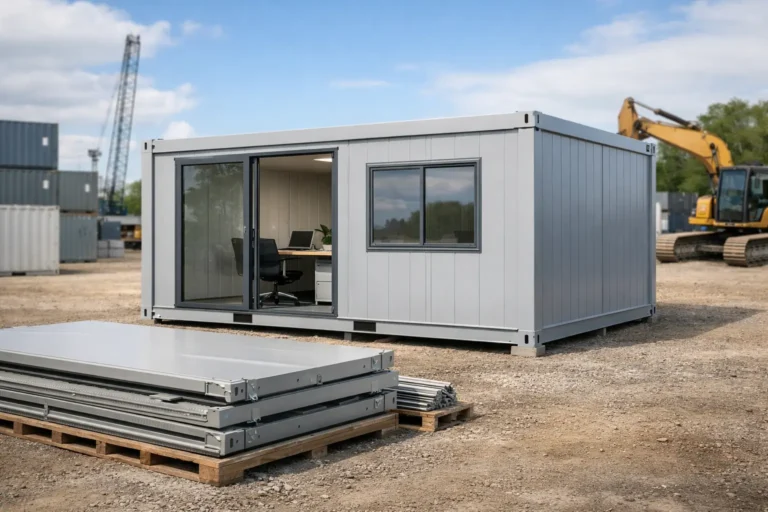
Residential buyers are a growing segment too. Homeowners in Wake, Durham, and Johnston counties are purchasing containers for backyard workshops, equipment storage, and even as the starting point for accessory dwelling unit conversions. Farm and rural property owners outside the Beltline frequently need large-capacity storage for tractors, feed, or seasonal equipment. All of this demand keeps a steady flow of containers moving through the Raleigh market.
Current Price Ranges for 40ft Containers in North Carolina
Pricing for a 40ft shipping container in the Raleigh area generally falls between $2,400 and $5,800, depending on the condition grade and whether you’re buying standard height or high cube. That’s a wide spread, so the specifics matter.
A used wind and watertight unit in fair cosmetic condition sits at the lower end. A one-trip container with minimal wear and original paint commands the higher end. North Carolina pricing tends to run slightly above what you’d find at a port city depot, reflecting the inland delivery cost baked into the price.
New vs. Used Unit Cost Comparisons
One-trip containers, often called “new,” have typically made a single ocean voyage loaded with cargo. They arrive with factory paint, minimal dents, intact rubber door seals, and clean interiors. Expect to pay between $4,200 and $5,800 for a 40ft one-trip unit delivered in the Raleigh metro area.
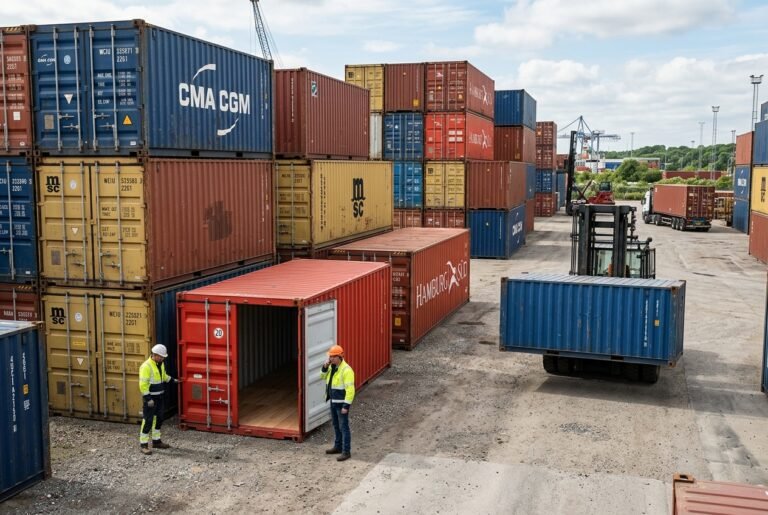
Used shipping containers span a much wider range. A cargo worthy unit with solid structural integrity but visible surface rust and some denting might run $2,800 to $3,600. Wind and watertight units, which are older and may have patches or heavier cosmetic wear, can drop to $2,400 to $3,000. If you’re planning a modification project like a container office or workshop, starting with a one-trip unit often saves money in the long run because you’ll spend less on prep and repairs.
Standard vs. High Cube Price Differences
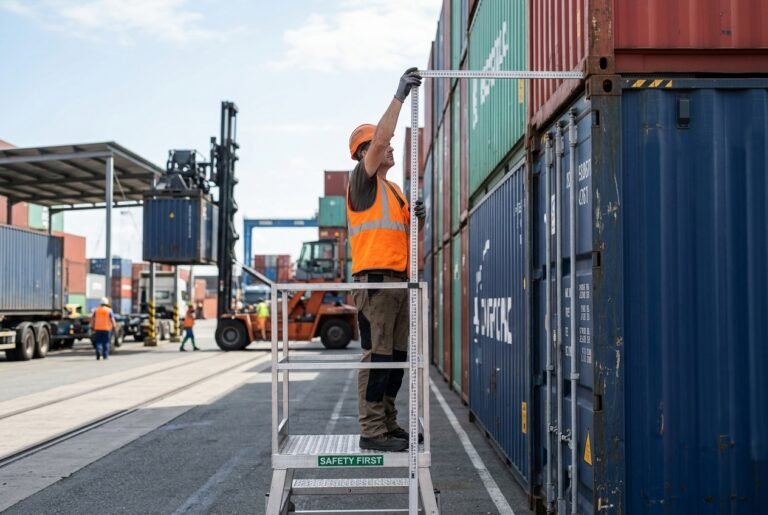
A standard 40ft container has an exterior height of 8 feet 6 inches, giving you roughly 7 feet 10 inches of interior clearance. A high cube shipping container adds an extra foot, bringing the exterior to 9 feet 6 inches and the interior to about 8 feet 10 inches. That additional headroom matters for shelving systems, overhead lighting, and general comfort if anyone will be working inside.
High cube units typically cost $200 to $600 more than their standard-height equivalents in the same condition grade. For most buyers in Raleigh, the high cube version is worth the premium. Contractors installing workbenches or racking systems particularly benefit from that extra clearance. If you’re comparing quotes, always confirm whether the price is for standard or high cube, because some sellers don’t specify upfront.
Factors Influencing Local Raleigh Pricing
Several factors push the 40ft shipping container price in Raleigh up or down beyond just the container’s age and condition. Seasonal demand plays a role: spring and summer construction seasons typically tighten supply and nudge prices higher. Global shipping trends also have an effect. When international freight rates spike, fewer containers get released into the domestic resale market, which constrains supply.
Local competition among suppliers matters too. Raleigh has enough buyer demand to attract both regional yards and national brokers, which generally keeps pricing competitive. But if you’re buying during a supply crunch or need a specific grade quickly, expect to pay closer to the top of the range.
Proximity to the Port of Wilmington and Logistics Costs
The Port of Wilmington is Raleigh’s closest major container port, sitting about 150 miles down I-40. Most containers sold in the Triangle originate from depots near Wilmington or, in some cases, from the Port of Virginia in Norfolk. Trucking a 40ft container from Wilmington to a Raleigh address typically adds $400 to $800 to the base cost, depending on the carrier, fuel prices, and exact delivery location.
Some suppliers include delivery in their quoted price while others list it separately. Always ask whether the quote is depot pickup or delivered. A container that looks $300 cheaper on paper might end up costing more once you add the freight charge. Suppliers like Lease Lane Containers, based right here in Raleigh, can often provide clearer delivery cost estimates because they’re already familiar with local routes, access challenges, and typical delivery distances across Wake County and surrounding areas.
Condition Grades and Their Impact on Value
Container condition is the single biggest factor affecting price, and it’s the area where buyers most often get confused or misled. The grading system isn’t regulated by a single authority, so terminology can vary between sellers. Knowing the three most common grades helps you compare quotes accurately.
Understanding One-Trip, Cargo Worthy, and Wind & Watertight
One-trip containers are the closest thing to new. They’ve made one ocean voyage, typically from a manufacturing facility in Asia to a U.S. port. Expect clean floors, intact original paint, and functioning door hardware. These are ideal for visible placement on commercial properties, modification projects, or any application where appearance and long remaining lifespan matter.
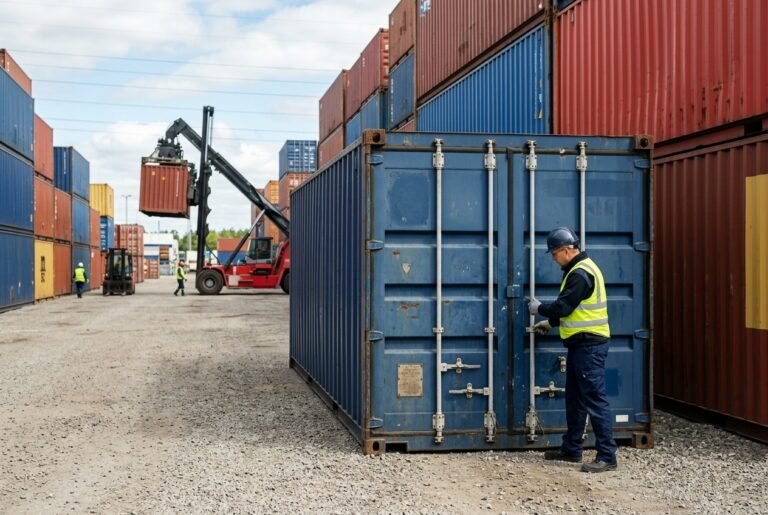
Cargo worthy containers have been certified for international ocean transport. They’re structurally sound, with working doors and no holes in the walls, roof, or floor. Cosmetically, they’ll show rust, scuffs, and dents from years of service. A cargo worthy unit is a solid choice for on-site storage, materials staging, or farm use where appearance is secondary to function.
Wind and watertight units keep weather out but may not meet the structural standards for ocean shipping. They’re the most affordable option and work well for dry storage on private property. Expect heavier cosmetic wear, possible weld patches, and older door seals. Lease Lane Containers provides transparent grading guidance so you know exactly what condition you’re getting before you commit.
Delivery and Site Preparation Costs in Wake County
Your container purchase price is only part of the total cost. Delivery and site prep can add $500 to $1,500 depending on your location and property conditions. In Wake County, most residential and commercial deliveries are straightforward, but a few variables can complicate things.
The delivery truck needs a clear path at least 12 feet wide and roughly 100 feet of straight-line space to slide the container off the trailer. Overhead obstructions like power lines, tree branches, and carport roofs must clear at least 15 feet for a high cube unit. Soft ground, steep grades, or tight turns can all delay or prevent delivery.
Tilt-Bed Trailer Requirements and Fees
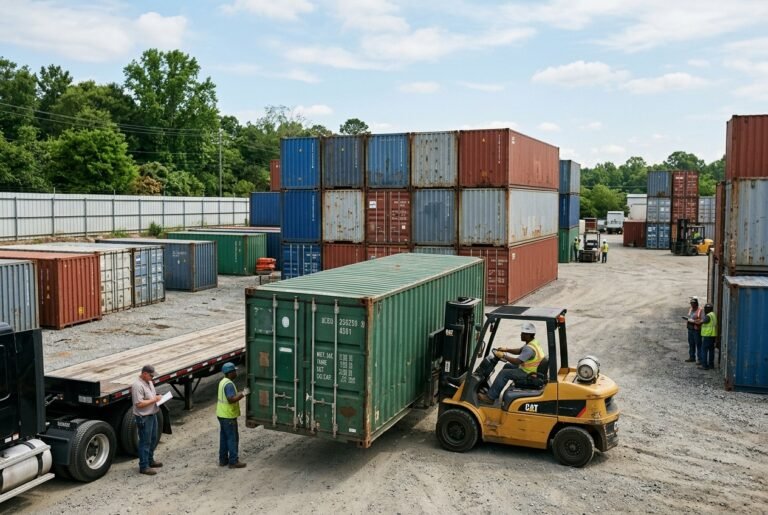
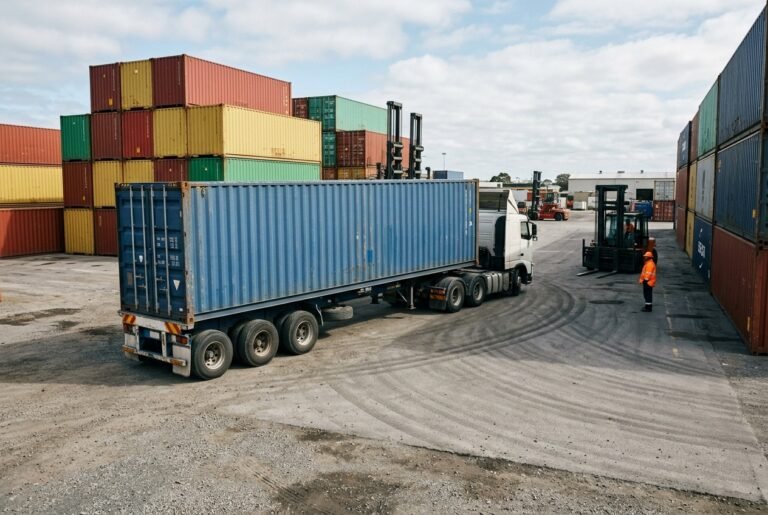
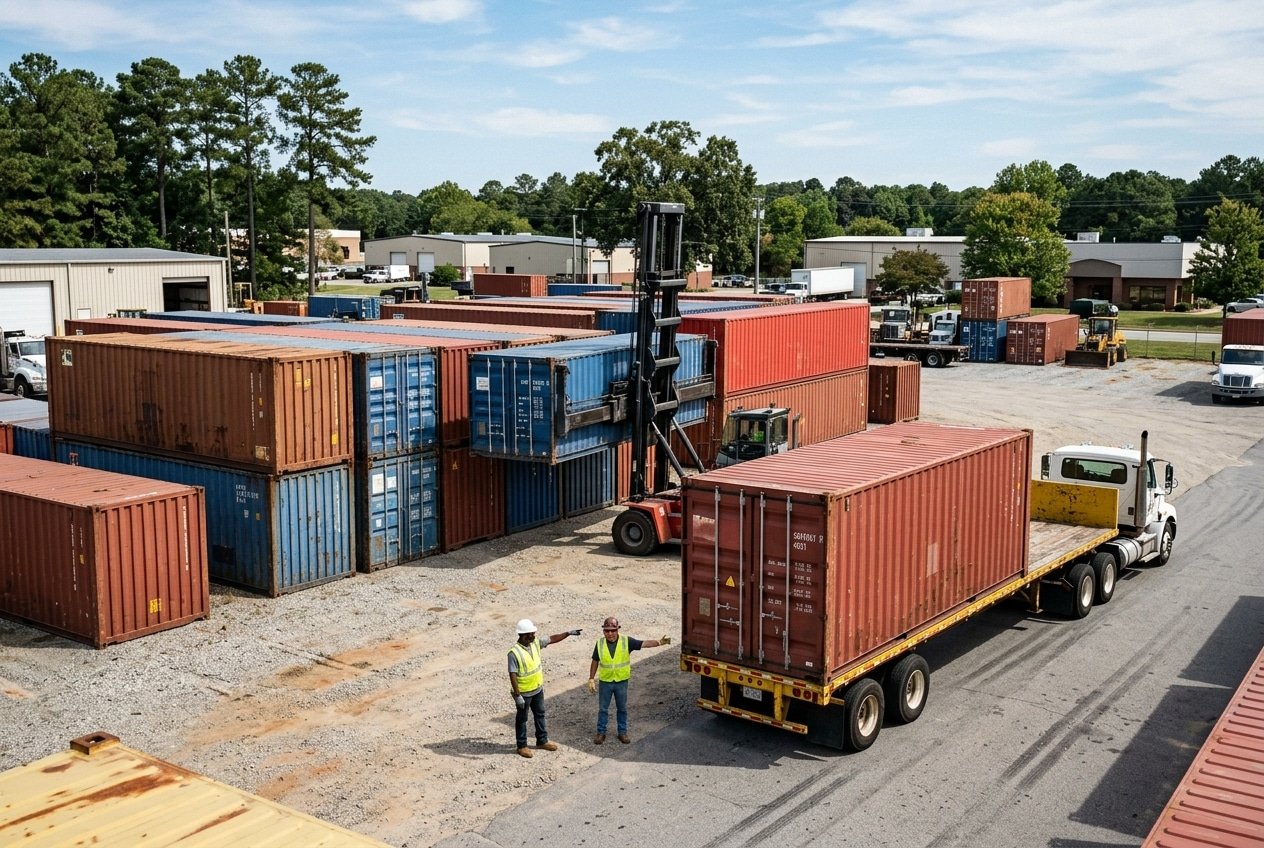
Most 40ft containers are delivered on tilt-bed trailers, which hydraulically tilt to slide the container onto the ground. This method requires a firm, level surface at the placement spot. If your site is unpaved, a compacted gravel pad at least 8 inches deep and extending 2 feet beyond the container footprint on each side is a good rule of thumb.
Delivery fees within 50 miles of a Raleigh depot typically run $350 to $700. Beyond that radius, expect mileage surcharges. Some suppliers charge extra for difficult access, such as narrow residential driveways or sites requiring the driver to navigate tight turns. Getting delivery planning support before you buy can prevent costly rescheduling. A quick site photo and measurements shared with your supplier usually clarifies whether your property is ready.
Raleigh Zoning and Permit Regulations for Storage Units
Wake County and the City of Raleigh have specific zoning rules that affect where and how you can place a shipping container on your property. In most residential zones within Raleigh city limits, a shipping container used for storage is treated as an accessory structure. That means it may need to comply with setback requirements, lot coverage limits, and appearance standards.
You’ll want to check with the Raleigh Planning and Development Department at (919) 996-2626 or visit raleighnc.gov for current zoning codes. In unincorporated parts of Wake County, regulations tend to be less restrictive, but you should still confirm with Wake County Planning at (919) 856-6335. Some HOA-governed neighborhoods prohibit containers entirely, so check your covenants before purchasing. A building permit may be required if the container will sit on a permanent foundation or if you’re modifying it with electrical, plumbing, or structural changes.
Where to Buy: Local Raleigh Suppliers vs. National Brokers
You have two main purchasing channels: local suppliers with inventory in or near Raleigh, and national brokers who connect you with depots across the country. Each has trade-offs.
Local suppliers offer the advantage of proximity. You can sometimes inspect the container before buying, get faster delivery, and work with someone who understands Raleigh-specific logistics. Lease Lane Containers, for example, is based in Raleigh and provides delivery planning support tailored to Triangle-area properties, including guidance on access, turning radius, and overhead clearance.
National brokers often list lower base prices, but delivery costs from distant depots can erase the savings. You also lose the ability to inspect the unit beforehand, and customer service may be handled by a call center rather than someone who knows your area. If you go the broker route, ask for timestamped photos of the specific container you’ll receive, not stock images, and confirm the delivery cost in writing before placing a deposit.
Strategic Tips for Securing the Best Local Rates
Getting a good price on a 40ft container in Raleigh comes down to preparation and timing. These practical steps can help you avoid overpaying:
- Get at least three quotes and make sure each one specifies the condition grade, standard vs. high cube, and whether delivery is included.
- Buy during fall or winter if your timeline allows. Demand typically dips after the peak construction season, and sellers may be more flexible on pricing.
- Ask about inventory that’s been sitting at a local depot for a while. Suppliers sometimes discount units that haven’t moved quickly.
- Confirm the container’s CSC plate and inspection history if you’re buying cargo worthy. This verifies the grade isn’t just a seller’s opinion.
- Prepare your site before the delivery date. Rescheduled deliveries due to site access problems often come with extra fees.
If you’re ready to compare options, browse available inventory at Lease Lane Containers to see current container sizes, grades, and pricing. Their Raleigh-based team can help you match the right container to your project and walk you through delivery planning so there are no surprises on drop-off day.