
How to Choose Shipping Container Size
Picking a container that is too small creates daily frustration. Picking one that is too large can mean higher purchase, delivery, and placement costs than you really needed. If you are figuring out how to choose shipping container size, the right answer usually comes down to four things: what you are storing, how often you need access, how much room your site actually has, and what delivery looks like.
For most buyers, size is not just a number on a spec sheet. It affects loading efficiency, door access, site prep, resale flexibility, and total project cost. That is why container size decisions tend to go better when you start with the job the unit needs to do, not just the length you think sounds about right.
How to choose shipping container size for the real job
A container used for household storage has different demands than one going to a commercial yard or construction site. A homeowner may care most about fitting seasonal items, furniture, and tools without taking over the driveway. A contractor may need room for pallets, gang boxes, equipment, and regular walk-in access. A small business might need a secure back-of-house inventory solution where organization matters as much as square footage.
That is why the first question is simple: are you storing loose items, palletized goods, equipment, or building out a container for another purpose? Storage volume matters, but layout matters too. A container can have enough total capacity on paper and still feel cramped if you need aisles, shelving, workbenches, or room to swing larger items through the doors.
If access is occasional and you are loading the unit once, you can use space more tightly. If the container will function like an active storeroom, you should size up or plan for a layout that leaves room to move.
Start with the most common container sizes
In practical terms, most buyers are deciding among 10-foot, 20-foot, 40-foot, and sometimes 45-foot containers. Each size has a sweet spot.
A 10-foot container works well when site space is limited and storage needs are moderate. It is often a good fit for residential use, smaller tools, landscaping equipment, or overflow storage where a full-length container would be excessive. The trade-off is straightforward: it saves space, but you run out of room faster than many buyers expect.
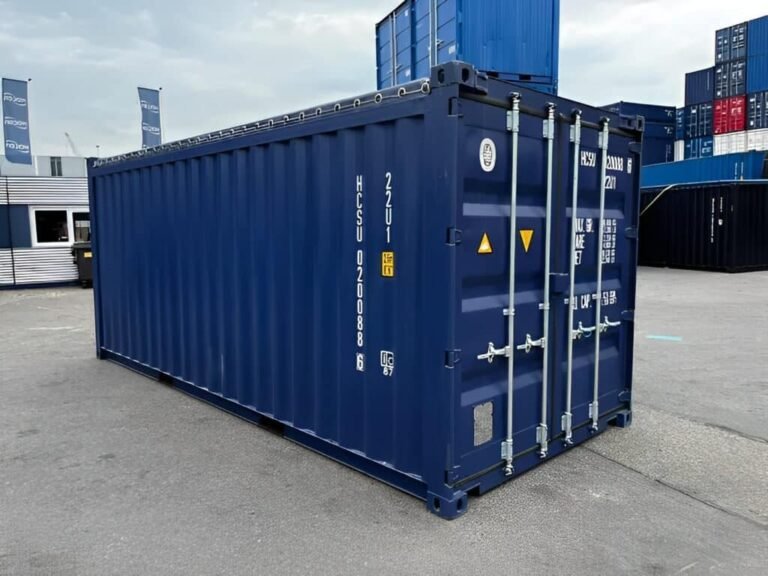
A 20-foot container is the most common all-around choice because it balances usable storage with manageable placement. For homeowners, farms, retail overflow, and many job sites, it is often the safest starting point. It gives enough room for meaningful storage without requiring the footprint of a 40-footer.
A 40-foot container makes sense when storage demand is high, inventory is bulky, or cost per foot matters more than compact placement. Many commercial buyers prefer this size because it can handle larger loads and reduce the need for multiple units. The catch is that delivery and placement become less forgiving. You need more room to maneuver, more room to set the unit, and more confidence that the site will stay practical after it arrives.
A 45-foot container is usually a more specialized decision. It can be useful when maximum enclosed length matters, but not every site or delivery setup is ideal for it. If you are considering this size, access and placement details should be checked early, not after purchase.
Think about interior use, not just exterior length
When buyers ask how to choose shipping container size, they often focus on the outside dimensions first. That is understandable, but interior function is the better filter.
If you are stacking boxes from floor to ceiling, a standard unit may be enough. If you are adding shelving, storing tall equipment, or planning a workshop or office conversion, interior height becomes more important. That is where a high-cube container can make more sense than simply moving to a longer box.
A longer container gives you more floor space. A high-cube container gives you more vertical clearance. Those are not interchangeable benefits. For some applications, extra height improves usability more than extra length. For others, especially pallet storage or long equipment, floor length is still the deciding factor.
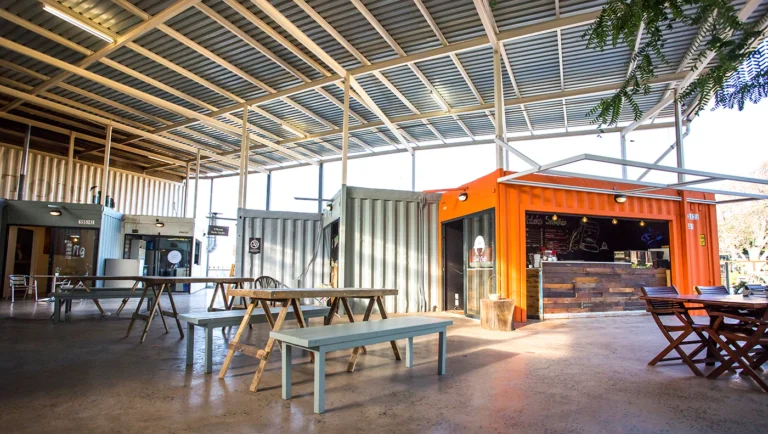
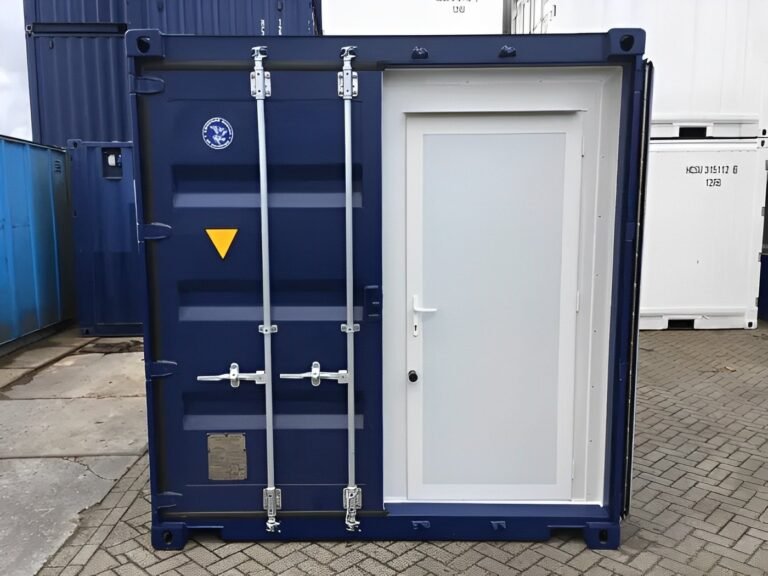
This is also where container type matters. Refrigerated containers, open-top units, tunnel containers, and specialty configurations solve different problems. If your use case involves temperature control, loading from both ends, oversized cargo, or modular assembly, size should be chosen alongside container style rather than as a separate decision.
Match the container size to how you will load and unload it
A container that is packed once and left alone can be filled very efficiently. A container you enter every day needs breathing room.
That difference changes size selection more than people expect. If you need to retrieve specific tools, SKUs, files, or equipment on a regular basis, a smaller packed-to-capacity unit may become inconvenient fast. You may spend more time moving items around than the smaller footprint saved you.
For active storage, leave room for paths and zones. You may want one side for long-term storage and the other for frequent access. You may need space at the doors for quick loading. In those cases, moving from a 10-foot to a 20-foot container, or from a 20-foot to a 40-foot unit, is often less about total volume and more about daily usability.
It also helps to think ahead. If your storage needs are likely to grow within a year, buying slightly larger upfront can be more cost-effective than replacing the unit later. That said, oversizing without a clear reason is not always smart. More container means more footprint, more visual impact, and potentially more site work.
Site space and delivery can rule out the wrong size quickly
A container may fit on your property and still be difficult to deliver. This is one of the biggest reasons buyers benefit from verified specs and real placement guidance.
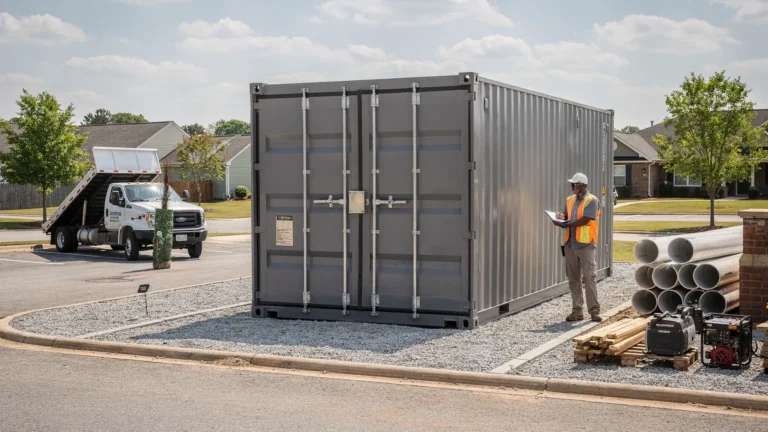
The footprint of the container is only part of the equation. Delivery trucks need room to approach, unload, and clear the area safely. Ground conditions matter too. Soft soil, slope, tight gates, overhead wires, low branches, and narrow turns can all affect what size makes sense.
That is why a 40-foot unit is not automatically the best value just because it gives more space. If your site has tight access or limited placement options, a 20-foot container may be the better operational choice. It is often easier to position, easier to work around, and less likely to create avoidable delivery complications.
Before choosing size, measure the placement area and the access path. Include fence openings, turning radius, vertical clearance, and the space needed around the container for doors to open and people to move. If you want the unit close to a structure, leave enough clearance for drainage, maintenance, and safe access.
Cost should be measured in total use, not just sticker price
Many buyers compare sizes by the base price alone. That is useful, but it does not tell the whole story.
A larger container often gives a better cost per square foot, but only if you can use that space efficiently and place the unit without additional headaches. If a longer unit requires extra site prep, more difficult delivery coordination, or compromises how the rest of your property functions, the lower per-foot value may not be the real value.
On the other hand, going too small can lead to a second purchase, off-site storage costs, or lost productivity from overcrowding. The right size is usually the one that fits your actual operation with a little room for change, not the one that looks cheapest at first glance.
This is also where condition and configuration affect the math. A used standard container may be the right answer for simple storage. A one-trip high-cube or specialty unit may be worth it if appearance, interior condition, or specific functionality matters more.
A simple way to narrow it down
If your site is tight and your storage need is modest, start with a 10-foot or 20-foot unit. If you need a general-purpose storage solution and want the safest default, a 20-foot container is often the most practical fit. If you are storing large quantities, palletized goods, or bulky equipment and your site can handle it, a 40-foot container is usually the stronger option. If height is limiting your plan, consider a high-cube before assuming you need more length.
For buyers who want a fast answer, this is the honest one: choose the smallest container that still supports safe access, future growth, and straightforward delivery. That keeps your costs controlled without creating daily workarounds.
At Lease Lane Containers, that is usually how the conversation starts – with the use case, the site, and the delivery path, not just the product list. Clear pricing and verified specifications matter, but the right fit matters more.
If you are between two sizes, the better choice is usually the one that will still feel practical six months from now, not just the one that fits today.
4 Comments