
One Trip vs. Cargo Worthy: Which Container Is Best?
Table of Contents
- Understanding the Core Differences Between One-Trip and Cargo Worthy Containers
- Visual Condition and Structural Integrity Standards
- Cost Analysis: Initial Investment vs. Long-Term Value
- Best Use Cases for One-Trip Containers
- When to Choose Cargo Worthy Units for Practicality
- Maintenance Requirements and Expected Lifespan
- Final Verdict: Selecting the Right Grade for Your Project
Choosing between a one-trip and a cargo worthy container is one of the most common decisions buyers face, and getting it wrong can mean overspending on features you don’t need or underbuying for a project that demands better condition. Both grades serve real purposes, but they’re built for different budgets, timelines, and end goals. The price gap between these two grades typically ranges from $1,000 to $3,000 or more depending on size and market conditions, so the stakes are real. Whether you’re a contractor setting up job site storage in Wake County, a homeowner planning a backyard workshop, or a small business owner needing inventory overflow space, this decision shapes your project’s cost and longevity. Understanding the specific grading criteria, visual differences, structural standards, and ideal applications for each grade will help you spend wisely and avoid common buyer mistakes.
Table of Contents
- Understanding the Core Differences Between One-Trip and Cargo Worthy Containers
- What Defines a One-Trip Container?
- The Criteria for Cargo Worthy (CW) Certification
- Visual Condition and Structural Integrity Standards
- Aesthetics: Pristine Paint vs. Surface Rust and Dents
- Floor Quality and Seal Tightness
- Cost Analysis: Initial Investment vs. Long-Term Value
- Best Use Cases for One-Trip Containers
- Residential Storage and High-End Modifications
- Container Homes and Commercial Storefronts
- When to Choose Cargo Worthy Units for Practicality
- International Shipping and Export Requirements
- Industrial Job Site Storage and Budget Projects
- Maintenance Requirements and Expected Lifespan
- Final Verdict: Selecting the Right Grade for Your Project
Understanding the Core Differences Between One-Trip and Cargo Worthy Containers
The grading system for shipping containers isn’t arbitrary. It follows industry standards tied to physical condition, structural soundness, and intended use. These two grades sit at different points on the condition spectrum, and the distinction matters more than most first-time buyers realize. A quick look at the labels might suggest they’re interchangeable, but the reality is that each grade reflects a very different stage in a container’s working life.
What Defines a One-Trip Container?
A one-trip container is manufactured overseas, typically in China, loaded with cargo for a single ocean voyage, and then sold at its destination port. Despite the name, it’s essentially a new container. The steel is fresh, the paint is factory-applied, the rubber door gaskets are supple, and the marine-grade plywood flooring (typically 28mm Apitong or Bamboo) has never been exposed to heavy wear.
These containers arrive with original manufacturer markings, no patches or welds from repairs, and a CSC (Convention for Safe Containers) plate showing a recent build date. Standard dimensions for a 20ft one-trip unit are approximately 20′ x 8′ x 8’6″ (or 9’6″ for a high cube shipping container), with a tare weight around 2,300 kg for a standard height unit. The corrugated steel walls are free of dents, and the locking mechanisms operate smoothly without the stiffness that comes from years of salt air exposure.
One key detail: “one-trip” doesn’t mean the container was only used once and discarded. It means it was manufactured for the specific purpose of making one loaded journey before entering the resale market. This business model exists because it’s often cheaper for shipping lines to buy new containers overseas than to reposition empty ones back across the ocean.
The Criteria for Cargo Worthy (CW) Certification
Cargo worthy is a certified grade, not just a description. A container earns CW status after passing an inspection by a certified surveyor, typically following guidelines set by the Institute of International Container Lessors (IICL). The inspection confirms the container is structurally sound enough to be loaded onto a vessel for international ocean transport.
The certification checks several specific criteria. The container must be wind and watertight, meaning no light penetrates through the walls, roof, or floor when the doors are closed. All corner castings must be intact with no cracks. The cross members beneath the floor must be free of significant corrosion or bending. Door seals must function properly, and the locking bars must engage fully.
A cargo worthy container has typically been in active shipping service for 8 to 15 years. It will show signs of that service: surface rust, minor dents, paint wear, and possibly small repair patches where damage was welded and sealed. None of these cosmetic issues disqualify it. The certification is about function, not appearance. If a container passes the survey, it gets a valid CSC plate update and can legally be used for ocean freight. That same structural integrity makes it a solid choice for ground-level storage and many other applications.
Visual Condition and Structural Integrity Standards
Aesthetics: Pristine Paint vs. Surface Rust and Dents
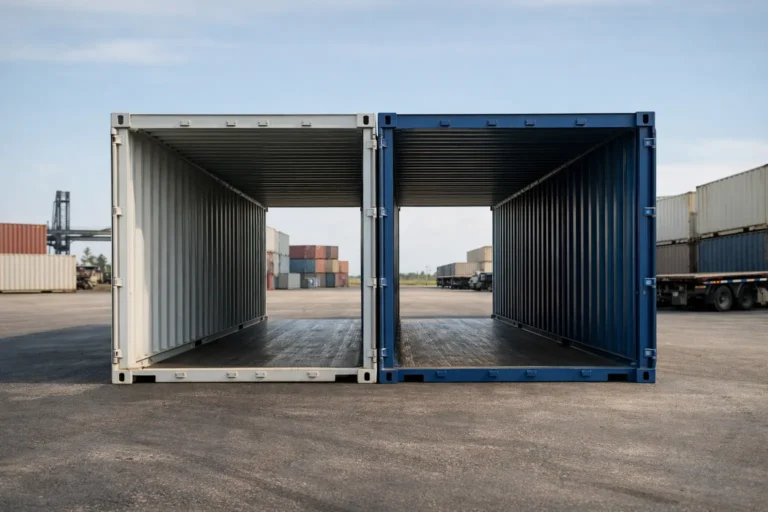
The visual difference between these two grades is immediately obvious. A one-trip container looks like it just rolled off the factory floor. The paint is uniform, typically a single color with no fading or chalking. There are no weld marks from repairs, no patches, and no streaks of surface rust. For buyers who care about appearance, whether for a residential property, a retail storefront, or a visible commercial installation, this matters.
Cargo worthy containers tell a different story on the outside. Expect surface rust along the bottom rails and lower wall panels where standing water and road spray accumulate during transport. Dents from handling at port terminals are common, ranging from minor dimples to palm-sized impressions. Previous company logos or shipping line decals may still be partially visible under faded paint. Some units will have small welded patches where minor damage was repaired during their service life.
None of these cosmetic issues affect the container’s ability to keep water out or hold up structurally. But if you’re placing a container in your backyard in a Raleigh neighborhood or using it as a customer-facing pop-up shop, the visual condition of a cargo worthy unit may require additional investment in repainting or cladding.
Floor Quality and Seal Tightness
Flooring condition is one of the most overlooked differences. A one-trip container’s marine-grade plywood floor is clean, flat, and free of stains or wear marks. It can handle forklift traffic, heavy equipment, and foot traffic without concern.
A cargo worthy container’s floor has endured years of loaded pallets, forklifts, and shifting cargo. You’ll often find scuff marks, gouges, and areas where the wood has been compressed or worn thinner. The floor must still be structurally sound to pass certification, meaning no soft spots, rot, or holes. But it won’t look new, and in some cases, buyers planning heavy use may want to add a protective layer of 3/4″ plywood or rubber matting on top.
Door seals follow a similar pattern. One-trip containers have fresh, pliable rubber gaskets that compress evenly when the doors close. Cargo worthy seals still function, but the rubber may be harder, slightly compressed, or show minor cracking. They keep water out, but they won’t maintain that seal as long without eventual replacement. Budget around $150 to $300 for a full gasket replacement kit if you’re buying a CW unit and want to extend its watertight life by several years.
Cost Analysis: Initial Investment vs. Long-Term Value
Price is usually the first thing buyers compare, and the gap between these grades is significant enough to influence most purchasing decisions. As of recent market conditions, a standard 20ft one-trip container typically sells in the range of $3,500 to $5,500, while a 40ft one-trip unit runs between $5,000 and $8,000 depending on availability and delivery distance. High cube versions add $300 to $800 to those figures.
Cargo worthy containers cost substantially less. A 20ft CW unit generally falls between $1,800 and $3,500, and a 40ft CW container ranges from $2,500 to $5,000. That price difference of $1,500 to $3,000 per unit adds up quickly if you’re buying multiple containers for a larger project.
But initial price isn’t the full picture. A one-trip container arrives ready for almost any application with zero prep work. A cargo worthy unit may need repainting ($500 to $1,500 depending on size and finish), floor reinforcement ($200 to $600), and gasket replacement. Those costs can narrow the gap, though a CW container still comes out cheaper in most scenarios.
Resale value favors one-trip containers. A well-maintained one-trip unit retains roughly 60% to 75% of its purchase price after five years of ground storage use. A cargo worthy container holds about 40% to 55% over the same period, assuming it remains wind and watertight. For buyers treating the container as a long-term asset, the one-trip grade offers better depreciation characteristics. For buyers who need functional storage at the lowest entry cost and aren’t concerned about resale, the CW grade delivers better immediate value per dollar spent.
Best Use Cases for One-Trip Containers
Residential Storage and High-End Modifications
One-trip containers are the clear choice for any project where appearance, cleanliness, and modification ease matter. Residential buyers placing a container on their property for storage, a workshop, or a home office benefit from the clean exterior that blends better with existing structures. Homeowners in neighborhoods with HOA guidelines or local aesthetic standards will find that a one-trip unit draws less attention and fewer complaints.
Modification work is also simpler and more predictable on new steel. Welders and fabricators prefer cutting into one-trip containers because the steel thickness is uniform, there are no hidden repair patches that could compromise a cut line, and the structural integrity is fully documented. If you’re planning to add windows, roll-up doors, electrical conduit, or insulation, starting with a one-trip container reduces surprises during the build.
Container Homes and Commercial Storefronts
Container homes and commercial storefronts represent the highest-investment applications, and the one-trip grade is almost always the right starting point. A container home project in the Raleigh-Durham area, for example, involves architectural planning, permitting through Wake County, foundation work, and significant interior buildout. Starting with a container that has compromised steel or questionable floor integrity introduces risk into a project that may cost $50,000 to $150,000 or more in total.
Commercial storefronts, coffee shops, and retail pop-ups face similar considerations. The container is visible to customers, and the brand image depends partly on the structure’s appearance. A one-trip container provides a clean canvas for custom paint, signage, and branding without the prep work of grinding rust and filling dents first.
Lease Lane Containers helps buyers in these categories match the right size and grade to their project scope, including guidance on high cube shipping container dimensions for projects requiring extra ceiling height (9’6″ interior versus the standard 8’6″).
When to Choose Cargo Worthy Units for Practicality
International Shipping and Export Requirements
If you need a container specifically for ocean freight, a cargo worthy unit with a current CSC plate is the minimum required grade. Shipping lines and port authorities will not accept a container for loading onto a vessel unless it holds valid CW certification. One-trip containers also meet this standard, but paying a premium for a new container that’s about to endure the same wear and tear of ocean service doesn’t make financial sense for most shippers.
For businesses exporting goods from the Southeast, whether agricultural products moving through the Port of Wilmington or manufactured goods heading out of the Port of Savannah, a cargo worthy container is the practical and cost-effective choice. The container does its job, protects the cargo, and meets regulatory requirements without the price tag of a new unit.
A rule of thumb for export buyers: always verify the CSC plate date and request a copy of the most recent survey report before purchasing. A CW certification is only valid for a specific period, and an expired plate means the container needs re-inspection before it can ship.
Industrial Job Site Storage and Budget Projects
Construction sites, industrial yards, and agricultural operations are where cargo worthy containers truly shine. A contractor storing tools, materials, and equipment on a job site along I-40 or I-95 doesn’t need pristine paint. The container needs to lock securely, keep rain out, and withstand the bumps and scrapes of an active work environment.
Farm and rural property owners benefit from the same logic. A cargo worthy container placed on a gravel pad for hay storage, equipment shelter, or seasonal supply holding does its job at a fraction of the one-trip price. The dents and surface rust that might bother a residential buyer are invisible on a working farm.
Budget-conscious projects of all types, from small business overflow storage to event staging areas, find the CW grade delivers the best return. The container is structurally certified, keeps contents dry, and costs significantly less. For buyers managing multiple sites or needing several containers, the savings multiply quickly.
Maintenance Requirements and Expected Lifespan
A one-trip container used for ground-level storage with basic maintenance can last 25 to 30 years or more. “Basic maintenance” means inspecting the roof and seals annually, touching up any paint chips or scratches before rust takes hold, and keeping the container elevated slightly off bare ground using railroad ties, concrete blocks, or a gravel pad to prevent moisture from pooling against the bottom rails.
Cargo worthy containers, having already logged 8 to 15 years of ocean service, have a remaining useful life of roughly 10 to 20 years for ground storage, depending on climate and care. In the humid Southeast, including the Raleigh and Triangle region, moisture is the primary enemy. Annual inspections should focus on the bottom rails, corner posts, and any existing repair patches where rust is most likely to advance.
A practical annual maintenance budget for either grade looks like this: $50 to $150 for rust treatment and touch-up paint, $0 to $300 for gasket inspection and replacement, and $0 to $200 for floor maintenance. One-trip containers will sit at the low end of those ranges for the first 5 to 10 years. Cargo worthy units may need attention sooner, particularly on seals and lower rail areas.
The 20-20-20 rule is a useful guideline: inspect your container every 20 weeks, address any rust spots larger than 20 square centimeters immediately, and budget 20 minutes per inspection. This simple routine catches problems early and prevents small issues from becoming expensive repairs. Keeping weeds and debris cleared from around the base of the container also reduces moisture retention and slows corrosion at ground level.
Final Verdict: Selecting the Right Grade for Your Project
The choice between a one-trip and cargo worthy container comes down to three factors: your budget, your project’s visibility, and how long you need the container to perform.
Choose a one-trip container if you’re building a container home, modifying the unit for commercial use, placing it in a residential setting, or planning to keep it as a long-term asset. The higher upfront cost pays for itself through easier modification, better appearance, longer lifespan, and stronger resale value. For projects where the container is the foundation of a significant investment, starting with new steel is the smart move.
Choose a cargo worthy container if you need functional, certified storage at the best price point. Job sites, farms, warehouses, industrial yards, and export shipments are all ideal CW applications. The container is inspected, certified, and structurally sound. It just looks like it’s done some work, because it has.
For buyers who are still weighing their options, Lease Lane Containers provides transparent grading guidance and practical delivery planning support from their Raleigh, North Carolina base, with nationwide shipping container delivery available. Their team can walk you through the specific condition details of available inventory so you know exactly what you’re getting before it arrives on site.
Ready to compare grades and sizes for your project? Browse available inventory to see current container options and find the right fit before requesting a quote.
Final Checklist Before You Buy:
- Confirm your project type: visible/residential or functional/industrial
- Set your total budget including delivery, site prep, and any modifications
- Verify CSC plate dates on any cargo worthy container before purchasing
- Measure your delivery site for access: tilt-bed trucks need roughly 100 feet of straight clearance, roll-off trucks need less but still require firm, level ground
- Check local permit requirements, especially for container homes or commercial structures in Wake County or your local municipality
- Plan your foundation: gravel pad, concrete piers, or railroad ties to keep the container off bare soil
- Schedule an annual inspection routine using the 20-20-20 rule from day one