Reliable Shipping Container Delivery in Raleigh, NC
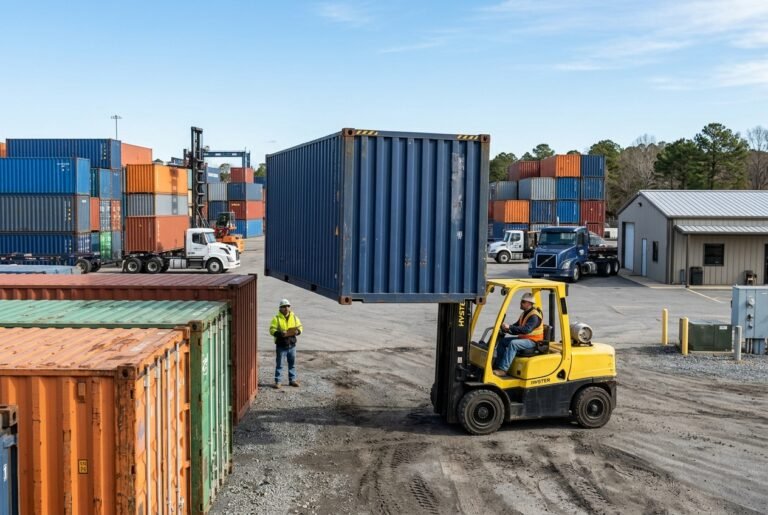
Getting a shipping container to your property in the Raleigh area involves more than just picking one out and clicking “order.” The delivery itself requires careful planning around access routes, site conditions, equipment type, and local regulations. A 20ft steel container weighs roughly 5,000 pounds empty, and a 40ft unit tips the scales at about 8,500 pounds. Moving that kind of weight safely through residential neighborhoods, down rural driveways, or onto active job sites demands real preparation. Whether you’re a contractor setting up temporary storage, a homeowner adding backyard space, or a small business owner managing inventory overflow, understanding how container delivery works in this part of North Carolina can save you time, money, and a lot of headaches. This guide covers the practical details you need to get it right the first time: delivery methods, site prep, sourcing, permits, costs, and safety.
Table of Contents
- Navigating Container Logistics in the Raleigh-Durham Area
- Standard Delivery Methods for North Carolina Customers
- Tilt-Bed and Roll-Off Trailer Services
- Flatbed and Crane-Assisted Offloading
- Site Preparation Essentials for Secure Placement
- Surface Requirements: Concrete, Gravel, and Grass
- Clearance for Height and Turning Radius
- Sourcing Quality Containers in the Triangle
- Comparing New ‘One-Trip’ vs. Used Cargo Worthy Units
- Local Zoning and Permitting in Wake County
- Cost Factors and Lead Times for Raleigh Deliveries
- Safety Protocols and Final Inspection Checklist
Navigating Container Logistics in the Raleigh-Durham Area
The Triangle region presents a mix of delivery scenarios. Urban neighborhoods in downtown Raleigh have narrow streets, overhead power lines, and tight cul-de-sacs. Suburban developments in Cary, Apex, and Holly Springs offer wider roads but often have HOA restrictions. Rural properties outside the beltline in places like Wendell or Fuquay-Varina might have long gravel driveways with low-hanging tree branches.
Each scenario changes the delivery equation. A tilt-bed truck needs about 100 feet of straight clearance to slide a container off the back. A crane truck can place a container over a fence or into a backyard, but it needs stable ground and room to extend its boom. Knowing your specific site conditions before you order is the single most important step in the process.
Delivery carriers familiar with Wake County and surrounding areas already know common trouble spots: the railroad crossings near downtown Durham, weight-restricted bridges in Johnston County, and the tight turns in older Raleigh subdivisions. If you’re working with a supplier like Lease Lane Containers, which is based right here in Raleigh, you can get site-specific delivery planning guidance before committing to a method. That local knowledge matters more than most buyers realize.
Standard Delivery Methods for North Carolina Customers
Two primary delivery methods handle the vast majority of shipping container drops in this region. Your choice depends on your site layout, budget, and container size.
Tilt-Bed and Roll-Off Trailer Services
Tilt-bed trucks are the most common delivery method for residential and small commercial sites. The truck backs into position, tilts its bed at an angle, and uses hydraulics or a winch to slide the container off the back onto the ground. This method works well on flat, open surfaces where the truck has a straight approach.
You’ll need a minimum of about 100 feet of unobstructed space behind the truck for a 20ft container, and closer to 130 feet for a 40ft unit. The truck itself is roughly 60 to 70 feet long when loaded, so factor in the turning radius needed to back into position. Roll-off trailers work similarly but use a hook-lift system. They’re common for shorter containers and can sometimes handle slightly tighter spaces.
The key limitation with tilt-bed delivery is the straight-line requirement. If your driveway curves sharply or your placement spot sits behind a building, this method might not work.
Flatbed and Crane-Assisted Offloading
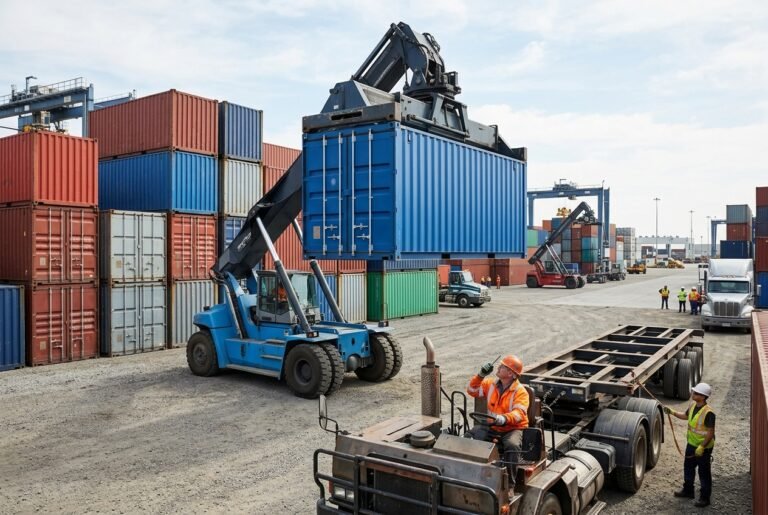
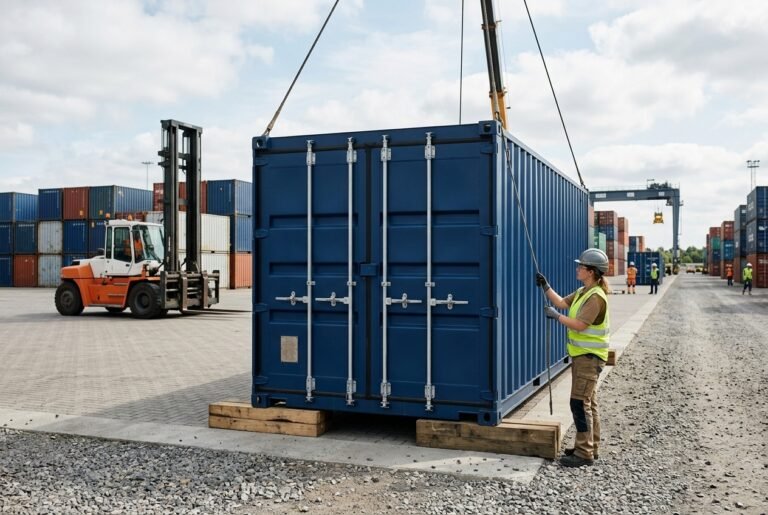
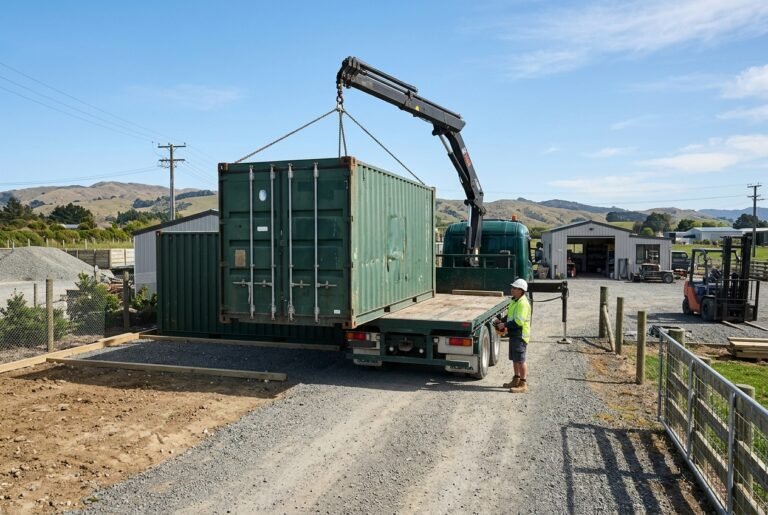
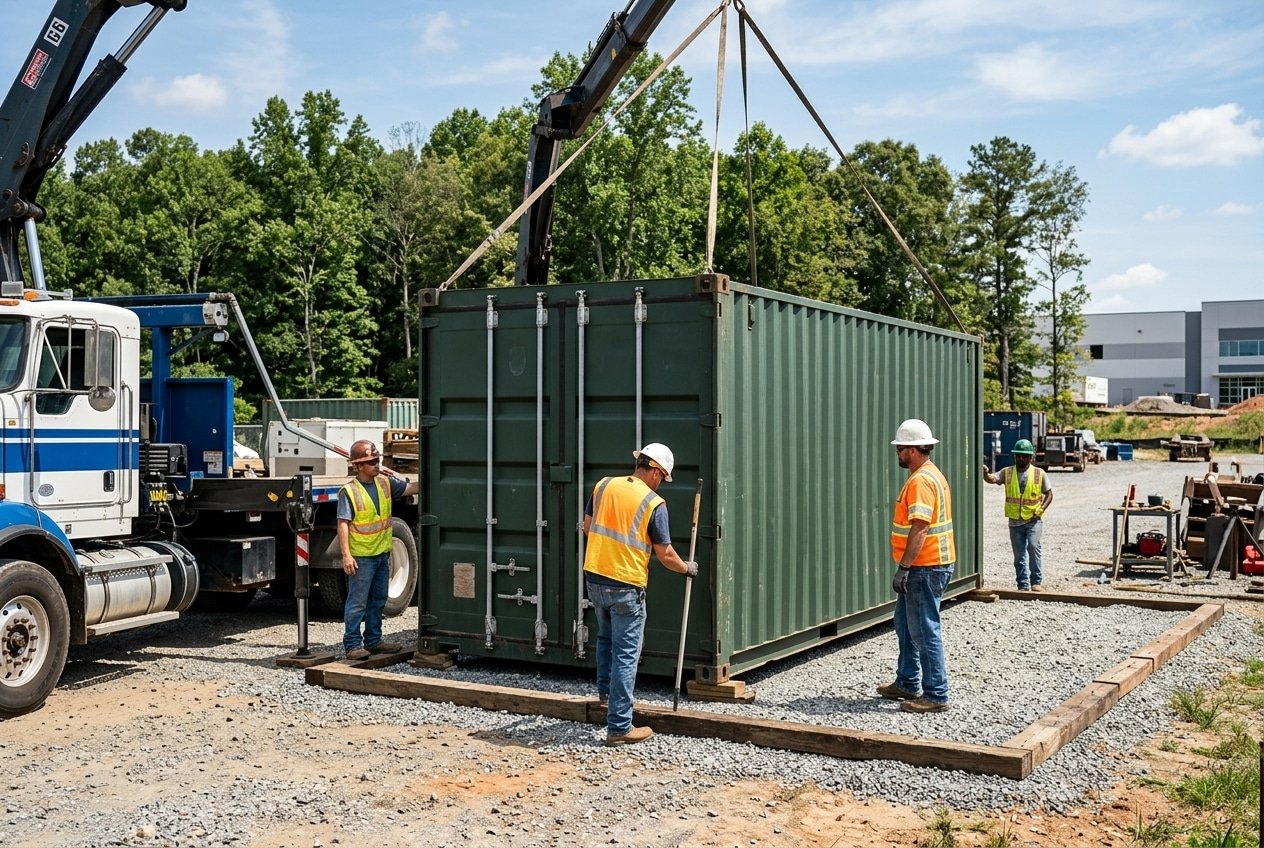
When tilt-bed access isn’t possible, flatbed delivery with crane assistance becomes the go-to option. The container arrives on a standard flatbed trailer, and a separate crane (or a truck-mounted crane called a “piggyback” or “sidelifter”) lifts it off and places it where you need it.
Crane delivery offers far more flexibility in placement. The container can be lifted over fences, placed alongside buildings, or set into areas with limited ground-level access. A typical truck-mounted crane can reach about 15 to 20 feet from the truck, which opens up options that tilt-bed simply can’t match.
The trade-off is cost. Crane-assisted delivery typically adds $300 to $800 or more to your total, depending on the equipment required and the complexity of the lift. For a 40ft high cube shipping container weighing close to 9,000 pounds empty, you’ll need a crane rated well above that capacity to maintain safe working loads.
Site Preparation Essentials for Secure Placement
A container sitting on a poorly prepared surface will shift, sink, settle unevenly, or trap moisture underneath. Spending a few hours on site prep before delivery day prevents problems that are expensive to fix later.
Surface Requirements: Concrete, Gravel, and Grass
Concrete is the gold standard. A 4-inch reinforced concrete pad distributes the container’s weight evenly and prevents settling. For a 20ft container, you’re looking at a pad roughly 8.5 feet wide by 21 feet long. A 40ft unit needs a pad about 8.5 by 41 feet. If pouring a full pad isn’t practical, concrete footings or pier blocks under the four corner castings work as a solid alternative.
Compacted gravel (typically 4 to 6 inches of crushed stone over compacted subgrade) is the most popular option for residential and farm sites. It drains well, prevents mud buildup, and costs significantly less than concrete. Use 57 stone or similar angular aggregate that locks together under weight.
Grass placement is possible for short-term use, but expect problems over time. The container’s corner castings concentrate thousands of pounds into small contact areas. Soft ground will compress unevenly, especially after rain. If you must place on grass, lay railroad ties or treated timber beams under the container’s frame rails to spread the load.
Clearance for Height and Turning Radius
Standard shipping containers stand 8 feet 6 inches tall. High cube shipping containers add another foot, reaching 9 feet 6 inches. When loaded on a delivery truck, the total height from road surface to the top of the container is typically 13 to 14 feet.
Check every overhead obstacle along the delivery route on your property: power lines, tree branches, carport roofs, and building eaves. Most residential power lines hang between 15 and 18 feet, but sagging lines or service drops to your home can be lower. Call your utility company if you’re unsure.
For turning radius, a loaded tilt-bed truck needs about 40 to 50 feet of turning space. Measure the width of your driveway entrance and any turns between the street and your placement spot. If your driveway is less than 12 feet wide or has a sharp 90-degree turn, discuss alternatives with your delivery provider before scheduling.
Sourcing Quality Containers in the Triangle
Raleigh sits within reasonable trucking distance of the Port of Virginia in Norfolk and the Port of Wilmington, both of which serve as major entry points for shipping containers into the Southeast. This geographic position means you’ll typically find good availability for both new and used units.
Comparing New ‘One-Trip’ vs. Used Cargo Worthy Units
A one-trip container has made a single ocean voyage from the manufacturing facility (usually in China) to a U.S. port. These units arrive in near-perfect condition: minimal surface rust, factory-applied paint, intact rubber door seals, and floors free of stains or damage. They’re the best choice when appearance matters, such as a container office conversion or a customer-facing storage setup. Expect to pay a premium of 30% to 50% over used units.
Cargo worthy containers have passed a CSC (Convention for Safe Containers) inspection and are certified structurally sound for ocean transport. They’ll show wear: surface rust, dents, scratched paint, and some floor scuffing. But structurally, they’re solid. For job site storage, farm equipment shelters, or inventory overflow, cargo worthy units offer excellent value.
A third grade, wind and watertight, means the container keeps weather out but hasn’t been inspected for ocean shipping. These units cost less but may have more cosmetic wear. Lease Lane Containers provides transparent grading guidance so you can compare these categories side by side and match the right grade to your actual use case.
Local Zoning and Permitting in Wake County
Wake County and the City of Raleigh treat shipping containers differently depending on their intended use and location. Inside Raleigh city limits, a container used for permanent storage on a residential property typically requires a zoning review and may need a building permit, especially if it’s visible from the street or exceeds certain size thresholds.
Unincorporated areas of Wake County often have more relaxed rules, but you still need to check setback requirements. Most zoning codes require structures to sit a minimum distance from property lines: commonly 5 to 15 feet depending on the zone.
If you’re placing a container on a commercial or industrial site, the permitting process is usually more straightforward since these zones generally allow accessory storage structures. Some municipalities in the Triangle, including Cary and Apex, have specific ordinances addressing shipping containers. Check with your local planning department before delivery day.
HOA restrictions are another consideration entirely. Many subdivisions in the Raleigh area prohibit visible shipping containers outright, regardless of what the county allows. Review your covenants before you order.
Cost Factors and Lead Times for Raleigh Deliveries
Several variables affect what you’ll pay for shipping container delivery in Raleigh, NC. Distance from the container depot to your site is the biggest factor. A delivery within 30 miles of a Raleigh-area yard might run $200 to $500, while a drop 60 miles out toward Sanford or Oxford could push past $600.
Container size matters too. Transporting a 40ft container costs more than a 20ft unit because of the larger truck required and the increased fuel consumption. Crane-assisted delivery, as mentioned earlier, adds a separate line item.
Here’s a rough breakdown of cost components:
- Container price (one-trip 20ft): $3,000 to $5,000
- Container price (cargo worthy 20ft): $1,800 to $3,200
- Standard tilt-bed delivery (under 30 miles): $200 to $500
- Crane-assisted delivery: $300 to $800 additional
- Site prep (gravel pad for 20ft): $300 to $800
- Permits (if required): $50 to $300
Lead times in the Raleigh area typically range from 3 to 10 business days, depending on inventory availability and delivery scheduling. One-trip containers sometimes take longer if they need to be transported from a port. Planning two to three weeks ahead gives you the best chance of hitting your preferred delivery date.
Safety Protocols and Final Inspection Checklist
Delivery day carries real risk if you’re not prepared. A container sliding off a tilt-bed generates enormous momentum, and crane lifts involve suspended loads that can swing unexpectedly.
Keep everyone clear of the delivery zone. Establish a perimeter of at least 25 feet around the placement area and the truck’s path. Children, pets, and bystanders should be inside or well away from the operation. OSHA standard 29 CFR 1926.1400 series covers crane and rigging safety, and while residential deliveries don’t fall under OSHA jurisdiction, the same principles protect you and your property.
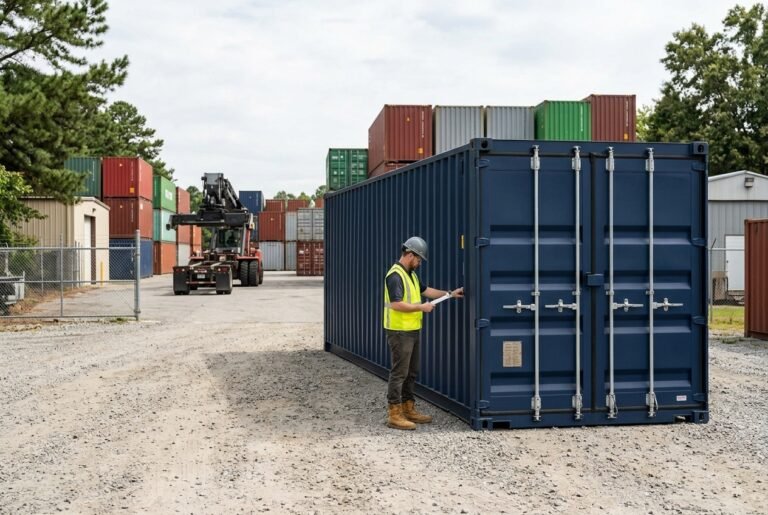
Once the container is on the ground, walk through a basic inspection before the driver leaves:
- Open both doors fully and check that latch bars, cam locks, and hinges operate smoothly
- Inspect door gaskets for cracks, gaps, or missing sections
- Look at the roof from inside with doors closed: any pinpoints of light indicate holes
- Check the floor for soft spots, excessive staining, or delamination
- Examine corner castings for cracks or heavy corrosion
- Verify the container sits level using a basic spirit level on the floor
If you ordered a one-trip unit, expect near-perfect condition. For cargo worthy or wind and watertight grades, minor cosmetic issues are normal, but structural defects or leaks are not. Document any concerns with photos and report them to your supplier immediately.
Getting your container delivery right starts with honest planning and the right information. If you’re ready to compare sizes, grades, and pricing, browse Lease Lane Containers’ current inventory to find the right fit for your project. The Raleigh-based team can help you work through site access, delivery method, and placement details before you commit: reach out at (984) 313-6158 or sales@leaselanecontainers.com.