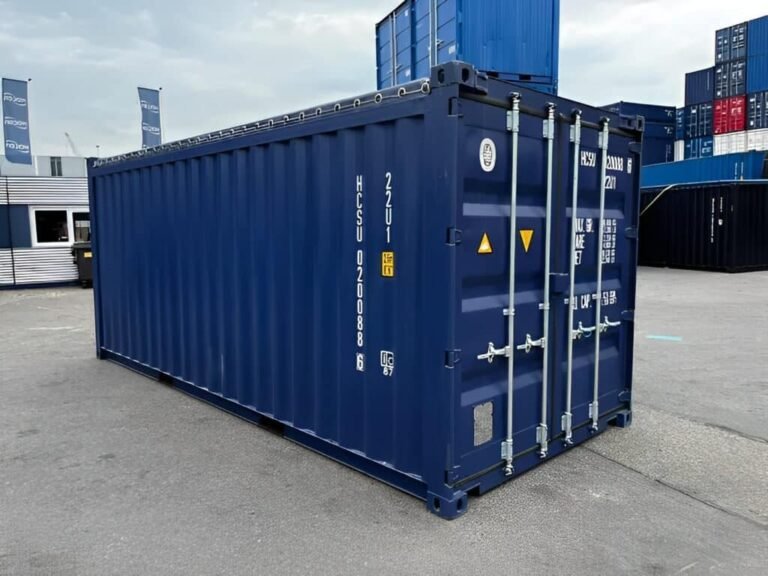
Secure Container Setup: Best Locks, Lighting, and Placement
A shipping container is already a strong starting point for on-site security. The corrugated shell is Corten steel, the corner castings follow ISO standards, and the doors lock with heavy cam bars that were designed for global freight handling. But turning that steel box into a truly secure container for a jobsite in Raleigh, a farm in Johnston County, or a small business yard anywhere in the Southeast takes a deliberate setup.
This guide walks through three things that do the most work for real-world container security:
- Locks that resist cutting, prying, and picking
- Lighting that removes “cover” and increases the chance of detection
- Placement that makes attacks harder and delivery safer
Start with the right container grade (security begins before locks)
Before you buy hardware, make sure the container itself is the right fit. Condition affects security because door alignment, gasket health, and steel integrity determine how easily someone can force entry.
One-Trip (new) containers
A One-Trip container has typically made a single cargo journey and is as close to “new” as the market gets. For security, the main advantages are predictable door operation, solid locking gear, and fewer hidden weak points from prior damage.
Best for: contractors storing tools, small businesses storing inventory, and anyone who wants the most reliable “lock it and forget it” baseline.
Cargo Worthy (CW)
Cargo Worthy generally means the unit meets the practical requirements for transport and handling, often aligned with having an active/acceptable CSC plate for international shipping contexts (requirements vary by carrier and jurisdiction). CW units tend to have sound structure and functional doors, which is also what you want for security.
Best for: buyers who want strong condition with value pricing, and logistics managers who may ship the unit later.
Wind & Watertight (WWT)
WWT (Wind & Watertight) means the container keeps weather out, but it can still show dents, patches, or wear that makes it less ideal for repeated transport. WWT can still be a very secure container when doors close square and locking gear is in good shape, but you should inspect more carefully for pry points, door alignment issues, and frame twists.
Best for: property storage and many construction applications where transport certification is not required.
If you want a practical walkthrough for spotting door and frame issues, use Lease Lane’s inspection guidance in How to Spot Quality Containers Before You Buy.
Locks: what actually works on shipping container doors
Container break-ins usually happen one of three ways: cutting exposed padlocks/hasps, prying the door enough to defeat the lock, or attacking weak door hardware. The goal is to (1) remove easy cutting access, and (2) slow an attacker down long enough that noise and time become the deterrent.
The most effective baseline: a welded lockbox plus a high-security “puck” lock
A lockbox (also called a lock shroud) is a steel cover welded over the padlock area so bolt cutters cannot easily reach the shackle. Pair that with a high-security puck lock (minimal exposed shackle) and you have one of the most common, proven container security combinations.
What to look for:
- Thick, well-fitted lockbox steel with tight tolerances
- Continuous, clean welds (poor welds can become the weak point)
- A puck lock designed for outdoor use, with strong corrosion resistance
This setup is popular on jobsites around Raleigh because it’s simple for crews and doesn’t require power.
Shrouded padlocks (good if you need keyed-alike flexibility)
If you need multiple containers keyed alike, a shrouded shackle padlock can be a practical alternative. The key is to avoid exposed shackles that invite bolt cutters.
Crossbar door locks (high deterrence, more effort)
A crossbar lock spans both doors and makes prying attacks harder. These can be excellent for long-term storage (farms, equipment yards, seasonal inventory). The tradeoff is extra steps for daily access.
Lock selection, at a glance
| Lock approach | Best for | Main strength | Main limitation |
|---|---|---|---|
| Welded lockbox + high-security puck lock | Most secure container setups, especially construction | Strong cut resistance and fast daily use | Needs proper welding and fitment |
| Shrouded shackle padlock | Multiple users/keys, keyed-alike needs | Better cut resistance than standard padlocks | Still depends on hasp/guard design |
| Crossbar lock | Long-term storage, high deterrence | Harder to pry doors | Slower access, more hardware to manage |
| Standard padlock (unshrouded) | Temporary, low-risk situations | Cheap and available | Often defeated quickly with cutters |
If you want a performance benchmark when comparing padlocks, you can review ASTM F883 (Standard Performance Specification for Padlocks), which is widely referenced for padlock testing terminology and performance classes: ASTM F883 overview.
Do not ignore the door hardware
Even the best lock can be undermined by poor door function.
- Make sure both door leaves close flush and the cam bars engage smoothly.
- Look for bent keeper brackets, missing bolts, or excessive play in the locking gear.
- Inspect the area around the lock location for past torch cuts or thin steel.
This is where grade matters. A One-Trip unit usually gives you the most predictable door alignment. If you’re buying used, follow the checks in How to Spot Quality Containers Before You Buy.
Lighting: security is visibility and psychology
Lighting is not just about “brightness.” It is about removing concealment, signaling surveillance, and forcing an intruder into a visible area. On many properties in North Carolina, the best results come from layered lighting:
- A motion-activated flood to create a sudden, attention-grabbing change
- A steady low-level light near access paths so your team can work safely
Motion lighting placement that actually helps
- Mount lights high enough that they cannot be easily disabled from the ground.
- Aim lights so they illuminate the doors, lock area, and approach path, not just the container roof.
- Avoid placing a bright light behind the container that silhouettes your camera view if you have surveillance.
For rural properties outside Raleigh (Wake, Franklin, Nash, Johnston counties), solar motion lights can work well if they receive direct sun. In shaded areas or tight urban corridors, hardwired lighting is more reliable.
Lighting should support operations too
A secure container often becomes a daily workflow tool. If crews are accessing a 20 foot unit every morning, lighting that improves safe footing and visibility reduces injuries and accidental damage to doors and lock gear.
If you’re still deciding between a 20ft container and a 40ft container, consider how often you’ll access the contents and whether you need a clear, well-lit staging area at the doors.

Placement: the “free” security upgrade most people skip
Where you put the container can make it either easy or expensive to break into. Placement also affects delivery feasibility, drainage, door function, and long-term corrosion risk.
Choose a location that controls 접근 (approach) and visibility
A common mistake is hiding a container behind a building or deep along a tree line. That can reduce curb appeal, but it also gives an intruder privacy.
Better placement principles:
- Put doors facing a visible, traveled area (driveway, yard, active jobsite zone).
- Avoid placing the doors tight against a fence or wall where someone can work unseen.
- Maintain enough clearance for full door swing (and for crews carrying long items).
For Raleigh-area construction, a practical rule is: place the container where a foreman, superintendent, or camera can see the doors without walking the site.
Use the site itself as a barrier
You can reduce vehicle-based theft and make forced entry harder by positioning the container so access is controlled.
- Place the container so a vehicle cannot easily back up to the doors to load stolen goods quickly.
- Consider using large concrete blocks or parked equipment (without blocking delivery access) to restrict close approach.
Keep it level, or you will fight the doors forever
Security depends on door alignment. If the container twists because it’s sitting unevenly, the locking cams and gasket compression suffer. That creates gaps that invite prying and also lets water in.
This matters even more on longer units. A 40 foot container spans more ground and is more sensitive to uneven support than a 20 foot unit.
Consider High Cube and ISO details for placement constraints
A High Cube container is typically 9 feet 6 inches tall (vs. 8 feet 6 inches standard). That extra height is great for shelving and bulky inventory, but it can introduce placement issues:
- Overhead clearance near trees and power lines
- HOA sightline concerns in residential neighborhoods
- Different shadowing that affects solar lighting performance
Shipping containers also use standardized corner castings defined by ISO container specifications (commonly referenced via ISO 668 for classification and dimensions and ISO 1161 for corner fittings). These standards are one reason containers stack and handle consistently worldwide, and they also enable secure anchoring options that use corner castings.
Reference: ISO 668 overview and ISO 1161 overview.
Anchoring and tamper resistance (optional, but powerful)
If your threat model includes towing or dragging, anchoring becomes part of a secure container setup.
Common approaches include:
- Ground anchors with hardened chains routed through corner castings
- Twist-lock style anchors that engage the container’s ISO corner castings
- Site barriers that prevent a truck from getting close enough to hook and pull
The “right” option depends on soil type, site rules, and whether the unit is temporary or permanent. In the Southeast, clay soils and drainage patterns can change anchor performance over seasons, so it’s worth discussing with a local team.
Pro-Tip: Prepare the site like you’re preparing a foundation
Most security problems show up after a rainstorm or after the first month of daily use, when the container settles and doors start sticking.
Pro-Tip (site preparation for Raleigh and beyond):
- Leveling: Set the container on level support points (many sites use compacted gravel plus proper blocking). A twisted frame makes doors harder to secure and easier to pry.
- Gravel pad: A compacted gravel pad improves drainage, reduces mud at the doors, and discourages people from lingering unnoticed at night.
- Permits and setbacks: In Raleigh and many North Carolina jurisdictions, rules can vary by zoning and use (especially for long-term placement or business use). Check local requirements before you commit to a “perfect” spot that later becomes a compliance headache.
If you want to avoid delivery-day surprises, plan placement and access early, especially for tight driveways, soft shoulders, and slopes.

Recommended secure container setups by use case
General contractors and home builders (Raleigh, Triangle, Southeast jobsites)
Use a setup that is fast for crews but punishing for opportunistic theft:
- One-Trip or strong CW grade for reliable doors
- Welded lockbox plus high-security puck lock
- Motion lighting aimed at doors and ground approach
- Placement visible from the main work zone
Many contractors choose a 20ft container for tools and consumables because it’s easier to place near active work without disrupting traffic. Larger crews storing bulk materials often step up to a 40ft container.
Small business owners (inventory overflow, equipment storage)
Focus on deterrence, access control, and after-hours visibility:
- CW or One-Trip for better long-term reliability
- Lockbox plus puck lock, plus secondary internal locking if needed
- Consistent lighting at the access path (not only motion)
- Optional camera coverage and signage
If you’re considering a used unit for value, follow the inspection approach in How to Spot Quality Containers Before You Buy to avoid door and seal problems that undermine security.
Homeowners and agriculture (property storage)
Long-term security is often about keeping the setup stable through seasons:
- WWT can be a solid choice if doors seal and lock gear is sound
- Crossbar lock if you want maximum deterrence and less frequent access
- Gravel pad and drainage planning to prevent settling
- Avoid hidden placement deep behind trees where someone can work unseen
When to call in local expertise
If your container will store high-value tools, regulated materials, or anything that creates liability exposure, it’s worth getting a second set of eyes on:
- Door alignment and keeper bracket condition
- Lockbox fitment and weld quality
- Placement relative to drainage and delivery route
A secure container setup is not just about buying a “better lock.” It’s a system: container grade, door condition, locks, lighting, and placement working together.
Get help choosing the right secure container setup
Lease Lane Containers LLC supports customers across Raleigh, North Carolina, the Southeast, and nationwide delivery with clear grading (One-Trip, Cargo Worthy, WWT) and practical site advice.
To talk through the right container, lock approach, and delivery plan, contact our sales team at sales@leaselanecontainers.com or visit our Raleigh office.