The Best 20ft Shipping Container Prices in Raleigh, NC
Table of Contents
- Table of Contents
- Current Market Overview for 20ft Containers in Raleigh
- Average Price Ranges for New vs. Used Units
- Local Factors Influencing North Carolina Container Costs
- Top-Rated Suppliers and Dealers in the Triangle Area
- Comparing Local Inventory vs. National Brokers
- Understanding Container Conditions and Their Price Points
- One-Trip Containers: The Gold Standard
- Wind and Watertight (WWT) Economy Options
- Essential Delivery and Logistics Costs in Raleigh
- Tilt-Bed Trailer Fees and Site Preparation
- Permitting and Zoning Regulations for Raleigh Residents
- City of Raleigh Storage Container Ordinances
- How to Inspect a Container Before Purchase
- Maximizing Value: Customization and Maintenance Tips
- Adding Security Features and Climate Control
- Final Checklist
Table of Contents
- Current Market Overview for 20ft Containers in Raleigh
- Top-Rated Suppliers and Dealers in the Triangle Area
- Understanding Container Conditions and Their Price Points
- Essential Delivery and Logistics Costs in Raleigh
- Permitting and Zoning Regulations for Raleigh Residents
- How to Inspect a Container Before Purchase
- Maximizing Value: Customization and Maintenance Tips
- Final Checklist
If you’re pricing out a 20ft shipping container in Raleigh, NC, you already know that quotes can vary wildly depending on where you look. A quick search might show prices ranging from $1,800 to over $5,000, and without context, those numbers don’t tell you much. The real question isn’t just what a container costs: it’s what you’re actually getting for that price.
Raleigh sits in a strong position for container buyers. The city’s proximity to the Port of Wilmington and major freight corridors along I-40 and I-95 keeps supply flowing into the Triangle region. That geographic advantage tends to keep pricing more competitive than you’d find in landlocked markets farther from port infrastructure. Whether you’re a contractor setting up a job-site storage unit, a homeowner adding secure backyard storage, or a small business managing inventory overflow, understanding the local pricing picture helps you avoid overpaying and spot real value when it shows up.
This guide breaks down what drives the 20ft shipping container price in Raleigh, NC, from container grades and supplier types to delivery logistics and city permitting requirements. Every section is built around the practical decisions you’ll face before signing a purchase order.
Current Market Overview for 20ft Containers in Raleigh
Raleigh’s container market has stayed relatively stable through 2024 and into 2025, though pricing still fluctuates based on global shipping patterns and regional demand. The Triangle area benefits from steady freight traffic, which keeps local dealer inventories healthier than many mid-size metro areas. Seasonal shifts matter too: spring and summer tend to push prices up slightly as construction activity and home improvement projects ramp up.
Average Price Ranges for New vs. Used Units
A one-trip (new) 20ft shipping container in the Raleigh area typically runs between $3,200 and $5,200, depending on the supplier and any included features. Used shipping containers in wind and watertight condition generally fall between $1,800 and $3,000. Cargo worthy units, which still meet international shipping standards, tend to land in the $2,200 to $3,500 range.
These ranges assume standard-height containers (8’6″ tall). If you need a high cube shipping container with an extra foot of interior height, expect to add $300 to $800 on top of those figures.
Local Factors Influencing North Carolina Container Costs
Several regional factors shape what you’ll pay. Proximity to the Port of Wilmington keeps transport costs lower than cities farther inland. Wake County’s ongoing construction boom drives consistent demand, which can tighten supply during peak months. Fuel surcharges on delivery trucks also play a role: diesel prices along the I-40 corridor directly affect the final number on your invoice.
Local inventory levels matter more than most buyers realize. When a dealer has surplus stock, you’ll find better deals. When inventory is thin, prices creep upward fast.
Top-Rated Suppliers and Dealers in the Triangle Area
Choosing the right supplier is just as important as choosing the right container. In the Raleigh-Durham-Chapel Hill Triangle, you’ll find a mix of local container yards, regional dealers, and national brokers all competing for your business.
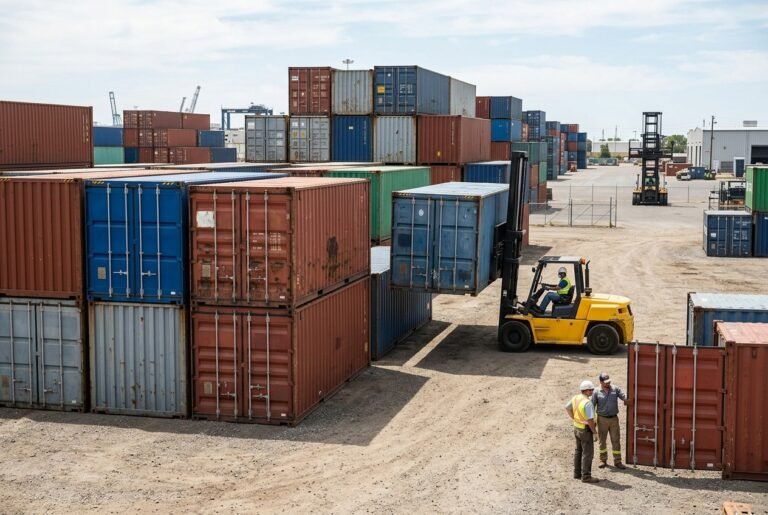
Local dealers with physical yards in or near Wake County offer the advantage of in-person inspections before purchase. You can walk the lot, check multiple units, and pick the exact container you want. Companies like Lease Lane Containers operate out of Raleigh and combine local delivery planning knowledge with access to both new and used inventory. That kind of setup means you’re working with someone who understands the specific delivery challenges of Triangle neighborhoods, from tight residential streets to rural farm properties off two-lane roads.
Comparing Local Inventory vs. National Brokers
National brokers often advertise lower base prices, but the details matter. A broker listing a container at $2,100 might be quoting from a depot in Savannah or Norfolk, with delivery fees that add $500 to $1,200 by the time the container reaches your Raleigh property. You also lose the ability to inspect the unit beforehand: what arrives on the truck might not match the photos you saw online.
Local suppliers typically include shorter delivery distances in their pricing, and many offer transparent grading guidance so you know exactly what condition you’re buying. If you value seeing what you’re paying for before it shows up on a tilt-bed trailer, a Raleigh-based team with local inventory is usually the smarter call.
Understanding Container Conditions and Their Price Points
Container grade is the single biggest factor in pricing, and it’s where most first-time buyers get confused. The terminology sounds straightforward, but the differences between grades are significant in terms of both appearance and long-term durability.
One-Trip Containers: The Gold Standard
A one-trip container has made exactly one ocean voyage from the overseas factory (usually China) to a U.S. port. It arrives with minimal wear: maybe a few scuffs from transit, but structurally and cosmetically near-perfect. Floors are clean marine-grade plywood, doors seal tightly, and the exterior paint is largely intact.
For buyers who plan to use a container as a visible part of their property, like a backyard office, retail pop-up, or workshop, one-trip is the grade to choose. You’re paying a premium, but you’re getting a unit that won’t need immediate cosmetic work and will hold up for 20+ years with basic maintenance.
Wind and Watertight (WWT) Economy Options
Wind and watertight containers are retired shipping units that no longer meet international cargo certification but still keep weather out. Expect surface rust, dents, and patched areas. Doors may require more effort to open and close. Floors might show wear but remain structurally sound.
WWT units work well for on-site storage, farm equipment protection, and inventory overflow where appearance isn’t a priority. At $1,800 to $2,800 for a 20ft unit in the Raleigh market, they represent the most budget-friendly option. Just make sure you inspect before buying: the gap between a solid WWT container and a worn-out one can be dramatic.
Essential Delivery and Logistics Costs in Raleigh
Your container’s sticker price is only part of the total cost. Delivery logistics can add $200 to $1,500 depending on distance, access conditions, and the type of truck required.
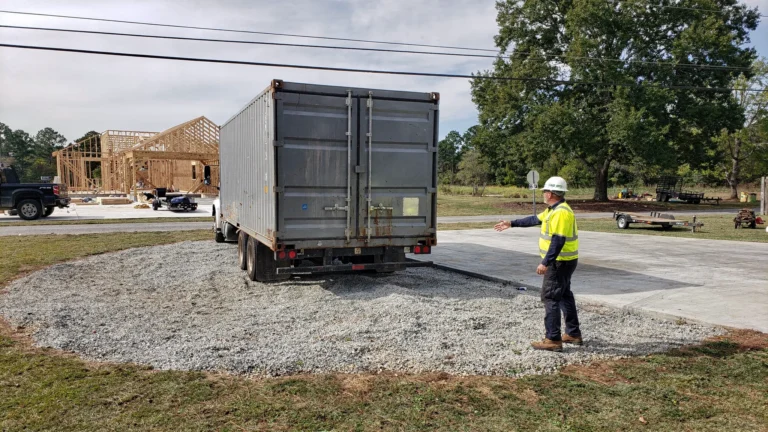
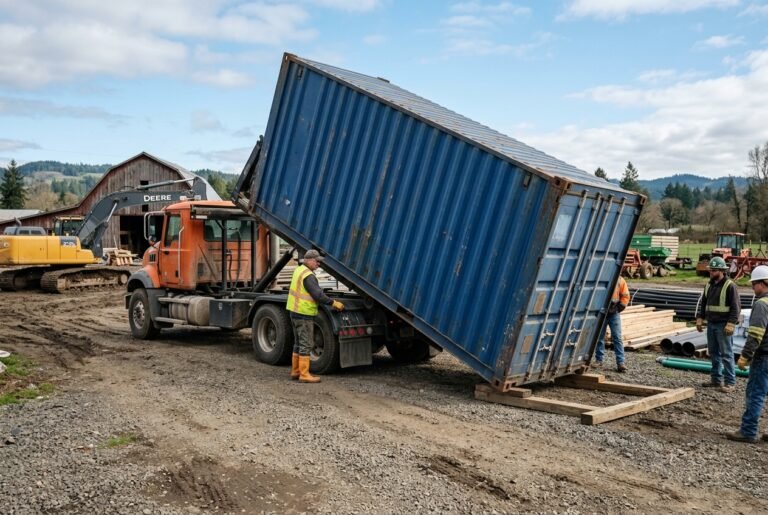
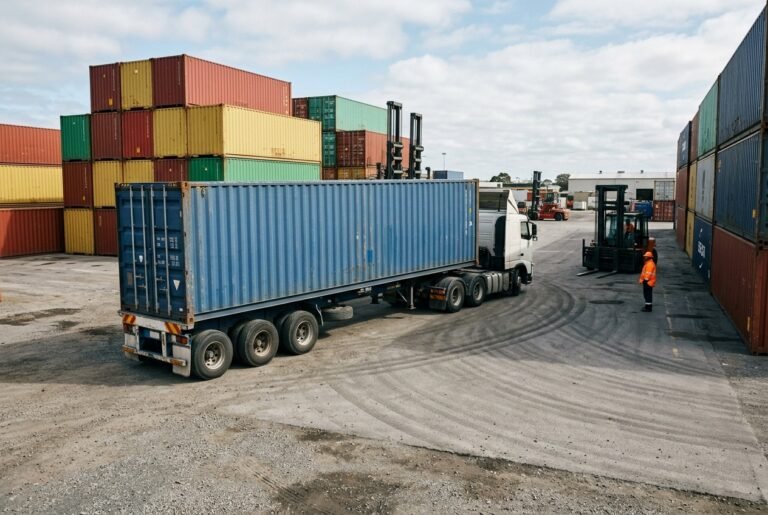
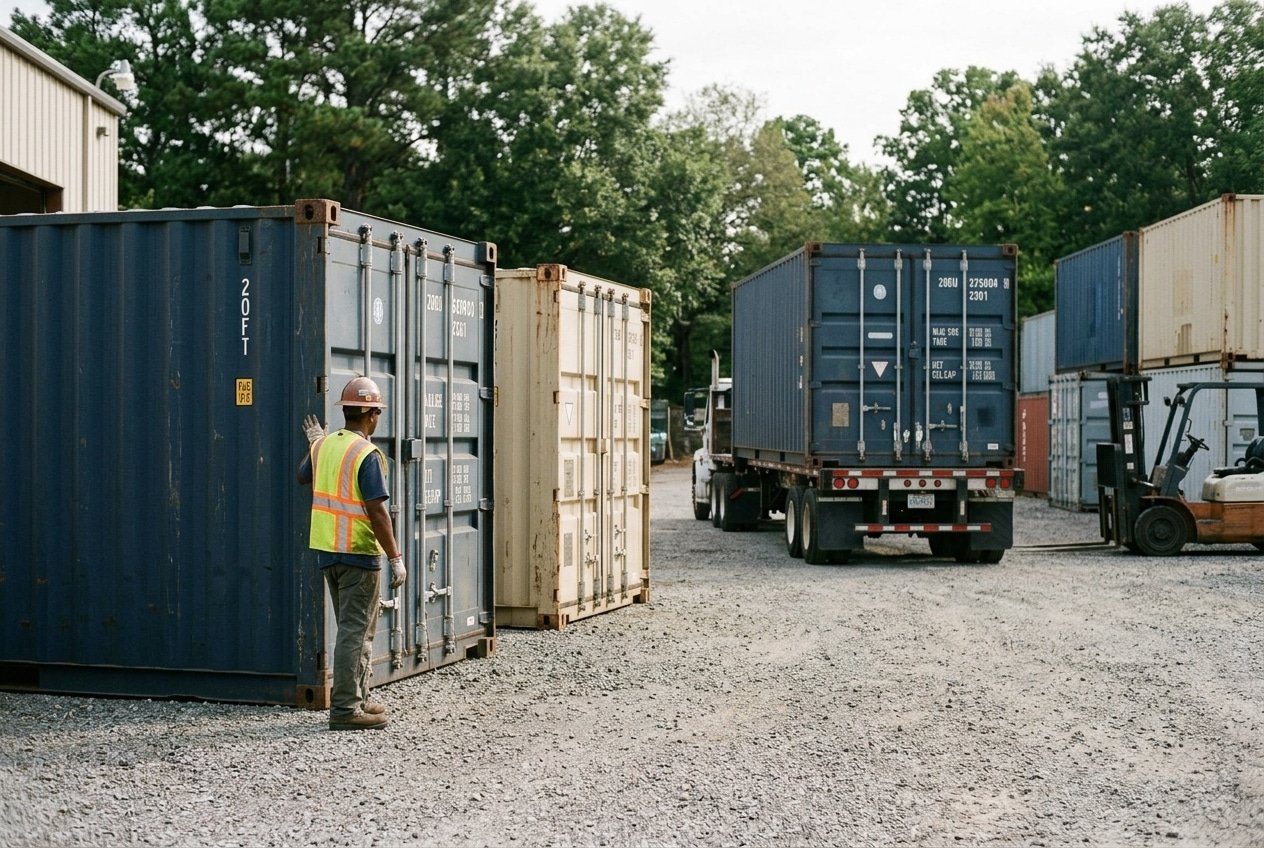
Most 20ft containers ship on tilt-bed trailers, which need a straight, flat approach of at least 100 feet to slide the container off the back. If your site has a tight turning radius, overhead power lines, or soft ground, the delivery gets more complicated and more expensive.
Tilt-Bed Trailer Fees and Site Preparation
Standard delivery within 50 miles of a Raleigh depot typically costs $200 to $500. Beyond that radius, expect mileage-based surcharges. If your property requires a crane or specialized equipment because the tilt-bed can’t reach the placement spot, crane fees can run $500 to $1,500 on top of the base delivery charge.
Site prep is your responsibility. A level gravel pad (at least 20 feet by 10 feet) is the most common foundation for a 20ft container. Concrete piers work for permanent installations. Placing a container directly on bare soil invites moisture problems and makes it harder to level over time. Budget $200 to $600 for a basic gravel pad, depending on your soil conditions and whether you hire it out or handle it yourself.
Lease Lane Containers provides delivery planning support that covers access evaluation, overhead clearance checks, and turning radius requirements: the kind of practical guidance that prevents a failed delivery attempt and the rebooking fees that come with it.
Permitting and Zoning Regulations for Raleigh Residents
Before you buy, check whether your property’s zoning allows a shipping container. This step catches many buyers off guard, especially in residential areas within Raleigh city limits.
City of Raleigh Storage Container Ordinances
The City of Raleigh regulates shipping containers under its Unified Development Ordinance (UDO). In most residential zones, a shipping container used for storage is treated as an accessory structure. That means it may require a zoning permit, must meet setback requirements, and could be subject to screening or fencing rules to keep it out of public view.
Contact the Raleigh Planning and Development department at (919) 996-2626 or visit raleighnc.gov to confirm requirements for your specific parcel. Wake County properties outside city limits may fall under different rules, so verify with the county planning office if your site is in an unincorporated area.
Temporary placement for construction projects sometimes gets different treatment than permanent storage use. If you’re a contractor placing a container on a job site for the duration of a build, ask about temporary use permits: they’re often simpler and faster to obtain.
How to Inspect a Container Before Purchase
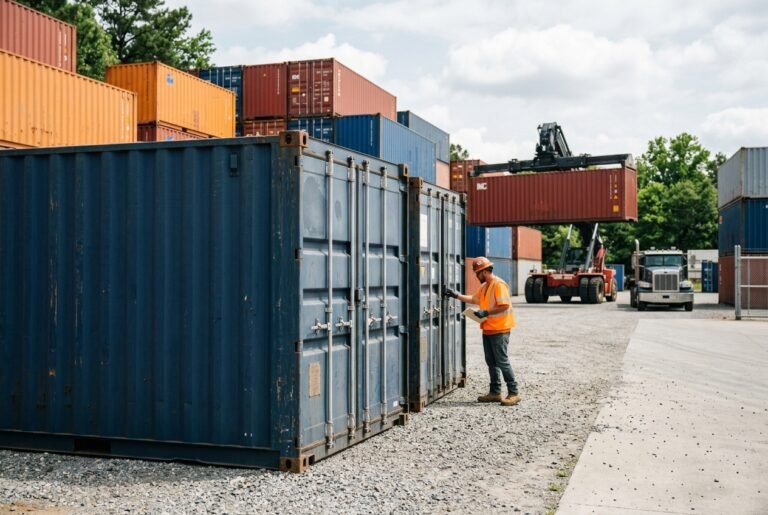
Never buy a shipping container sight unseen if you have the option to inspect it first. Even within the same grade, individual units vary. A 15-minute inspection can save you from spending money on a container that doesn’t meet your needs.
Start with the doors. Open and close both doors fully. Check the gaskets for cracks or compression damage. Doors that stick or won’t latch properly are a red flag, and fixing them after purchase costs $150 to $400.
Move to the exterior walls. Look for deep rust, especially along the bottom rails and corner posts. Surface rust is normal on used units, but rust that’s eaten through the steel means structural compromise. Use a flashlight inside with the doors closed: any pinpoints of light coming through the walls or roof indicate holes that need patching.
Check the floor by walking the entire interior. Soft spots in the marine-grade plywood suggest water damage from above. Inspect the undercarriage if possible: the cross members and bottom rails carry the container’s structural load, and corrosion there is more serious than cosmetic rust on the sides.
A reputable supplier will let you inspect on-site or provide detailed, honest photos with grade explanations if you’re buying remotely.
Maximizing Value: Customization and Maintenance Tips
A 20ft container is a blank canvas for dozens of practical modifications. The key is knowing which upgrades add real value for your use case and which ones you can skip.
Basic annual maintenance keeps a container in strong condition for decades. Inspect door gaskets yearly and replace them when they crack (about $50 to $100 for a set). Touch up paint chips and surface rust with marine-grade rust inhibitor before they spread. Lubricate door hinges and locking rods with silicone spray every six months. Budget roughly $100 to $200 per year for routine upkeep: a small investment that protects a $2,000 to $5,000 asset.
Adding Security Features and Climate Control
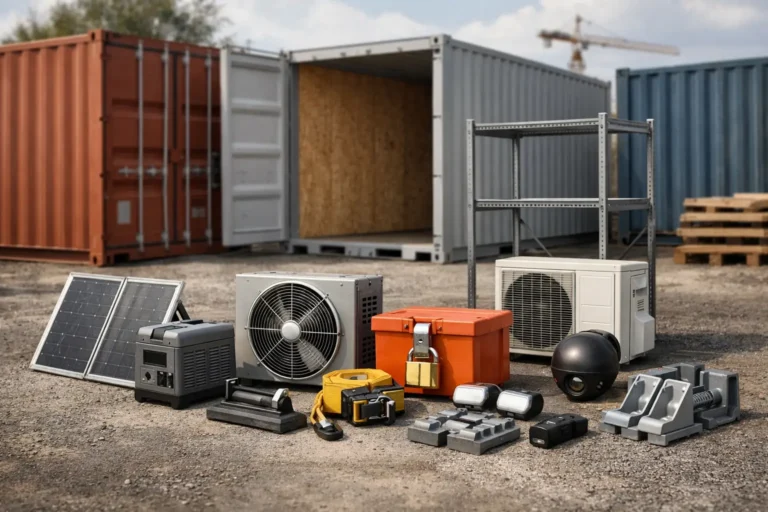
For job sites and business storage, a lock box welded over the door handles is the most cost-effective security upgrade at $75 to $150 installed. Puck locks designed for shipping containers run $30 to $60 and resist bolt cutters far better than standard padlocks.
Climate control depends on what you’re storing. Passive ventilation (two to four wall vents) costs $100 to $200 and prevents condensation buildup inside the container. If you’re storing temperature-sensitive inventory or converting the unit into a workspace, insulation with spray foam and a mini-split HVAC system runs $2,500 to $5,000 but turns a basic storage container into a usable four-season space.
Final Checklist
Before you commit to a purchase, run through these steps:
- Confirm your property’s zoning allows a shipping container (call Raleigh Planning at 919-996-2626 or check with Wake County)
- Decide on the grade you need: one-trip for visibility and longevity, WWT for budget storage
- Get at least three quotes from local suppliers and national brokers, comparing total delivered cost
- Verify delivery access: measure your driveway width, check overhead clearance, and confirm a tilt-bed truck can reach your placement spot
- Prepare your site with a level gravel pad or concrete piers before delivery day
- Inspect the container in person or request detailed graded photos before finalizing
The best 20ft container purchase starts with knowing what you actually need and what you’re willing to spend on delivery, site prep, and any modifications. Raleigh buyers have strong options thanks to the area’s port access and active dealer network.
If you’re ready to compare real inventory, browse available containers from Lease Lane Containers to see current sizes, grades, and pricing. Their Raleigh-based team can help you match the right unit to your project and plan a delivery that works the first time.