Tracking Delivery for Containers: Status Updates Explained
Delivery day feels simple on paper: a truck shows up and your container is set in place. In real life, shipping container logistics are closer to moving heavy equipment than ordering a parcel. If you are a general contractor staging materials in Raleigh, a small business adding overflow storage in the Southeast, or a homeowner placing a unit on acreage, tracking delivery is how you reduce downtime, prevent re-delivery fees, and make sure the site is ready when the driver arrives.
Below is a practical breakdown of the most common delivery status updates, what they actually mean in container logistics, and what you should do at each step.
What “tracking delivery” means for a shipping container (and why it is different)
Most shipping containers are built to ISO standards (often referenced under ISO 668 series requirements for Series 1 freight containers) and constructed from Corten steel for corrosion resistance in harsh marine and outdoor environments. But while the box is standardized, delivery is not.
A container delivery typically involves:
- A local or regional carrier (often a flatbed or tilt-bed)
- Sometimes a chassis (common in port or intermodal moves)
- Site access constraints (grade, overhead clearance, turning radius)
- Appointment scheduling, because a 20,000 to 10,000+ pound steel unit cannot be left at a door
So your status updates will be more like freight milestones than minute-by-minute GPS tracking.
The IDs that matter: order number vs container number vs freight reference
When customers ask for “tracking,” the first step is clarifying which identifier is being used. Here is how they differ.
| Identifier | What it is | When you see it | Why it matters |
|---|---|---|---|
| Order/Invoice number | Your purchase reference with the seller | Immediately after checkout or quote approval | Helps the sales team locate your order, delivery address, and delivery method |
| Container number (BIC code) | The physical container’s ID painted on the doors | Once a specific unit is assigned | Useful if you need documentation, inspections, or to match a specific unit |
| Bill of Lading (BOL) or freight reference | Carrier paperwork number for transport | When the load is dispatched or tendered | Often required for carrier-side updates and proof of delivery |
| Appointment window | Scheduled delivery time range | After routing and dispatch | Tells you when to have the site ready and someone available |
If you are unsure what you have, give your supplier the order number first. Once the container is assigned and dispatched, freight references become more useful.
Container delivery status updates explained (plain English)
Different carriers use different wording, but most updates map to the same real-world events.
| Status update | What it usually means | What you should do |
|---|---|---|
| Order confirmed | Payment and basic order details are complete | Confirm delivery address, contact phone, and any gate codes |
| Unit assigned | A specific container has been allocated (often with a container number) | Verify size and type (20ft, 40ft, Standard vs High Cube, Reefer if applicable) |
| Preparing for dispatch | Routing is being scheduled with a carrier | Re-check drop spot, overhead clearance, and turning space |
| Dispatched / Tendered to carrier | A carrier has accepted the load | Make sure a site contact can answer calls and texts |
| Picked up / Loaded | The container is physically on the truck or staged for the final move | Clear vehicles, unlock gates, mark the placement area |
| In transit | En route to your site or a local terminal | Expect an ETA range, not a minute-by-minute map |
| Out for delivery | The driver is on the final leg and may call ahead | Be on-site or reachable, last-minute site changes are hard |
| Attempted delivery | Driver could not safely place the unit (access, clearance, soft ground) | Coordinate a new plan, expect additional charges depending on the situation |
| Delivered / POD available | Container is placed and delivery is complete | Inspect condition, confirm doors operate, document with photos |
A note about “ETA” updates
An ETA is usually a best estimate based on routing and appointment windows. It can shift due to traffic, weather (common during summer storm season across North Carolina and the coastal Southeast), port congestion, or earlier stops on the route.
Why your status might change (and what is normal)
Some changes are expected and do not signal a problem.
- Carrier scheduling constraints: Flatbeds and tilt-beds run planned routes. Your stop is one piece of a larger schedule.
- Delivery method differences: Ground-level set (tilt-bed) vs chassis delivery can change timing and site requirements.
- Site readiness issues: Soft ground after rain in the Raleigh area, tight turns in new subdivisions, or overhead lines can force rescheduling.
- Equipment availability: A 40ft High Cube may require different handling than a 20ft standard unit.
- Permits and access windows: Some municipalities and HOAs in Wake County and surrounding areas restrict placement times or locations.
If you want a “sanity check” on a status update you received from a carrier portal, share it with your supplier’s team. A good container provider will translate carrier language into next steps.
How to get better tracking updates from day one
Tracking delivery gets easier when you set expectations early, especially for projects with tight timelines.
Confirm your container specs early
Size and type affect routing and equipment.
- 20ft container: Often easier for residential driveways and tighter Raleigh neighborhoods.
- 40ft container: Common on job sites and for larger inventory storage, but needs more turning radius and a longer set-down zone.
- High Cube: Adds height (typically 9'6" vs 8'6"), which can matter for tree limbs, service lines, and low branches.
- Refrigerated (Reefer): May require special planning for power, ventilation clearance around the unit, and protection for the condenser area.
If you are still deciding between a 20ft and 40ft unit, start by comparing your site constraints and storage volume needs with the team at Lease Lane Containers so your delivery plan matches the container.
Know your container grade and what “acceptable condition” looks like
Delivery tracking is not only about timing, it is also about what shows up when the truck arrives.
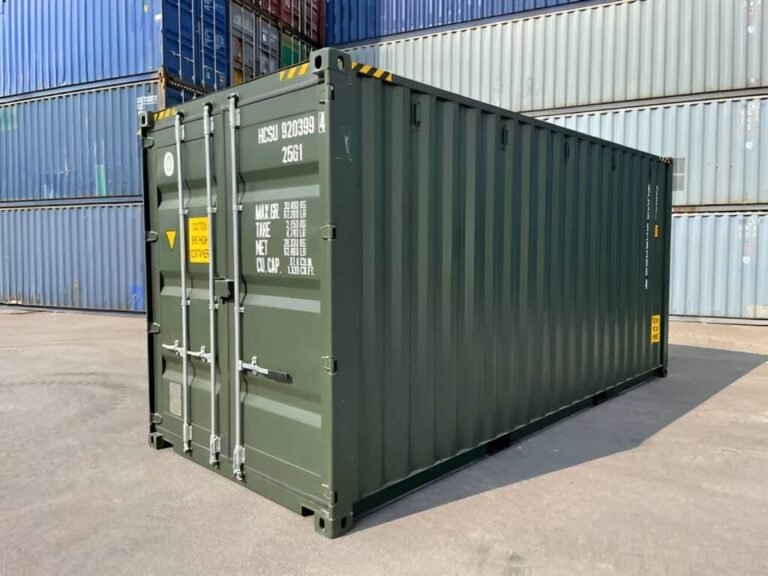
- One-Trip (new) containers: These are typically used once for ocean transport, then sold. They usually present cleaner paint, fewer dents, smoother door operation, and minimal floor wear.
- Cargo Worthy (CW) containers: These are used containers that are generally considered suitable for transport and international shipping contexts (condition can vary, but they should meet functional requirements for moving cargo).
- Wind & Watertight (WWT) containers: These are commonly purchased for on-site storage. They should keep out wind and water when closed properly, while cosmetic dents, surface rust, and patches are more common than on one-trip units.
Understanding grade helps you interpret delivery notes like “scratches present” or “used unit shows wear” without confusion. If you are shopping used inventory, you can also review options through used containers at Lease Lane Containers and confirm what grade you are buying before dispatch.
Using tracking portals responsibly (and when to rely on your supplier)
Some carriers and container companies offer web interfaces that let you enter a consignment or reference number. These can be helpful for quick milestone checks, especially if your shipment is moving through multiple depots.
For example, some customers are familiar with a dedicated track your order page where you enter a consignment number to view shipment status. Tools like this are useful for seeing standard freight milestones, but they do not replace site-specific planning like gate access, tilt-bed clearance, or confirming exactly where the container should land on your property.
When in doubt, your best source of truth is the seller coordinating delivery, because they can connect your order details, container type, and site constraints to what the carrier is actually able to do.
Pro-Tip: Site preparation that prevents the most common delivery failures
The fastest way to turn “out for delivery” into “attempted delivery” is poor site prep. A little planning makes tracking smoother because there are fewer surprises.
Pro-Tip (Raleigh and Southeast soil conditions): If rain is in the forecast, assume your yard will be softer than you think. A heavy truck and a steel container can rut turf quickly.
Focus on these fundamentals:
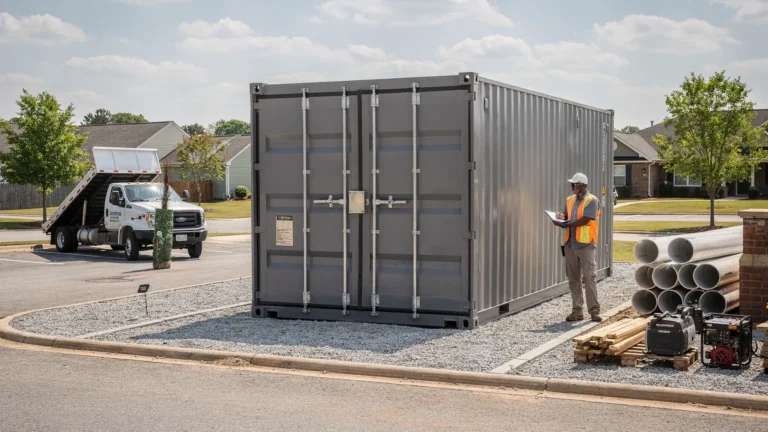
- Base and leveling: A compacted gravel pad is ideal. At minimum, plan stable supports (railroad ties or concrete blocks) so the container corners are level and doors do not bind.
- Clearance: Ensure adequate overhead space for the truck’s tilt angle if using a tilt-bed ground set. Watch for tree limbs, service drops, and low lines.
- Access and turning radius: Measure driveway width and turning constraints, especially in tight Raleigh subdivisions or older neighborhoods with narrow streets.
- Drainage: Avoid placing the unit where water pools. Even Corten steel benefits from good drainage, and keeping the floor dry protects what you store.
- Permits and rules: In Raleigh and nearby municipalities, placement rules can vary by zoning, setbacks, and HOA covenants. If you are uncertain, ask your supplier what local customers commonly run into and confirm with your city or county.
Good site prep does more than prevent delays, it protects the container doors from twisting due to an uneven base.

What to do on delivery day (quick inspection without slowing the driver)
Plan to do a fast, practical check the moment the container is set.
- Verify the size (20ft vs 40ft) and height (Standard vs High Cube).
- Open and close both doors to confirm smooth operation and locking cam function.
- Look for obvious daylight around door seals and major holes (WWT expectations are about keeping weather out when closed).
- Check the floor condition for soft spots and strong odors (especially important for storage and mobile office use).
- Take photos of all four sides, the doors, and the container number if visible.
If anything is not as ordered (wrong size, wrong type, major functional issue), contact your supplier immediately while the delivery is fresh and documentation is easiest.
Matching tracking expectations to your use case
Different buyers care about different milestones.
- General contractors in North Carolina: The most important status is often “dispatched” and the confirmed appointment window, so crews can plan tool security and material deliveries.
- Small business owners: “Delivered” plus placement accuracy matters most, especially if the container is serving as inventory overflow or a pop-up build-out.
- Homeowners and agriculture: Site condition and drainage are the biggest variables, so “out for delivery” should trigger a final walkthrough of the drop zone.
- Logistics managers: Container number assignment and paperwork milestones may be the top priority, especially for Cargo Worthy units.
If you are coordinating deliveries across the Southeast, from Raleigh to Charlotte, Greensboro, Wilmington, or into South Carolina and Virginia, build a repeatable site checklist and share it with everyone who will receive loads.
Need clearer delivery updates for your container order?
Lease Lane Containers LLC helps customers in Raleigh, across North Carolina, and nationwide understand delivery milestones, prepare sites correctly, and choose the right container type and grade (One-Trip, Cargo Worthy, or Wind & Watertight).
To get an accurate status update or plan your delivery, email sales@leaselanecontainers.com or visit our Raleigh, NC office to speak with our local team.