Tunnel Shipping Container Benefits Explained
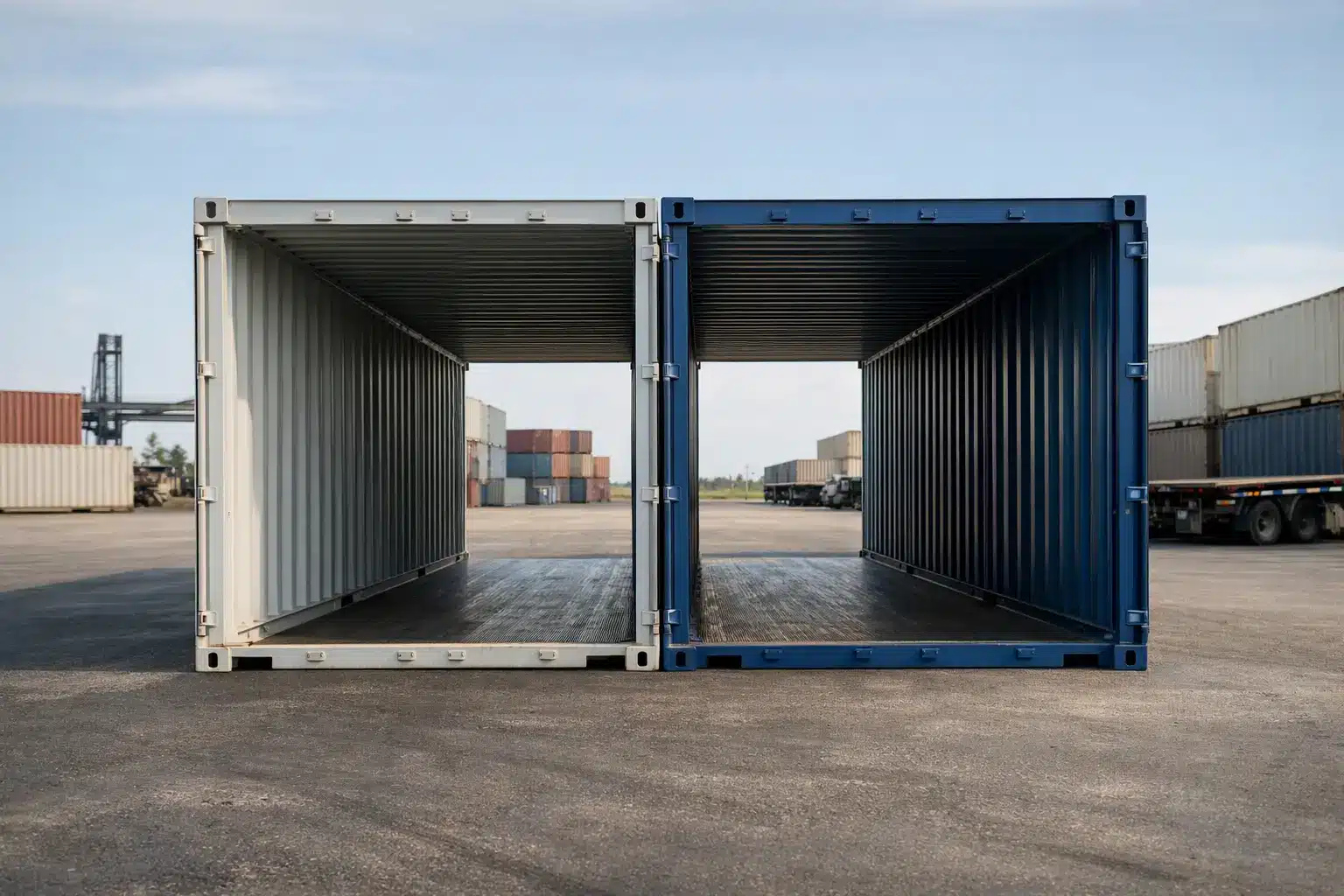
If you have ever had to unload a container one pallet at a time just to reach the material at the back, the tunnel shipping container benefits become obvious fast. A tunnel container has cargo doors on both ends, which changes how you load, access, and organize stored goods. For contractors, farm operators, and businesses dealing with fast-moving inventory, that layout can solve real workflow problems that a standard single-door container cannot.
If you are comparing specialty layouts against standard storage options, browse our shipping container inventory before deciding which access style actually fits your workflow.
What makes a tunnel container different
A tunnel shipping container looks similar to a standard ISO container from the outside, but the key difference is access. Instead of one set of end doors, it has doors on both ends. Most units are built from Corten steel and follow standard container dimensions, so they still deliver the durability, stackability, and weather resistance buyers expect from cargo-worthy equipment.
That second set of doors sounds simple, but it affects how the container performs on a job site or property. You are no longer forced to load and unload from one end only. That means less reshuffling, shorter retrieval times, and more flexibility in how the container is positioned.
For a broader overview of standard container footprints and common sizing choices, review our standard shipping container size guide before narrowing down a specialty unit.
Tunnel shipping container benefits for daily operations
Faster loading and unloading
The clearest advantage is speed. With access from both ends, crews can load from one side and unload from the other, or simply reach the closest door instead of walking the full length of the container every time. On active construction sites, that can save labor hours over weeks or months.
This matters most when the container holds tools, electrical supplies, fasteners, safety equipment, or boxed inventory that turns over often. If your team needs the same container several times a day, reducing unnecessary handling is not a small convenience. It is a practical labor and productivity gain.
If your team is choosing between compact access and larger overall storage volume, compare our 20ft shipping containers and 40ft shipping containers side by side.
Better inventory organization
A standard container often turns into a single access aisle with stacked material behind stacked material. Tunnel containers give you more options. You can organize by project phase, crew, product type, or frequency of use, with one category loaded from one end and another category from the opposite end.
For example, a contractor might keep daily-use tools and consumables at the front end and bulk reserve stock at the rear. An agricultural operator might store seed, fencing supplies, or repair parts in separate zones. A retail operator handling overflow inventory can create a more logical first-in, first-out flow.
Improved access in tight schedules
When time matters, direct access matters too. If your crew loses 15 minutes every time they have to move material to reach the back, those delays add up. Tunnel containers reduce that friction. Instead of unpacking half the container to retrieve one item, you may be able to open the opposite doors and access it directly.
That is one of the more overlooked tunnel shipping container benefits. The value is not only in storage capacity. It is in reducing the interruptions that slow work down.
Where tunnel containers make the most sense
Construction and job-site storage
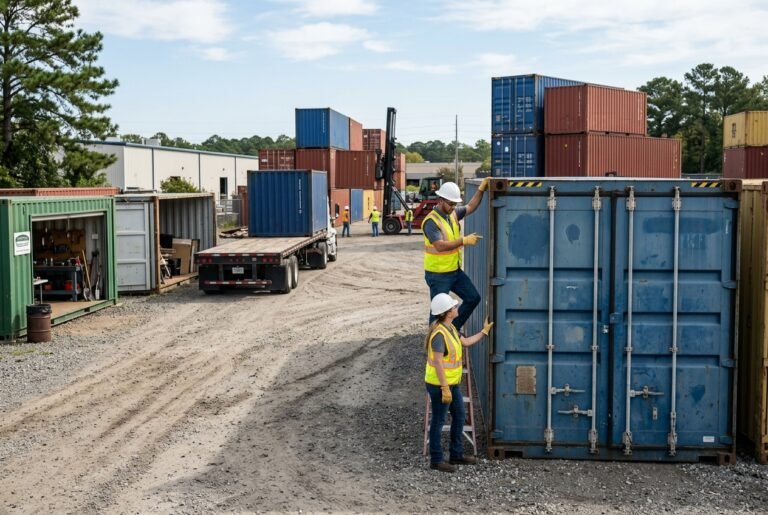
Tunnel containers are a strong fit for construction firms managing active sites with multiple trades. One door can face the main work area while the opposite end faces delivery or staging space. That setup helps crews access what they need without creating a bottleneck at a single entrance.
For job sites where access control and theft prevention matter as much as storage layout, our secure container setup guide can help you plan locks, lighting, and placement correctly.
They also work well for phased material storage. You can stage near-term material at one end and longer-term stock at the other, which makes the container easier to manage as the job progresses.
Agricultural properties and rural operations
Farm and ranch buyers often need storage that is secure, weather-resistant, and easy to access during busy seasons. A tunnel container can support equipment parts, feed-related supplies, irrigation components, fencing materials, or harvest support items without forcing everything through a single entry point.
On larger properties, positioning can be easier too. Depending on the site layout, double-end access may reduce the need to leave extra turnaround space on only one side. That said, you still need enough clearance to safely open both sets of doors when needed.
If your farm use case is mostly general storage rather than dual-end access, our container solutions for jobsites, farms, and small business guide helps compare the most practical fit.
Inventory overflow and retail use
For logistics managers, event operators, and retail businesses, tunnel containers can function as practical stockrooms. If inventory comes in one side and goes out the other, the container supports a cleaner flow. This can be especially useful for seasonal merchandise, promotional stock, or temporary storage during renovations.
In pop-up retail or modular conversions, the dual-door design can also support customer flow or ventilation planning, though that depends on the build. Not every conversion benefits equally, so layout should be reviewed before purchase.
Security, structure, and trade-offs
Buyers sometimes ask whether more doors mean less security. The answer depends on the container’s condition, lock hardware, and intended use. A well-built tunnel container still offers the core steel construction and lockable door system expected from an ISO-style unit. But it also has more door hardware, more gaskets, and more moving parts than a standard single-door container.
That means condition matters. If you are considering a used tunnel unit, inspect door alignment, hinge condition, gasket integrity, and locking gear carefully. A container rated Wind & Watertight should keep out normal weather, but worn rear-door seals can create future maintenance issues if they are not addressed up front. For long-term storage of sensitive goods, cargo-worthy or one-trip condition may be worth the added cost.
Structurally, tunnel containers are engineered for cargo use, but the extra door opening changes how some buyers think about modifications. If you plan to cut side openings, install shelving, or convert the unit into a workspace, you should evaluate reinforcement needs with the same care you would use on any modified container. Double-end access is useful, but every alteration has structural implications.
If you are evaluating a used specialty container, our how to spot quality containers before you buy guide will help you inspect doors, seals, flooring, and frame condition more carefully.
When a standard container may be the better buy
Not every buyer needs a tunnel unit. If you are storing equipment long term and only accessing it occasionally, a standard 20-foot or 40-foot container may be more cost-effective. Standard units are more common, often easier to source, and usually available in a wider range of grades and price points.
This is where the real answer depends on your use case. The tunnel shipping container benefits are strongest when frequent access, workflow efficiency, and organized retrieval are part of the job. If your priority is simply secure enclosed storage at the lowest practical cost, a standard container may deliver better value.
If extra vertical room matters more than dual-end access, compare a 40ft High Cube container before moving to a tunnel layout.
Availability can also affect the decision. Tunnel containers are a more specialized product, so inventory may be tighter than standard boxes in some markets. Delivery timelines, grade availability, and regional stock can vary.
Delivery and site planning still matter
A tunnel container only works well if the site supports the way you plan to use it. Before ordering, think through door swing clearance, delivery path, ground conditions, and final orientation. If both ends need to be opened regularly, do not place one end too close to a fence, berm, wall, or another container.
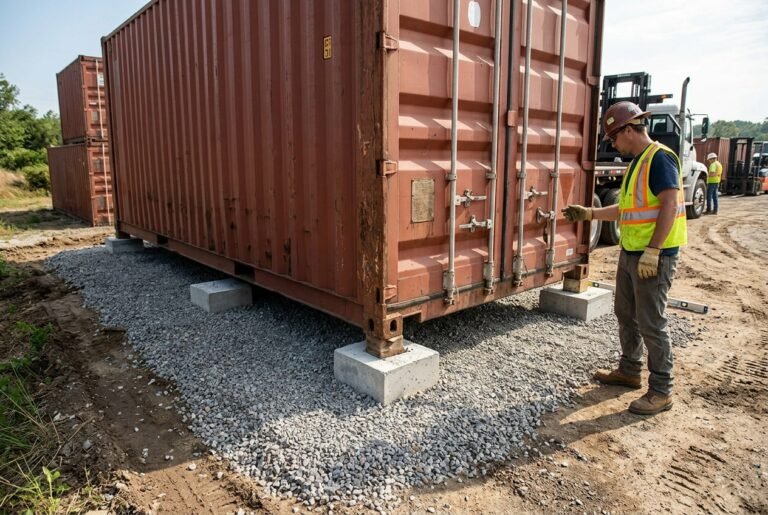
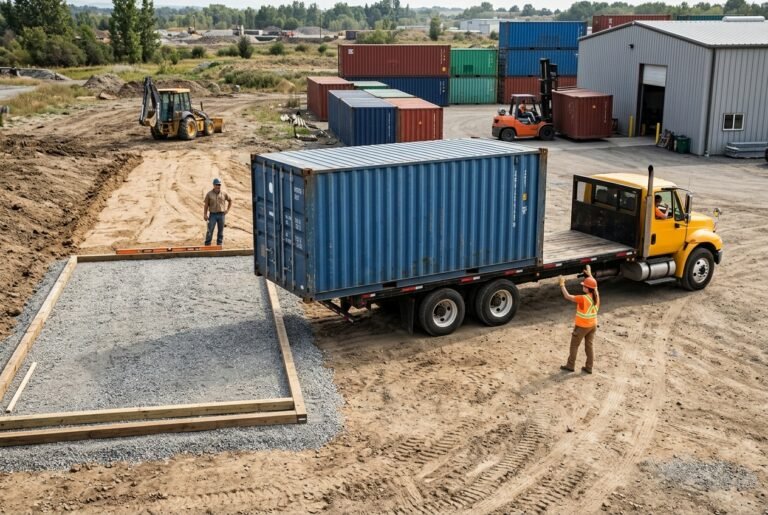
Ground-level and tilt-bed delivery setups also need attention. The driver needs enough room to place the unit safely, and you need a stable, level surface that supports the full footprint. If the container twists on uneven ground, door operation can become more difficult over time.
Before scheduling delivery, review our shipping policy and ground-level delivery guide so the container can be positioned for real access from both ends.
For many buyers, this is where a knowledgeable seller adds value. Clear guidance on dimensions, grade definitions, and delivery requirements helps avoid preventable costs later. That is especially true for first-time buyers who may not realize how much access clearance matters until the container is already on site.
Choosing the right tunnel container
Start with the same questions you would ask for any container purchase. What are you storing, how often will you access it, and how important is appearance versus pure function? A one-trip tunnel container usually offers the best door performance, cleaner appearance, and the longest service life. A used unit may reduce upfront cost, but only if the door systems are still in sound working order.
It also helps to match the size to the real job. A 20-foot tunnel container can be ideal for dense job-site storage where access matters more than maximum cubic capacity. A 40-foot unit makes sense when you need both throughput and volume, but it also requires more placement room and more thought about organization.
If you are comparing quotes, ask for verified specifications, exact grade descriptions, and delivery details in writing. No fine print, no surprises should be the standard on a purchase like this.
Lease Lane Containers works with buyers who need that level of clarity, especially when specialized units and delivery logistics are part of the equation. The right container is not just about dimensions. It is about how the container performs once it is on your site and in daily use.
A tunnel container is worth serious consideration when access is part of the problem you are trying to solve, not just storage space. If reaching the back of the box keeps costing you time, labor, or organization, the better layout often pays for itself in fewer slowdowns and less frustration.
If you want help comparing tunnel containers against standard, high-cube, or other specialty units, contact our team for clear guidance before you buy.