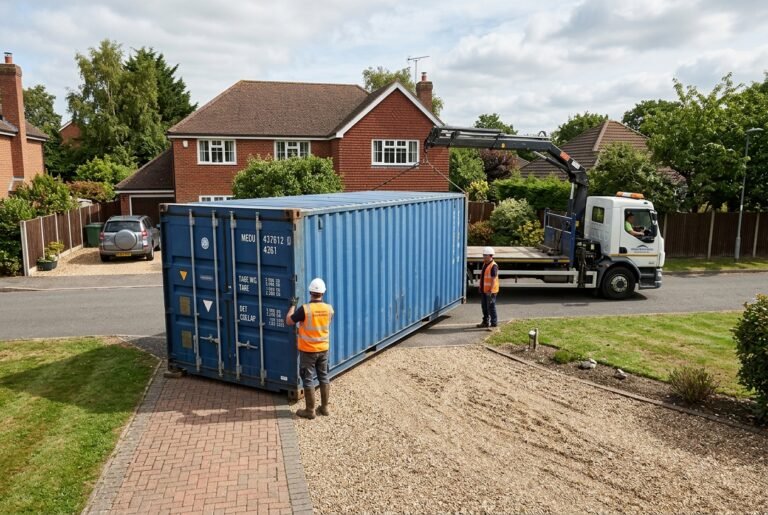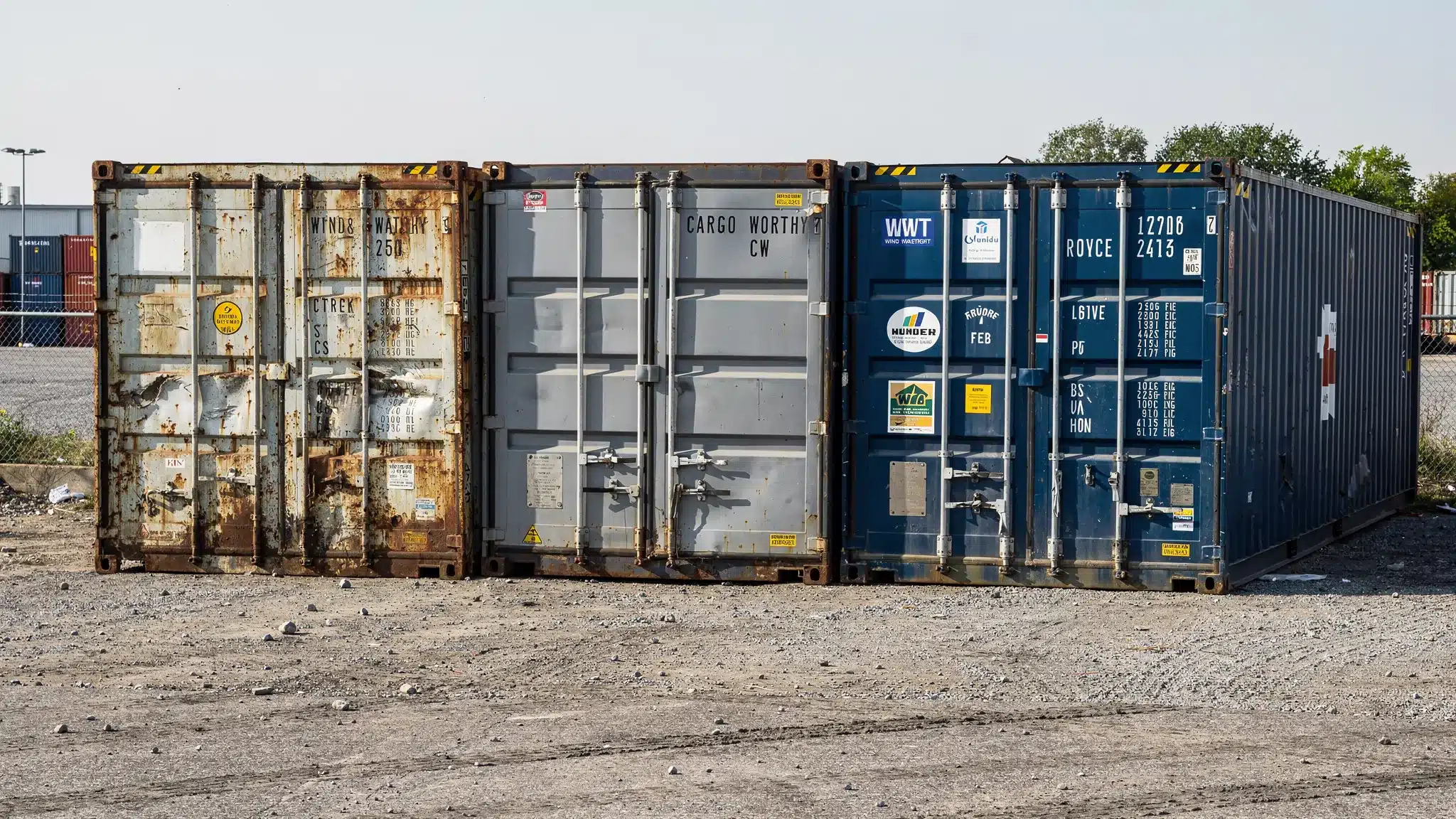
Used Cargo Containers for Sale: CW vs WWT Grading Made Simple
If you’re searching for used cargo containers for sale, the two most common labels you’ll see are CW (Cargo Worthy) and WWT (Wind and Watertight). They sound similar, but they are not interchangeable. Choosing the wrong grade can mean paying too much for storage, or worse, buying a “storage-only” box when you actually need something that can legally move through ports.
Lease Lane Containers LLC works with buyers across Raleigh, North Carolina, the Southeast, and nationwide. This guide makes CW vs WWT simple, without skipping the technical details that matter (ISO standards, CSC plates, and what “Corten steel” actually buys you in durability).
CW vs WWT, made simple
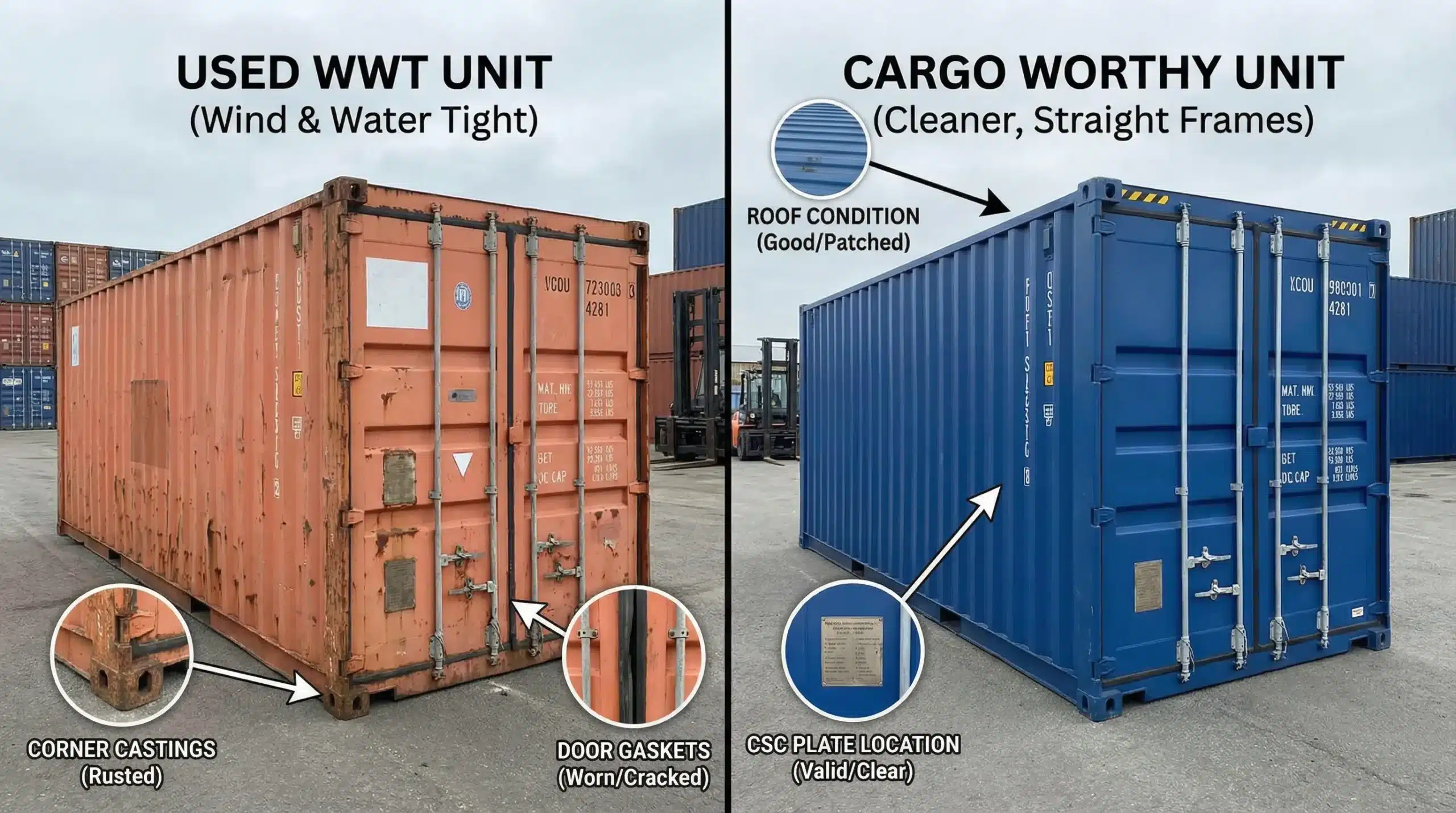
Wind & Watertight (WWT) means the container is intended for static storage and should keep weather out (no active leaks, doors close, solid roof). It is a resale grade focused on usability on your property.
Cargo Worthy (CW) generally means the container is structurally suitable for transport and handling in the cargo system (lifting, stacking, moving), and typically aligns with having a valid or verifiable CSC safety approval when required for export.
If your container is going to sit on a jobsite in Raleigh, WWT often checks the box. If your container needs to move freight internationally, CW is usually the minimum starting point.
Why these grades exist (and why they’re often confused)
Shipping containers are built to global specs, commonly described as meeting ISO standards for dimensions and handling (for example, ISO 668 is widely referenced for series 1 container classifications). They’re designed around corner castings, standardized lifting points, and structural loads.
Most containers in the resale market are made from Corten steel (weathering steel). It resists corrosion better than mild steel when the protective oxide layer is allowed to form. That said, Corten is not “rust-proof.” Poor drainage, roof damage, salt exposure, and neglected paint can still create real corrosion, especially around door frames and roof seams.
Where the confusion starts is that many sellers use “cargo worthy” as a marketing phrase, while others use it as a strict operational standard tied to transport readiness. Lease Lane Containers prioritizes transparent grading so you can match condition to use.
What does WWT mean in practical terms?
A WWT container is commonly used for:
- Construction storage for tools and materials
- Farm and property storage (feed, implements, seasonal equipment)
- Small business inventory overflow
- Budget-friendly workshops (after proper ventilation and planning)
WWT typically implies:
- Doors open and close properly (even if stiff)
- No holes in the roof, no daylight through the walls (a “light test” should pass)
- Weather seals and door gaskets are functional enough to keep rain out
- Floors are serviceable, but may show stains, patches, and wear
WWT does not automatically mean:
- The container is certified for ocean export
- The container has a current CSC plate approval
- The container is cosmetically clean or dent-free
For a deeper definition and inspection expectations, see our guide on what a Wind and Watertight shipping container is.
What does Cargo Worthy (CW) mean in practical terms?
A CW container is commonly chosen for:
- Export freight and international moves
- Logistics managers needing equipment that can stay in the transport ecosystem
- Projects where stacking strength and handling integrity matter
CW is strongly associated with:
- Sound structural frame (top rails, bottom rails, cross members)
- Intact corner castings for safe lift and secure handling
- Doors that seal and secure properly
- A condition that can pass the scrutiny of transport stakeholders (depending on route and carrier requirements)
CW and the CSC plate (the part many listings skip)
For international shipping, most stakeholders care about the CSC (Convention for Safe Containers) safety approval. The official convention is managed under the IMO framework, and the plate is the quick field reference to safety approval data. You can read more background directly from the IMO overview of the Convention for Safe Containers (CSC).
Important nuance: “CW” in resale listings is not always the same as “a container currently certified for export today.” If you’re moving cargo overseas, you should verify what documentation your freight forwarder or carrier expects.
For a practical comparison of nearly-new vs transport-ready used options, see One Trip vs. Cargo Worthy: which container is best?.
Where One-Trip fits (and why it matters even if you asked about used)
Even when shopping “used,” you’ll often see One-Trip quoted alongside CW and WWT.
- One-Trip means the container made a single loaded voyage (usually from the factory) and then entered the resale market. It’s typically the closest you’ll get to new condition.
- It’s still built to the same ISO handling ecosystem, but the difference is wear, corrosion exposure, and floor condition.
If appearance, remaining service life, and clean interiors matter (retail pop-ups, mobile offices, higher-end builds), One-Trip is often worth pricing out.
If you want a full decision framework, Lease Lane’s Ultimate Shipping Container Buyers Guide is the best place to start.
CW vs WWT: quick comparison table
Use this table to pick the grade based on how you will use the container, not how the listing is worded.
| Feature | WWT (Wind & Watertight) | CW (Cargo Worthy) | One-Trip (New / one voyage) |
|---|---|---|---|
| Best for | On-site storage | Transport ecosystem, export use cases | Customer-facing projects, conversions, longest lifespan |
| Weather protection | Expected to be weather-tight | Expected to be weather-tight | Expected to be weather-tight |
| Structural integrity expectation | Good for static use, may have dents | Higher expectation for handling and stacking | Highest, minimal wear |
| Certification focus | Usually not sold on export certification | Often tied to CSC needs for shipping (verify) | Often easiest path for clean documentation and condition |
| Typical visual condition | Dents, patches, surface rust common | Dents possible, but should remain structurally sound | Minor handling marks, cleaner paint and doors |
| Buyer risk if mismatched | May fail export requirements | You may overpay if you only need storage | You may overpay if you only need basic storage |
How to choose the right grade based on your use case
Contractors and home builders (Raleigh and across the Southeast)
If your goal is secure jobsite storage for tools, materials, and locking up at night, WWT is often the value sweet spot.
You’re paying for function, not appearance.
If you need predictable doors (daily access) and plan to add lockboxes, shelving, or lighting, it can still be worth stepping up to CW or One-Trip depending on budget.
Small business owners
Ask one question first: Will customers see it?
- For back-of-house inventory overflow, WWT can be perfect.
- For pop-ups, branded activation, or a container office, the cleaner surfaces and straighter doors of One-Trip often reduce prep costs.
Homeowners and agriculture
WWT is commonly the best match for long-term storage, especially when placed correctly on a pad with drainage.
If you’re storing sensitive goods (paper products, fabrics, electronics), grade matters, but so do ventilation and condensation control.
Logistics and export buyers
Start at CW (or better) and then verify what your shipping partners require.
If you’re building an overseas operation and plan to move equipment internationally, it can be helpful to coordinate your container procurement with your corporate and compliance setup. For businesses establishing operations in the UAE, an experienced UAE company formation and compliance partner can help align governance, banking, and tax requirements with your expansion plan.
What to ask a seller so “CW” and “WWT” are not guesswork
The fastest way to avoid confusion is to ask for specifics, not labels:
- What grade is it being sold as, in writing? CW, WWT, One-Trip, or As-Is.
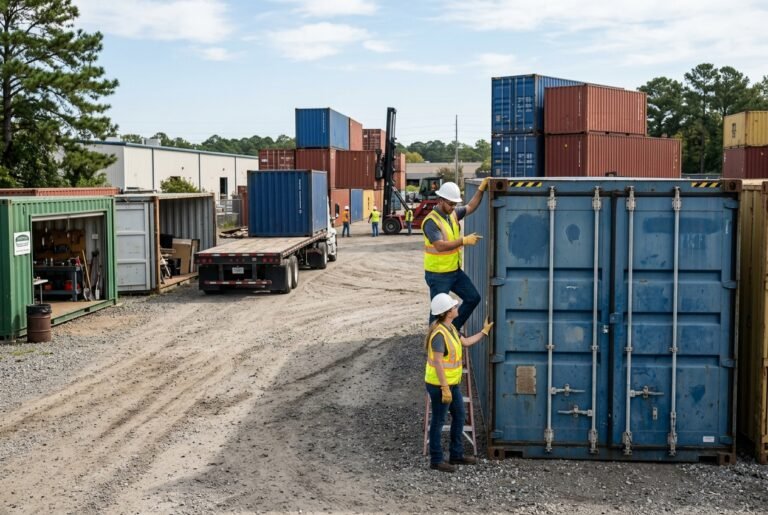
- Do you have photos of the actual unit (doors closed, doors open, roof, corner castings, CSC plate if present)?
- Any known floor issues? Soft spots, delamination, strong odors, or chemical contamination concerns.
- Any active leaks or recent patching? (A patched roof can still be WWT if done correctly, but you want transparency.)
- Door function (does it latch without extreme force, are gaskets intact)?
If you want a more detailed inspection process, use our step-by-step resource on how to check used shipping container conditions.
Size and height still matter: 20ft, 40ft, and High Cube considerations
Grade tells you condition, but size determines usability and delivery constraints.
- A 20ft container is often the most practical for residential driveways and tighter Raleigh lots, and it’s a favorite for contractors who need secure storage without sacrificing staging space. Start with our 20ft shipping container price guidance, then compare grades.
- A 40ft container is ideal for volume storage, jobsite material staging, and business inventory overflow, but it raises delivery access requirements. If you’re budgeting, see what a 40ft shipping container costs.
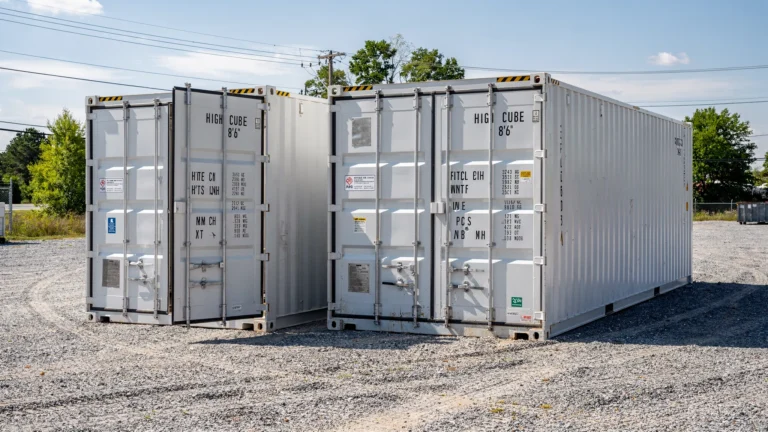
- A High Cube (typically 9'6" tall vs 8'6" standard) adds valuable vertical space for shelving and larger items, but it can affect clearance under trees and lines. For exact sizing, use our shipping containers dimensions guide.
Pro-Tip (site preparation): build the pad first, not after delivery
The most common “bad container experience” is not the container, it’s the site. In Raleigh and the broader Southeast, clay soils, heavy rain, and soft shoulders can create settlement and twisting, which causes door binding and water intrusion.
Do this before your container arrives:
- Pick a high, well-drained location so water does not pool along the side rails.
- Level the base (a container that is out of level will often have hard-to-close doors).
- Use a compacted gravel pad (commonly 4 to 6 inches of compacted stone over geotextile for many storage applications, thicker if loads are heavy).
- Support at the corners (and along rails if needed) to keep the frame true.
- Confirm permits or HOA rules where applicable, especially in Wake County areas with stricter visibility or placement rules.
If you want to coordinate access, clearances, and the right delivery method, start with shipping container delivery requirements. A few photos and measurements can prevent a failed delivery.
Common “CW vs WWT” mistakes (and how to avoid them)
Mistake 1: Buying CW when you only need basic storage
If you’re storing lawn equipment or jobsite supplies and the container never needs to move through ports, you might be paying a premium that doesn’t improve your real outcome.
Mistake 2: Buying WWT for export
A WWT unit can be weather-tight and still be a poor fit for international transport requirements. If shipping is involved, verify documentation expectations early.
Mistake 3: Ignoring the floor
Floors are where “used” condition shows up fast. Even with Corten steel walls, a compromised floor can turn a good deal into a rehab project.
Mistake 4: Forgetting delivery geometry
A perfect deal can become expensive if the truck cannot place it. Tight cul-de-sacs, soft shoulders, overhead limbs, or short approach distances cause redelivery fees and delays.
Frequently Asked Questions
Is a WWT container good enough for long-term storage in North Carolina? Yes for many use cases. A properly graded WWT container placed on a level, well-drained pad is a common long-term solution in Raleigh and throughout the Southeast.
Does Cargo Worthy mean the container is leak-free? It should be weather-resistant, but “CW” is primarily about transport readiness and structural integrity. Always verify roof condition, door gaskets, and perform a light test if possible.
Can I convert a WWT container into an office? You can, but budgeting often works better with One-Trip or higher-quality used units because door alignment, wall flatness, and interior condition affect build cost.
Should I buy a 20ft or 40ft used container? Choose based on access and how you’ll use the interior. Many residential and contractor sites prefer 20ft for easier placement, while 40ft wins for volume and staging.
What paperwork should I request for export? Ask about the CSC plate and any inspection history your carrier or freight forwarder requires. Requirements vary by route and stakeholders, so verify before purchasing.
Get a clear quote on the right grade (CW, WWT, or One-Trip)
If you want help matching CW vs WWT to your project, and getting delivery right the first time, contact the Lease Lane Containers LLC team. Email sales@leaselanecontainers.com to request current inventory and delivered pricing, or visit our Raleigh, NC office to talk through sizing, grading, and site prep with a local expert.