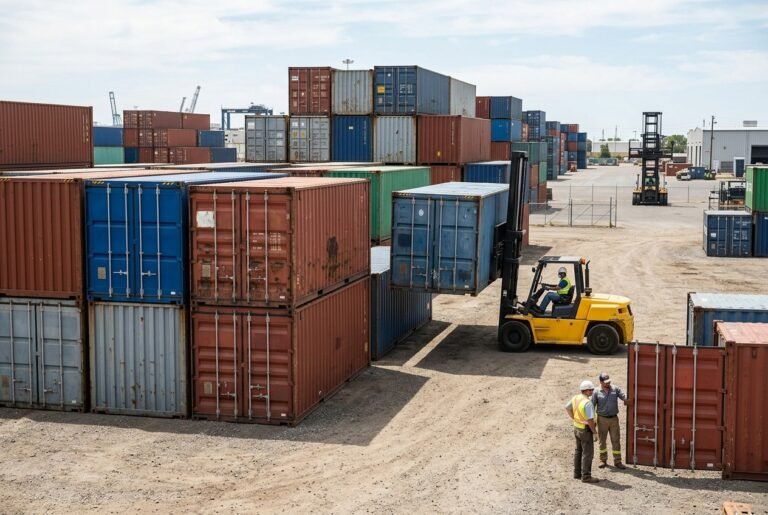
Used Shipping Containers for Sale: How to Inspect Before Paying
Buying used shipping containers for sale can be a smart move for jobsite storage, farm equipment protection, overflow inventory, and even modular builds, but only if you verify what you are actually paying for. In the Southeast, especially around Raleigh, NC where humidity, rainfall, and temperature swings accelerate corrosion and seal wear, a quick walk-around is not enough.
A solid inspection does two things:
- Confirms the container’s grade matches the quote (One-Trip vs. Cargo Worthy vs. Wind & Watertight).
- Identifies repair risks that can wipe out your “great deal” after delivery.
Below is a practical, buyer-focused process you can use at a Raleigh-area yard or anywhere in the U.S. when purchasing through photos, video, or third-party inspection.
Start by confirming the grade (before you look at dents)
Container condition is not one universal standard, it is a mix of industry terminology, resale grading, and (sometimes) shipping compliance requirements.
One-Trip (new, one voyage)
A One-Trip container is typically the closest thing to new in the resale market: built to ISO standards for intermodal use, made from Corten steel (weathering steel commonly used on ISO containers), shipped once with cargo, then sold.
What you’re paying for is lifespan, better door function, cleaner interiors, and fewer unknowns. If you’re planning customer-facing use, a build-out, or you simply want a cleaner baseline, One-Trip is usually the safest bet. If you want the deeper comparison, see One Trip vs. Cargo Worthy: which container is best.
Cargo Worthy (CW), often shown as CWO
Cargo Worthy generally means the container is structurally suitable for transport use, and is commonly associated with having a valid CSC plate for international shipping. In practice, “cargo worthy” is frequently used in the resale market to signal a higher grade than basic storage.
If your use case involves export or true freight service, you should verify documentation expectations up front. The International Maritime Organization provides background on the CSC (Container Safety Convention) and why plate status matters.
Wind & Watertight (WWT)
A WWT container is typically the go-to for static storage: it should keep out wind and rain, but it may have cosmetic damage, older paint, and visible repairs. WWT is not the same as “cargo worthy,” and it is not a promise of perfect aesthetics.
If storage is your goal, WWT can be excellent value when you inspect it correctly. For a focused definition, read What is a Wind and Watertight (WWT) shipping container?.
What to bring (or request) to inspect a used container properly
In a Raleigh yard, you can do most checks in 15 to 25 minutes with basic tools. If you are buying from out of state, ask for a live video walk-through using the same checklist.
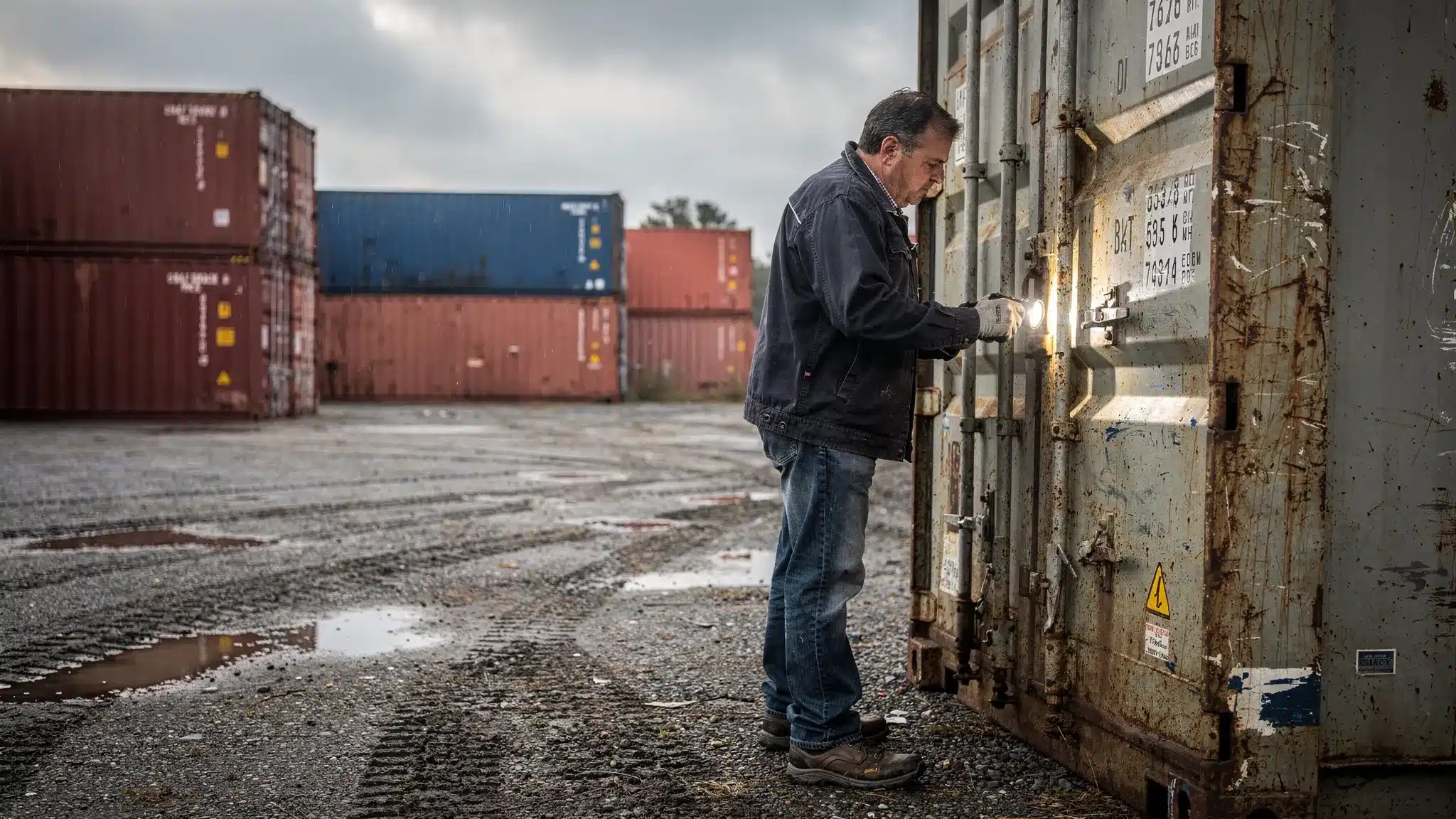
- Bright flashlight (for the “light test” and floor inspection)
- Tape measure (door opening, dents, squareness checks)
- Phone with video (document everything before you pay)
- Work gloves (door gear can bite)
- Small step ladder (roofline checks, if allowed)
If you are traveling in to inspect inventory, booking flexible lodging near the depot can make the process less rushed. Use a site with free-cancellation options, for example hotel booking deals that let you extend a night if you need a second yard visit.
The inspection sequence that catches expensive problems
Cosmetic dents are common and usually not the deal-breaker. The expensive surprises tend to be water entry, door misalignment, structural distortion, and contaminated floors.
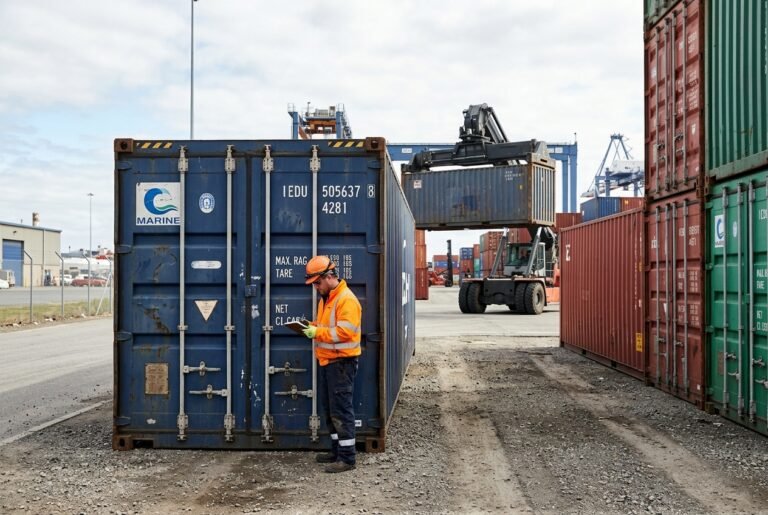
1) Verify identity: container number, CSC plate, and overall squareness
Before you look at anything else, confirm the unit you are inspecting is the unit on the quote.
- Match the container number on the doors to the paperwork/photos.
- Locate the CSC plate (typically on the left door). If the container is being represented as Cargo Worthy for export, this plate is part of the conversation.
- Stand at each corner and sight down the sidewalls. Severe bowing can indicate racking (twist) that affects door operation and structural integrity.
2) Exterior shell: roof, top rails, corner castings, and side panels
Most buyers forget the roof because it is hard to see. In North Carolina weather, roof issues are where storage containers fail.
Focus areas:
- Roof panel: look for depressions, patch plates, or signs of chronic pooling. Light surface rust is common, but pinholes and active perforation are not.
- Top rails: these are structural members. Excessive corrosion here is a red flag.
- Corner castings: these are the load-transfer points designed for lifting and stacking. Cracks, heavy deformation, or welded rebuilds should be explained.
- Side panels: dents are normal, but long creases can signal impact that may have shifted frame geometry.
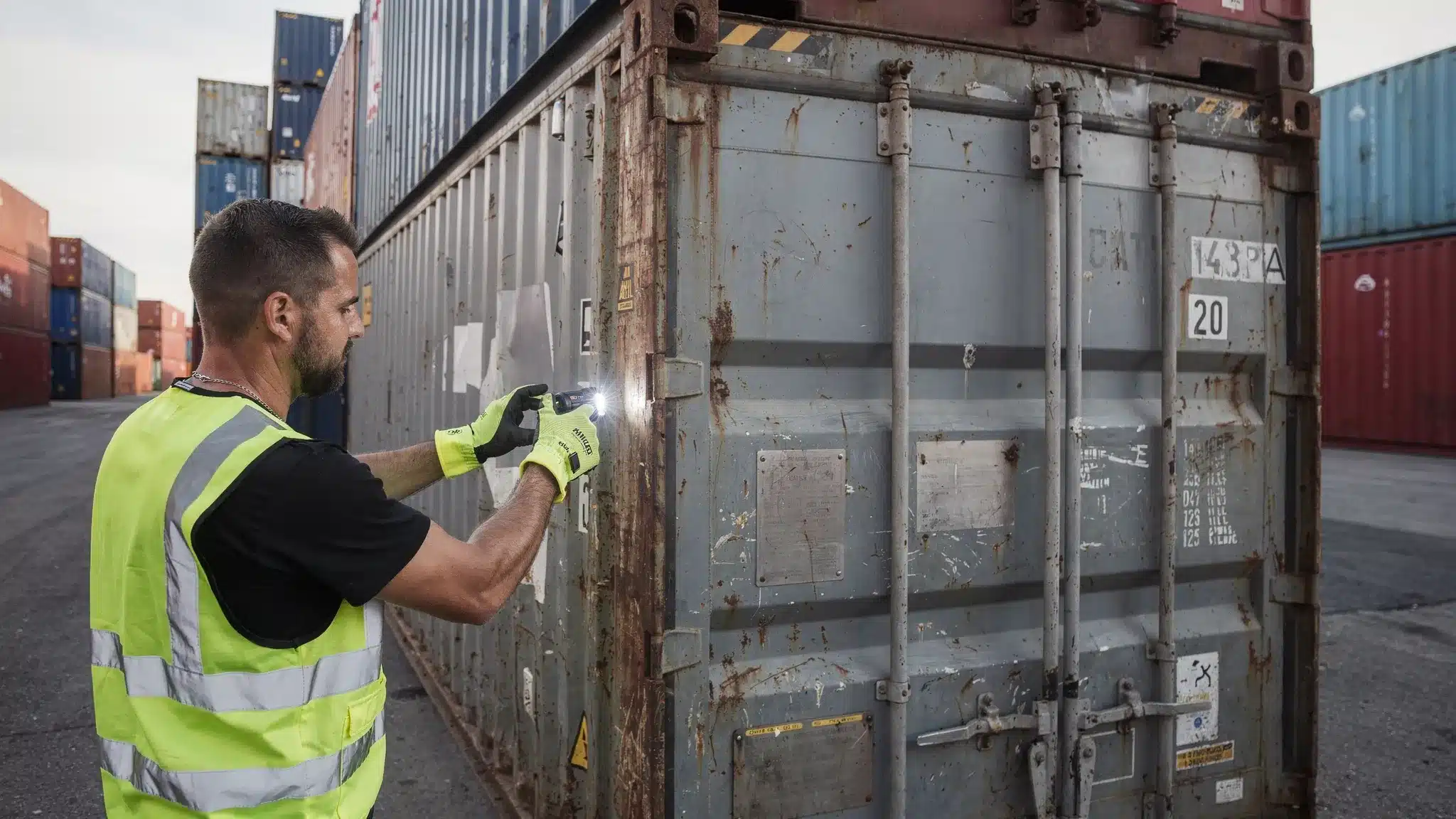
3) Doors and locking gear: the fastest way to spot a “project container”
Door function is not just convenience. Poor door alignment often points to a twisted frame or damaged header.
Check:
- Do the doors open and close smoothly without needing a forklift, a shoulder, or a pry bar?
- Locking bars: look for missing cams, bent rods, or seized hardware.
- Gaskets: brittle, torn, or missing gaskets are a common leak source.
- Light gaps: with doors closed, check for visible daylight around seals.
In Raleigh’s humidity, doors that “almost close” often become doors that will not close after the container settles on an uneven base.
4) Interior: do the light test, then inspect the floor like a contractor
The interior tells the truth.
- Light test: close the doors, let your eyes adjust, then scan for pinholes at roof welds, upper corners, and along seams.
- Smell test: chemical odors, strong fuel smells, or persistent mustiness can indicate contamination or chronic moisture.
- Wall condition: look for ripples and welded patches that may have been done after an impact.
Now the big one: the floor.
Most used ISO containers have marine-grade plywood floors, and older units may have been treated with pesticides in the past. You are not trying to diagnose chemistry on-site, but you should avoid unknowns if the container is for a workshop, retail space, or any human-occupied conversion.
Look for:
- Soft spots and delamination (heel test across the floor)
- Dark staining near the door (often water intrusion)
- Deep gouges that expose sublayers
- Evidence of spills or oily residue
5) Underside basics: crossmembers and bottom rails
You do not need to crawl under the unit to learn a lot.
- Look along the bottom side rails for heavy scaling rust.
- Check visible crossmembers for bends or corrosion.
- Confirm the container sits flat, not rocking corner to corner.
If you are buying a 40ft High Cube, keep in mind the extra height increases wind exposure at the site and makes a level base even more important for door alignment. For dimension planning, see 40ft High Cube container dimensions explained.
A practical checklist you can use on-site (or during a video walk-through)
Use this to stay objective when you are staring at “fresh paint” and a good sales pitch.
| Inspection area | What to check | Quick test | Why it matters before paying |
|---|---|---|---|
| Grade confirmation | One-Trip vs CW vs WWT stated clearly on quote | Ask seller to put grade in writing | Prevents bait-and-switch condition claims |
| Roof integrity | Depressions, patch plates, pinholes | Flashlight scan, look for interior light leaks | Roof leaks ruin storage fast |
| Door operation | Smooth open/close, proper alignment | Open both doors fully, then close and latch | Door issues often indicate frame twist |
| Door gaskets | Cracks, gaps, missing sections | Visual check, daylight around seals | Leaks, pests, condensation problems |
| Corner castings | Cracks, deformation, heavy weld repairs | Visual inspection at all 8 corners | Core structural and lifting points |
| Sidewalls/end walls | Major creases, repaired impact zones | Sight down each wall for bowing | Distortion affects structure and doors |
| Floor | Soft spots, delamination, stains, contamination | Walk every 2 to 3 feet, heel test | Floor replacement can erase savings |
| Underside rails | Heavy scaling rust | Look along bottom rail line | Structural longevity and safe placement |
| Identification | Container number, CSC plate present if relevant | Match photos to the unit in front of you | Confirms you get the exact unit you inspected |
For a more detailed deep-dive on condition evaluation, compare this guide with How to check used shipping container conditions.
Red flags that should change the deal (or end it)
Some issues are negotiable, others are structural or risk-based.
Walk away, or at least pause the purchase, if you see:
- Active roof leaks, multiple pinholes, or heavy roof corrosion
- Doors that cannot be closed without force, especially on a container sold as WWT or CW
- Severe frame twist (visible racking, uneven door gaps)
- Floors with unknown staining, persistent chemical odor, or widespread delamination
- Vague grading language like “good condition” without One-Trip, CW, or WWT defined
Match the inspection standard to your use case (storage vs shipping vs build-out)
The “right” used container depends on what you plan to do with it.
- Construction and jobsite storage: WWT is often sufficient, but door function and leak resistance matter more than cosmetics.
- Small business inventory and retail storage: prioritize cleaner floors, reliable seals, and better appearance.
- Export or freight: consider Cargo Worthy and verify CSC expectations, especially if a shipper or port requires it.
- Conversions and modular projects: start with One-Trip or a very clean CW unit to reduce remediation work.
If you are still deciding between sizes, use Shipping containers dimensions: 20ft vs 40ft vs High Cube to align your footprint and interior volume with your project.
If you already know the size, you can also benchmark expectations for a 20ft container or plan around common 20ft vs 40ft delivery constraints.
Pro-Tip: Prepare the drop spot before you buy (it protects the container you just inspected)
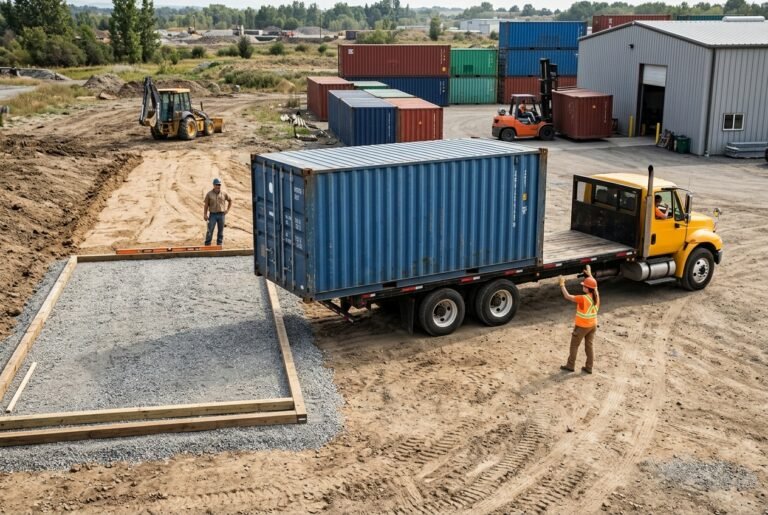
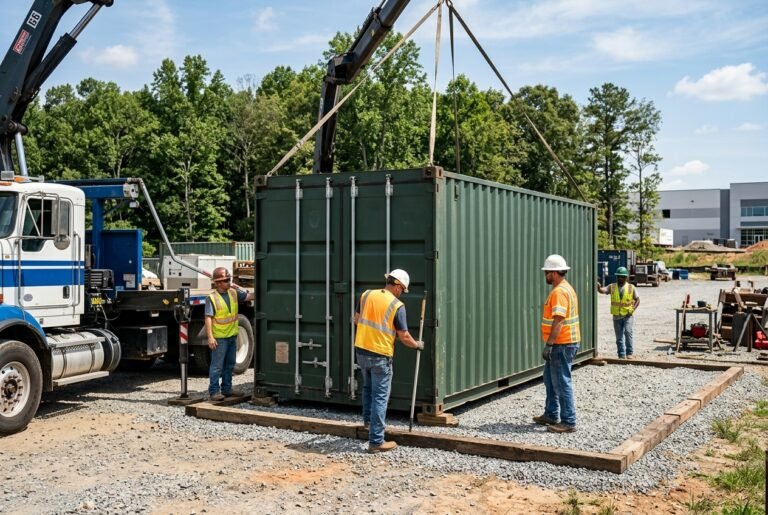
Even a solid used container can develop door problems and leaks if it is dropped on an uneven surface. This is especially common in the Raleigh area where clay soils hold water and soften after storms.
A simple, proven approach:
- Level first: your goal is a stable, square support at the corners so the frame does not twist.
- Use a compacted gravel pad (often with geotextile underlayment in softer soils) to improve drainage and reduce settling.
- Support the corners with proper blocks or piers, not random scraps, and avoid supporting only the middle.
- Check permitting and HOA rules early, especially inside Wake County or planned communities where placement rules can surprise buyers.
If you want a step-by-step on foundations and long-term stability, see Choosing the right base for a shipping container.
What to ask the seller to put in writing before you pay
When you are ready to move forward, clarity beats optimism.
Ask for:
- The exact grade (One-Trip, Cargo Worthy, or WWT)
- The container number of the unit you are buying (not “one like this”)
- Recent photos including roof, doors, and interior floor
- Delivery assumptions (tilt-bed vs flatbed vs crane), and what counts as a failed delivery
Lease Lane Containers LLC is built around transparent grading and practical delivery planning, especially for customers in Raleigh and across the Southeast, with nationwide delivery options when you need a unit outside North Carolina.
If you’re shopping used shipping containers for sale and want help confirming the right grade, size, and delivery plan, contact our team at sales@leaselanecontainers.com or visit our Raleigh, NC office to review available inventory and get clear pricing.