What Is a One-Trip Shipping Container?
Table of Contents
- Table of Contents
- Defining the One-Trip Shipping Container
- The Journey from Manufacturer to Destination
- Distinguishing One-Trip vs. Brand New Units
- Key Physical Characteristics and Condition
- Common Cosmetic Imperfections
- Structural Integrity and Floor Quality
- Standard Sizes and Specifications
- 20-Foot vs. 40-Foot Configurations
- High Cube Options for Extra Vertical Space
- Benefits of Choosing One-Trip Containers
- Longevity and Resistance to Corrosion
- Aesthetic Appeal for Visible Placements
- Common Applications and Use Cases
- Container Homes and Modular Construction
- High-End Residential and Commercial Storage
- Comparing Costs and Long-Term Value
- Price Premiums Over Used Cargo Worthy Units
- Essential Considerations Before Purchasing
- Delivery Requirements and Site Preparation
- Final Checklist
Table of Contents
- Defining the One-Trip Shipping Container
- The Journey from Manufacturer to Destination
- Distinguishing One-Trip vs. Brand New Units
- Key Physical Characteristics and Condition
- Common Cosmetic Imperfections
- Structural Integrity and Floor Quality
- Standard Sizes and Specifications
- 20-Foot vs. 40-Foot Configurations
- High Cube Options for Extra Vertical Space
- Benefits of Choosing One-Trip Containers
- Longevity and Resistance to Corrosion
- Aesthetic Appeal for Visible Placements
- Common Applications and Use Cases
- Container Homes and Modular Construction
- High-End Residential and Commercial Storage
- Comparing Costs and Long-Term Value
- Price Premiums Over Used Cargo Worthy Units
- Essential Considerations Before Purchasing
- Delivery Requirements and Site Preparation
- Final Checklist
If you’ve started shopping for a shipping container, you’ve probably noticed that the term “one-trip” appears everywhere, often carrying a higher price tag than other used options. Understanding what a one-trip shipping container actually is, and why it commands that premium, can save you from overpaying for features you don’t need or underspending on a container that won’t hold up. The distinction matters whether you’re a contractor setting up job-site storage, a homeowner planning a backyard workshop, or a small business owner expanding inventory space. The grade of container you select directly affects its lifespan, appearance, and suitability for your project. This guide breaks down the specifics: how one-trip containers are manufactured and shipped, what condition to expect when one arrives on your property, the standard sizes available, real-world applications, cost comparisons, and the delivery logistics you need to plan for. By the end, you’ll have a clear picture of whether a one-trip unit is the right investment for your situation or whether a different grade makes more sense. The goal here is practical buying clarity, not sales hype. Every section is built around the decisions real buyers face when comparing container grades, sizes, and delivery requirements across the U.S.
Defining the One-Trip Shipping Container
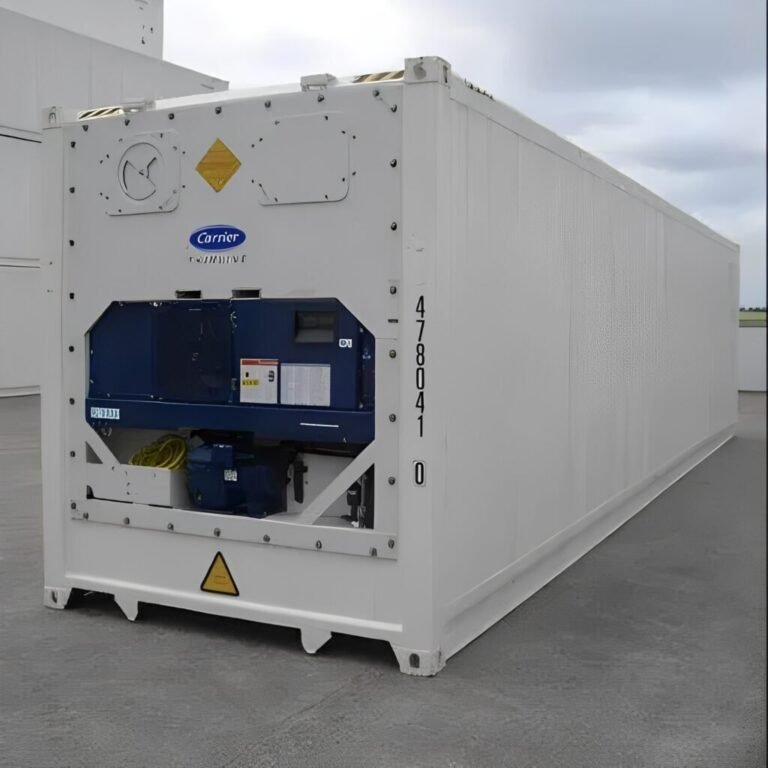
A one-trip shipping container is a steel intermodal container that has been manufactured overseas, typically in China, and then loaded with cargo for a single ocean voyage to a destination port in the United States. Once that cargo is offloaded, the container is sold domestically rather than being returned to the shipping line for continued use. The result is a container that has seen exactly one transoceanic journey, giving it a condition that sits between factory-new and the well-worn look of a unit that has spent years circulating in global trade.
The “one-trip” designation is an industry-standard grade. It tells buyers that the container has been used for commercial shipping exactly once. This matters because a container’s condition degrades predictably with each voyage and each handling cycle at port terminals. A one-trip unit has experienced one loading, one ocean crossing (typically 30 to 45 days at sea), and one unloading. That’s it.
The Journey from Manufacturer to Destination
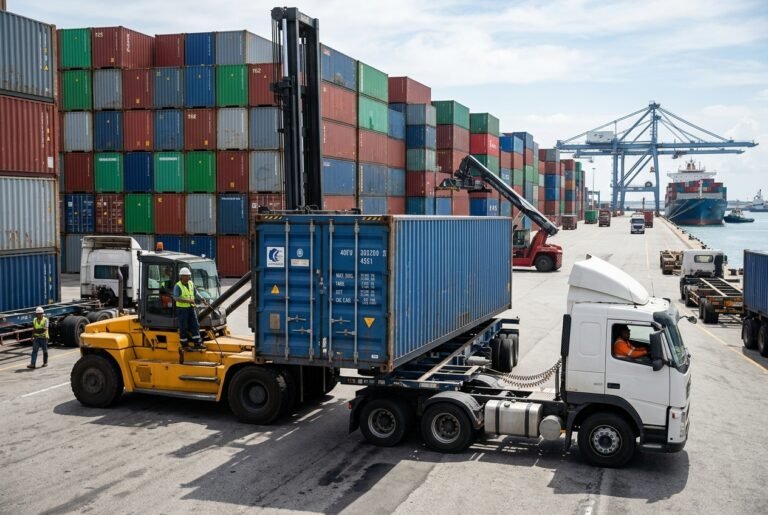
Most one-trip containers originate from factories in China, where the majority of the world’s shipping containers are produced. After fabrication, the container is inspected, painted, and certified to ISO 6346 standards. It then gets loaded with export cargo, often consumer goods, electronics, or raw materials, and placed on a vessel bound for a U.S. port such as Savannah, Houston, Los Angeles, or Newark.
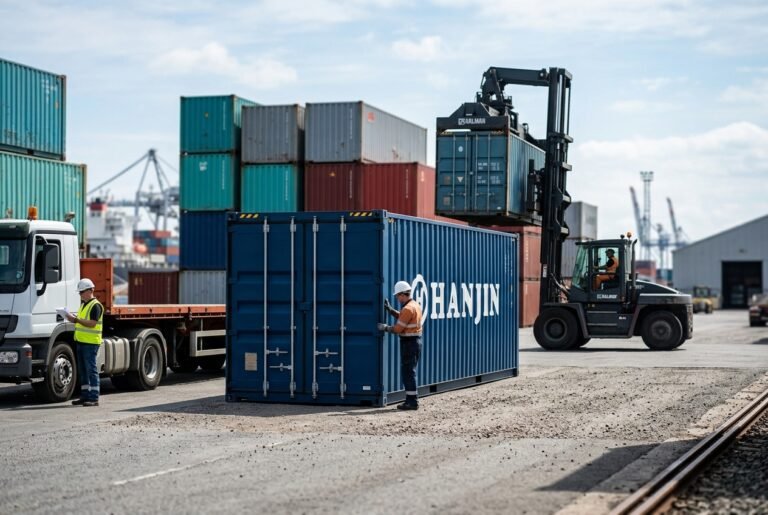
The voyage itself typically lasts four to six weeks depending on the route. During this time, the container sits on the deck or in the hold of a cargo ship, exposed to salt spray, wind, and UV radiation. After arrival, the cargo is removed, and the empty container enters the domestic resale market. Because shipping lines frequently find it cheaper to sell containers at the destination port than to ship them back empty, the supply of one-trip units in the U.S. remains relatively steady.
Distinguishing One-Trip vs. Brand New Units
Here’s a distinction that trips up many first-time buyers: a one-trip container is not the same as a brand-new, never-used container. A truly new container would be one purchased directly from the factory floor before any cargo has been loaded. These are exceptionally rare in the U.S. market because the economics of international shipping make it impractical to transport empty containers across the Pacific solely for resale.
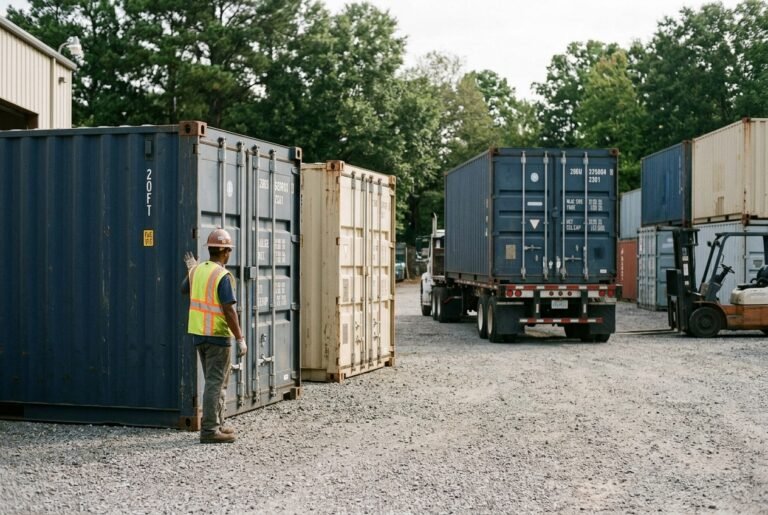
One-trip containers arrive with minor signs of that single voyage. You’ll see small scratches, light surface marks from cargo contact, and possibly a few scuffs from port handling equipment. None of these affect structural performance, but they do mean the container isn’t in showroom condition. Think of it like buying a car with 500 miles on the odometer versus zero: functionally identical, cosmetically almost perfect, but technically not “new.” Lease Lane Containers provides transparent grading guidance that explains these differences clearly, so buyers know exactly what condition to expect before placing an order.
Key Physical Characteristics and Condition
One-trip containers arrive in remarkably good shape. The steel is fresh from the factory, the paint is intact across most surfaces, and the rubber door seals are supple and fully functional. Compared to cargo-worthy or wind-and-watertight units that may have spent 10 to 15 years in active shipping service, the difference is immediately visible and tangible.
The walls are free of dents and patches. The roof shows no signs of rust pitting. The corner castings, which bear the full weight of stacking during ocean transport, are clean and undamaged. The locking mechanisms operate smoothly, and the doors swing open and closed without resistance. For buyers who plan to modify their container with windows, roll-up doors, or HVAC penetrations, starting with clean, uncorroded steel simplifies every step of the fabrication process.
Common Cosmetic Imperfections
Despite their excellent overall condition, one-trip containers are not flawless. Expect to find a few common cosmetic marks.
- Light scratches on exterior panels from cargo loading and port handling equipment
- Minor scuff marks near the door end where forklifts or reach stackers made contact
- Small paint chips, particularly along the bottom rails where the container sat on chassis during transport
- Occasional surface rust spots at scratch locations, easily treated with touch-up paint
- Slight discoloration on the roof from UV exposure during the ocean crossing
None of these imperfections compromise the container’s weather seal or structural rating. They are purely cosmetic and consistent across the industry. If a supplier claims their one-trip units have zero marks of any kind, that should raise questions about the accuracy of the grading.
Structural Integrity and Floor Quality
The structural components of a one-trip container are where the grade truly shines. The corrugated steel wall panels, typically 14-gauge (1.6mm) Corten steel, retain their full original thickness. Corten steel is specifically engineered to form a protective oxide layer that resists further corrosion, and on a one-trip unit, that protective layer is just beginning to develop.
The flooring deserves special attention. One-trip containers feature 28mm marine-grade plywood flooring that is clean, dry, and free of the staining, warping, or delamination common in older used units. This flooring has supported one load of cargo, so it’s structurally sound and shows minimal wear. For buyers planning to use the container as a workshop, retail space, or living area, starting with an undamaged floor saves significant time and money on interior finishing. The undercarriage cross-members are free of corrosion, and the forklift pockets show no deformation from repeated handling.
Standard Sizes and Specifications
Shipping containers follow ISO standards that ensure consistent dimensions worldwide. One-trip containers are available in the same standard sizes as any other grade, with the two most common being 20-foot and 40-foot lengths. Both come in standard height and high cube configurations.
20-Foot vs. 40-Foot Configurations
The 20-foot container measures 20 feet long, 8 feet wide, and 8 feet 6 inches tall (exterior dimensions). Interior usable space is approximately 19 feet 4 inches long, 7 feet 8 inches wide, and 7 feet 10 inches tall, providing roughly 1,170 cubic feet of storage volume. The empty weight (tare weight) is approximately 4,900 to 5,070 pounds, and the maximum payload capacity is around 47,900 pounds.
The 40-foot container doubles the length to 40 feet while maintaining the same 8-foot width and 8-foot-6-inch height. Interior dimensions come in at approximately 39 feet 5 inches long, 7 feet 8 inches wide, and 7 feet 10 inches tall, yielding about 2,390 cubic feet of volume. Tare weight runs approximately 8,160 to 8,380 pounds with a payload capacity near 59,000 pounds.
For most residential storage and small business applications, the 20-foot container hits the sweet spot between capacity and footprint. Contractors running larger job sites or businesses needing significant inventory overflow tend to favor the 40-foot option. The choice often comes down to available space on your property and the volume of goods you need to store.
High Cube Options for Extra Vertical Space
High cube shipping containers add one foot of height to the standard configuration, bringing the exterior height to 9 feet 6 inches and the interior ceiling height to approximately 8 feet 10 inches. That extra 12 inches makes a meaningful difference for several applications.
For container homes and offices, the additional headroom allows standard interior framing, insulation, and finished ceiling panels without creating a claustrophobic feel. Standard 8-foot ceiling heights become achievable after accounting for floor buildup and ceiling materials. For storage, the extra vertical space accommodates taller shelving systems and allows stacking of standard pallets two-high with clearance. High cube units are available in both 20-foot and 40-foot lengths, though the 40-foot high cube is by far the most common configuration in the market. The tare weight increases slightly, typically by 300 to 500 pounds, compared to standard-height units.
Benefits of Choosing One-Trip Containers
The premium you pay for a one-trip container buys you measurable advantages in durability, appearance, and long-term value retention. These aren’t abstract benefits: they translate directly into fewer repairs, better aesthetics, and a longer useful life before the container needs any maintenance intervention.
Longevity and Resistance to Corrosion
A one-trip container’s Corten steel panels and structural members have their full original thickness intact. There’s no pitting, no thinning from years of salt exposure, and no patched areas where previous damage was repaired. This means the container’s natural corrosion resistance is at its peak.
Corten steel works by forming a stable rust-like patina that protects the underlying metal from further oxidation. On a one-trip unit, this process is just getting started, giving you decades of useful life before corrosion becomes a maintenance concern. By comparison, a cargo-worthy container that has spent 12 years in ocean service may have already consumed a significant portion of its corrosion allowance. A well-maintained one-trip container placed on a proper foundation can realistically last 25 to 30 years or more in a stationary application. That’s a meaningful difference for anyone investing in a permanent or semi-permanent installation.
Aesthetic Appeal for Visible Placements
Appearance matters more than many buyers initially expect. If your container will be visible from a road, placed in a residential neighborhood, or used as a customer-facing retail or office space, the clean look of a one-trip unit makes a real difference.
One-trip containers feature consistent paint color, minimal surface blemishes, and clean lines that photograph well and meet the aesthetic expectations of neighbors, customers, and municipal code enforcement. Older used containers often arrive with mismatched paint patches, visible weld repairs, shipping line logos, and surface rust that requires significant prep work before painting. Starting with a one-trip unit eliminates that prep work entirely and gives you a professional-looking base for any exterior treatment you choose.
Common Applications and Use Cases
One-trip containers serve the same fundamental purposes as any shipping container: storage, shelter, and structure. The difference is that their superior condition makes them the preferred choice for applications where appearance, longevity, or modification quality matters.
Container Homes and Modular Construction
The container home movement has grown steadily over the past decade, and one-trip containers are the preferred building block for serious residential projects. The reasons are practical: clean steel cuts more precisely, unworn flooring provides a solid subfloor, and the absence of corrosion means fewer surprises during fabrication.
Builders working with one-trip containers can cut window and door openings with confidence that the surrounding steel is full-thickness and structurally sound. Welding new framing to clean Corten steel produces stronger, more consistent joints than welding to pitted or previously repaired surfaces. For projects requiring building permits and structural engineering certification, inspectors and engineers prefer working with containers in documented, verifiable condition. A one-trip grade provides that documentation.
Modular construction companies building multi-container structures, whether residential, commercial, or institutional, almost exclusively specify one-trip units. The consistency of condition across multiple containers simplifies engineering calculations and ensures uniform structural performance throughout the finished building.
High-End Residential and Commercial Storage
Not every one-trip container becomes a home or office. Many buyers choose the grade specifically for premium storage applications where the contents justify the investment in a better container.
Homeowners storing furniture, seasonal equipment, or vehicles want a container with reliable weather sealing and a clean, dry interior. Farms storing expensive equipment or seed inventory benefit from the tighter seals and better floor condition of a one-trip unit. Small businesses holding retail inventory, tools, or documents need confidence that their goods will stay dry and protected. Wine storage, art storage, and archival document storage are niche applications where the superior seal integrity of a one-trip container provides meaningful protection that older units may not match.
Comparing Costs and Long-Term Value
One-trip containers cost more upfront than used cargo-worthy or wind-and-watertight units. That’s a fact, and the price difference is significant enough to warrant careful consideration based on your specific use case and budget.
Price Premiums Over Used Cargo Worthy Units
As of 2024-2025, one-trip 20-foot containers typically sell in the range of $3,000 to $5,500 depending on location, availability, and market conditions. A cargo-worthy 20-foot container might run $1,800 to $3,200. For 40-foot high cube units, one-trip pricing generally falls between $4,500 and $7,500, while cargo-worthy equivalents range from $2,500 to $4,500. These figures vary by region, port proximity, and seasonal demand.
The premium for one-trip runs roughly 40% to 60% above cargo-worthy pricing. Whether that premium is justified depends entirely on your application. For a construction site needing temporary tool storage for two years, a cargo-worthy unit makes perfect financial sense. For a permanent backyard office, a container home, or a customer-facing retail installation, the one-trip premium pays for itself through reduced maintenance, better aesthetics, and longer useful life.
Think of it as a cost-per-year calculation. A one-trip container lasting 25+ years at $5,000 costs roughly $200 per year. A cargo-worthy unit lasting 15 years at $3,000 costs $200 per year as well, but you’ll likely spend more on maintenance, paint, and seal repairs over that shorter lifespan. The math favors one-trip for long-term installations.
Essential Considerations Before Purchasing
Buying the right container is only half the equation. Getting it to your property and placing it correctly requires planning that many first-time buyers overlook.
Delivery Requirements and Site Preparation
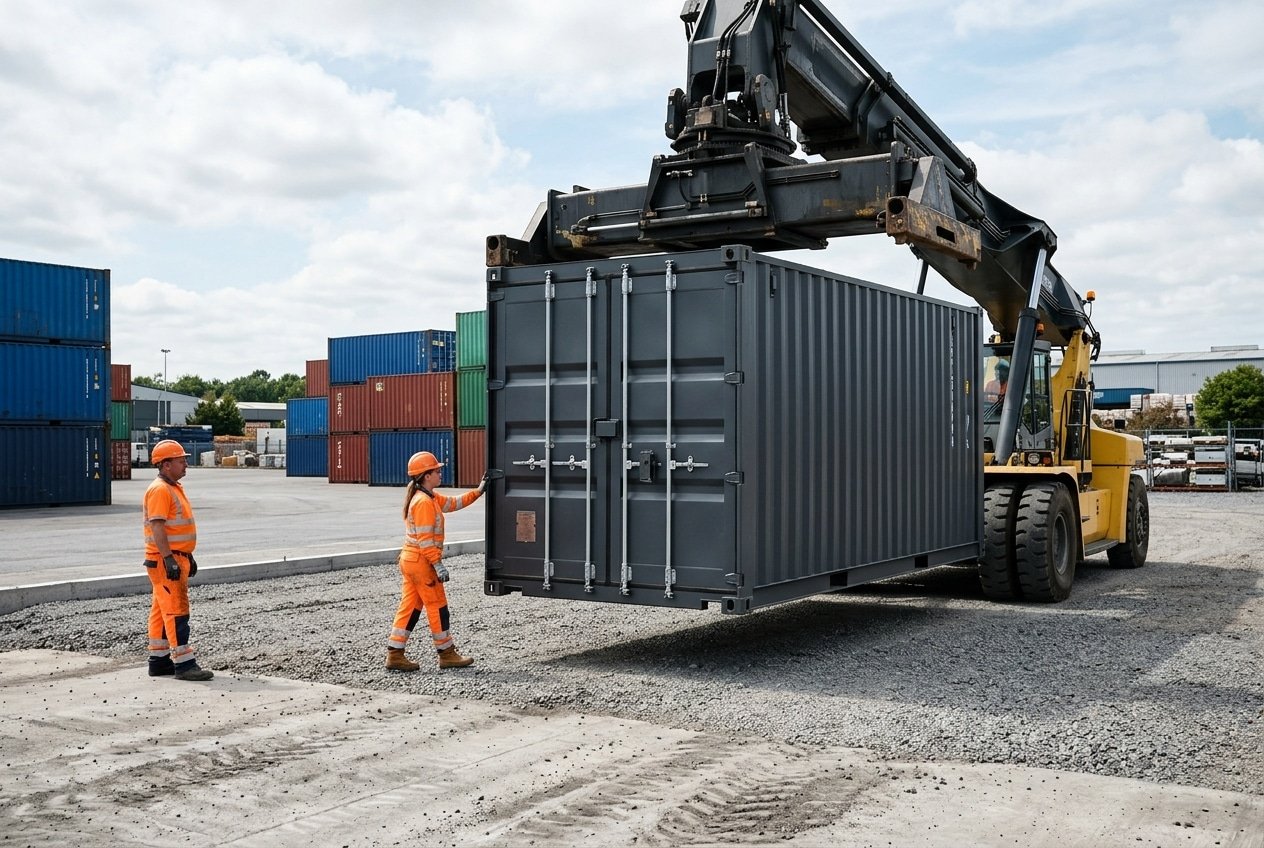
Shipping container delivery typically involves either a tilt-bed truck or a roll-off chassis. Both require specific site conditions that you need to verify before scheduling delivery.
- A tilt-bed truck needs approximately 100 feet of straight, level space in front of the placement area to slide the container off the back of the truck.
- A roll-off delivery requires less length but needs adequate overhead clearance: at least 16 feet for a standard-height container and 17 feet for a high cube.
- The delivery truck itself is a full-size semi, requiring a turning radius of roughly 60 feet and a driveway or access road that can support 60,000+ pounds of gross vehicle weight.
- Overhead obstructions like power lines, tree branches, and building overhangs must be identified and cleared before the truck arrives.
- The ground surface at the placement location should be level, firm, and well-drained. Gravel pads, concrete piers, or railroad ties are common foundation options.
Lease Lane Containers, based in Raleigh, North Carolina, provides delivery planning support that covers site access, placement logistics, overhead clearance, and turning radius requirements. Getting these details right before delivery day prevents costly rescheduling and ensures the container lands exactly where you want it on the first attempt. If you’re in the Raleigh-Durham area or anywhere in the Southeast, local delivery planning knowledge is especially valuable given the region’s mix of rural properties, suburban lots, and commercial sites with varying access conditions.
Contact your local municipality or county planning office, such as Wake County’s planning department at (919) 856-6335, to confirm whether you need a permit for container placement on your property. Requirements vary significantly by jurisdiction, and some HOAs have specific restrictions on container visibility and placement duration.
Final Checklist
Before purchasing a one-trip shipping container, run through these steps to confirm you’re making the right decision for your project:
- Confirm your intended use: permanent installation, modification project, or long-term storage
- Verify that the one-trip grade is justified for your application versus a cargo-worthy alternative
- Select the correct size: 20-foot or 40-foot, standard height or high cube
- Measure your delivery access path for length, width, overhead clearance, and turning radius
- Prepare your foundation: gravel pad, concrete piers, or compacted level ground
- Check local permit requirements with your county or city planning department
- Request photos of the specific container before purchase to verify condition
- Confirm delivery method (tilt-bed or roll-off) and ensure your site accommodates it
A one-trip shipping container is one of the best long-term investments you can make for storage, construction, or conversion projects. The condition, longevity, and appearance justify the premium for buyers who plan to keep and use the container for years. If you’re ready to compare options, browse Lease Lane Containers’ current inventory to see available sizes, grades, and pricing. Their Raleigh-based team can help you match the right container to your project and plan a smooth delivery, whether you’re local to North Carolina or ordering from anywhere in the U.S.