
Standard Shipping Container Size: What Fits Your Use Case?
When most people search for standard shipping container size, they are really trying to answer two questions:
-
What are the “normal” dimensions in the container industry?
-
Which standard size will actually work for my job site, business, or property?
At Lease Lane Containers LLC (based in Raleigh, North Carolina), we help customers across the Southeast and nationwide match container size and container grade to real-world constraints like access, storage layout, and delivery clearance. This guide breaks down the standard dimensions (20ft, 40ft, High Cube, and Refrigerated) and shows what typically fits each use case.
If you want to compare real options by size, condition, and delivery fit, browse our shipping container inventory before narrowing down the right unit.
What “standard shipping container size” means in the real world
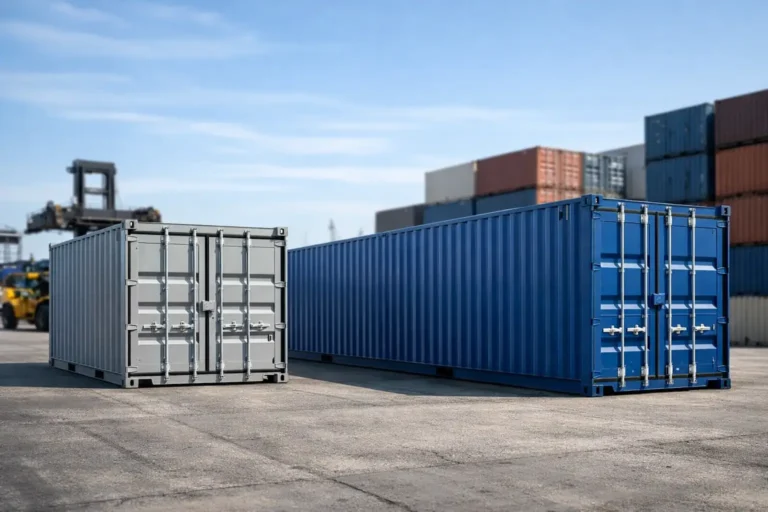
In container terms, “standard” usually refers to ISO (International Organization for Standardization) shipping containers designed for global transport and intermodal handling. That ISO standardization is why 20ft and 40ft containers are widely available and why they stack, lift, and ship predictably.
A few important clarifications:
-
The external footprint is the headline size. A “20ft” container is about 20 feet long on the outside.
-
Interior space is smaller because of wall thickness, corner posts, and door framing.
-
Exact dimensions vary slightly by manufacturer, and specialty units (like Reefers) can vary more. For any specific unit, confirm the data plate and spec.
Standard shipping container dimensions (20ft vs 40ft vs High Cube)
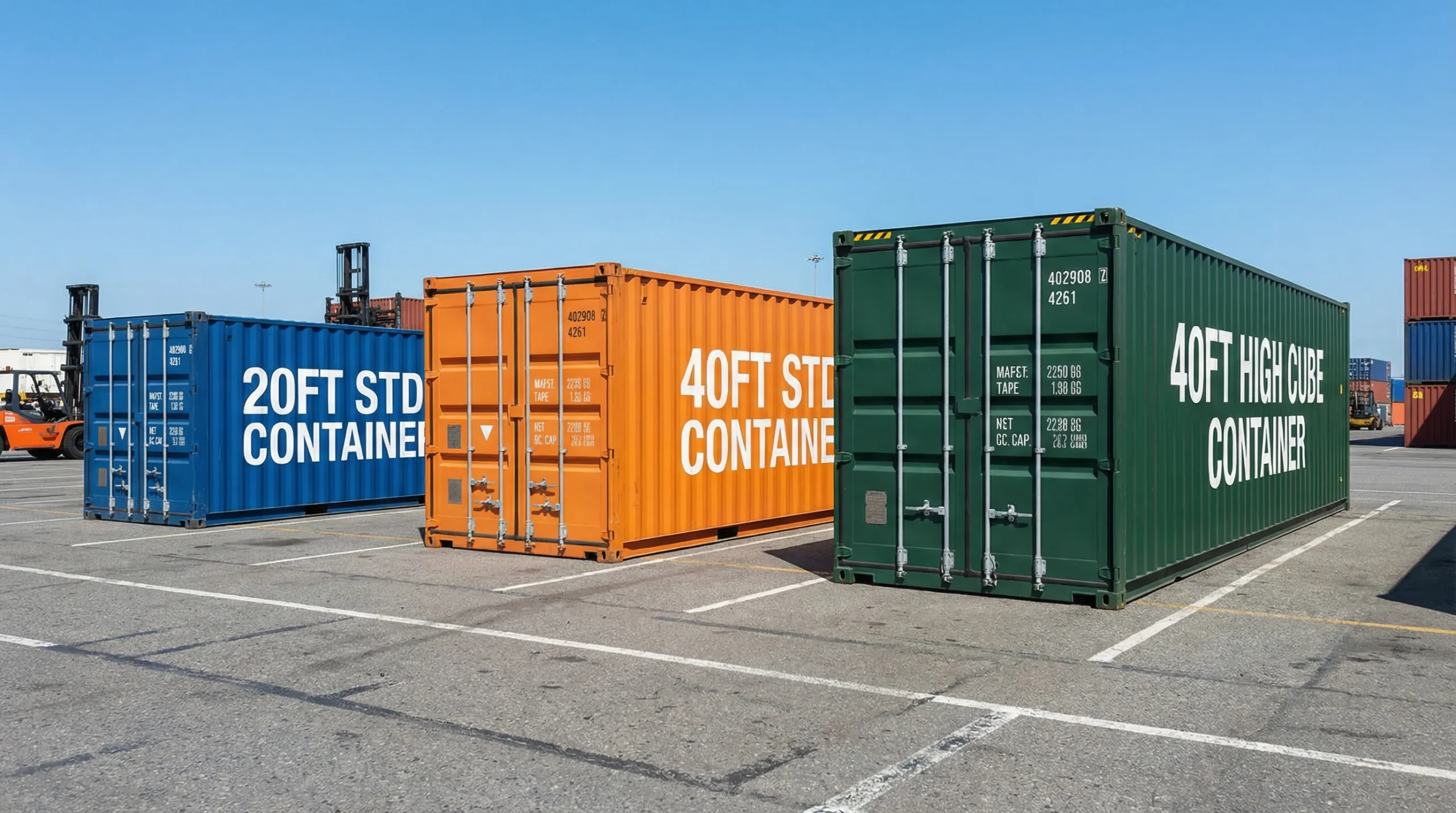
Here are the most common “standard” sizes you will see in Raleigh and nationwide, with dimensions shown as typical industry approximations.
For buyers who want a broader overview before comparing exact dimensions, our Buyers Guide explains how size, grade, and delivery work together.
| Container type | External size (L x W x H) | Typical internal size (L x W x H) | Typical door opening (W x H) | Best for |
|---|---|---|---|---|
| 20ft Standard (8'6" tall) | 20' x 8' x 8'6" | ~19'4" x 7'8" x 7'10" | ~7'8" x 7'5" | Jobsite storage, homeowners, dense/heavy loads |
| 40ft Standard (8'6" tall) | 40' x 8' x 8'6" | ~39'5" x 7'8" x 7'10" | ~7'8" x 7'5" | Inventory overflow, larger sites, workshop layouts |
| 40ft High Cube (9'6" tall) | 40' x 8' x 9'6" | ~39'5" x 7'8" x 8'10" | ~7'8" x 8'5" | Extra height for shelving, offices, conversions |
Material note (EEAT): Most ISO containers are built from Corten steel (weathering steel), chosen for corrosion resistance and durability in harsh conditions. That matters in the Southeast where humidity, rainfall, and coastal salt exposure can accelerate rust on lower-grade steel.
What fits your use case? A practical decision framework
Rather than choosing by length alone, focus on (1) what you are storing, (2) how you need to access it, and (3) whether your site can physically accept delivery.
If you want a deeper step-by-step sizing walkthrough, see our detailed guide on how to choose shipping container size.
General contractors and home builders (Raleigh job sites and beyond)
For many contractors, the “standard” choice comes down to 20ft vs 40ft.
-
Choose a 20ft container when you want secure storage close to the work area without eating up staging space. It is also easier to place on tighter lots and short driveways that are common around Raleigh infill builds.
-
Choose a 40ft container when you need zones inside the container (tools, fasteners, materials, lockable cages) or you plan to store long items like framing lumber, doors, or trim while keeping an aisle for access.
If you are deciding between 20ft containers and 40ft containers, plan your interior like a mini-warehouse: an aisle down one side often beats “stuffing it full” and losing access.
Small business owners (inventory overflow, pop-ups, mobile offices)
Small businesses often start with a 20ft and “graduate” to a 40ft once operations stabilize.
-
A 20ft works well for secure backstock, seasonal inventory, and equipment storage.
-
A 40ft is often better if you need organized shelving runs, packing stations, or a split layout (storage plus small work area).
-
A High Cube becomes the smart choice when you want taller shelving or plan a conversion (office, workshop, pop-up buildout) where ceiling height affects comfort.
If your plan includes insulation and interior finishing, the extra foot of height in a High Cube is more than “nice to have,” it can reduce the cramped feel once you add framing, insulation, and electrical.
Homeowners and agriculture (property storage, barns, sheds)
For homeowners and agricultural properties across North Carolina, the “right” standard size usually depends on equipment dimensions and seasonal access.
-
20ft: common for mowers, ATVs, feed storage (in sealed bins), tack rooms, and general property storage.
-
40ft: better for riding equipment, multiple storage zones, or when you want to keep a clear aisle so you can reach items in the back.
-
High Cube: ideal when you have tall items, want overhead storage, or plan to add loft-style shelving.
A key detail: door opening height can be the real limiter, not container length. If you plan to roll in equipment, measure it with the ROPS/canopy and compare it to the door opening height.
Real estate developers (modular builds and multi-container layouts)
For modular or container-based construction, “standard size” is also about predictable geometry.
-
40ft High Cube containers are a frequent starting point because of the extra height (better for insulation and MEP runs).
-
Standard widths are consistent, which simplifies multi-unit alignment, stacking, and corridor planning.
If you are developing in the Raleigh metro, make sure you evaluate site access for delivery early. The best floor plan in the world still fails if a truck cannot safely reach the set location.
Logistics managers (Cargo Worthy units and real shipping)
If the container will enter a shipping workflow, size choice intersects with compliance and safety.
-
20ft containers are commonly used for heavier, denser cargo to avoid exceeding weight limits.
-
40ft containers are preferred for higher-volume, lighter goods.
For export or intermodal use, you typically want Cargo Worthy (CW) grade (and you should confirm the container’s identification markings and condition requirements for your lane and carrier). If your use case is storage only, CW may be unnecessary.
If you need a clearer breakdown of One-Trip, WWT, and Cargo Worthy standards, review our Container Conditions guide before choosing by size alone.
Standard vs High Cube: when the extra height actually matters
A High Cube container is typically 9'6" tall externally (about 1 foot taller than standard 8'6"). That sounds minor until you consider:
-
Tall pallet stacks and bulk shelving
-
Interior build-outs (insulation, ceiling, lighting)
-
HVAC ducting in office conversions
In practice, High Cube is often the best “future-proof” option if you think your needs might expand, especially for businesses and developers.
Refrigerated (Reefer) containers: standard length, different interior reality
Reefer containers (commonly 20ft or 40ft) are built to ISO handling standards, but they are not the same inside.
Because Reefers have insulated walls and an integrated refrigeration system, the interior dimensions are smaller than a dry container of the same external length. They also require power planning (voltage/phase requirements vary by unit) and airflow discipline so the system can maintain temperature.
Reefers are a strong fit for:
-
Cold storage for food and beverages
-
Pharmaceutical or lab storage (use case dependent)
-
Temporary overflow refrigeration during equipment replacement or remodels
If cold storage is part of your plan, compare our refrigerated shipping containers separately from dry containers because the interior dimensions and operating requirements are different.
If you are using a Reefer like a walk-in cooler, basic troubleshooting and maintenance habits matter (door seals, airflow, defrost behavior). A helpful reference for general refrigerator and freezer problem patterns is the PHX Appliance Fix Blog, which covers common cooling failures and maintenance-related issues that also show up in container-based cold storage setups.
Size is only half the decision: understand One-Trip vs WWT vs Cargo Worthy
Two containers can be the same standard size and perform very differently depending on grade and history. At Lease Lane Containers LLC, we focus on transparent grading so you can match condition to your use case.
If you are comparing a cleaner long-term option against a budget-friendly storage unit, our used shipping containers and one-trip shipping containers show the two most common paths buyers consider.
| Grade | What it typically means | Best fit | What to watch for |
|---|---|---|---|
| One-Trip (New) | Shipped once, minimal wear, clean interior, best cosmetics | Retail-facing uses, offices, long-term property storage | Higher cost, but best appearance and lifespan expectations |
| Wind & Watertight (WWT) | Suitable for storage, keeps out wind and water | Contractors, homeowners, farms needing secure dry storage | Cosmetic dents, surface rust, repairs are normal on used units |
| Cargo Worthy (CW) | Suitable for transport use cases (commonly aligned to shipping needs) | Logistics, export, intermodal scenarios | Confirm requirements for your carrier or lane, not all “shipping” needs are identical |
If you are considering a used container, our inspection-focused guide on how to spot quality containers before you buy will help you avoid common red flags (door issues, roof damage, floor integrity, rushed paint jobs).
Planning the footprint: what your site must handle (especially in Raleigh)
Standard sizes are predictable on paper, but successful installs depend on real site conditions.
Plan for:
-
Door swing and working space: You need clearance in front of the doors to fully open and to safely move items.
-
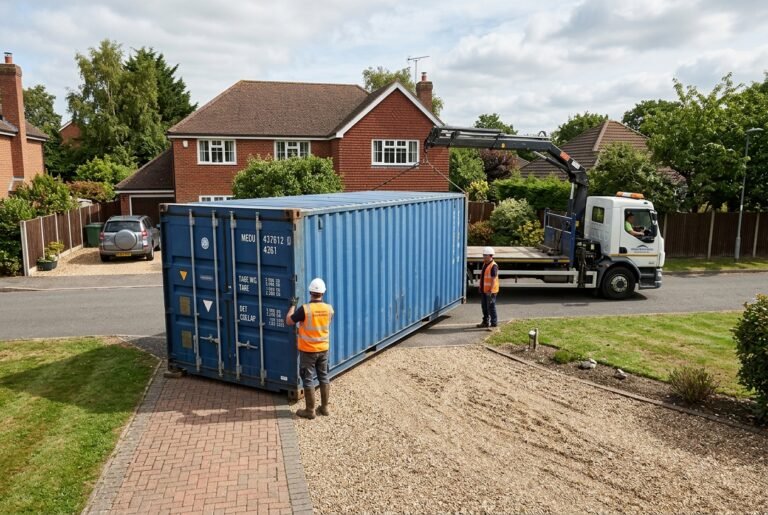
Truck access and turning radius: Many residential streets, tight driveways, and tree-lined lots around Raleigh can limit a 40ft delivery route.
-
Overhead obstacles: Power lines, low limbs, and eaves can interfere with tilt-bed delivery angles.
-
Ground conditions: Soft soil, saturated clay, and sloped areas can cause sinking or twisting that stresses door alignment.
Before delivery day, review our Shipping Policy or contact our team if you want help confirming access, turning room, and placement needs for your property.
Pro-Tip: prep your pad before the truck shows up
A little site preparation prevents most placement problems.
-
Level matters more than people expect. Even slight twist can make container doors hard to open or keep closed.
-
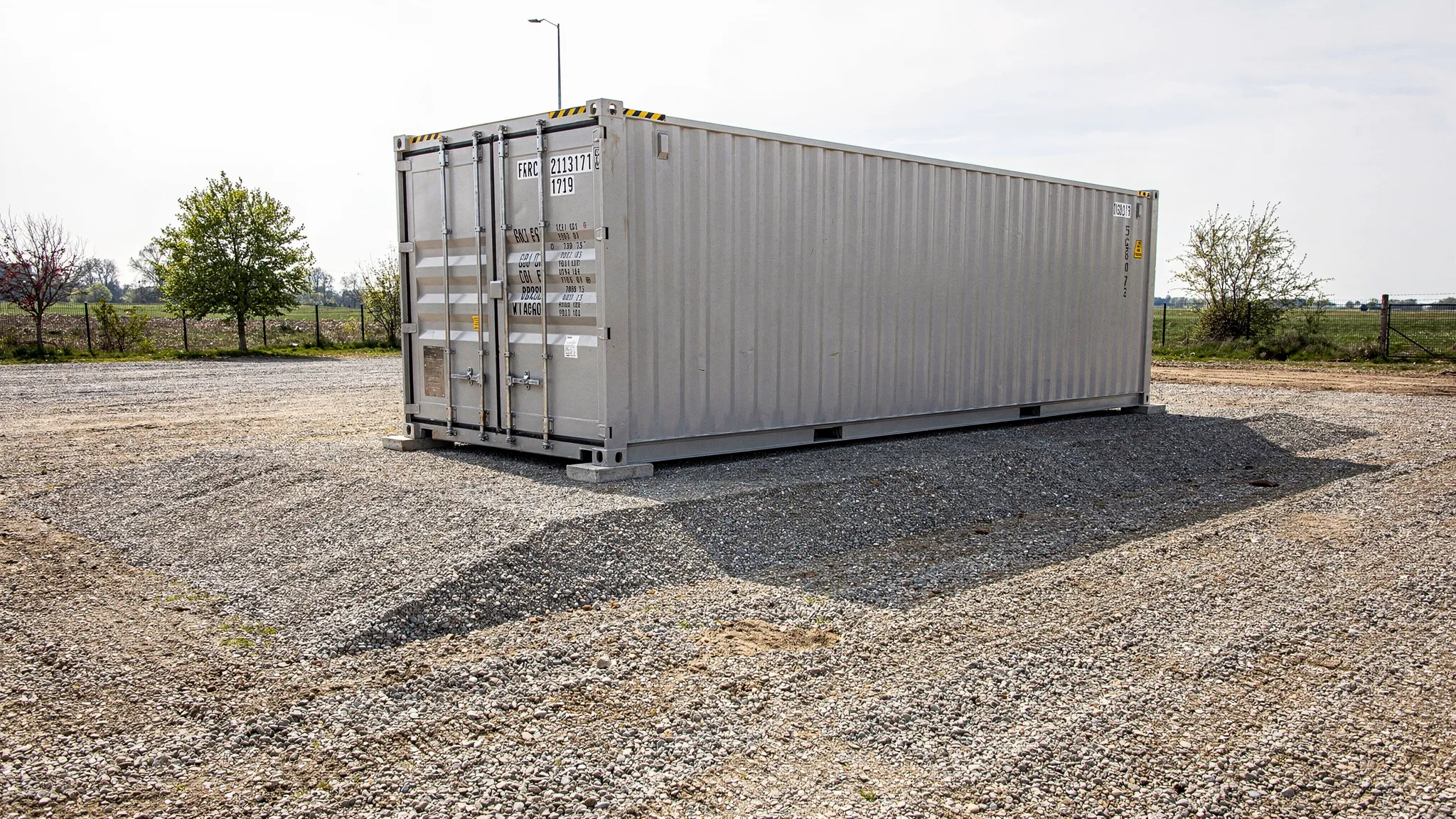
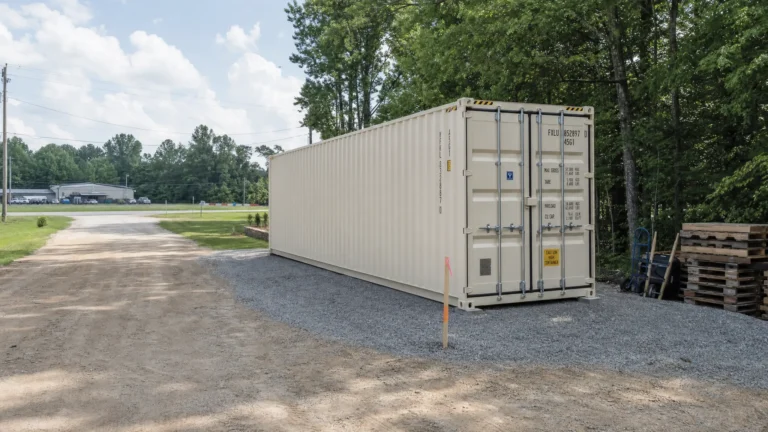
Use a stable base. Many customers use a compacted gravel pad (often 4 to 6 inches, depending on soil) or well-placed blocking at the corners and midpoints.
-
Think about drainage. Keep the container out of low spots where water collects, especially in North Carolina’s storm seasons.
-
Check local rules early. In Raleigh and surrounding jurisdictions, permitting rules can vary by zoning, HOA requirements, and use (temporary storage vs long-term placement). Confirm before delivery.
Frequently Asked Questions
What is the standard shipping container size? The most common standard sizes are 20ft and 40ft containers that follow ISO handling standards, typically 8 feet wide and 8'6" tall (standard), with a 9'6" tall High Cube option.
Is a 20ft container big enough for a contractor job site? Often, yes. A 20ft container is a popular jobsite storage size because it is easier to place and still holds a large amount of tools and materials, especially when you plan an access aisle.
Why are interior dimensions smaller than exterior dimensions? Interior space is reduced by structural framing, corrugated Corten steel walls, door framing, and in some cases insulation or lining.
Should I pick a High Cube if I am not stacking containers? If you will add shelving, store taller items, or plan to insulate and finish the interior, High Cube is frequently worth it because the extra height improves usable space and comfort.
Do Reefer containers have the same interior size as standard dry containers? No. Reefers typically have smaller interior dimensions due to insulated walls and the refrigeration machinery, even though they follow standard external handling sizes.
Which container grade is best for storage: One-Trip, WWT, or Cargo Worthy? For storage, WWT is often sufficient if the unit is truly wind and watertight. One-Trip is best for a cleaner look and longer-term ownership, while Cargo Worthy is typically chosen when the container will be used for transport.
Get the right container size, delivered and placed with confidence
If you are deciding between a 20ft, 40ft, High Cube, or Reefer, our team can help you match the standard shipping container size to your access constraints, layout goals, and grade requirements (One-Trip vs WWT vs Cargo Worthy). Contact us at sales@leaselanecontainers.com or visit our Raleigh office to get clear pricing and delivery guidance.
9 Comments