Best 40ft shipping container in Atlanta, Georgia | 2026 Guide
Table of Contents
- Table of Contents
- Atlanta 40ft Shipping Container Quick Facts
- 40ft Shipping Container in Atlanta: What You Need to Know
- Top 40ft Shipping Container Options in Atlanta
- Budget-Friendly: Wind and Watertight Grade
- Mid-Range: Cargo Worthy Grade
- Premium: One-Trip Containers
- How to Choose the Right 40ft Shipping Container in Atlanta
- Match the Grade to Your Use Case
- Verify Delivery Access Before You Order
- Check Georgia Permit Requirements
- Questions to Ask Your Supplier
- Red Flags to Watch For
- Atlanta 40ft Shipping Container Market in 2026
- Atlanta 40ft Shipping Container FAQ
- How much does a 40ft shipping container cost in Atlanta in 2026?
- Do I need a permit to place a shipping container on my property in Atlanta?
- How long does delivery take?
- What is the difference between a standard 40ft and a high cube 40ft container?
- Can I place a 40ft container in my backyard?
- What should I put under the container?
- Get 40ft Shipping Container in Atlanta Today
- Final Checklist
Table of Contents
- Atlanta 40ft Shipping Container Quick Facts
- 40ft Shipping Container in Atlanta: What You Need to Know
- Top 40ft Shipping Container Options in Atlanta
- How to Choose the Right 40ft Shipping Container in Atlanta
- Atlanta 40ft Shipping Container Market in 2026
- Atlanta 40ft Shipping Container FAQ
- Get 40ft Shipping Container in Atlanta Today
- Final Checklist
Atlanta is one of the fastest-growing metro areas in the Southeast, and that growth has driven steady demand for large-format shipping containers among contractors, small businesses, and property owners alike. If you are searching for the best 40ft shipping container in Atlanta, Georgia, the 2026 market offers more options, more competitive pricing, and more delivery flexibility than even two years ago. The trick is knowing what separates a solid purchase from an expensive headache. This guide breaks down real pricing, grading standards, local market conditions, and the practical delivery factors that matter most when you are placing a 40-foot steel box on an Atlanta job site or property. Whether you need long-term storage for a Midtown renovation project or inventory overflow space for a warehouse near Hartsfield-Jackson, the right container at the right price is out there. Lease Lane Containers, based in Raleigh, North Carolina, delivers 40ft shipping containers to Atlanta-area buyers and can help you sort through grades, pricing, and site logistics before you commit. The information below is built to save you time, money, and frustration.
Atlanta 40ft Shipping Container Quick Facts
A 40ft shipping container measures 40 feet long by 8 feet wide by 8 feet 6 inches tall (or 9 feet 6 inches for a high cube shipping container). That gives you roughly 2,390 cubic feet of interior storage in a standard unit and about 2,700 cubic feet in a high cube. These are the most common large containers on the market, and Atlanta has strong supply because of its proximity to the Port of Savannah, one of the busiest container ports in the United States.
Typical 2026 pricing in the Atlanta metro area runs between $2,200 and $5,500 depending on condition. A used shipping container in wind and watertight grade typically falls in the $2,200 to $3,200 range. Cargo worthy units sit between $2,800 and $4,000. One-trip containers, which have made a single voyage from the manufacturer and are in near-new condition, generally cost $4,200 to $5,500. Delivery within metro Atlanta usually adds $250 to $600 depending on distance from the depot and site access conditions.
What makes Atlanta’s local market stand out is supply consistency. The I-75 and I-20 corridors connect the city to major depot networks, and containers flow regularly from Savannah through Atlanta distribution points. Lead times for standard grades typically range from 3 to 10 business days, which is faster than many inland cities. Buyers in areas like Marietta, Decatur, Kennesaw, and College Park generally see the same delivery windows as those in the city center.
40ft Shipping Container in Atlanta: What You Need to Know
Atlanta’s construction, logistics, and small business sectors have driven consistent demand for 40ft containers over the past several years. The city’s position as a regional hub means containers are used for everything from materials staging on commercial build-outs in Buckhead to equipment storage on residential developments in East Atlanta. Farms and rural property owners south of the perimeter along I-75 toward Griffin and McDonough also rely on 40ft units for hay storage, equipment protection, and workshop conversions.
The local market includes a mix of national container brokers, regional depots, and direct suppliers. Not all of them maintain their own inventory, which means some sellers are simply middlemen adding markups to containers they source from the same depots. Knowing whether your supplier owns or directly controls their inventory matters because it affects pricing transparency, delivery scheduling, and your ability to inspect or verify the container grade before purchase.
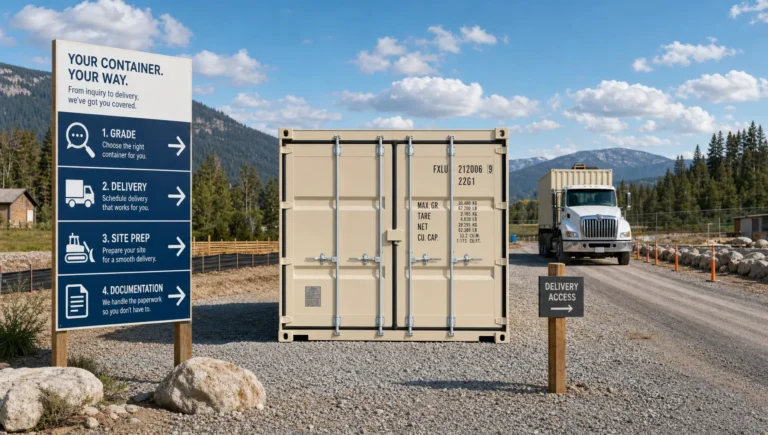
Location plays a real role in your total cost. A buyer in Alpharetta will pay different delivery fees than someone in Jonesboro, even if the container price is identical. Delivery logistics depend on distance from the nearest depot, road access to your site, and the type of delivery truck required. Most 40ft containers are delivered on tilt-bed trucks that need at least 100 feet of straight-line clearance for placement. If your property is on a narrow residential street in Grant Park or a tight commercial lot in Midtown, you need to verify access before you order.
Lease Lane Containers provides delivery planning support that covers site access, turning radius, overhead clearance, and placement specifics so your container arrives and gets placed correctly on the first attempt. This kind of pre-delivery planning prevents the costly scenario where a truck shows up and cannot complete the drop.
Top 40ft Shipping Container Options in Atlanta
Budget-Friendly: Wind and Watertight Grade
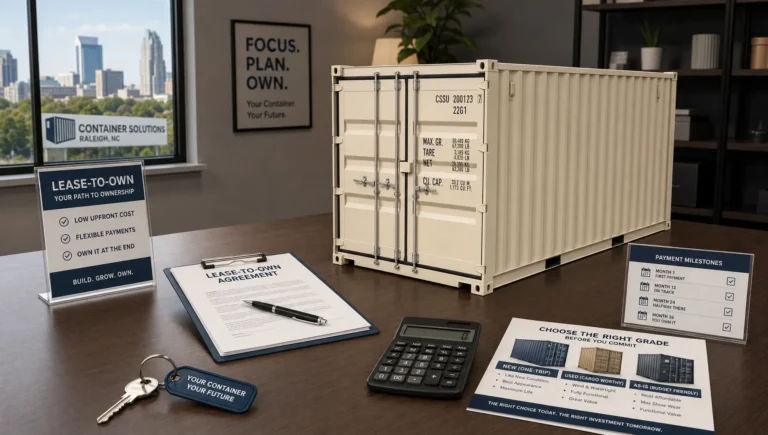
Wind and watertight containers are the most affordable option and work well for on-site storage where appearance is secondary to function. These units have visible wear: surface rust, dents, patched areas, and faded paint. Structurally, they keep weather out and protect contents from rain, wind, and pests. In Atlanta’s 2026 market, expect to pay $2,200 to $3,200 for a 40ft wind and watertight unit.
This grade is a strong fit for contractors storing materials on active job sites, rural property owners needing covered equipment storage, and small businesses using the container as a temporary overflow warehouse. The trade-off is cosmetic condition. If you are placing a container where clients or neighbors will see it, this grade may not meet your standards without additional paint or exterior work.
Mid-Range: Cargo Worthy Grade
Cargo worthy containers have passed a structural inspection certifying them fit for international shipping. They are in better overall condition than wind and watertight units, with fewer dents, less surface corrosion, and functional hardware throughout. Pricing in Atlanta runs $2,800 to $4,000 for a 40ft unit.
This is the sweet spot for most buyers. Cargo worthy containers work for long-term storage, retail inventory, and projects where you want a solid-looking container without paying for near-new condition. Many small businesses along the I-85 corridor and in industrial areas like Forest Park and Norcross choose this grade for permanent or semi-permanent placement.
Premium: One-Trip Containers
One-trip containers are manufactured overseas (typically in China) and shipped to the U.S. loaded with cargo on their maiden voyage. They arrive in excellent condition: clean floors, minimal to no rust, fresh paint, and intact seals. A 40ft one-trip container in Atlanta typically costs $4,200 to $5,500 in 2026.
This grade is the right choice for container offices, retail pop-ups, visible commercial storage, and any project where condition and appearance matter. If you are converting the container into a workspace or customer-facing structure, starting with a one-trip unit saves significant money on prep work. Lease Lane Containers offers transparent grading guidance so you can compare one-trip, cargo worthy, and wind and watertight options side by side before making a decision.
How to Choose the Right 40ft Shipping Container in Atlanta
Selecting the right container comes down to five practical factors: intended use, condition requirements, delivery logistics, local regulations, and supplier credibility. Here is how to work through each one.
Match the Grade to Your Use Case
A container for storing landscaping equipment on a Gwinnett County property does not need the same condition as a container being converted into a pop-up retail space in Ponce City Market. Start with your use case and work backward to the appropriate grade. The rule of thumb is simple: if anyone other than your crew will see or enter the container, lean toward cargo worthy or one-trip. If it is strictly functional storage, wind and watertight will do the job.
Verify Delivery Access Before You Order
This is where many Atlanta buyers run into problems. A 40ft container on a tilt-bed truck requires roughly 100 feet of straight clearance for the truck to tilt and slide the container off. Overhead clearance of at least 14 feet is needed for the truck itself. If your site has low-hanging power lines, tree branches, or a narrow driveway, you may need a different delivery method or site preparation before the truck arrives.
For properties in older Atlanta neighborhoods like Virginia-Highland, Inman Park, or Kirkwood, tight streets and mature tree canopy can create real access challenges. Measure your access route, check for overhead obstructions, and confirm the delivery path with your supplier before signing anything.
Check Georgia Permit Requirements
Georgia does not have a statewide permit requirement for placing a shipping container on private property, but individual municipalities and counties set their own rules. In the City of Atlanta, placing a container on a residential lot may require a temporary use permit or zoning approval depending on the duration and location. Fulton County and DeKalb County have different standards. Contact your local planning department before purchase:
- City of Atlanta Department of City Planning: (404) 330-6145
- Fulton County Department of Environment and Community Development: (404) 612-7400
- DeKalb County Planning and Sustainability: (404) 371-2155
Questions to Ask Your Supplier
Before committing to a purchase, ask these questions:
- What specific grade is this container, and can you provide photos of the actual unit?
- Where is the container currently located, and what is the delivery timeline to my site?
- What is included in the delivery fee, and are there additional charges for placement?
- Do you offer any warranty or return policy if the container does not match the described condition?
- Can you help me assess whether my site can accommodate delivery?
Red Flags to Watch For
Be cautious of suppliers who cannot provide photos of the specific container you are buying, quote prices significantly below market range without explanation, or are vague about delivery logistics. A $1,500 quote on a 40ft container in 2026 almost certainly means a unit in poor condition or hidden fees on delivery. Condition matters as much as size, and the cheapest option is rarely the best value.
Atlanta 40ft Shipping Container Market in 2026
Atlanta’s container market in 2026 reflects broader national trends shaped by global shipping patterns and domestic demand. The Port of Savannah handled over 6 million TEUs (twenty-foot equivalent units) in 2024, and that volume continues to push surplus containers into the Southeast distribution network. Atlanta benefits directly from this flow, which keeps supply relatively strong and prices more stable than in landlocked markets like Nashville or Charlotte.
Demand in the Atlanta metro has increased roughly 12-15% year over year since 2023, driven primarily by construction activity, e-commerce warehousing needs, and the growing popularity of container-based structures for commercial use. The BeltLine development corridor and ongoing mixed-use projects in Westside and Old Fourth Ward have created steady demand for on-site storage during construction phases.
Seasonal patterns affect both pricing and availability. Spring and summer see the highest demand as construction activity peaks across Georgia. Buyers who purchase in late fall or winter often find better pricing and faster delivery windows because competition for available inventory drops. If your project timeline allows flexibility, purchasing in Q4 or Q1 can save $200 to $500 on the same container.
Compared to the rest of Georgia, Atlanta’s pricing sits slightly above the state average due to higher delivery costs within the metro and stronger demand. Buyers in Savannah or Augusta may find lower per-unit costs because of proximity to port depots, but Atlanta’s infrastructure and depot network still make it one of the most accessible markets in the Southeast. Georgia has not introduced any significant new regulations affecting container placement in 2026, though several metro-area municipalities have tightened enforcement on unpermitted containers on residential lots. Checking local zoning rules remains essential.
Atlanta 40ft Shipping Container FAQ
How much does a 40ft shipping container cost in Atlanta in 2026?
Pricing ranges from about $2,200 for a wind and watertight unit to $5,500 for a one-trip container. Cargo worthy units fall in the $2,800 to $4,000 range. Delivery within metro Atlanta adds $250 to $600. Total cost depends on grade, delivery distance, and site access requirements.
Do I need a permit to place a shipping container on my property in Atlanta?
It depends on your specific municipality. The City of Atlanta, Fulton County, and DeKalb County each have different rules. Residential placements in the City of Atlanta typically require some form of zoning approval or temporary use permit. Commercial properties may have different requirements. Always call your local planning office before purchasing.
How long does delivery take?
Most 40ft containers can be delivered to Atlanta-area sites within 3 to 10 business days from order confirmation. Availability of specific grades and current depot inventory affect timing. One-trip containers sometimes take slightly longer if they need to be sourced from a specific location.
What is the difference between a standard 40ft and a high cube 40ft container?
A standard 40ft container has an exterior height of 8 feet 6 inches. A high cube shipping container stands 9 feet 6 inches tall, giving you an extra foot of vertical interior space, which translates to roughly 300 additional cubic feet. High cube units are preferred for container offices, workshops, and any use where headroom matters.
Can I place a 40ft container in my backyard?
Physically, yes, if you have the space and access. A 40ft container needs a level surface and enough room for the delivery truck to maneuver. Legally, you need to verify with your local zoning authority. Many Atlanta-area residential zones allow containers with conditions, but some restrict them entirely or limit placement duration.
What should I put under the container?
A level gravel pad is the most common and cost-effective foundation for a shipping container. A 6-inch compacted gravel base provides drainage and prevents the container from sitting in standing water. Concrete piers or a poured slab work for permanent placements. Bare dirt is not recommended because moisture and uneven settling can cause structural issues over time.
Get 40ft Shipping Container in Atlanta Today
If you have read this far, you likely have a specific project or need in mind. Here is how to move forward efficiently.
Start by confirming three things: your intended use (storage, workspace, commercial), your site access (measure the driveway width, overhead clearance, and available length for truck maneuvering), and your local permit requirements (call your municipal planning department). Having these answers ready before you contact a supplier will speed up the quoting process and prevent delays.
Lease Lane Containers works with Atlanta-area buyers to match the right container grade and size to your project. Their Raleigh-based team provides container buying guidance that covers sizing, grading, and delivery planning so you know exactly what you are getting before it shows up on a truck. Whether you need a cargo worthy unit for a Decatur construction site or a one-trip container for a retail conversion in West Midtown, the process starts with a straightforward conversation about your requirements.
Request quotes from at least two suppliers, compare delivered pricing (not just the container price), and verify that the quoted grade matches what you will actually receive. Ask for photos of the specific unit when possible.
Final Checklist
Use this checklist before purchasing a 40ft shipping container in Atlanta:
- Confirm your use case and select the appropriate container grade (wind and watertight, cargo worthy, or one-trip)
- Measure your site access: driveway width, overhead clearance (minimum 14 feet), and straight-line clearance (minimum 100 feet for tilt-bed delivery)
- Contact your local planning department to verify permit requirements for your specific property
- Prepare your placement surface: a compacted gravel pad of at least 6 inches is recommended
- Request quotes from multiple suppliers and compare total delivered cost, not just container price
- Ask for photos of the actual container you will receive, not stock images
- Verify the supplier’s delivery process, including placement method and any additional fees
- Confirm the delivery timeline and coordinate site readiness before the scheduled drop date
Finding the right 40ft shipping container for your Atlanta project does not have to be complicated. The key is matching the grade to your needs, preparing your site properly, and working with a supplier who is upfront about pricing and delivery logistics. If you are ready to compare options, browse available inventory from Lease Lane Containers to see current 40ft container choices, or contact us directly to discuss your specific project requirements.