Lease to Own Shipping Containers: Pros, Costs, and Risks
A lease-to-own shipping container can be a practical middle ground when you need secure storage now, but do not want to pay the full purchase price upfront. For general contractors in Raleigh, small businesses expanding inventory, agricultural properties in the Southeast, and logistics teams managing seasonal capacity, that flexibility can be appealing.
But lease-to-own is not the same as renting, and it is not automatically cheaper than buying. The right decision depends on the container grade, total contract cost, delivery requirements, site conditions, and how long you plan to keep the unit.
This guide breaks down the pros, costs, and risks of lease to own shipping containers so you can compare options with confidence before signing an agreement.
What does lease-to-own mean for a shipping container?
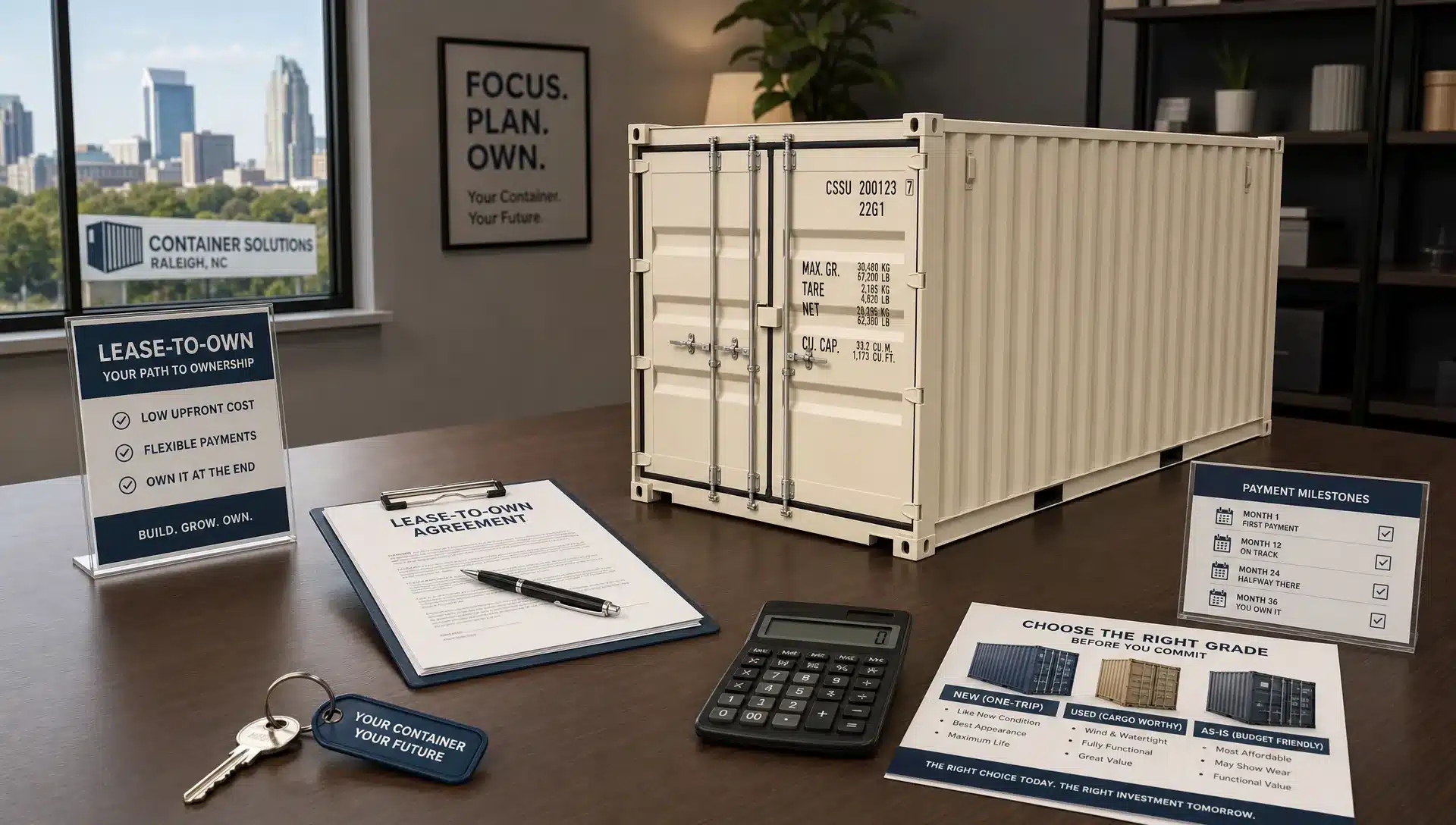
A lease-to-own agreement, sometimes called rent-to-own or lease-purchase, lets you make payments over time with the goal of owning the container at the end of the term. Instead of paying the full cash price upfront, you typically make a down payment or first payment, then continue with monthly payments until the contract is complete.
The important point is that lease-to-own is a financing structure, not a container type. You still need to choose the right unit, size, and grade. A 20ft Wind & Watertight storage container on a construction site is a very different asset from a 40ft High Cube Cargo Worthy container intended for export or a refrigerated reefer container used for temperature-controlled inventory.
If you are still comparing traditional leasing with purchasing, the broader container lease vs buy comparison can help clarify when each option makes more sense.
Why container grade matters before you discuss payments
Before focusing on monthly cost, confirm exactly what grade of container you are pricing. Two lease-to-own offers can look similar on paper, but the underlying container condition may be very different.
Most shipping containers are made from Corten Steel, a weathering steel designed to resist corrosion better than ordinary steel in outdoor environments. Standard dry containers are built around international dimensional and structural conventions, including ISO standards for freight containers. That said, age, handling history, floor condition, door alignment, roof integrity, and structural wear still vary widely.
Here are the main grades to understand:
| Grade | What it usually means | Best fit | Key caution |
|---|---|---|---|
| One-Trip | New or near-new container used for one ocean trip from the factory | Retail use, modifications, mobile offices, cleaner job sites, long-term ownership | Higher monthly cost than used options |
| Cargo Worthy | Used container that is structurally suitable for cargo transport, often eligible for shipping when properly inspected and documented | Export, regional transport, logistics, storage that needs stronger structural assurance | Confirm documentation if international shipping is required |
| Wind & Watertight | Used container that should keep out wind and water, but is not necessarily certified for cargo transport | Jobsite storage, farm storage, home storage, overflow inventory | Not the right choice if you need ocean shipping certification |
| As-Is | Container sold with known or unknown defects | Rarely a good fit for lease-to-own | High risk of leaks, door issues, floor damage, or repair costs |
For lease-to-own, most buyers should avoid vague descriptions like “used container” without a grade. Ask whether the unit is One-Trip, Cargo Worthy, or Wind & Watertight, and request photos or inspection details before committing.
Common sizes used in lease-to-own agreements
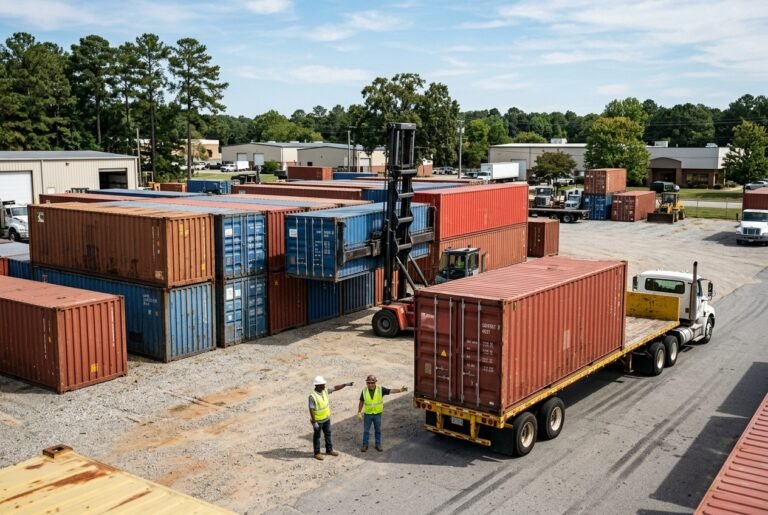
The two most common choices are 20ft and 40ft containers. A 20ft unit is easier to place on tighter lots, urban job sites, residential properties, and smaller farms. A 40ft container provides much more storage volume, making it popular for contractors, warehouses, distributors, and large property owners.
High Cube containers add extra vertical clearance. A standard container is commonly 8 feet 6 inches tall on the exterior, while a High Cube is commonly 9 feet 6 inches tall. That extra foot can matter if you plan to store taller materials, add insulation, install lighting, or convert the container into a mobile office.
Refrigerated containers, or reefers, are a separate category. They include mechanical refrigeration equipment and electrical requirements, which can make lease-to-own terms more complex. If your business depends on cold storage, you should evaluate not just the box, but also the reefer machinery, maintenance expectations, power supply, and service access.
For a deeper overview of grades, sizing, and delivery basics, the Lease Lane Containers buyer’s guide is a useful starting point before comparing payment structures.
Pros of lease-to-own shipping containers
Lease-to-own can be a strong fit when the use case is long-term, but immediate cash preservation matters. It is especially relevant for businesses in Raleigh, across North Carolina, and throughout the Southeast that need secure storage quickly without tying up capital that could be used for labor, materials, equipment, or inventory.
Lower upfront cash requirement
The biggest advantage is usually cash flow. Buying a container outright requires a larger upfront payment, plus delivery and any site preparation costs. Lease-to-own spreads the container cost over time, which may help contractors and small businesses keep working capital available.
This can be valuable when a general contractor needs jobsite storage for tools and materials before the first draw is received, or when a small business needs overflow storage before seasonal revenue comes in.
Ownership at the end of the term
Unlike a standard rental, lease-to-own can result in ownership if all contract terms are satisfied. That makes it attractive when you know the container will be used for years, not weeks.
A homeowner using a container as long-term property storage, a farm storing feed and tools, or a builder with ongoing projects may prefer eventual ownership over continuous rental payments.
Better fit for modifications
If you plan to add vents, personnel doors, windows, shelving, insulation, electrical components, or office features, ownership matters. Many rental agreements restrict modifications because the provider expects the unit to be returned in rentable condition.
Lease-to-own may give you more room to customize, but only if the contract allows it. Always confirm modification rules in writing before cutting, welding, drilling, painting, or installing permanent upgrades. If modifications are central to your plan, a One-Trip or clean Cargo Worthy unit is often a better starting point than a heavily worn WWT unit.
Predictable path for long-term users
If your project timeline keeps extending, short-term rental can become expensive and frustrating. Lease-to-own gives you a clearer path: pay over time, then keep the container.
This is why many construction firms, property owners, and businesses with recurring storage needs compare lease-to-own against both rental and cash purchase. The value is not only in the monthly payment, but in whether the agreement matches the real duration of use.
What costs should you expect?
The cost of a lease-to-own shipping container depends on the same factors that affect purchase price: size, condition, grade, location, delivery distance, market availability, and any special equipment. The financing structure then adds another layer: term length, fees, taxes, insurance, early payoff rules, and ownership transfer conditions.
The most important number is not the monthly payment by itself. It is the total cost to own.
A simple way to evaluate an offer is:
Total cost to own = upfront payment + monthly payments over the full term + delivery + taxes and fees + insurance or damage charges + modification costs + any final ownership or documentation fees
Use that total to compare against a cash purchase quote for the same grade and size.
| Cost factor | Why it matters | Questions to ask |
|---|---|---|
| Container size | 40ft units usually cost more than 20ft units, and High Cube units can cost more than standard-height units | Is the quote for standard height or High Cube? |
| Container grade | One-Trip usually costs more than Cargo Worthy or WWT, but may reduce repair and appearance concerns | What grade is guaranteed in writing? |
| Delivery | Tilt-bed delivery, distance, access, and regional availability affect final cost | Is delivery included or separate? |
| Term length | Longer terms can lower monthly payments but may increase total cost | What is the total amount paid if I complete the term? |
| Early payoff | Some agreements allow early purchase, others include penalties or minimum payments | Can I pay off early without penalty? |
| Damage responsibility | You may be responsible for damage during the lease period before ownership transfers | What counts as normal wear versus chargeable damage? |
| Taxes and fees | Taxes, documentation fees, or processing charges can change the real cost | Are all fees shown on the quote? |
If you are evaluating used units specifically, it is also worth understanding the variables that drive used shipping container cost before comparing monthly payments.
Lease-to-own vs renting vs buying
Lease-to-own is only one path. For some customers, a short-term rental is smarter. For others, a direct purchase is cleaner and cheaper over the long run.
| Option | Best for | Main advantage | Main drawback |
|---|---|---|---|
| Rent | Short projects, temporary storage, uncertain timelines | Low commitment and easy exit | No ownership, long rentals can add up |
| Lease-to-own | Long-term use when cash flow matters | Payments over time with potential ownership | Total cost may exceed cash purchase |
| Buy | Long-term use with available capital | Usually the simplest path to ownership | Higher upfront payment |
For example, a Raleigh home builder who needs storage for a six-month project may be better served by renting. A landscaping company that expects to use the same container for equipment storage year after year may benefit from buying or lease-to-own. A real estate developer planning a modified container office should usually think in terms of ownership from the beginning, because modifications and permitting often require more control over the asset.
Key risks to watch before signing
Lease-to-own can be helpful, but the risks are real if the contract is vague or the container is misrepresented.
Paying more than the container is worth
A lower monthly payment can make an agreement feel affordable, but the total paid over the full term may be significantly higher than the cash price. That may still be acceptable if cash flow is the priority, but it should be a conscious decision.
Ask for the cash purchase price and the total lease-to-own cost side by side for the same container. If the lease-to-own premium is high, ask whether a shorter term, larger upfront payment, or direct purchase would be better.
Confusing WWT with Cargo Worthy
This is one of the most common and costly mistakes. Wind & Watertight means the container should keep weather out for storage. Cargo Worthy means the container is structurally suitable for cargo transport, subject to inspection and documentation requirements.
If you only need jobsite storage in North Carolina, WWT may be perfectly adequate. If you need to ship goods internationally, do not assume a WWT unit will qualify. Ask specifically about Cargo Worthy condition, CSC plate status, and inspection documentation.
Not knowing when ownership transfers
Some lease-to-own agreements transfer ownership only after the final payment and completion of all contract requirements. Until then, you may have restrictions on moving, modifying, subleasing, or selling the unit.
Confirm when title or ownership documentation transfers. Also ask what happens if you miss a payment, want to pay off early, or need to relocate the container to another property.
Underestimating delivery and access constraints
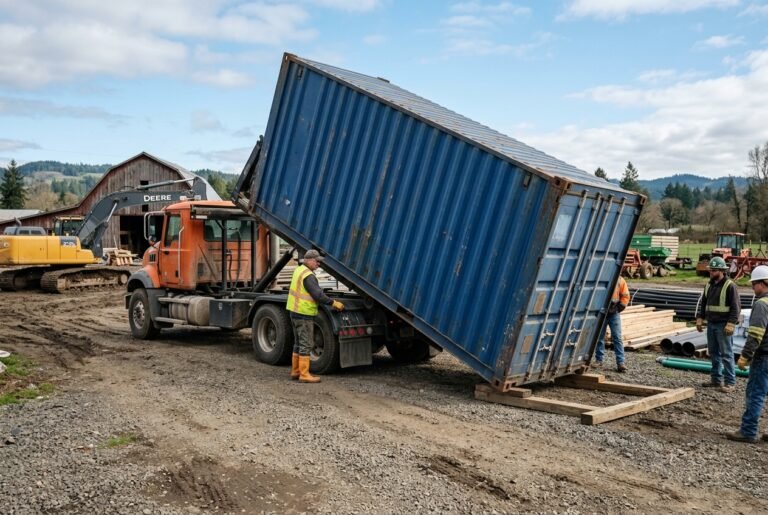
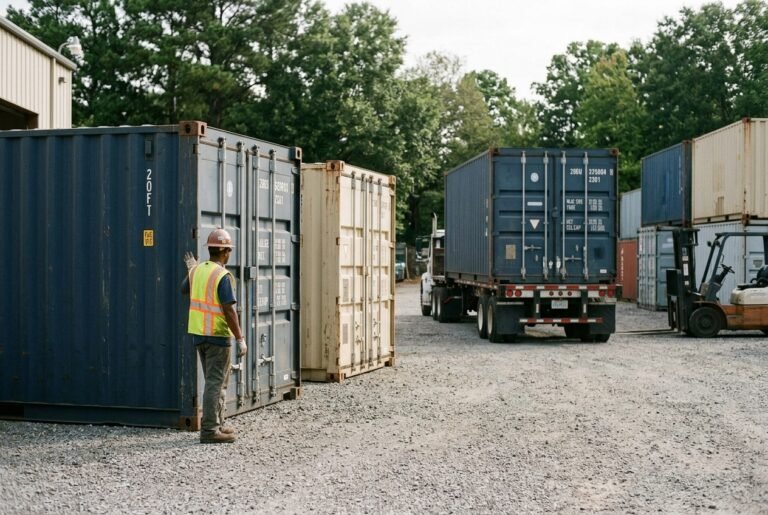
Containers are large, heavy, and delivered by specialized trucks. A 40ft container often needs more straight-line clearance than customers expect, especially for tilt-bed delivery. Tight driveways, low branches, soft ground, overhead wires, steep slopes, and narrow jobsite entrances can create delays or additional charges.
This is especially important in older Raleigh neighborhoods, wooded rural properties, and active construction sites where access changes week by week.
Accepting poor inspection standards
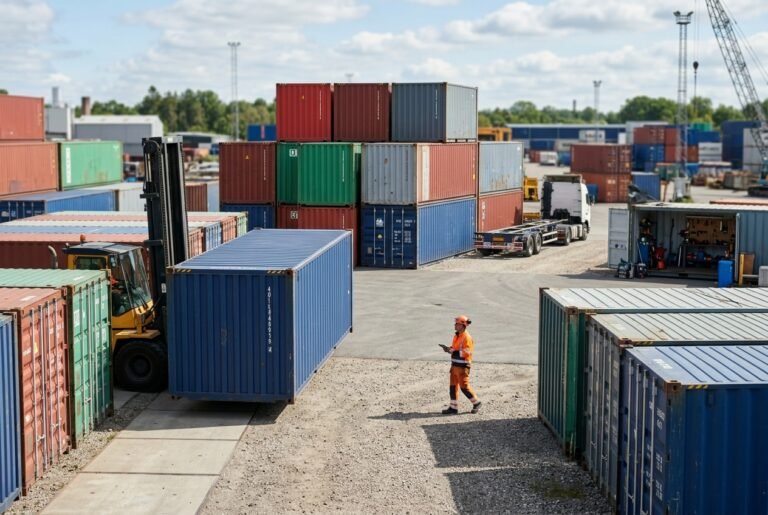
A lease-to-own agreement can leave you paying for a container that does not match your needs. For used containers, inspect the roof, door gaskets, locking bars, corner castings, crossmembers, floor, interior walls, and signs of patching or active leaks.
Red flags include fresh paint hiding corrosion, daylight visible through the roof or walls, doors that do not close properly, soft flooring, strong chemical odors, severe dents along structural rails, and vague promises that are not written into the agreement.
Pro-Tip: prepare the site before delivery day
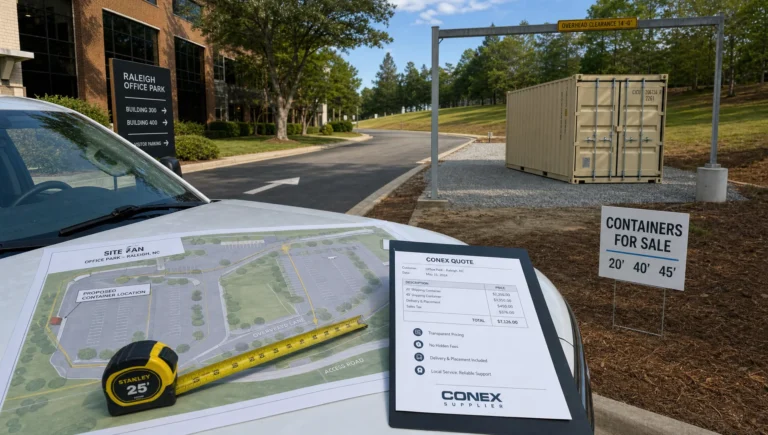
A good container on a bad pad can become a frustrating investment. Before delivery, choose a level location with stable ground and enough access for the truck to enter, maneuver, unload, and exit safely.
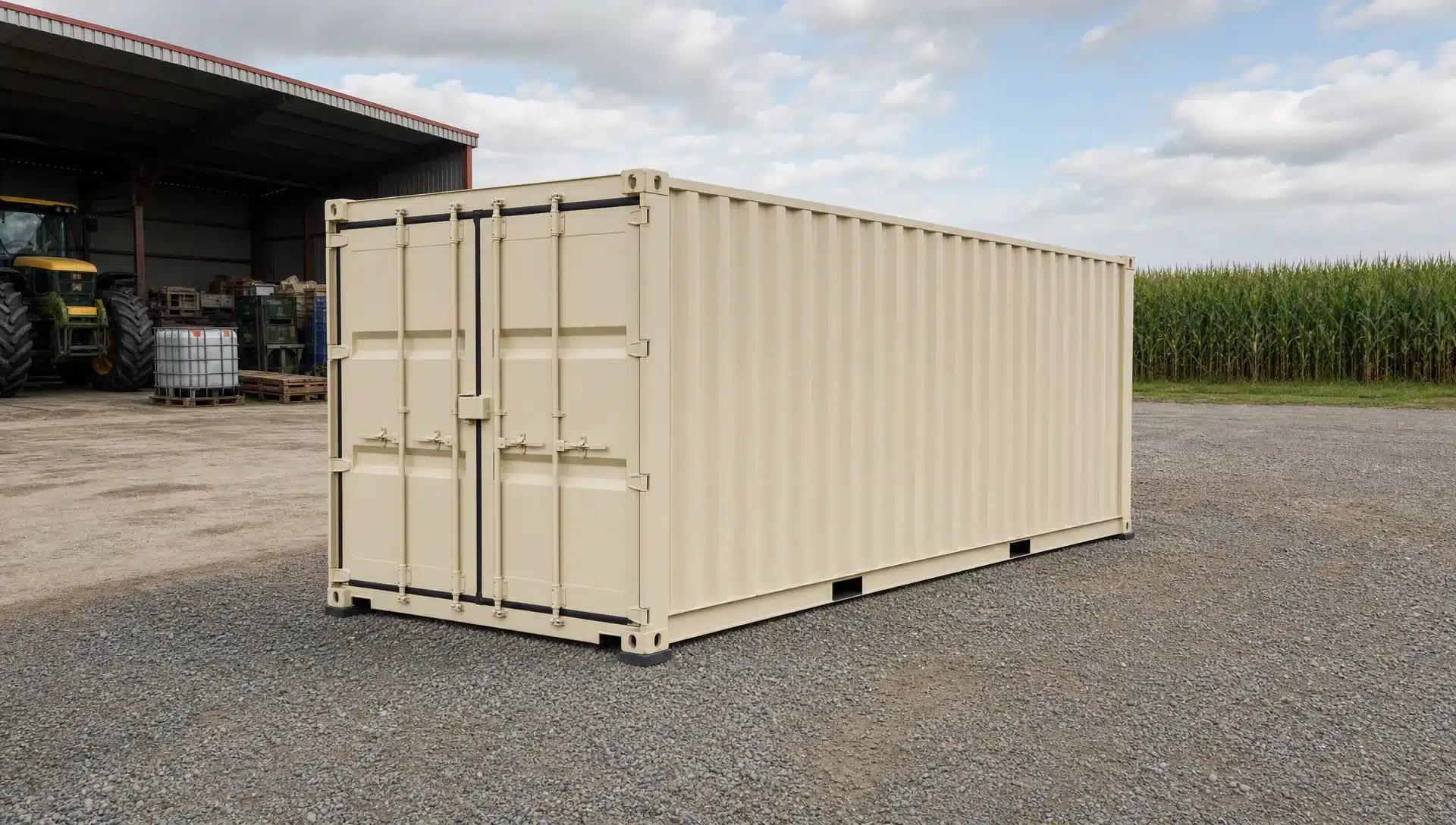
For most long-term storage uses in Raleigh and the Southeast, a compacted gravel pad is a practical choice because it improves drainage and helps keep the container from sitting in standing water. The container should be supported evenly, especially at the corners and along the base rails. Uneven support can twist the frame, which may cause doors to bind even if the container itself is in good condition.
Also check permit requirements before delivery. Rules vary by city, county, HOA, zoning district, and intended use. A temporary jobsite storage container may be treated differently from a permanent accessory structure or a modified office. In Raleigh, Wake County, and surrounding North Carolina communities, it is wise to confirm local requirements before scheduling delivery, especially if the container will be visible from the street, connected to utilities, or used for business operations.
Who is lease-to-own best for?
Lease-to-own is usually most attractive for customers who expect to keep the container for years but prefer not to buy outright immediately.
General contractors and home builders may use lease-to-own to secure tools, equipment, fixtures, and materials across multiple jobs. A durable Corten Steel container can handle jobsite conditions better than many temporary storage alternatives, especially when theft prevention and weather protection are priorities.
Small business owners may use containers for inventory overflow, seasonal storage, mobile retail concepts, or future modifications. In these cases, the ability to eventually own the unit can matter if the business plans to brand, paint, or modify it.
Homeowners and agricultural users may prefer lease-to-own when building a long-term storage solution for equipment, feed, ATVs, tools, or household items. A 20ft WWT container may be enough for many residential uses, while larger farms and rural properties may prefer 40ft or High Cube options.
Logistics managers should be more cautious. If the container will move cargo, especially internationally, grade and documentation are critical. Cargo Worthy condition matters more than monthly payment, and a reefer unit should be evaluated for both container integrity and refrigeration performance.
Questions to ask before agreeing to lease-to-own
Before signing, slow the conversation down and ask for details in writing. A reputable provider should be able to explain the container, the cost structure, and the delivery process clearly.
- What is the exact container size, grade, and height, such as 20ft standard, 40ft standard, or 40ft High Cube?
- Is the unit One-Trip, Cargo Worthy, or Wind & Watertight?
- Is the specific container inspected before delivery, and are photos available?
- What is the cash purchase price for the same unit?
- What is the total cost if every lease-to-own payment is made through the end of the term?
- Are delivery, taxes, fees, and pickup or relocation costs included?
- When does ownership transfer, and what documentation is provided?
- Are modifications allowed before ownership transfers?
- Is early payoff allowed, and are there penalties?
- What happens if the site is not ready on delivery day?
If the answer to any of these questions is unclear, do not rely on verbal assurances. Put the details into the agreement.
Final verdict: is lease-to-own worth it?
Lease-to-own can be worth it when you need a shipping container now, plan to keep it long-term, and want to preserve cash for other priorities. It can be a practical fit for contractors, small businesses, farms, homeowners, and some logistics users.
It is less attractive when the total cost is far above the cash price, the container grade is unclear, the contract restricts how you need to use the unit, or your project is short-term enough that a rental would be simpler.
The best approach is to compare three numbers for the same container: rental cost for your expected timeline, direct purchase price, and full lease-to-own cost. Then evaluate the container grade, delivery plan, site readiness, and contract terms before deciding.
Frequently Asked Questions
Is lease-to-own cheaper than buying a shipping container? Not usually in total cost. Lease-to-own often reduces upfront cash needs, but the total paid over the full term may be higher than a direct cash purchase. Always compare the full contract cost against the purchase price for the same size and grade.
Can I lease-to-own a used shipping container? Yes, many lease-to-own agreements involve used containers, but the grade matters. A Wind & Watertight unit may be fine for storage, while a Cargo Worthy unit is more appropriate if the container must be structurally suitable for transport.
What size container is best for lease-to-own? It depends on your use and available space. A 20ft container is easier to place on tight sites, while a 40ft container offers more storage capacity. A High Cube container adds extra height, which can be useful for bulky materials or modifications.
Can I modify a lease-to-own container? Possibly, but only if the contract allows it. Do not cut openings, add doors, install electrical systems, or make permanent changes until you confirm modification rights in writing.
Do I need a permit for a lease-to-own shipping container in Raleigh? Permit and zoning requirements depend on location, duration, placement, and use. Raleigh, Wake County, nearby municipalities, and HOAs may treat containers differently, so confirm requirements before delivery.
Talk with Lease Lane Containers before you commit
If you are comparing lease to own shipping containers, rentals, or direct purchase options, Lease Lane Containers LLC can help you evaluate the right size, grade, and delivery plan for your property. Our team works with customers in Raleigh, across North Carolina, throughout the Southeast, and nationwide.
For current availability, clear pricing, and practical site preparation guidance, contact the sales team at sales@leaselanecontainers.com or visit the Lease Lane Containers Raleigh office to discuss your project in person.