How to Choose a Conex Supplier in Your Area
Searching for a “conex box near me” can bring up dozens of sellers, brokers, auction listings, and marketplace ads. The hard part is not finding a container. The hard part is choosing a supplier who will deliver the right unit, in the right condition, at a clear delivered price, without surprises on drop-off day.
For contractors in Raleigh, homeowners across North Carolina, small businesses in the Southeast, and logistics teams buying nationwide, a good Conex supplier should do more than quote a box. They should help you match size, grade, delivery method, and site conditions to the way you will actually use the container.
This guide explains how to evaluate a Conex supplier in your area with a practical buyer’s mindset, including what to ask, what red flags to avoid, and how to compare quotes fairly.
Start With Your Use Case, Not the Lowest Price
A reliable supplier will ask why you need the container before they recommend one. The right unit for jobsite tool storage is not always the right unit for international shipping, farm equipment, retail inventory, or a future mobile office conversion.
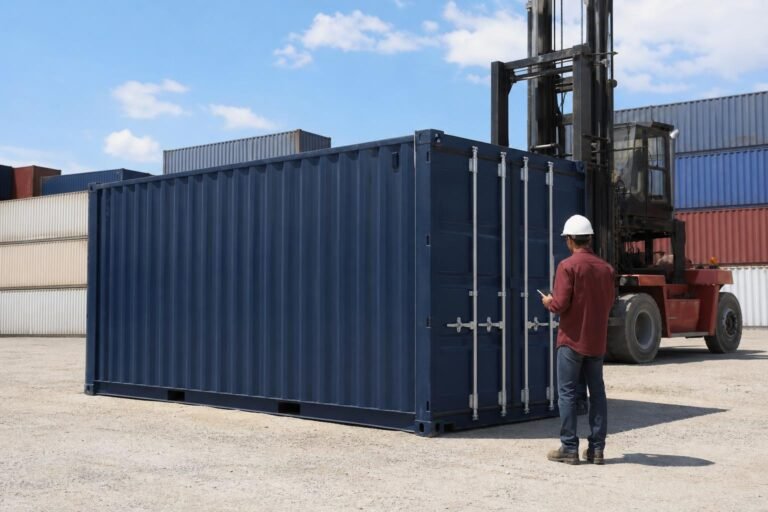
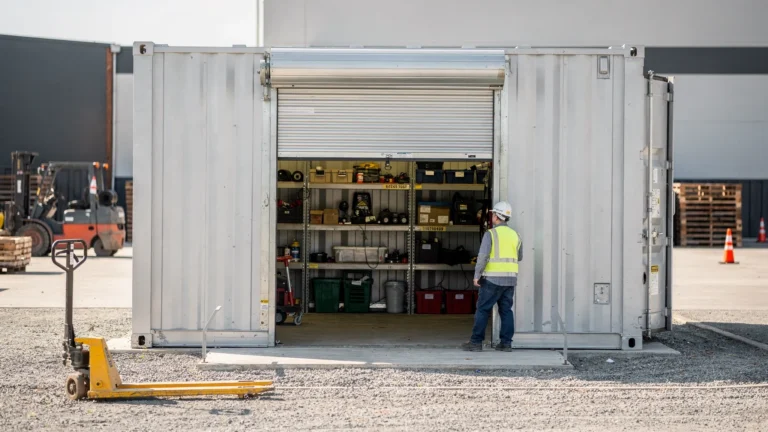
For example, a general contractor in Raleigh may need a Wind & Watertight 20ft container for secure storage close to an active build site. A logistics manager moving cargo may need a Cargo Worthy unit that can meet shipping requirements. A small business planning a pop-up or workspace may prefer a One-Trip High Cube container because it offers cleaner walls, better cosmetics, and extra interior height.
Before requesting quotes, define the basics:
- Primary use: Storage, shipping, workspace, cold storage, retail, agriculture, or modification.
- Location: Residential property, commercial lot, farm, construction site, warehouse yard, or port-adjacent location.
- Duration: Temporary project storage or long-term asset.
- Access needs: Standard cargo doors, roll-up door, side access, ventilation, insulation, or refrigeration.
- Appearance requirements: Functional used condition or cleaner One-Trip appearance.
If you are still comparing sizes and grades, Lease Lane’s guide to choosing which Conex size and grade fit your needs is a helpful next step.
Verify That the Supplier Understands Container Grades
Container grading is where many bad purchases begin. A vague listing that says “good condition” is not enough. A reputable Conex supplier should clearly explain the difference between One-Trip, Cargo Worthy, and Wind & Watertight units, and they should be willing to match the grade to your intended use.
Shipping containers are typically built from Corten Steel, a weathering steel designed to resist atmospheric corrosion better than ordinary steel. They are also built around ISO standards, including standard corner castings and dimensions that allow them to be stacked, lifted, transported, and secured using compatible equipment. However, ISO construction does not mean every used unit is in the same condition.
| Container grade | What it usually means | Best fit | What to ask the supplier |
|---|---|---|---|
| One-Trip | A newer container that has typically made one cargo trip from the manufacturer and has minimal handling wear | Retail storage, clean business use, modifications, mobile offices, higher-appearance sites | Can I see current photos of the exact unit or representative inventory? |
| Cargo Worthy | A used container that is structurally suitable for cargo transport when properly inspected and certified as required | Export shipping, regional transport, heavy-duty storage | Is the unit certified, and is documentation available if I need it for shipping? |
| Wind & Watertight (WWT) | A used container that should keep out wind and rain, but may not be certified for ocean shipping | Jobsite storage, farm storage, household storage, inventory overflow | Are the doors, gaskets, roof, and floor inspected for leaks or soft spots? |
The key distinction is that WWT is a storage-grade condition, while Cargo Worthy is tied to transport suitability. One-Trip units are usually the cleanest and most modification-friendly, but they also cost more. Used units can be a smart buy when the supplier is transparent about rust, dents, door function, flooring, and repairs.
For deeper inspection details, review this guide on what to check before you buy a used Conex box.
Ask Whether the Quote Is a Delivered Price
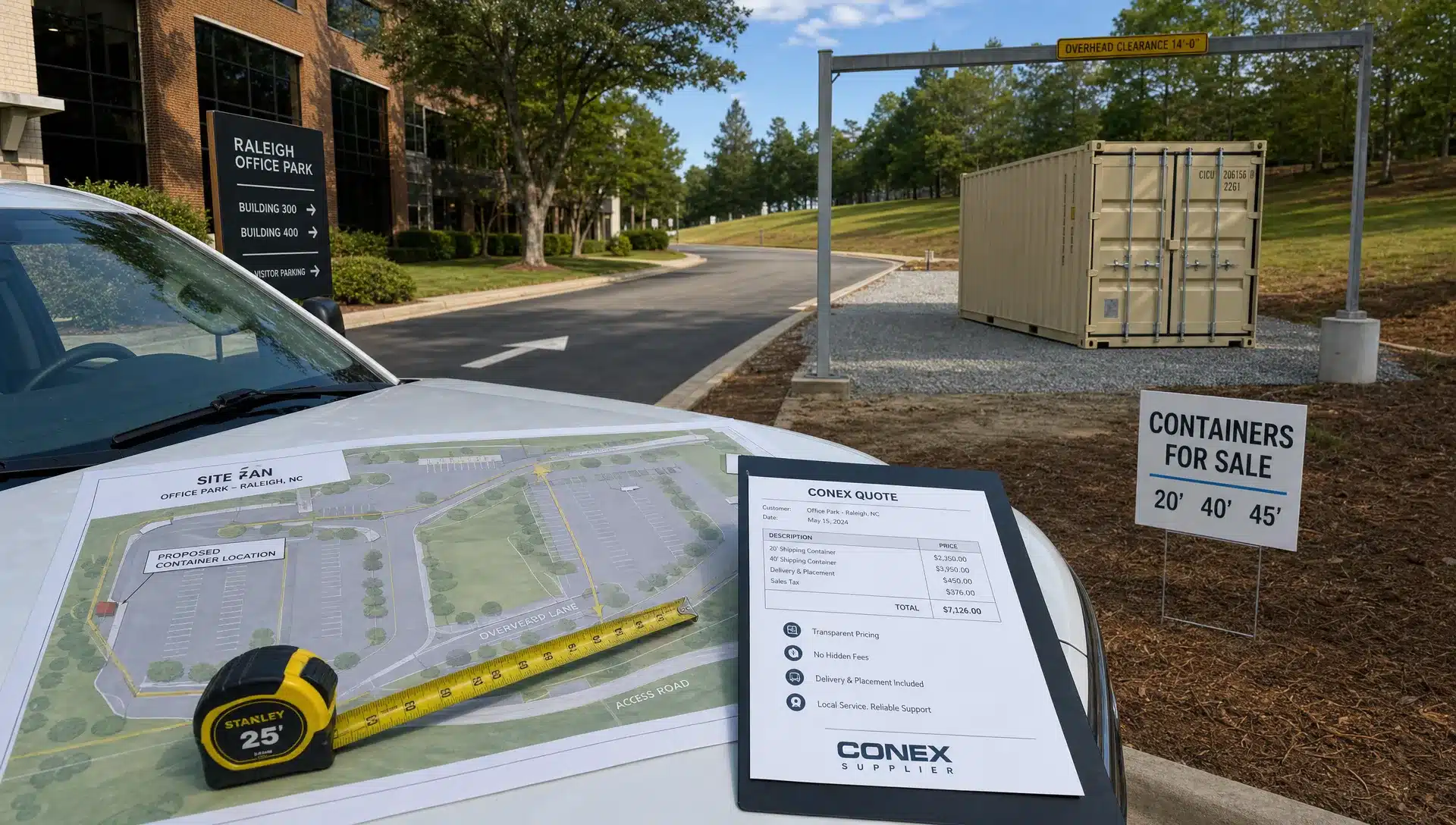
A low container price can become an expensive purchase once delivery, fuel, permits, crane work, or failed site access are added. When choosing a Conex supplier in your area, ask for a delivered quote rather than a container-only quote.
A complete quote should clarify:
- Container size and grade
- Standard or High Cube height
- New One-Trip, Cargo Worthy, WWT, refrigerated, or modified condition
- Delivery address or ZIP code
- Delivery method, such as tilt-bed, roll-off, flatbed, or chassis
- Whether offloading is included
- Any access limitations or additional charges
- Sales tax, if applicable
- Payment terms and estimated delivery window
This matters especially in Raleigh and across the Southeast, where delivery conditions can vary widely between urban lots, wooded properties, farms, new subdivisions, and active construction sites. A property near downtown Raleigh may have tight street access and overhead utility concerns. A rural North Carolina property may have soft ground, long driveways, or seasonal drainage issues.
A professional supplier should ask for photos or a description of the drop location before the truck arrives. If they do not discuss access, grade, turning radius, surface conditions, or overhead clearance, that is a warning sign.
Compare Local Presence With Nationwide Capability
Choosing a supplier “near me” does not always mean choosing the closest online listing. You want a team that understands your local delivery environment and has access to dependable inventory.
For buyers in Raleigh, a local supplier can help with regional questions such as driveway access, jobsite staging, HOA concerns, and common permitting expectations. For companies operating across multiple states, national delivery capability matters because you may need a consistent source for containers in different markets.
The best supplier often combines both strengths: local knowledge and broader logistics reach. Lease Lane Containers LLC is headquartered in Raleigh, NC, and works with buyers who need clean shipping containers, trailers, and modular solutions delivered to properties across North Carolina, the Southeast, and nationwide.
When comparing suppliers, ask these questions:
- Where is the container physically located?
- Do you have Raleigh or North Carolina delivery experience?
- Do you provide delivery planning before dispatch?
- Can you supply multiple units for contractors, developers, or logistics operations?
- Can you source 20ft, 40ft, High Cube, and refrigerated units when needed?
A supplier who can answer these clearly is more likely to prevent delays, mismatched equipment, and delivery-day problems.
Evaluate Size Options With Practical Space in Mind
Most buyers start by choosing between 20ft and 40ft containers. Standard ISO container widths are typically 8 feet, while common exterior heights are 8 feet 6 inches for standard units and 9 feet 6 inches for High Cube units. A High Cube container provides extra vertical clearance, which can be valuable for shelving, equipment, palletized inventory, insulation, HVAC, or office conversions.
A 20ft container is often easier to place on tight residential lots, smaller construction sites, or farm areas where maneuvering space is limited. A 40ft container provides more storage per delivered unit and is common for commercial storage, larger job sites, and inventory overflow. A 40ft High Cube is a popular choice when vertical space matters.
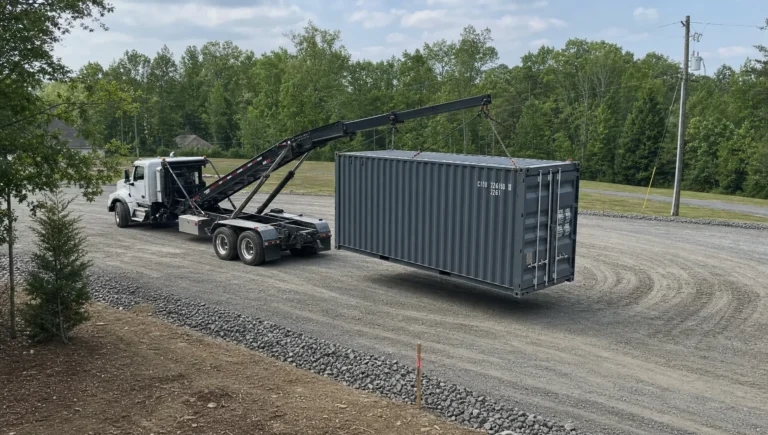
Do not choose size by price alone. A larger container may be more cost-effective per square foot, but only if your site can receive it. A 40ft unit delivered by tilt-bed truck usually needs significant straight-line clearance because the container slides off the trailer. If the truck cannot line up properly, the delivery may fail or require specialized equipment.
If you are comparing local options, this article on how to compare Conex containers for sale in your area provides a broader framework for evaluating size, condition, and seller transparency.
Look for Transparent Photos and Inspection Practices
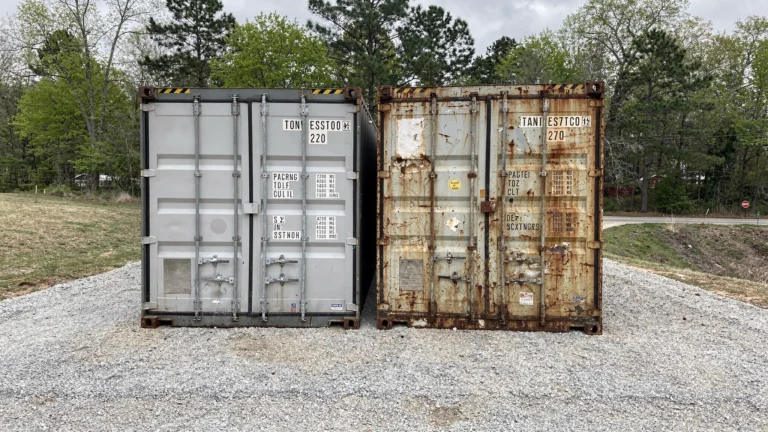
A trustworthy supplier should be willing to describe the condition of the unit honestly. For One-Trip units, you should still expect minor handling marks, small dents, or scuffs from transport. For used WWT or Cargo Worthy units, cosmetic wear is normal, but structural condition matters.
Ask for details on the following areas:
- Roof: Check for major dents, standing water areas, punctures, or heavy corrosion.
- Doors: Confirm that both doors open, close, latch, and seal properly.
- Gaskets: Look for cracked or missing rubber seals that could allow water intrusion.
- Floor: Ask about soft spots, chemical contamination, major delamination, or repairs.
- Frame and corner posts: Look for structural bends, collision damage, or compromised corner castings.
- Rust: Surface rust is common on used containers, but deep corrosion, holes, or flaking steel are more serious.
For storage buyers, the most important question is usually whether the container is dry, secure, and structurally sound. For shipping buyers, documentation and certification are more important. For modification buyers, a cleaner frame and less interior wear may save time and labor later.
Pro-Tip: Prepare the Drop Site Before Delivery
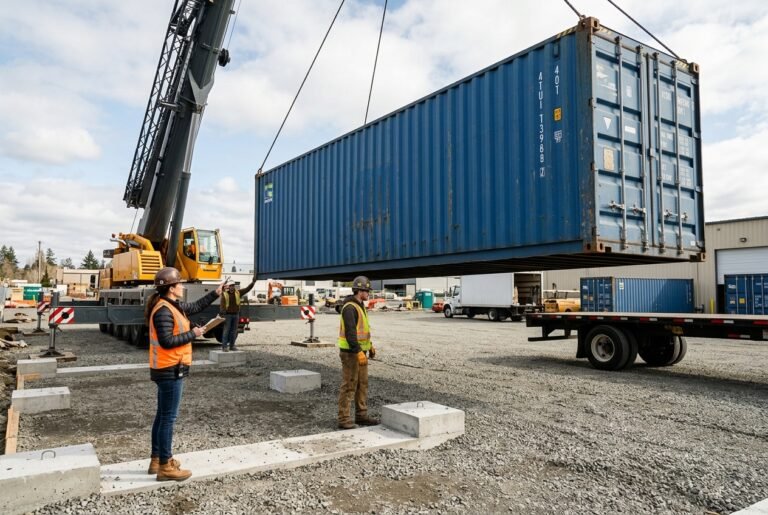
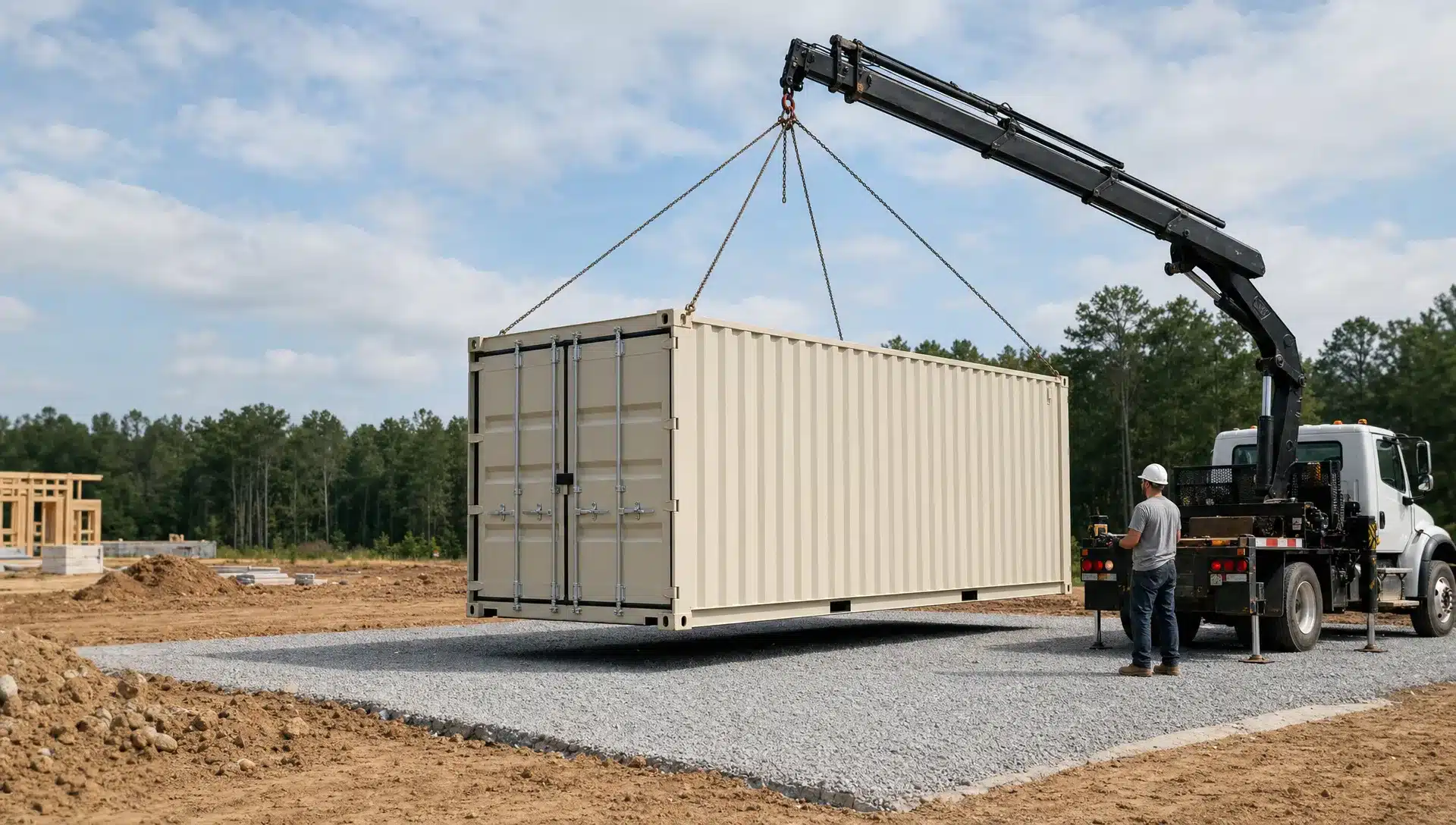
The best container supplier cannot compensate for a site that is unlevel, too soft, or blocked by obstacles. Before delivery, prepare a firm, level pad that allows the container to sit evenly from corner to corner. Uneven placement can cause door alignment problems, water pooling, and unnecessary stress on the frame.
For many Raleigh and Southeast properties, a compacted gravel pad is a practical choice because it drains well and reduces soil contact. Concrete pads, railroad ties, concrete blocks, and piers can also work when installed correctly. Avoid placing a container directly on soft soil, low spots, or areas where stormwater collects.
Also check overhead and approach clearance. Delivery trucks need room to enter, align, offload, and exit safely. Watch for tree limbs, power lines, fences, septic fields, tight gates, parked vehicles, and steep slopes. If your location is inside city limits, a subdivision, commercial district, or HOA-controlled property, confirm local permit and placement rules before scheduling delivery. Requirements can vary by municipality and property use, so Raleigh buyers should verify current guidance with the appropriate local office when the container will remain on-site for an extended period.
A good supplier will talk through these details before delivery and may ask for site photos to help avoid costly rescheduling.
Watch for Pricing Red Flags
Container pricing changes based on size, condition, market availability, delivery distance, fuel costs, and modifications. That is why two quotes can look very different even when both mention a “40ft Conex box.” The issue is not whether prices vary. The issue is whether the supplier explains why.
Be careful with listings that show unusually low prices but provide little detail. Some sellers advertise a container price without delivery. Others use stock photos that do not reflect the unit you will receive. In worst-case scams, sellers request full payment for inventory they do not control.
Red flags include:
- No clear business identity, address, or local presence
- Pressure to pay quickly before you receive documentation
- Refusal to explain grade or condition
- No delivery planning questions
- Stock photos only, with no inspection details
- Prices that seem far below the local market
- No written quote or invoice
A professional quote should help you compare total value, not just sticker price. If you want a clearer understanding of cost factors, Lease Lane’s guide to Conex container prices and what buyers should expect explains how size, grade, delivery, and site preparation affect the final number.
Make Sure the Supplier Can Support Specialty Needs
Not every buyer needs a standard dry storage container. Some businesses and job sites need specialty equipment, and your supplier should be able to explain what is realistic before you buy.
Refrigerated containers, often called reefers, are used when temperature control matters. They may be suitable for cold storage, food distribution, events, agriculture, pharmaceuticals, or other controlled-temperature needs. Buyers should ask about electrical requirements, operating condition, temperature range, maintenance history, and placement needs.
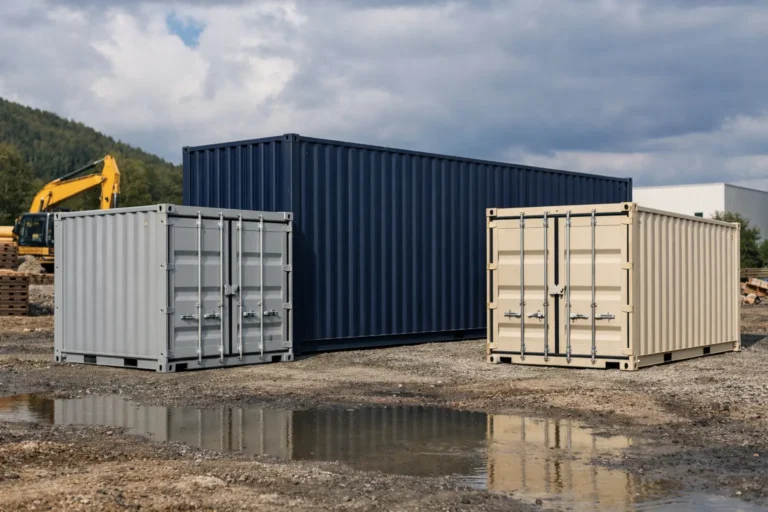
High Cube containers are useful for taller equipment, racking, workspace conversions, and modular builds. If you plan to insulate the walls or ceiling, the extra height can preserve more usable interior space. For mobile offices or retail builds, starting with a cleaner One-Trip High Cube may reduce prep work and create a better finished result.
Trailer and chassis-related needs should also be discussed early. Ground-level delivery is convenient for storage access, while chassis delivery may be better for operations that need mobility or dock-height loading. The right answer depends on workflow, equipment, and site layout.
Choose a Supplier Who Educates, Not Just Sells
A strong Conex supplier should help you make a confident decision. They should be able to explain why a WWT used container is enough for one buyer but not another, why a Cargo Worthy grade matters for shipping, and why a One-Trip unit may be worth the higher investment for modifications or public-facing use.
They should also be honest about tradeoffs. Used containers are cost-effective and durable, but they will show wear. One-Trip containers are cleaner, but they still are industrial steel assets, not showroom products. High Cube units provide more space, but they may require more clearance. Delivery can be simple, but only when the site is ready.
This advisory role is especially important for first-time buyers. Many homeowners and small businesses only buy one container, so they may not know what to ask. Contractors, developers, and logistics managers may buy more often, but they still benefit from consistent grading, clear documentation, and predictable delivery coordination.
A Practical Checklist Before You Choose
Before committing to a Conex supplier, confirm that the company can provide clear answers to these questions:
- What grade is the container, One-Trip, Cargo Worthy, or Wind & Watertight?
- Is the quote delivered to my exact address or ZIP code?
- What delivery method will be used, and how much space is required?
- Can the supplier explain site preparation requirements?
- Are photos, inspection notes, or representative condition details available?
- Does the supplier understand Raleigh, North Carolina, or Southeast delivery conditions if I am buying regionally?
- Can they source 20ft, 40ft, High Cube, refrigerated, or modified units if my needs change?
- Will I receive a written invoice or agreement before payment?
If a supplier can answer these without vague language, you are more likely to receive a container that matches your expectations.
Frequently Asked Questions
What should I look for when searching for a Conex box near me? Look for a supplier with clear grading, delivered pricing, delivery planning, real inventory access, and knowledge of your local area. In Raleigh and the Southeast, site access, ground conditions, and placement rules can be just as important as the container itself.
Is a Wind & Watertight container good enough for storage? In many cases, yes. A WWT container is commonly used for jobsite, farm, business, and household storage because it should keep out wind and rain. It is not the same as Cargo Worthy, so do not assume it is suitable for ocean shipping.
When do I need a Cargo Worthy container? Choose Cargo Worthy when the container may be used for shipping cargo, especially intermodal or export transport. Ask whether inspection or certification documentation is available, since requirements can depend on the shipping line, route, and use case.
Why would I choose a One-Trip container instead of a used one? A One-Trip container is usually cleaner, newer, and better suited for modifications, public-facing business use, mobile offices, retail applications, or buyers who want fewer cosmetic issues. Used containers are often more cost-effective for basic storage.
Do I need a permit for a Conex container in Raleigh? Permit requirements depend on the property, location, zoning, duration, and intended use. Before delivery, check with the appropriate local authority, HOA, or site manager. A reputable supplier can help you think through placement considerations, but local approval is ultimately site-specific.
Talk With a Local Conex Supplier Before You Buy
Choosing the right Conex supplier in your area comes down to transparency, technical knowledge, and delivery experience. You want a team that can explain container grades, help you choose between 20ft, 40ft, High Cube, One-Trip, Cargo Worthy, WWT, and refrigerated options, and make sure your site is ready before the truck arrives.
If you are buying in Raleigh, anywhere in North Carolina, across the Southeast, or need nationwide delivery, Lease Lane Containers LLC can help you compare options and plan your delivery with confidence. Contact the sales team at sales@leaselanecontainers.com or visit the Raleigh office to discuss the right container for your property, project, or business.