Conex for Sale: Which Size and Grade Fit Your Needs
A Conex for sale can be a jobsite storage unit, a farm equipment shed, an inventory overflow solution, a mobile office shell, or a cargo-ready asset for transport. The right purchase depends on three decisions: size, grade, and delivery conditions.
For buyers in Raleigh, across North Carolina, and throughout the Southeast, those decisions matter because climate, site access, local permitting, and long-term use can all affect what container will perform best. A 20ft Wind & Watertight unit may be perfect for a general contractor storing tools near a residential build. A 40ft High Cube One-Trip container may be the better foundation for a retail pop-up or modular office. A Cargo Worthy unit may be non-negotiable if it needs to move loaded freight.
This guide walks through how to match container size and grade to your actual use, without overpaying for features you do not need or underbuying a unit that creates problems later.
What does Conex mean when you are buying a container?
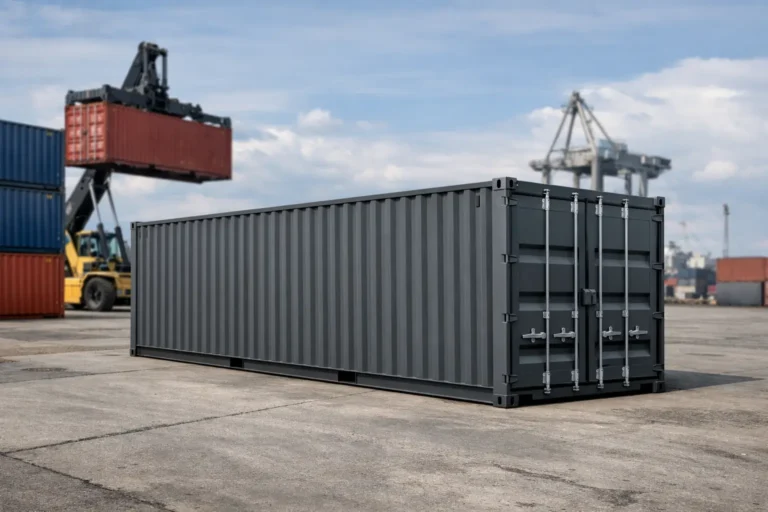
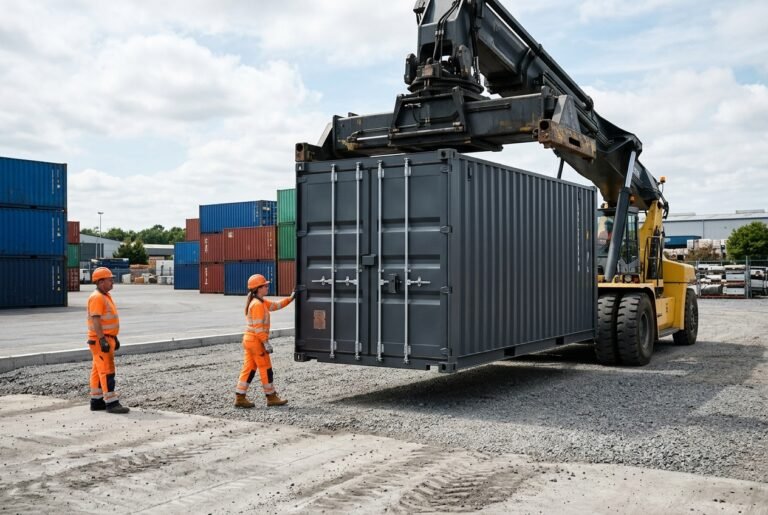
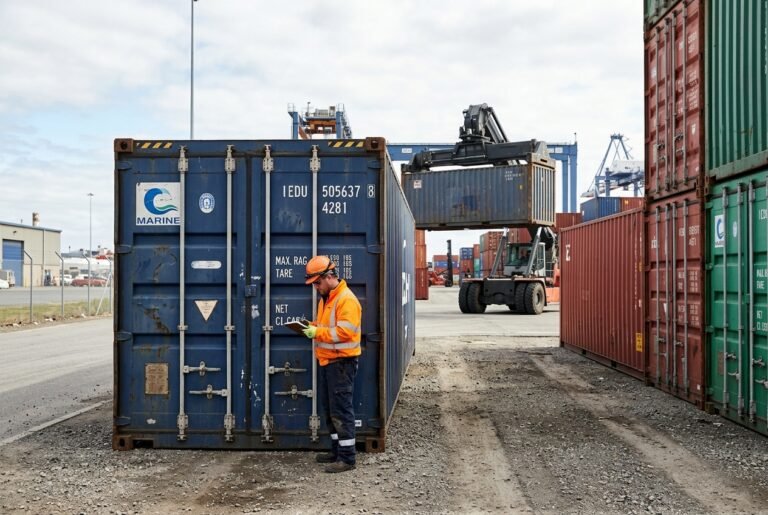
Conex is a common term for steel intermodal shipping containers. Many buyers use Conex, shipping container, cargo container, and storage container interchangeably. In practical buying terms, you are usually looking at an ISO-standard container built for intermodal transport, meaning it can be handled by ships, trucks, rail systems, cranes, and forklifts when properly rated and equipped.
Most dry storage Conex containers are made from Corten Steel, a weathering steel designed to resist corrosion better than ordinary mild steel. That does not mean a used container cannot rust, dent, or leak. It means the base structure was built for harsh marine and transport conditions, which is why these units are so useful for contractors, farms, retailers, logistics teams, and property owners.
If you want a broader overview before narrowing your choice, Lease Lane Containers has a helpful breakdown of Conex containers for sale, grades, prices, and uses that explains the main buying variables.
Step one: define what the container must do
Before choosing a size or grade, decide what problem the container needs to solve. Buyers often start by asking for the cheapest available unit, but the better question is whether the container needs to protect valuable tools, store household goods, support a modification project, pass a shipping inspection, or sit on a property for years.
A general contractor in Raleigh may need fast ground-level access, secure doors, and enough room for lumber, ladders, generators, and boxed materials. A small business owner may care more about clean appearance and modification potential. A homeowner may only need reliable weather protection for seasonal equipment. A logistics manager may need a Cargo Worthy container that can legally and safely move through the intermodal supply chain.
Here is a simple way to think about intent:
| Use case | Best starting point | Why it fits |
|---|---|---|
| Jobsite tool and material storage | 20ft or 40ft WWT or Cargo Worthy | Secure, ground-level access with practical weather protection |
| Farm, acreage, or home storage | 20ft or 40ft WWT | Cost-effective long-term storage when shipping certification is not needed |
| Retail pop-up or mobile office shell | One-Trip or clean Cargo Worthy High Cube | Better appearance, easier modifications, more interior height |
| Modular construction or container build | One-Trip 40ft High Cube | Consistent condition and added ceiling clearance |
| Loaded cargo transport | Cargo Worthy | Built and inspected for shipping use, not just stationary storage |
| Temperature-sensitive goods | Refrigerated container | Designed for cold storage or cold chain support when properly powered |
Choosing the right Conex size
Container size affects usable space, delivery access, placement, and future flexibility. The most common choices are 20ft and 40ft containers, with High Cube variants offering extra height.
20ft containers: compact, strong, and easier to place
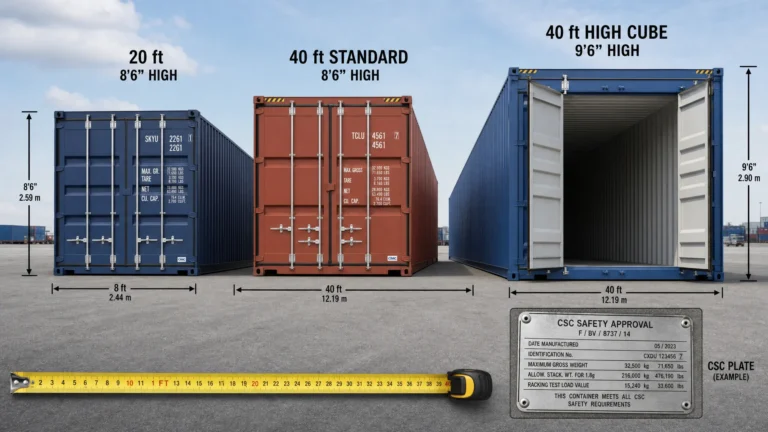
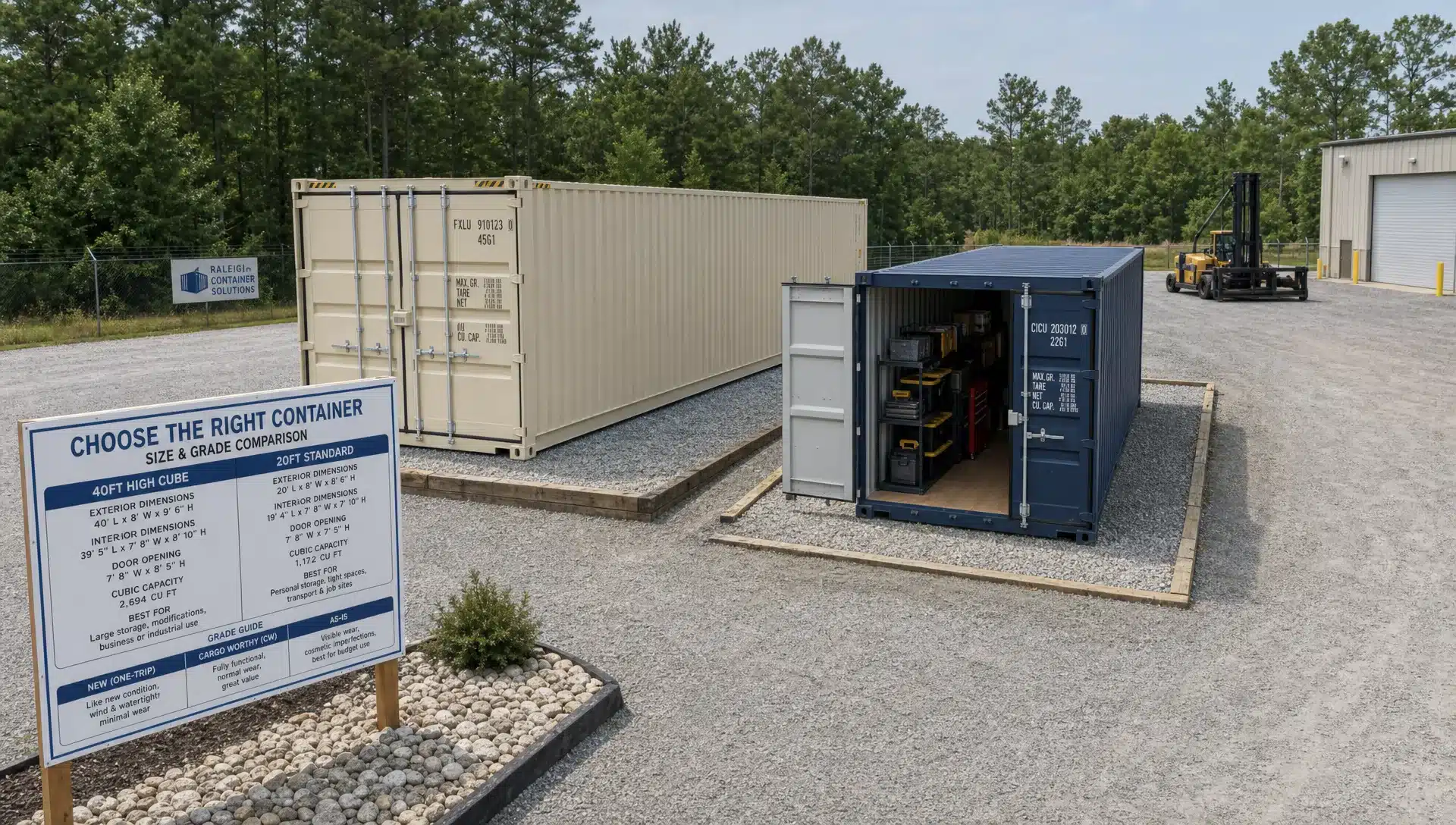
A standard 20ft container is typically about 20 feet long, 8 feet wide, and 8 feet 6 inches tall on the exterior. It is popular with contractors, homeowners, farms, and small businesses because it provides substantial storage without taking over the entire property.
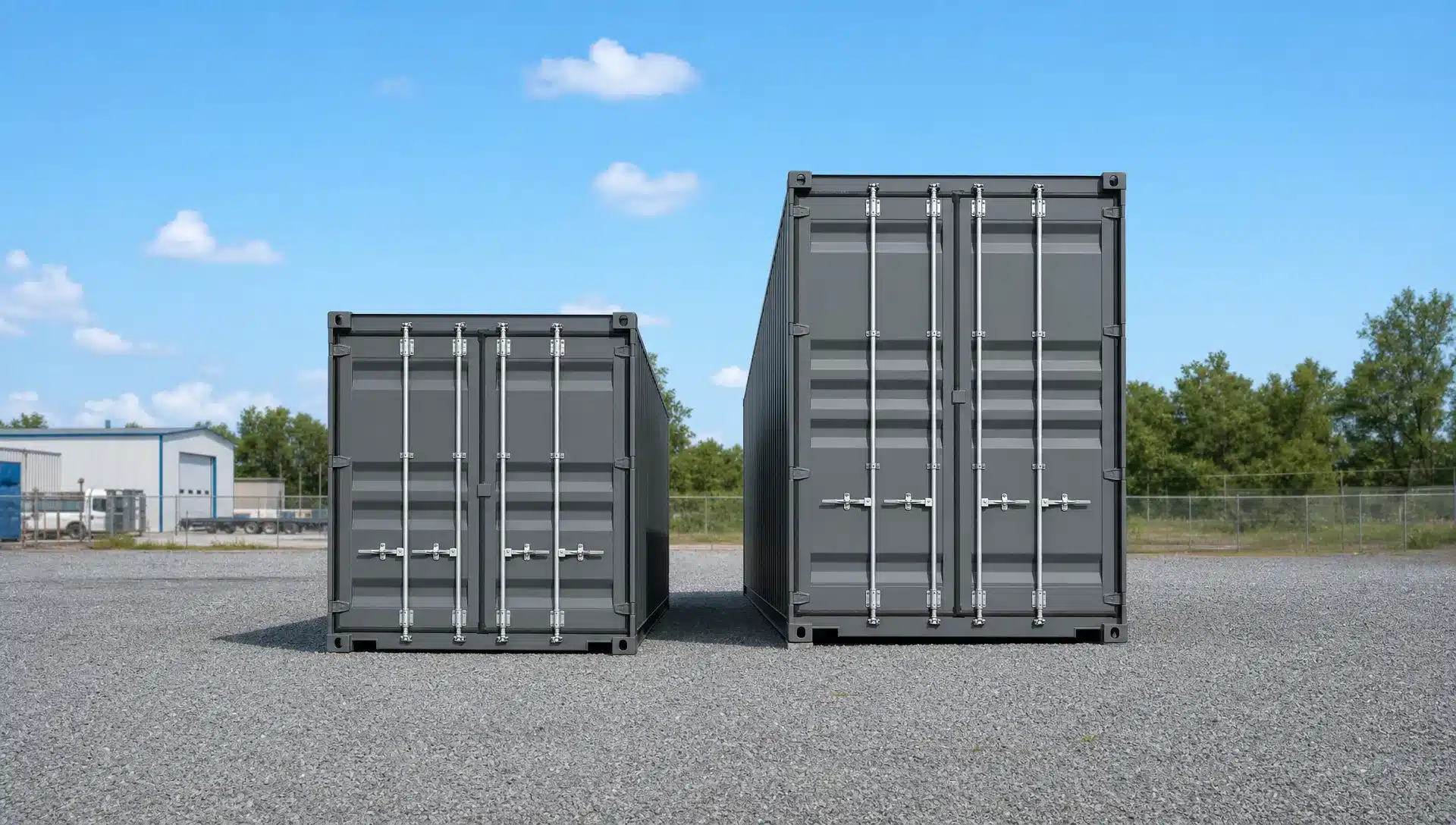
A 20ft Conex is often the best fit when space is tight, access roads are shorter, or the unit needs to sit near a garage, barn, residential build, or commercial lot. In Raleigh neighborhoods and developing areas around the Triangle, the smaller footprint can make delivery and placement easier than a 40ft unit.
Choose a 20ft container if you need:
- Secure storage for tools, equipment, feed, seasonal inventory, or supplies
- Easier placement on a residential, farm, or compact commercial site
- A unit that may need to be repositioned later
- Strong storage capacity without committing to a large footprint
40ft containers: maximum storage per delivery
A standard 40ft container is typically about 40 feet long, 8 feet wide, and 8 feet 6 inches tall on the exterior. It is the go-to choice when storage volume matters more than compact placement.
For general contractors, 40ft containers work well for lumber, pipe, insulation, doors, fixtures, and larger jobsite materials. For small businesses, they can handle inventory overflow, seasonal merchandise, records, equipment, or staging supplies. For agriculture, they can store implements, fencing supplies, feed, and bulk materials when properly organized.
A 40ft unit may provide better value per square foot than a 20ft unit, but only if your site can accept it. Delivery trucks need room to maneuver, and a longer container requires a longer straight placement area.
High Cube containers: extra height for modifications and bulky storage
A High Cube container is typically 9 feet 6 inches tall on the exterior, giving it about one extra foot of height compared with a standard unit. That additional height is valuable for mobile offices, workshops, retail spaces, equipment storage, and modular construction.
High Cube containers are especially popular for 40ft builds because the extra interior clearance can make insulation, lighting, HVAC, ceiling finishes, and raised flooring easier to plan. If you are converting a container into a workspace, retail unit, or modular structure, a High Cube is often worth considering from the start.
For buyers who are still comparing container types beyond standard dry units, Shipping Containers 101 offers a useful overview of High Cube, refrigerated, open top, flat rack, and other container categories.
Understanding Conex grades: One-Trip vs. Cargo Worthy vs. WWT
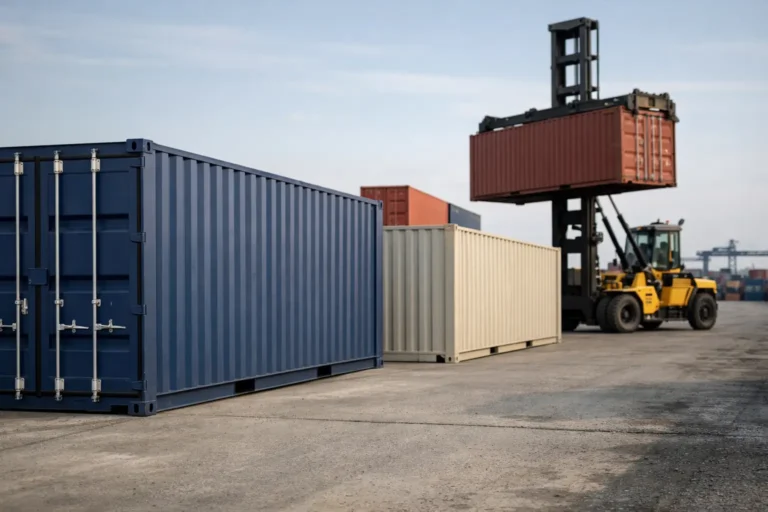
Container grade is one of the most important parts of the buying decision. It affects appearance, remaining service life, shipping eligibility, and price. The three grades most buyers compare are One-Trip, Cargo Worthy, and Wind & Watertight.
One-Trip containers
A One-Trip container is a newer unit that has typically made one loaded trip from the manufacturer before being sold. It should have minimal dents, cleaner paint, newer door gaskets, and a fresher interior than most used containers.
One-Trip units are a strong choice when appearance matters, when the container will be modified, or when you want the longest practical service life. They are commonly used for mobile offices, retail conversions, modular builds, high-value storage, and customer-facing commercial spaces.
A One-Trip container is not always necessary for basic jobsite storage. If the unit will sit behind a fence storing rough materials, a used WWT or Cargo Worthy container may deliver better value.
Cargo Worthy containers
A Cargo Worthy container is a used container that is structurally sound enough for cargo transport. In the industry, Cargo Worthy usually means the unit can pass an inspection for shipping use, though buyers should confirm documentation and inspection status if the container will be used for international or intermodal freight.
Cargo Worthy containers are appropriate for logistics managers, exporters, regional freight operations, and buyers who may need to load and move goods. They can also be excellent stationary storage units because they generally have a stronger condition profile than lower-grade used inventory.
If your container must ship loaded cargo, do not assume a Wind & Watertight container is enough. Ask specifically for Cargo Worthy condition and confirm any required inspection details.
Wind & Watertight containers
Wind & Watertight, often shortened to WWT, means the container is used but should keep out wind and water under normal storage conditions. It is generally not certified for loaded ocean cargo, but it can be a practical and cost-effective option for stationary storage.
WWT containers are popular for contractors, farms, homeowners, municipalities, and businesses that need secure ground-level storage without paying for a newer or shipping-certified unit. A quality WWT unit should have functional doors, intact gaskets, no major roof holes, and a solid floor.
The key is transparency. WWT does not mean cosmetically perfect. Expect dents, surface rust, previous markings, and signs of transport use. What matters is whether the structure is secure and weather-resistant for storage.
As-Is containers
As-Is units are usually the lowest-cost option, but they carry the highest risk. They may have leaks, door issues, floor damage, heavy rust, structural concerns, or unknown repair needs. An As-Is container may be acceptable for a buyer who is comfortable making repairs or using the unit for non-sensitive materials, but it is usually not the best choice for tools, inventory, household goods, or modification projects.
For a deeper technical explanation of condition categories, review Lease Lane Containers' guide to used shipping container grades.
Which size and grade should each buyer choose?
Different buyers need different combinations. The right Conex for sale is not just the cleanest or largest container. It is the unit that fits the job, the site, and the budget.
General contractors and home builders
For residential and commercial builds in Raleigh, Durham, Cary, Garner, Apex, and the wider Southeast, secure jobsite storage is often the priority. A 20ft WWT container works well for smaller projects, tool storage, and tight lots. A 40ft WWT or Cargo Worthy container is better for multi-trade projects with bulk materials.
Choose Cargo Worthy if the unit may be moved frequently while loaded or if you want a stronger condition grade. Choose One-Trip only if appearance, client-facing placement, or long-term service life justify the premium.
Small business owners
Small businesses often need containers for overflow inventory, records, equipment, retail pop-ups, or mobile workspaces. For hidden storage behind a building, WWT may be enough. For a public-facing use, a One-Trip unit or clean Cargo Worthy High Cube is usually a better fit.
If you plan to add windows, doors, insulation, electrical systems, shelving, or branding, start with the cleanest structure you can reasonably afford. Modifications are easier when the walls, roof, doors, and floors are in better condition.
Homeowners and agricultural buyers
Homeowners, farmers, and rural property owners often choose 20ft or 40ft WWT containers because they provide durable, weather-resistant storage at a practical cost. A 20ft unit is easier to place near a driveway, barn, or shop. A 40ft unit works better for tractors, attachments, bulk supplies, and seasonal equipment.
One-Trip may be worth it if the container will be highly visible near the home or used for a finished project. Otherwise, a well-inspected WWT unit often does the job.
Real estate developers and modular builders
Developers and container-based builders should look closely at One-Trip High Cube containers. The cleaner structure, consistent dimensions, and extra height can simplify design, insulation, mechanical planning, and finish work.
While used units can be modified, hidden damage or irregular wear can add labor and uncertainty. For modular housing, offices, or commercial structures, the container is not just storage. It is the shell of the project.
Logistics managers
For logistics, freight, exporting, or regional transport, Cargo Worthy is the practical baseline. The container must be structurally suitable for loaded movement and compatible with the requirements of carriers, ports, and receiving facilities.
If the cargo is temperature-sensitive, a refrigerated container may be required. Reefers are specialized units with refrigeration machinery and electrical requirements, so buyers should confirm power needs, temperature range, maintenance expectations, and delivery conditions before purchasing.
Grade comparison at a glance
| Grade | Typical condition | Best for | Not ideal for |
|---|---|---|---|
| One-Trip | Newer, clean, minimal wear | Modifications, retail, offices, long-term premium storage | Buyers who only need basic low-cost storage |
| Cargo Worthy | Used, structurally sound, suitable for cargo when properly inspected | Shipping, logistics, stronger storage needs | Buyers focused only on lowest upfront cost |
| Wind & Watertight | Used, weather-resistant for stationary storage | Jobsites, farms, homeowners, inventory overflow | Loaded ocean cargo or high-end visible builds |
| As-Is | Variable condition, may need repairs | Non-sensitive use or repair-capable buyers | Valuable goods, dry storage, shipping, finished projects |
Pro-Tip: prepare the site before delivery day
A good container can still create problems if the site is not ready. Before delivery, choose a firm, level area with enough space for the truck to approach, unload, and pull away safely. A compacted gravel pad is often a smart choice in North Carolina because it promotes drainage and helps keep the container from sitting in mud after heavy rain.
Leveling matters. If a container is twisted because one corner sits lower than the others, the doors may become difficult to open and close. Use railroad ties, concrete blocks, or other appropriate supports only when they are stable, level, and suitable for the load. Many buyers prefer a gravel base with support at the corners and along key points of the container.
For Raleigh and surrounding municipalities, check local zoning rules, setback requirements, HOA restrictions, and permit requirements before scheduling delivery. Rules can vary between residential, commercial, agricultural, and construction uses. If you are outside North Carolina, the same principle applies: confirm local requirements before the truck arrives.
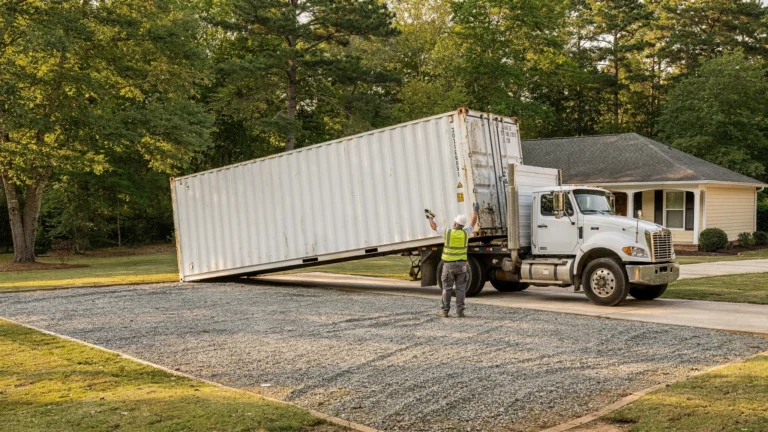
Also discuss access with your container supplier. Tilt-bed delivery may require more straight-line clearance than buyers expect. Exact space requirements vary by truck, trailer, slope, and site conditions, so the safest approach is to share photos, measurements, driveway details, overhead obstructions, and preferred door orientation before delivery.
What to ask before you buy a Conex
A reputable seller should help you understand what you are buying, not rush you into the nearest available box. Before purchasing, ask for the grade, size, delivery cost, estimated delivery timeline, and whether the photos represent the actual container or a similar unit.
You should also ask about door operation, floor condition, roof condition, gaskets, visible rust, prior repairs, and whether the unit has a lockbox. For used units, cosmetic wear is normal. Structural damage, active leaks, soft flooring, and severe door problems are different matters.
Strong buying questions include:
- Is the container One-Trip, Cargo Worthy, Wind & Watertight, or As-Is?
- Are photos of the actual unit available before purchase?
- Is delivery included in the quote or priced separately?
- What type of truck will deliver the container?
- How much space is needed for placement?
- Are there roof patches, floor repairs, or door issues to know about?
- If shipping cargo, is current inspection documentation available?
The goal is not to find a flawless used container. The goal is to get an honest match between condition, price, and use.
Avoid these common buying mistakes
The first mistake is buying on price alone. A lower-cost unit can become expensive if it leaks, cannot be delivered to the desired spot, or needs repairs before use.
The second mistake is choosing the wrong size. A 20ft container is easier to place, but it may fill quickly on a busy jobsite. A 40ft container holds more, but it may not fit the driveway, lot, or unloading path.
The third mistake is confusing WWT with Cargo Worthy. WWT is usually appropriate for stationary storage. Cargo Worthy is the better choice when the container needs to transport loaded goods.
The fourth mistake is ignoring site preparation. Uneven ground, poor drainage, low tree limbs, soft soil, and tight turns can delay delivery or make the container harder to use after placement.
Frequently Asked Questions
What size Conex should I buy for general storage? A 20ft container is usually best for compact storage, residential use, tools, and smaller jobsites. A 40ft container is better when you need to store bulky materials, larger equipment, or high-volume inventory.
Is a Wind & Watertight container good enough? Yes, WWT is often a smart choice for stationary storage when the unit does not need to ship loaded cargo. It should keep out normal wind and rain, but it may show dents, surface rust, and cosmetic wear.
When do I need a Cargo Worthy container? Choose Cargo Worthy if the container will be used for loaded transport, export, or intermodal shipping. It is also a good option when you want a stronger used condition grade for long-term storage.
Are One-Trip containers worth the extra cost? One-Trip containers are worth considering for modifications, retail uses, mobile offices, modular builds, high-visibility locations, and buyers who want a cleaner unit with longer expected service life.
Do I need a permit for a Conex in Raleigh or North Carolina? It depends on the property type, use, duration, zoning district, and local rules. Always check with the city, county, or HOA before delivery, especially for residential or long-term placement.
Can Lease Lane Containers deliver outside Raleigh? Lease Lane Containers is headquartered in Raleigh, NC and supports buyers across North Carolina, the Southeast, and nationwide delivery needs. Delivery details depend on container type, location, and site access.
Talk with Lease Lane Containers before you choose
The best Conex for sale is the one that fits your space, grade requirements, delivery conditions, and long-term plans. Whether you need a 20ft WWT unit for a Raleigh jobsite, a 40ft High Cube for a Southeast business, a Cargo Worthy container for transport, or a One-Trip unit for a custom modular project, Lease Lane Containers can help you compare practical options.
For clear guidance and availability, contact the sales team at sales@leaselanecontainers.com or visit the Raleigh office. You can also start with Lease Lane Containers to connect with a local team that understands container sizing, grading, site preparation, and nationwide delivery.