Delivery Service Price Breakdown for Container Buyers
Shipping containers are built like tanks (Corten steel panels, heavy corner castings, ISO-standard dimensions), but getting one from a depot to your driveway or jobsite is not a “standard freight” move. That’s why many buyers are surprised when the delivery service price is a meaningful part of the total, sometimes the part that makes or breaks the project timeline.
This guide breaks down what typically goes into container delivery pricing, what causes the biggest swings in cost, and how Raleigh, North Carolina buyers (and nationwide customers) can get a quote that matches reality on delivery day.
First, separate the container price from the delivery service price
A clean quote should make it obvious what you’re paying for:
- Container cost: the steel box itself (size, type, and grade).
- Delivery and placement: the truck, trailer, driver time, fuel, permits (if needed), and the unloading method.
If you’re comparing offers, insist on “apples to apples.” A quote for a 40ft High Cube on a tilt-bed with easy access is not comparable to a 40ft Standard requiring a crane set over a fence.
If you’re still deciding what to buy, start with Lease Lane’s Buyer’s Guide for the big picture, then use the breakdown below to pressure-test your delivery assumptions.
The core line items inside a container delivery quote
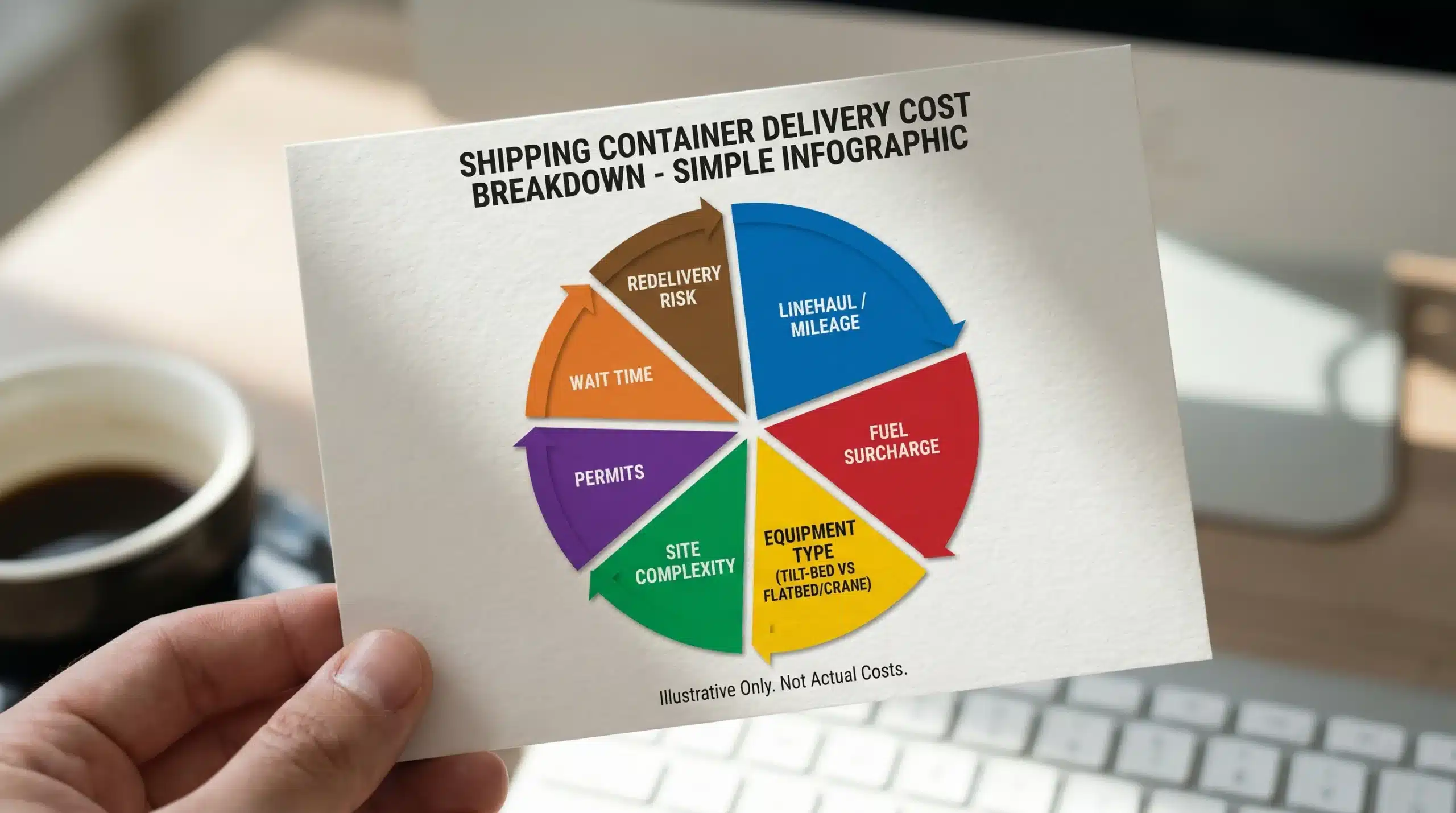
Most delivery quotes are a combination of predictable base costs and “accessorials” (extras that apply only if certain conditions exist). Here are the components you should expect to see or discuss.
| Quote component | What it covers | What makes it higher (or triggers it) |
|---|---|---|
| Base linehaul (distance-based) | Transport from the yard/depot to your site | Longer miles, rural routes, tolls, limited carrier availability |
| Fuel surcharge | A variable adjustment tied to diesel costs | Fuel price spikes, longer routes, idling time |
| Equipment type | Tilt-bed, flatbed, chassis, crane, side-loader | Needing a crane, needing a side-loader, unusual placement constraints |
| Placement complexity | Time and maneuvering at your property | Tight turns, soft shoulders, steep slopes, narrow gates, tree canopy |
| Permits and escorts (rare but possible) | Special routing permissions if required | Oversize routing constraints in dense metros, unusual equipment |
| Wait time / detention | Driver time beyond the scheduled window | Site not ready, customer not on-site, blocked drop zone |
| Redelivery / failed delivery fee | Second trip if delivery cannot be completed | Incorrect measurements, HOA denial, ground too soft after rain |
Equipment choice is a major price driver
Different equipment solves different problems, and it changes both the cost and the space you need.
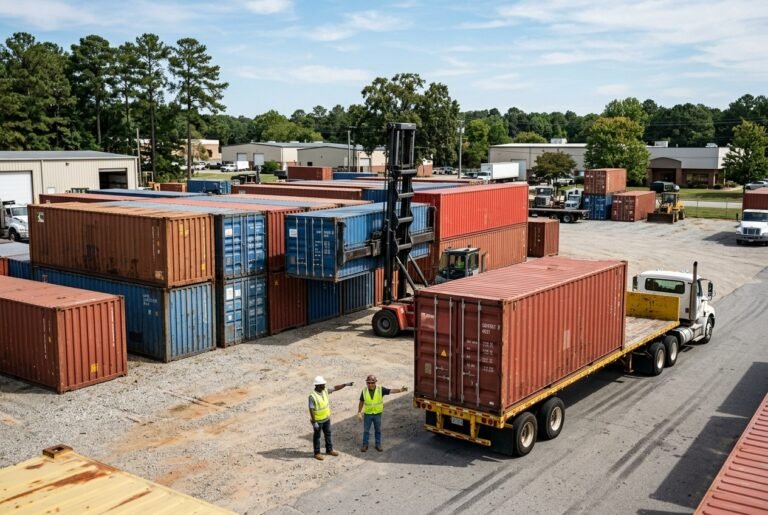
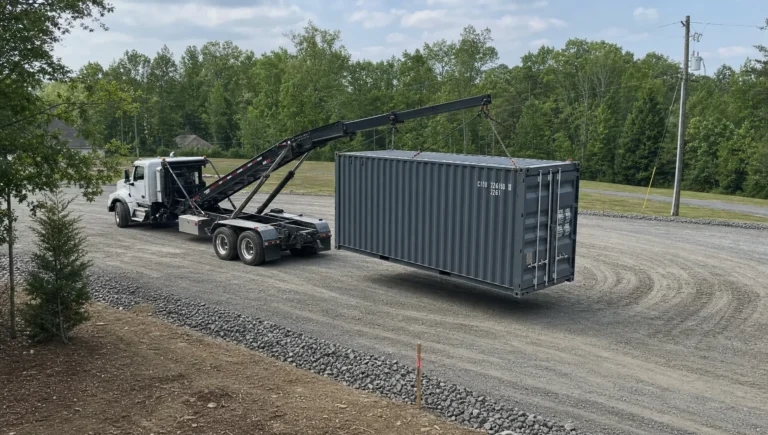
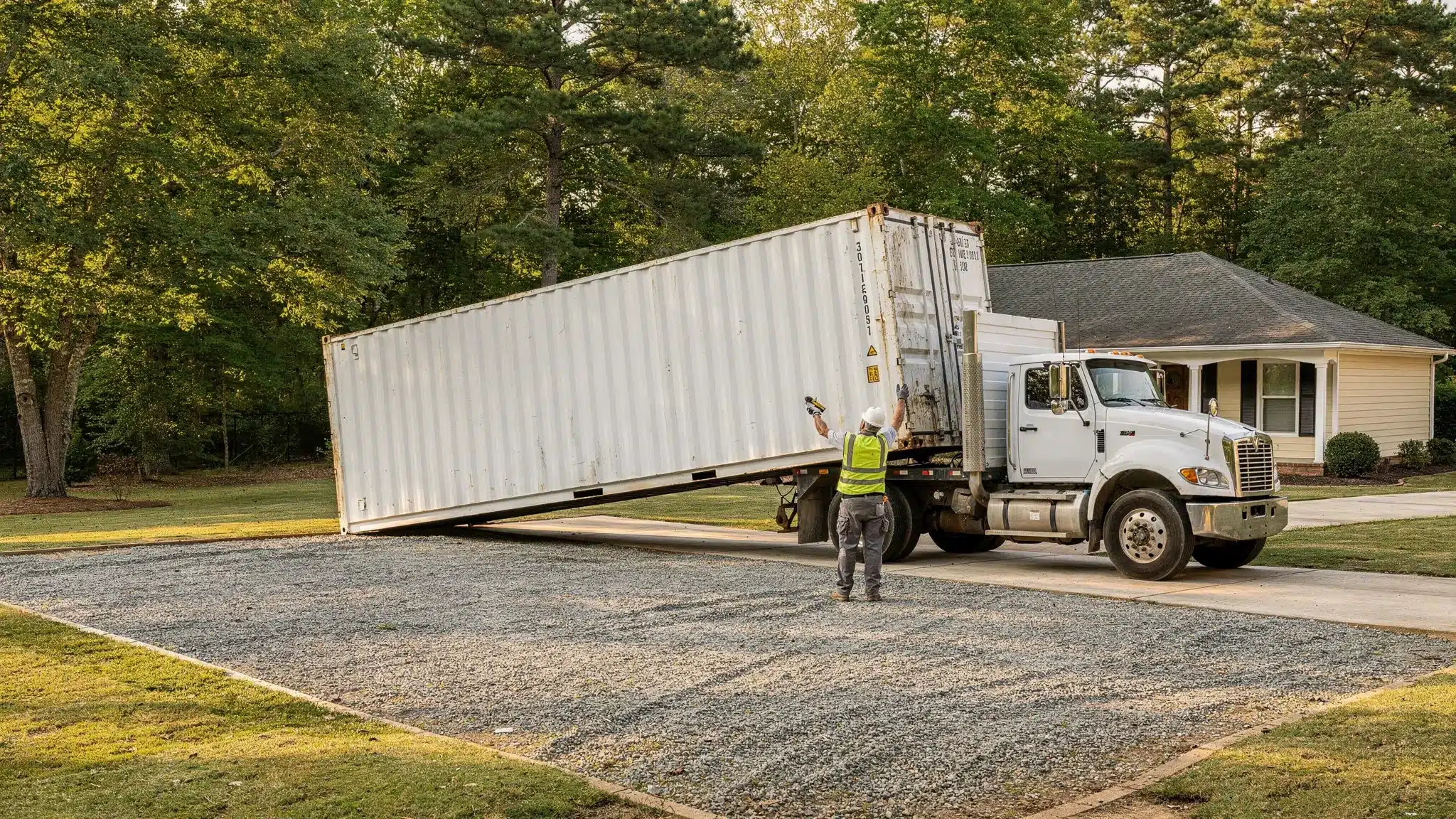
- Tilt-bed (roll-off): Common for ground placement. The truck tilts and slides the container off. This often requires straight-line clearance in front of the drop spot.
- Flatbed plus crane or forklift: Used when you must lift over obstacles, set the container behind a building, or place it precisely in tight areas.
- Chassis delivery (container stays on a trailer): Sometimes used for temporary staging or when ground placement is not possible, but it is not the same as “delivered and placed on the ground.”
Lease Lane covers these differences in more detail in Shipping Container Delivery Requirements, which is worth reviewing before you commit to a delivery date.
How size and type change delivery service price
Container delivery is not priced like parcel shipping. Size, weight, and handling constraints matter.
20ft vs 40ft containers
- 20ft containers are generally easier to place because they’re shorter and lighter, and they fit more properties with limited turning radius.
- 40ft containers need more maneuvering room and a longer, clearer approach. That increases the chance you’ll need a different trailer type or added driver time.
If you’re still deciding between sizes, the right first step is to confirm access and use case. See Lease Lane’s guidance on where to buy a 20ft shipping container in Raleigh, NC and how to shop for a 40ft shipping container for sale in Raleigh, NC.
Standard vs High Cube
A High Cube container is typically 9'6" tall (about a foot taller than standard). That extra height is a big advantage for storage and build-outs, but it can also:
- Increase overhead clearance requirements (trees, wires, building eaves).
- Reduce route options in rare cases where low bridges or tight site entry points exist.
Refrigerated (Reefer) containers
Reefers can affect the delivery plan because they are heavier and often require more careful placement planning. The bigger budget issue is usually not delivery itself, it’s power and electrical readiness after drop-off.
How container grade affects the “value” of delivered pricing
Delivery cost can feel high until you compare it to the cost of getting the wrong grade, then having to re-buy, repair, or replace the unit later. In the container industry, grade matters.
Here’s the practical definition (and what it implies for your total delivered cost):
- One-Trip (new, one-trip): A nearly new container that has made a single loaded voyage from the factory. Expect better cosmetics, newer door gear, and longer service life. Best when appearance, longevity, and clean interiors matter.
- Cargo Worthy (CW): A used container that meets structural requirements for transport, typically aligned with ISO/CSC expectations for intermodal use. Best when you need export capability, stacking confidence, or a stronger baseline for modifications.
- Wind and Watertight (WWT): A used container suitable for stationary storage, it keeps out wind and water but may not meet cargo-worthy certification requirements. Best for budget-focused on-site storage.
If you want a deeper comparison of CW vs WWT, Lease Lane has a dedicated guide: Cargo Worthy vs. Wind and Watertight Containers: Which to Buy?.
Why this matters for delivery
Delivery pricing is mostly about transportation, but grade influences what “a good delivered deal” looks like:
- If you’re placing a container where access is difficult (crane, tight driveway, remote jobsite), a failed delivery or a second delivery can cost real money. In those cases, buyers often prefer One-Trip or CW because they’re more confident in the doors, seals, and structural alignment once set.
- If you’re using it purely for ground storage (tools, feed, furniture), a WWT used unit can be the best total value, even after delivery, as long as site prep is correct.
If you’re specifically shopping used inventory, start here: Best used shipping containers for sale in Raleigh, NC.
Raleigh and Southeast pricing realities (with nationwide delivery in mind)
Lease Lane is headquartered in Raleigh, and that local knowledge matters because the Southeast has a few delivery quirks that impact price and planning:
- Clay soils and drainage: After heavy rain (common in North Carolina), a spot that looked fine can turn into a soft, rutted drop zone. That can force a reschedule or different equipment.
- Tree canopy and overhead obstructions: Mature neighborhoods around Raleigh, Cary, Apex, and Wake Forest often have the turning space but not the overhead clearance.
- Seasonality: Hurricane season and storm activity can tighten trucking capacity and affect scheduling.
Nationally, the same principles apply. The further you are from a major depot network, the more the quote becomes about carrier availability and route efficiency.
A helpful mental model is to compare container delivery to other “shipping” situations you’ve experienced. For example, many consumer retailers can offer free or low-cost delivery thresholds because they’re shipping small parcels through dense networks. A shop like Fabbrica Ski Sises can offer fast online shipping for apparel and sports gear because the logistics are fundamentally different. Containers require specialized equipment, permitted vehicles, and a site that can safely receive tens of thousands of pounds.
The hidden cost driver: site readiness (and how to eliminate it)
Most delivery surprises come from the site, not the container.
Common triggers for extra charges include:
- The truck cannot complete the turn from street to driveway.
- The drop zone is not level enough, causing a twist that affects door operation.
- The driver arrives and the site is blocked (cars, pallets, debris).
- Overhead branches or wires prevent safe unloading.
Pro-Tip: build a proper pad and level the corner castings
For most sites in the Raleigh area and across the Southeast, a compacted gravel pad with good drainage is the best balance of cost and performance.
- Aim for a level footprint that supports the container at the corner castings (the ISO lifting and stacking points).
- Use compacted stone, not loose gravel, and plan drainage so water does not pond under the container.
- If the container is going to be “permanent” (or in an HOA-regulated neighborhood), check whether your jurisdiction or HOA treats it as an accessory structure. In parts of Wake County, permitting requirements can vary by use and duration.
If you want a step-by-step foundation walkthrough, see 5 Steps for Proper Shipping Container Ground Preparation.
How to request a delivery quote that matches real life
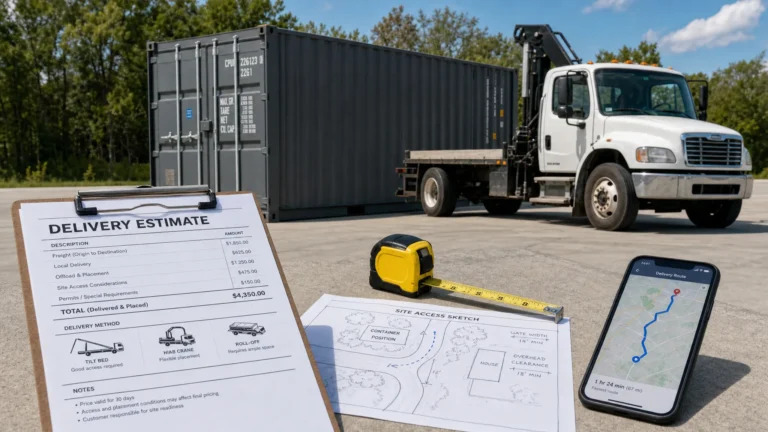
To get a delivery service price that holds up on delivery day, send your supplier the details that trucking dispatch actually needs.
- Delivery address (and whether it’s commercial, residential, or an active jobsite)
- Container size and type (20ft, 40ft, Standard, High Cube, Reefer)
- Preferred unloading method (or ask what they recommend)
- Photos of:
- Street approach
- Gate/driveway entrance
- The route to the drop area
- The drop zone itself
- Basic measurements: access width, turning constraints, overhead clearance
- Your desired door orientation once placed
If you’re not sure how to measure clearances, Lease Lane’s library includes practical guides like How to Measure Shipping Container Overhead Clearance and How Much Room Do You Need to Deliver a Container?.
Frequently Asked Questions
What is included in a shipping container delivery service price? A typical delivery service price includes transport from the depot, the truck and trailer type, fuel surcharge, and unloading/placement time. Extra charges can apply for difficult access, waiting time, permits, or redelivery.
Is a 40ft container more expensive to deliver than a 20ft? Often, yes. A 40ft unit usually requires more turning room and a longer drop zone, which can increase equipment needs and driver time. The exact difference depends on your site access and placement method.
Does container grade (One-Trip vs CW vs WWT) change delivery cost? The trucking portion is usually similar for the same size and equipment. Grade affects the total value of the delivered purchase and can influence risk, for example avoiding door issues after placement or reducing the chance you need to swap units.
What causes failed deliveries and redelivery fees? The most common causes are blocked or too-narrow access, insufficient turning radius, low branches or wires, soft ground, or an unlevel pad that prevents safe unloading.
Do I need a permit to deliver a shipping container in Raleigh, NC? Sometimes. Permit needs depend on how long it will be on-site and how it’s used (storage vs office vs retail). You should also confirm HOA rules if applicable.
Get a transparent delivered price from a Raleigh-based team
If you want a delivery service price that reflects your real site conditions, Lease Lane Containers LLC can help you choose the right size, explain One-Trip vs Cargo Worthy vs WWT options, and plan a smooth drop anywhere in North Carolina or nationwide.
Email sales@leaselanecontainers.com to request a delivered quote, or visit our Raleigh, NC office to talk through your site access and container needs in person.