Shipping Container Home for Sale: Red Flags and Must-Checks
When you search for a shipping container home for sale, you will see everything from a bare 40ft shell to a fully finished, code-compliant residence marketed as “turnkey.” The problem is that the word “home” gets used loosely, and the most expensive surprises typically show up after delivery, when you discover structural issues, moisture problems, or permit roadblocks.
If you are buying in Raleigh, North Carolina (or anywhere in the Southeast), humidity, heavy rains, and warm summers magnify common container conversion mistakes. The goal of this guide is simple: help you spot red flags early and know exactly what to verify before money changes hands.
First, confirm what is actually for sale
A listing may look like a home, but the seller could be offering only part of the project. Before you inspect anything, clarify which of these applies:
- Container shell only (unmodified or lightly modified). This is closer to buying a container for a build.
- Partially converted unit (framed and insulated, rough openings cut, utilities not finished).
- Finished structure (electrical, plumbing, HVAC, interior finishes installed).
- “Deliverable home” vs “on-site build” (some projects require assembly, craning, or site-built connections).
In every case, ask for a written scope of what is included: appliances, electrical panel, water heater, fixtures, exterior stairs, skirting, tie-downs, engineering, and permits.
Must-know: container grades and why they matter for homes
A container home starts with a steel box, typically built to ISO standards and made from Corten steel (weathering steel designed to resist corrosion better than mild steel). But not all used containers begin in the same condition. The grade you start with affects safety, modification cost, appearance, and long-term maintenance.
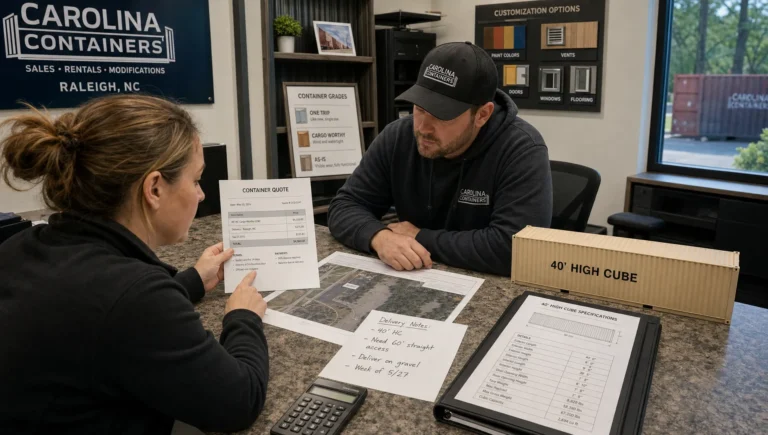
Lease Lane Containers uses transparent, industry-standard grading language. Here is the practical meaning when you are evaluating a “container home for sale.”
| Grade | What it typically means | Best fit for a home project | Common risk if you ignore this |
|---|---|---|---|
| One-Trip (new, one voyage) | Near-new condition with minimal wear, straight frames, better doors and coatings | Best starting point for most residential builds and customer-facing projects | Paying used pricing for a unit that is actually older, repaired, or repainted |
| Cargo Worthy (CW) | Structurally suitable for transport, often with a valid CSC plate at time of inspection | Solid choice for many conversions if verified and straight | Cosmetic defects or prior repairs that complicate finishing and waterproofing |
| Wind & Watertight (WWT) | Keeps wind and rain out for stationary use, not the same as shipping certification | Sometimes acceptable for budget builds, workshops, or non-permitted structures | Hidden corrosion, door alignment issues, or prior patchwork that becomes costly after cutouts |
If you need a refresher on definitions, read Lease Lane’s breakdown of Cargo Worthy vs Wind and Watertight containers and the broader used shipping container grades guide.
Size note: 20ft, 40ft, and High Cube changes your inspection priorities
Most container homes start from a 20ft or 40ft dry container, and many buyers prefer High Cube (9'6" tall) for better ceiling height after insulation and framing.
- If the “home” is built from a 20-footer, review typical costs and trade-offs before you commit: 20ft shipping container price expectations.
- If it is a 40-footer or a High Cube build, verify exact height and door specs before planning delivery and permitting: 40ft High Cube dimensions explained.
Red flags when shopping a shipping container home for sale
Some issues are cosmetic. Others can turn into structural rework, failed inspections, or water intrusion behind finished walls.
Red flag 1: Fresh paint with no documentation
A newly painted container can be fine, but it is also a classic way to hide:
- Weld patches
- Rust-through or pinholes
- Roof repairs
- Heavy dents that indicate a twisted frame
If the seller cannot show “before” photos, an inspection checklist, and clear disclosure of repairs, treat it as a risk.
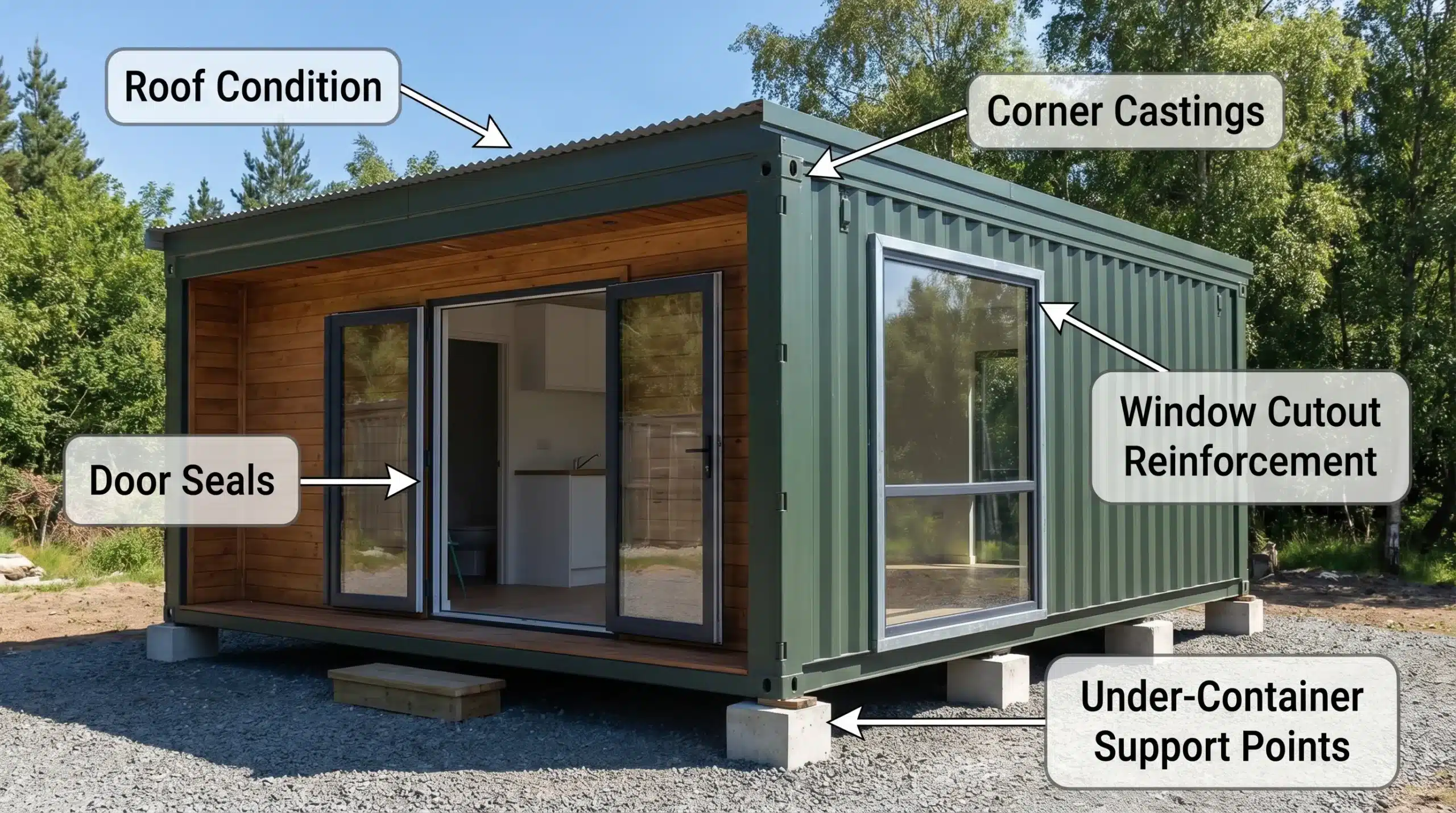
Red flag 2: Cutouts (windows/doors) without engineered reinforcement
Cutting large openings removes strength from the corrugated sidewalls and top rails. A legitimate build plan accounts for this with properly sized steel framing and welding.
Watch for:
- Wavy or oil-canning wall panels around windows
- Doors that do not latch smoothly
- Evidence of sagging at the top rail line
For multi-container homes (especially stacked units), this becomes even more critical.
Red flag 3: Doors that “fight you”
Hard-to-open container doors often mean the unit is out of square from:
- Frame twist
- Corner casting damage
- Improper support (uneven foundation)
A “home” with door issues before delivery can become a major issue after it is set on your site.
Red flag 4: Rust patterns that suggest standing water or chronic leaks
Surface rust is common on used containers. What you do not want is structural corrosion at key load paths.
Pay special attention to:
- Roof panels (ponding areas)
- Top rails and header
- Bottom rails, especially in humid Southeast conditions
- Corner castings (they matter for lifting and squareness)
Red flag 5: Strong chemical odors or stained flooring
Many containers use marine-grade plywood floors. Some older units may have been exposed to spills, fumigation residues, or chemicals.
For a residential interior, treat unknown contamination as a serious red flag unless flooring has been professionally remediated and documented.
Red flag 6: “No permits needed” claims
Permitting is local. In Raleigh and Wake County, whether you need a permit depends on use, zoning, utilities, foundations, and whether it is considered a permanent structure.
A seller who promises you can skip permits may be setting you up for stop-work orders or expensive redesign.
Must-checks: what to verify before you buy
A container home purchase should be treated like a hybrid of a home inspection and a steel structure inspection.
1) Identity and base container documentation
Ask for:
- Container number and photos of all sides
- CSC plate photo if the unit is represented as Cargo Worthy (or recently Cargo Worthy)
- A written statement of the grade (One-Trip vs CW vs WWT)
If you are buying a used base container (or multiple containers) to build your own home, start with Lease Lane’s buyer resources and inspection approach: The Ultimate Shipping Container Buyers Guide and How to spot quality containers before you buy.
2) Structural integrity, straightness, and ISO-critical components
Even if you never plan to ship it overseas, ISO container geometry matters because it tells you whether the unit is straight.
Inspect:
- Corner castings: cracks, heavy deformation, non-standard weld repair
- Top and bottom rails: bows, dents, and signs of twist
- Roof: repairs, soft spots, pinholes (a light test from inside helps)
If the home is built from used inventory, do not assume WWT equals “ready for a house.” WWT simply means it keeps weather out in current condition, not that it is square, clean, or ideal for extensive cutouts.
3) Water management and condensation control (the hidden budget killer)
In North Carolina, humidity plus air conditioning can create condensation on steel if the envelope is poorly designed.
Verify:
- Insulation type and thickness (and whether a vapor strategy was designed for your climate)
- Ventilation and bath/kitchen exhaust routing
- Any evidence of moisture behind walls (staining, swelling, musty smells)
- How windows are flashed, not just trimmed
A container can be wind and watertight from rain, yet still suffer from interior condensation if insulation and ventilation are wrong.
4) Electrical and fire safety documentation
A real “home” should have clear electrical scope and compliance pathway.
Ask for:
- A panel schedule and load calculation (especially if HVAC and water heating are electric)
- Details on how wiring is protected through steel walls
- Grounding/bonding plan
If the seller cannot provide any documentation, plan for a licensed electrician to inspect and potentially rework.
5) Plumbing and penetrations through steel
Every penetration is a future leak path if not flashed and sealed correctly.
Confirm:
- How supply and drain lines are routed (interior chases vs undercarriage)
- Whether penetrations are sleeved and sealed
- Freeze protection strategy if lines are exposed
6) HVAC sizing and placement
Container homes can be efficient, but only if HVAC is matched to insulation, layout, and air sealing.
Check:
- Where the condenser and air handler are mounted
- Whether condensate drains are properly routed
- Service access (you need room to maintain equipment)
7) Foundation, anchoring, and installation plan
Many listing photos show a container set on blocks “for now.” That is not the same as a planned residential foundation.
Ask:
- What foundation type the design assumes (piers, slab, stem wall)
- How it is anchored for wind loads (important in storms across the Southeast)
- Whether the container is supported at corners only, or with intermediate supports where needed
8) Permits, zoning, and engineering stamps (especially in Raleigh)
For Raleigh and nearby jurisdictions, verify who is responsible for:
- Zoning compliance and setbacks
- Building permits
- Engineered drawings (structural modifications, foundation)
- Inspections and certificate of occupancy (for habitable use)
If the seller is offering a “deliverable unit,” clarify whether it is legally an accessory structure, an ADU, or a primary residence in your jurisdiction.
A practical inspection matrix (use this on walkthrough day)
Bring a flashlight, ladder (if permitted), and a phone for video.
| Area | What to check | Why it matters |
|---|---|---|
| Roof | Standing water marks, patches, pinholes | Roof leaks often show up after finishes are installed |
| Doors | Smooth operation, gasket condition, locking gear | Out-of-square frames cause security and weather issues |
| Sidewalls | Dent lines, ripples around cutouts, weld quality | Indicates structural compromise or poor reinforcement |
| Underbody | Rust scale, crossmember condition, exposed plumbing | Corrosion and exposed systems drive long-term repairs |
| Interior | Odor, staining, soft floors, mold signs | Indoor air quality and remediation cost risk |
| Windows/doors | Flashing, sealants, water staining, weep paths | Most conversion leaks originate at openings |
| Mechanical | HVAC model info, condensate routing, ventilation | Comfort and moisture control depend on correct systems |
Delivery reality check (many “container homes for sale” fail here)
A container home is not a tiny box that shows up like furniture. Delivery constraints can make or break the project.
Key questions:
- Is it being delivered as a standard 20ft or 40ft unit, or does it require a crane set?
- Is it High Cube, and do you have overhead clearance for the truck and offload?
- Is your route tight (trees, power lines, narrow turns), common in older Raleigh neighborhoods and rural Wake County roads?
If you are planning placement, start with Lease Lane’s guidance on shipping container delivery requirements and access planning.
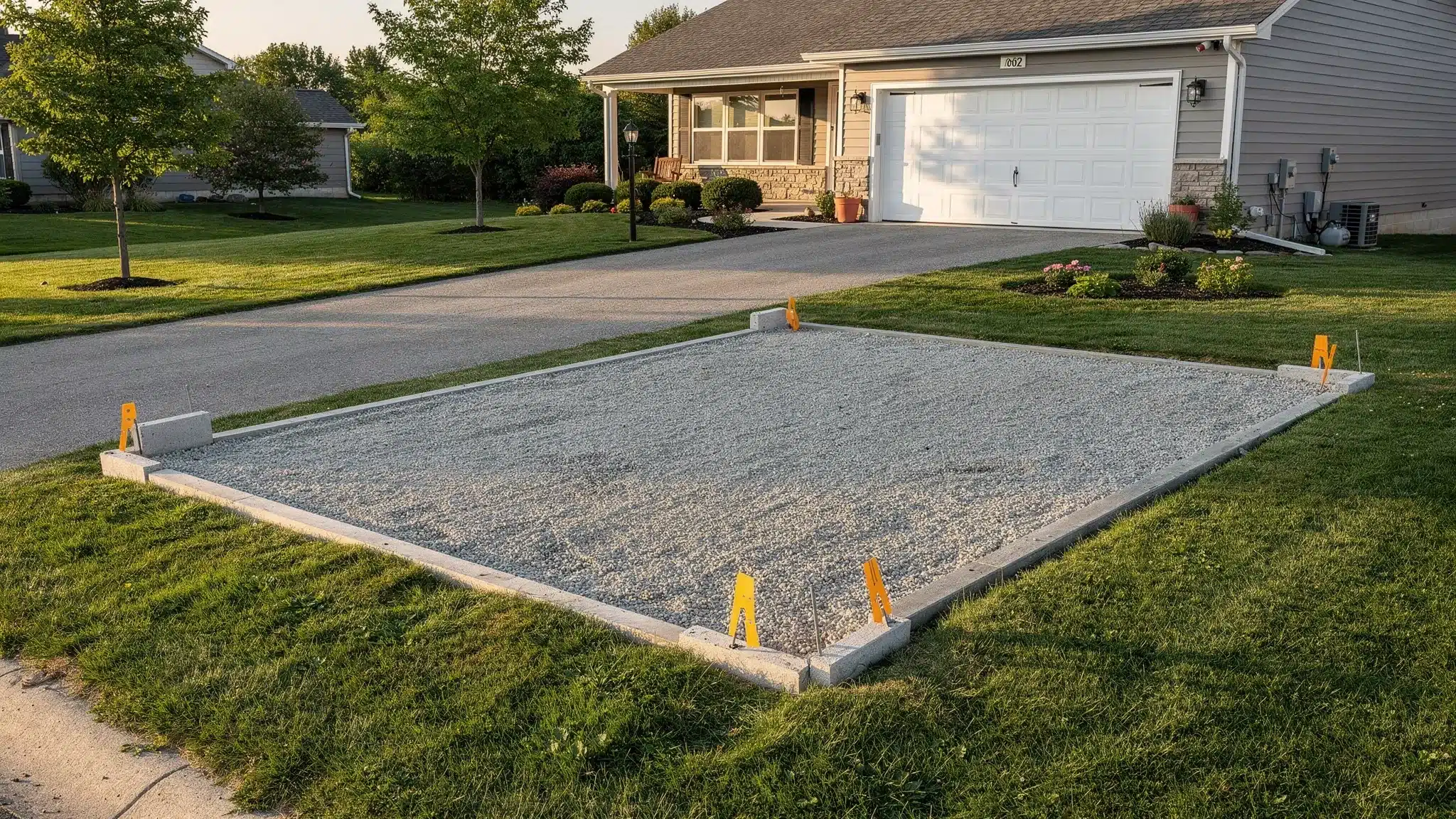
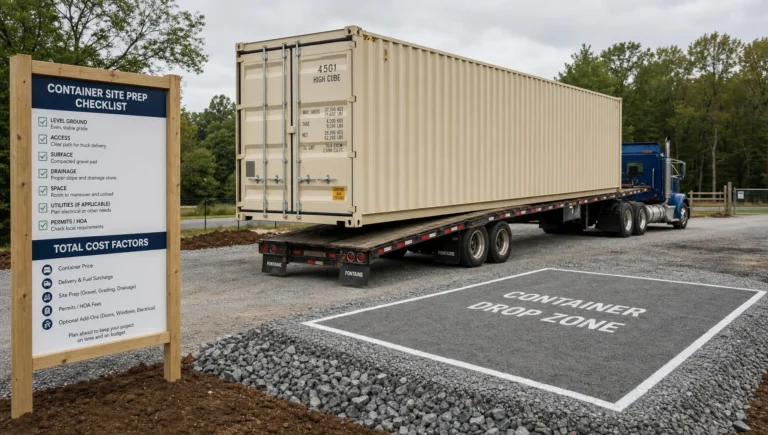
Pro-Tip (Site Prep): prevent twist, stuck doors, and water pooling
Even a perfect container can develop problems if the site is not prepared.
- Level matters more than most buyers think: A small twist can cause doors to bind and can telegraph into interior finishes.
- Use a compacted gravel pad in many residential and rural Southeast sites: It supports weight, improves drainage, and reduces under-container corrosion.
- Plan permitting early: In Raleigh and surrounding Wake County areas, zoning, setbacks, and utility tie-ins can drive whether you need permits and what foundation is acceptable.
For a step-by-step foundation approach, see 5 steps for proper shipping container ground preparation.
If you are buying just the container to build your own home
Many buyers decide that purchasing the right container first (then hiring the right builder) reduces risk compared to buying someone else’s conversion.
When choosing inventory:
- Prefer One-Trip for cleaner interiors, straighter frames, and fewer unknowns. Start here: What is a One Trip container?
- If you are considering used containers, insist on grade transparency and inspection evidence. Use: How to check used shipping container conditions
- Match size to layout and site constraints before you buy: How to choose shipping container size
If you are sourcing used inventory, work with a supplier that explains grading clearly and can help you plan delivery. For vetting, use How to vet a shipping container company in Raleigh, NC.
Frequently Asked Questions
Is a Wind and Watertight (WWT) container good enough for a shipping container home? It can be, but it is riskier for residential builds. WWT only indicates weather resistance in current condition, not squareness, cleanliness, or suitability for major cutouts. Many home projects start better with One-Trip or well-verified Cargo Worthy units.
What grade is best if I want a container home with clean interior finishes? One-Trip is typically the best starting point because it is closest to new, usually straighter, and has fewer unknown repairs. Cargo Worthy can also work well if you verify structure, doors, and prior patching.
What is the biggest red flag when buying a shipping container home for sale? Missing documentation around structural modifications and permitting. If a seller cannot explain reinforcement around cutouts, foundation assumptions, and the permit pathway, you can inherit expensive rework.
Do High Cube containers matter for container homes? Yes. High Cube units provide extra interior height that is valuable after insulation, framing, and ceiling finishes. They also affect delivery clearance and sometimes local planning constraints.
Can a container home be delivered to a typical Raleigh driveway? Sometimes, but it depends on container size, truck type, overhead clearance, turning radius, and surface strength. Planning delivery and placement early prevents failed deliveries and property damage.
Talk to a Raleigh-based container team before you commit
If you are evaluating a shipping container home for sale, or you want to start with the right 20ft or 40ft container and build from there, Lease Lane Containers LLC can help you verify grades (One-Trip vs Cargo Worthy vs WWT), choose the right unit, and plan a successful delivery in Raleigh, across North Carolina, and nationwide.
Contact our sales team at sales@leaselanecontainers.com or visit our Raleigh office to discuss your project and get clear, honest guidance before you buy.